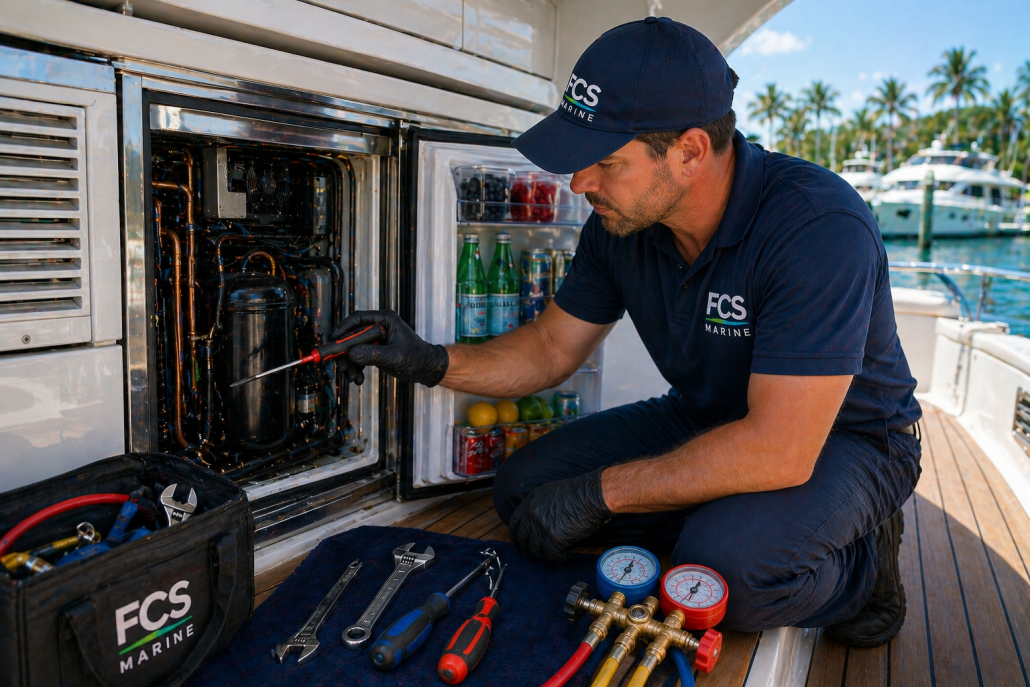
How Long Marine Refrigeration Systems Last (And When to Replace Them)
Marine refrigeration systems are essential for preserving food, supporting offshore travel, and maintaining onboard comfort during extended marina stays. Like all marine mechanical equipment, these systems experience wear over time—especially in warm coastal environments such as South Florida.
Understanding how long marine refrigeration systems typically last helps vessel owners plan maintenance schedules, avoid unexpected cooling failures, and make informed upgrade decisions when replacement becomes the better option.
This guide explains what affects marine refrigeration lifespan and how to recognize when replacement should be considered.
Average Lifespan of Marine Refrigeration Systems
Most marine refrigeration systems last between 8 and 15 years depending on usage patterns, maintenance history, and operating conditions typical of the marine refrigeration system lifecycle and operation onboard vessels. Systems installed on vessels operating year-round in warm coastal environments may experience faster wear than equipment used seasonally in cooler regions.
Because marine refrigeration systems often operate continuously during trips and extended dock stays, compressors and circulation components typically experience more operating hours than residential refrigeration equipment.
Routine inspection plays an important role in extending equipment lifespan.
Why South Florida Operating Conditions Affect Equipment Longevity
Marine refrigeration systems operating in South Florida waters face several environmental challenges that influence long-term reliability. Warm seawater temperatures increase condenser workload, while salt exposure affects wiring connections and fittings over time.
Humidity inside enclosed cabin spaces also affects airflow performance and evaporator efficiency if maintenance is delayed.
These same environmental conditions are also among the most common contributors to refrigeration failure across coastal vessels. If cooling performance has already started changing, you may find it helpful to review the common causes of marine refrigeration failure.
Signs Your Marine Refrigeration System May Be Near the End of Its Service Life
Cooling performance usually declines gradually rather than stopping suddenly. Vessel owners often begin noticing longer cooling cycles or inconsistent temperature control before major failures occur.
Common warning signs that replacement may soon be necessary include:
-
refrigeration compartments taking longer to reach target temperature
-
compressors running continuously during operation
-
rising electrical demand from aging components
-
uneven cooling inside storage areas
-
repeated service visits within short time periods
Addressing these warning signs early helps prevent unexpected system shutdowns during offshore travel.
When Compressor Replacement Makes Sense
The compressor is the primary mechanical component responsible for refrigeration performance. When compressors begin losing efficiency, systems often struggle to maintain stable temperatures even when airflow and circulation remain normal.
In some situations, replacing the compressor restores system performance without requiring full system replacement. However, when compressors fail in older refrigeration systems, upgrading the entire unit may provide better long-term reliability.
Professional diagnostics help determine which approach is most appropriate for each vessel.
How Refrigerant System Leaks Affect Long-Term Reliability
Marine refrigeration systems rely on sealed refrigerant loops to maintain stable cooling temperatures. Over time, vibration and salt exposure can affect fittings and hose connections, allowing small leaks to develop.
Repeated refrigerant loss often signals that aging components inside the system are approaching the end of their service life. While temporary repairs may restore cooling performance, replacement may become the more practical long-term solution if leaks continue to appear.
Early inspection helps prevent unnecessary compressor strain.
Electrical Wear Can Shorten Refrigeration System Lifespan
Electrical reliability plays a major role in marine refrigeration performance. Shore power connections, generators, breaker panels, and thermostat controls must all deliver stable voltage for compressors to operate correctly.
Salt exposure can gradually affect wiring terminals and control components. Over time, this may lead to inconsistent cooling response or unexpected shutdowns during operation.
Routine inspection helps identify electrical wear before it affects refrigeration reliability.
When Upgrading Improves Cooling Performance
In many cases, vessel owners consider upgrading refrigeration systems when cooling performance declines or onboard usage requirements change. Larger crews, extended trips, or expanded storage needs may require improved cooling capacity.
Modern marine refrigeration systems often provide improved efficiency compared with older equipment while reducing compressor workload during continuous operation.
Upgrading equipment can also improve temperature consistency across multiple storage compartments.
Repair vs Replacement: How Technicians Help Decide
Choosing between repair and replacement depends on several factors, including equipment age, compressor condition, refrigerant system reliability, and cooling performance consistency.
Technicians typically evaluate:
-
compressor efficiency
-
refrigerant pressure stability
-
airflow condition inside compartments
-
condenser heat exchange performance
-
electrical supply reliability
These diagnostics help determine whether restoring the existing system is practical or whether replacement provides better long-term performance.
If your system is no longer maintaining stable temperatures, professional evaluation helps identify the best solution. Learn more about available support on the
How Preventative Maintenance Extends Refrigeration System Lifespan
Routine inspection of seawater circulation components, airflow pathways, refrigerant pressure levels, and electrical connections helps extend equipment lifespan significantly.
Preventative diagnostics also allow technicians to identify developing issues early before they affect onboard cooling reliability during trips.
Maintaining stable system performance helps protect stored provisions and improves long-term operating confidence.
Schedule Marine Refrigeration Replacement Evaluation With FCS Marine
Marine refrigeration systems operating in South Florida waters benefit from regular diagnostics and performance evaluation as equipment ages.
FCS Marine provides dockside marine refrigeration inspections, repair support, compressor diagnostics, and replacement planning throughout Fort Lauderdale, Palm Beach, and surrounding South Florida marinas.
Contact FCS Marine today to schedule a marine refrigeration system evaluation and determine whether repair or replacement is the right solution for your vessel.