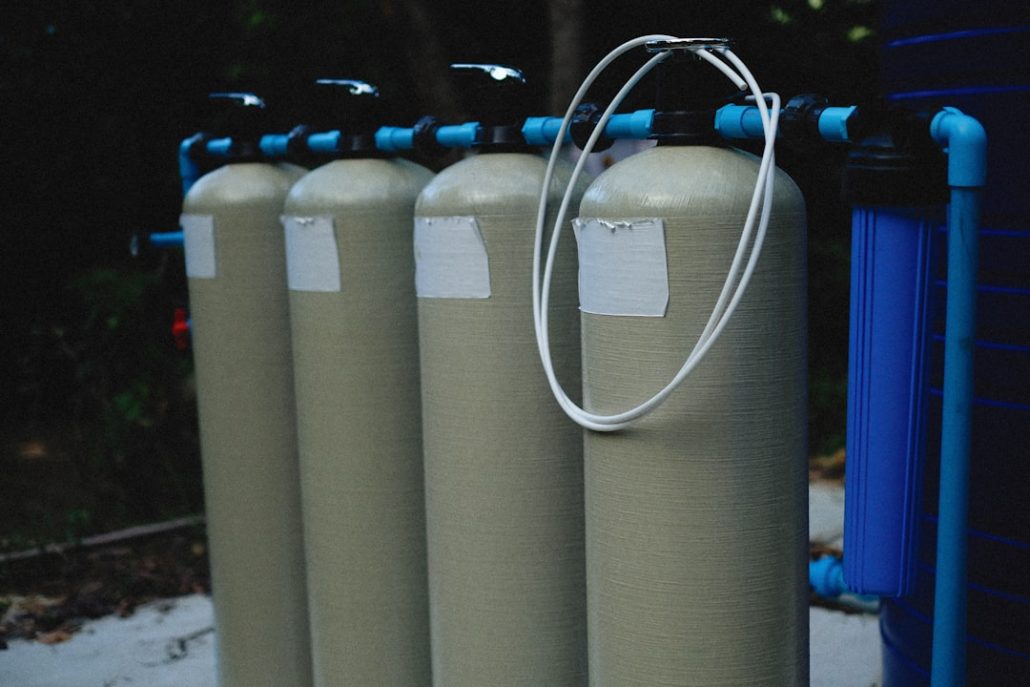
What You Need to Know About Reverse Osmosis Water Filters
A reverse osmosis water filter is one of the most effective home and marine water purification systems available today — here’s a quick breakdown of what it does and why it matters:
What is a reverse osmosis water filter?
- A water purification system that pushes water through a semi-permeable membrane
- The membrane blocks contaminants as small as 0.0001 microns
- It removes lead, arsenic, fluoride, PFAS, chlorine, bacteria, and more
- Most systems include multiple pre- and post-filtration stages
Key facts at a glance:
| Feature | Typical RO System |
|---|---|
| Contaminants removed | Up to 99.99% of 158+ impurities |
| Water waste ratio | 5:1 (some efficient models: 1.5:1) |
| Common types | Countertop, under-sink, whole-house, marine |
| Filter replacement | Every 6–24 months depending on stage |
| Certifications to look for | NSF/ANSI 42, 58, 372 |
If you own a yacht in South Florida, water quality isn’t just a comfort issue — it’s a safety issue. Whether you’re docked at a marina or out on open water, the water coming through your onboard system can carry contaminants that are invisible to the naked eye.
Most people assume their water is clean enough. Often, it isn’t.
Reverse osmosis filtration has become the gold standard for removing dissolved solids, heavy metals, and harmful chemicals from drinking water — both on land and at sea. Understanding how it works helps you make smarter decisions about the water your family and crew drink every day.
This guide breaks it all down in plain language. No chemistry degree required.
What is a Reverse Osmosis Water Filter and How Does It Work?
To understand a reverse osmosis water filter, it helps to first understand regular osmosis. In nature, water naturally flows from an area of low salt concentration to an area of high salt concentration through a semi-permeable membrane. This is how plants absorb water from the soil.
Reverse osmosis (RO), as the name suggests, does the exact opposite. By applying external pressure, we force water to flow against its natural inclination. We push highly concentrated, contaminated water through a semi-permeable membrane, leaving all the impurities behind and collecting pure, clean water on the other side.
Unlike standard filtration, which relies purely on physical size exclusion (like a sieve catching pasta), reverse osmosis relies on solvent diffusion. Solutes (the contaminants) are separated from the solvent (the water) based on their chemical properties, solubility, and diffusivity.
The Science Behind Reverse Osmosis Filtration
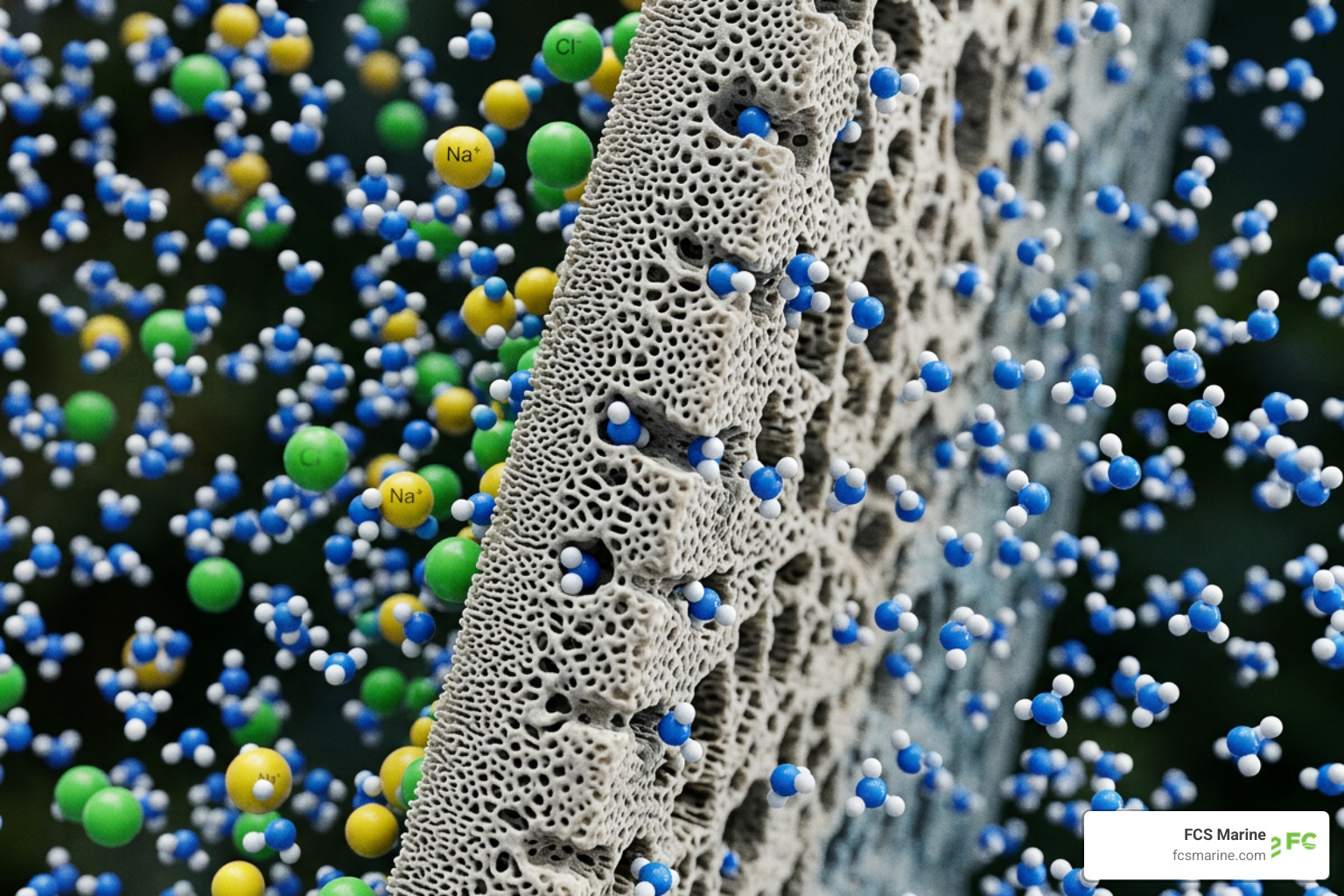
The heart of any RO system is its semi-permeable membrane. This membrane features incredibly tiny pores measuring approximately 0.0001 microns. To put that into perspective, a single strand of human hair is about 70 microns wide.
Because these pores are so microscopic, only water molecules can easily pass through. Dissolved salts, heavy metals, organic molecules, and biological pathogens are simply too large and are swept away in a separate waste stream known as the “concentrate” or “reject water.”
To overcome natural osmotic pressure and force the water molecules through the membrane, the system requires adequate feed water pressure. For standard residential systems, a minimum of 40 psi (280 kPa) is generally required. If your water pressure is too low, the system will struggle to produce water efficiently, which is why many high-capacity units feature built-in booster pumps.
Key Stages of a Reverse Osmosis Water Filter System
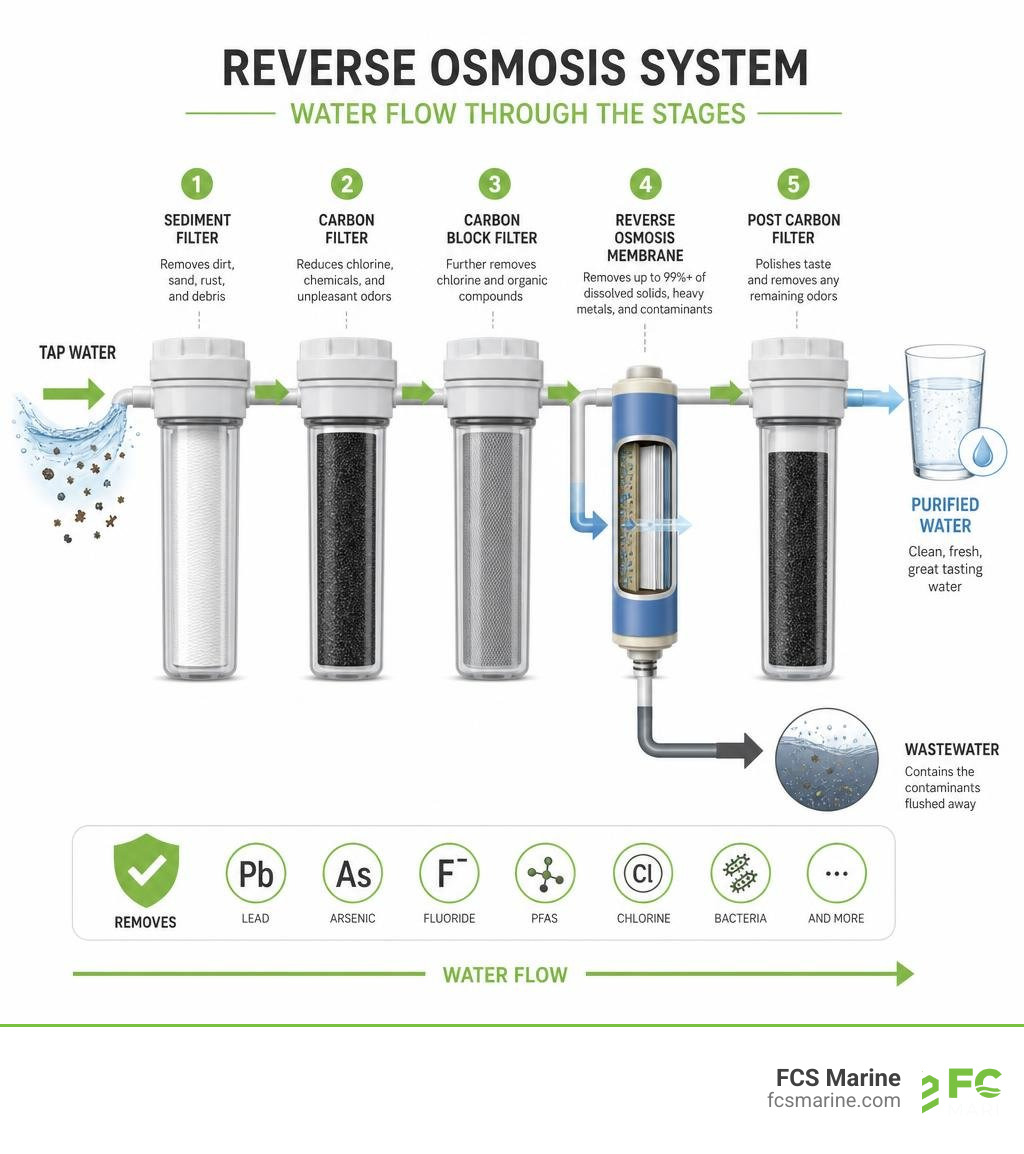
A complete reverse osmosis water filter is rarely just a single membrane. Because the RO membrane is delicate and can easily clog (a process known as fouling), systems use a multi-stage process to protect it and improve water quality:
- Sediment Pre-filter: Captures larger physical particles like dirt, rust, sand, and silt.
- Activated Carbon Pre-filter: Removes chlorine, chloramines, and volatile organic compounds (VOCs). This stage is critical because chlorine can chemically degrade Thin Film Composite (TFC) membranes.
- The RO Membrane: The star of the show. Most modern systems use TFC membranes, which offer a high rejection rate of 95% to 98% and a longer lifespan compared to older Cellulose Triacetate (CTA) membranes, which only have an 85% to 95% rejection rate.
- Remineralization and pH Adjustment: Because RO filtration is so thorough, it removes healthy minerals like calcium and magnesium, which can leave the water tasting flat and slightly acidic (often below pH 6.4). High-quality systems include a post-filter that reintroduces these beneficial minerals, balancing the pH to a healthy 7.5± and restoring a crisp, natural taste.
- Post-Carbon Filter (Polishing Filter): A final carbon stage that removes any lingering tastes or odors from the storage tank before the water reaches your faucet.
Contaminants Removed and System Types Compared
Reverse osmosis systems are incredibly powerful. They are certified to reduce up to 99.99% of Total Dissolved Solids (TDS) and over 150 different impurities.
Common contaminants removed include:
- Heavy Metals: Lead, arsenic, chromium, and copper.
- Harmful Chemicals: Fluoride, chlorine, VOCs, and industrial runoff.
- Emerging Pollutants: PFAS (PFOA/PFOS) and microplastics.
- Biological Hazards: Bacteria, parasites, and viruses.
| System Type | Best For | Typical Daily Capacity | Pros | Cons |
|---|---|---|---|---|
| Countertop | Apartments, renters, small kitchens | 50–100 Gallons | No plumbing required, portable, glass carafe options | Takes up counter space, manual filling |
| Under-Sink | Standard homes, active kitchens | 50–1600 Gallons | Hidden out of sight, continuous supply, direct faucet | Requires basic plumbing, minor cabinet space |
| Whole-House | Complete home protection, high-TDS areas | 300–7000 Gallons | Pure water from every tap, protects pipes | Expensive, large storage tanks needed, complex install |
| Marine / Yacht | Onboard fresh water generation | 200–2000+ Gallons | Desalinates seawater, independent cruising, compact | High power needs, requires professional maintenance |
Countertop vs. Under-Sink Reverse Osmosis Water Filter Units
For most homeowners and yacht owners looking for localized drinking water solutions, the choice comes down to countertop versus under-sink models.
Countertop systems require zero installation. You simply plug them into an electrical outlet, fill the water reservoir, and let the system filter the water into a pitcher. Modern, premium countertop units like the Bluevua ROPOT utilize a 5-stage filtration process, remineralize the water, and feature a borosilicate glass carafe to prevent secondary plastic pollution.
Under-sink systems are plumbed directly into your cold water line and drain. Traditional under-sink models use a bulky pressurized storage tank, but modern engineering has paved the way for tankless designs.
For example, the Under Sink Reverse Osmosis System – Waterdrop D6 offers a space-saving, tankless 600 GPD (gallons per day) flow rate and a smart LED faucet that displays real-time TDS levels.
If you require even higher capacities, the 800 GPD Tankless Reverse Osmosis System – Waterdrop G3P800 includes a built-in UV sterilizer to eliminate 99.9% of bacteria, while the Waterdrop X12 Reverse Osmosis System with Replacement Filter Combo provides a blazing-fast 1200 GPD flow rate alongside alkaline remineralization.
For the ultimate in speed and purification, the Waterdrop X Series Undersink Reverse Osmosis System, X16 boasts an 11-stage filtration process and a 1600 GPD capacity, allowing you to fill a cup of water in just two seconds.
For residential installations or local water concerns in South Florida, residents often consult regional experts to ensure their systems are configured correctly. Understanding your local water quality is the first step toward choosing the right filtration setup for your home or vessel.
Efficiency, Water Waste, and Environmental Impact
One of the most common criticisms of the reverse osmosis water filter is water waste. Because the system continuously flushes the membrane to prevent contaminant buildup, a portion of the incoming water is directed down the drain as “reject water” or wastewater.

Historically, typical point-of-use RO systems were highly inefficient, generating five gallons or more of reject water for every single gallon of purified water produced. Some older, low-pressure systems could even waste up to 10 gallons of water per gallon of treated water.
Fortunately, modern technology has dramatically improved these ratios.
Understanding the Pure-to-Drain Ratio
Today’s advanced tankless systems boast significantly better pure-to-drain ratios. Many high-efficiency units operate at a 1.5:1, 2:1, or even a 3:1 ratio (producing three cups of pure water for every one cup of wastewater).
When shopping for an RO system, look for the EPA WaterSense label. WaterSense labeled RO systems are independently certified to meet strict efficiency standards, sending 2.3 gallons of water or less down the drain for every gallon of treated water they produce.
Selecting a WaterSense labeled RO model makes a massive difference:
- It reduces water waste on average by more than 3,100 gallons of water per year compared to a standard, non-labeled RO system.
- This translates to a savings of 47,000 gallons of water over the lifetime of the system.
- If every household point-of-use RO system sold in the United States met WaterSense criteria, we could save over 3.1 billion gallons of water annually — enough to meet the household water needs of nearly 41,000 American homes!
At the municipal and industrial level, reverse osmosis is used for large-scale desalination. In coastal cities like Cape Coral, Florida, or in international hubs like Singapore, massive RO plants process seawater and brackish water.
These industrial seawater systems typically require 2.9 to 5.5 kWh of energy per cubic meter of water produced, though state-of-the-art facilities have driven that down to 2.3 kWh/m³. Worldwide, approximately 16,000 desalination plants produce around 95 million cubic meters of fresh water daily, proving that RO is a vital global utility.
Maintenance, Lifespan, and Health Considerations
To keep your reverse osmosis water filter running at peak performance, routine maintenance is essential. Neglecting filter changes can lead to membrane damage, bacterial growth, and a drop in water quality.
While a high-quality system can last 15 to 20 years, individual filter cartridges must be replaced on a regular schedule:
- Sediment and Carbon Pre-filters: Replace every 6 to 12 months to protect the RO membrane from chlorine and physical debris.
- Reverse Osmosis Membrane: Typically lasts 24 months before mineral scaling reduces its flow rate and rejection capacity.
- Remineralization / Alkaline Filter: Replace every 12 months to ensure your water maintains a healthy mineral balance and pleasant taste.
- UV Sterilizer (if equipped): The UV light bulb should be replaced annually, though some advanced solid-state UV LEDs can last up to 50 years with minimal upkeep.
From a health perspective, drinking demineralized RO water over long periods can be a concern if your diet lacks essential minerals. Because pure RO water can be slightly acidic, using a system with an integrated remineralizer is highly recommended. These post-filtration systems reintroduce vital calcium and magnesium, ensuring your drinking water is both incredibly pure and health-promoting.
For larger properties, a modular Whole House Reverse Osmosis System | Crystal Quest – Crystal Quest Water Filters can protect your entire plumbing infrastructure from scale buildup while providing premium drinking water to every single faucet in the home.
Frequently Asked Questions about Reverse Osmosis
Does reverse osmosis remove beneficial minerals from drinking water?
Yes. The filtration process is so thorough that it removes healthy minerals like calcium and magnesium along with the bad contaminants. However, this is easily corrected by selecting an RO system that includes a remineralization stage, which reintroduces these minerals to balance the pH and improve the flavor.
How often do reverse osmosis filters need to be replaced?
Pre-filters (sediment and carbon) should be swapped out every 6 to 12 months. The main RO membrane typically lasts up to 24 months. Regularly replacing your pre-filters is the best way to extend the lifespan of your expensive RO membrane.
Can a reverse osmosis system be used for well water?
Yes, but well water requires careful pre-treatment. Well water often contains high levels of iron, manganese, and heavy sediment, which can quickly clog and ruin an RO membrane. You must install a dedicated sediment pre-filter or water softener before the water enters your RO system.
Conclusion
Whether you are seeking pure drinking water for your waterfront home in West Palm Beach or need a reliable marine watermaker for your vessel docked in Fort Lauderdale, a reverse osmosis water filter is an unbeatable investment in your health and comfort.
For residents in South Florida — from Palm Beach County and Broward County down to Miami-Dade, Martin, and St. Lucie counties — local water conditions require specialized expertise to ensure your systems are set up correctly for the unique regional water profile.
At FCS Marine, we are a family-owned South Florida company specializing in premium yacht maintenance services. We provide fast, dockside service with a satisfaction guarantee across Pompano Beach, Fort Lauderdale, and the surrounding coastal communities.
Our professional team is expert in marine AC repair, refrigeration, mold cleaning, and marine water purification. If you want to ensure your onboard water system is pristine, check out our full range of Services and learn more about our specialized Yacht Water Purification solutions today. We are here to keep your water clean, your systems running, and your journeys safe!