Keep Your Yacht Reverse Osmosis System Ready to Make Fresh Water
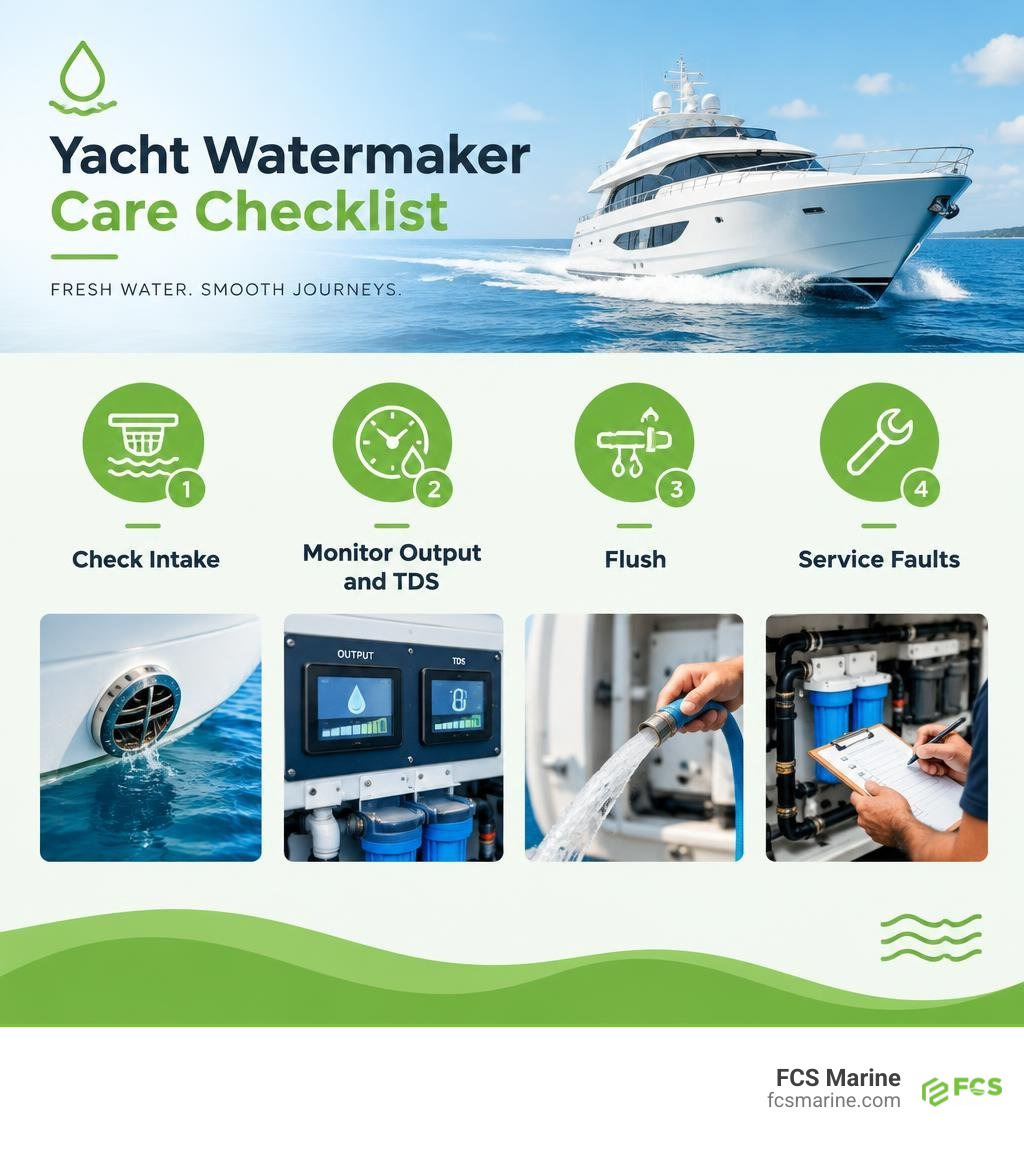
A yacht reverse osmosis system turns seawater into fresh water by pushing it through a membrane that rejects salt. To keep it working during a cruise, check the intake and pre-filters for blockages, track water output and total dissolved solids (TDS), and flush the system as its manufacturer directs. A drop in output or a rise in TDS is a sign to investigate before you rely on the watermaker offshore.
Warm South Florida waters and long periods between trips make routine checks especially important. FCS Marine provides on-site water system service to help yacht owners inspect and maintain their watermakers where the vessel is located.
Easy yacht reverse osmosis system glossary:
How a Yacht Reverse Osmosis System Operates Under Cruising Demands
Operating offshore requires complete self-sufficiency, and modern desalination equipment makes long-range cruising practical. Understanding making potable water offshore with marine reverse osmosis systems begins with the physics of cross-flow filtration. Seawater contains roughly 35,000 parts per million (ppm) of dissolved minerals and salts. To overcome natural osmotic pressure, the system pressurizes incoming raw water against a semi-permeable membrane.
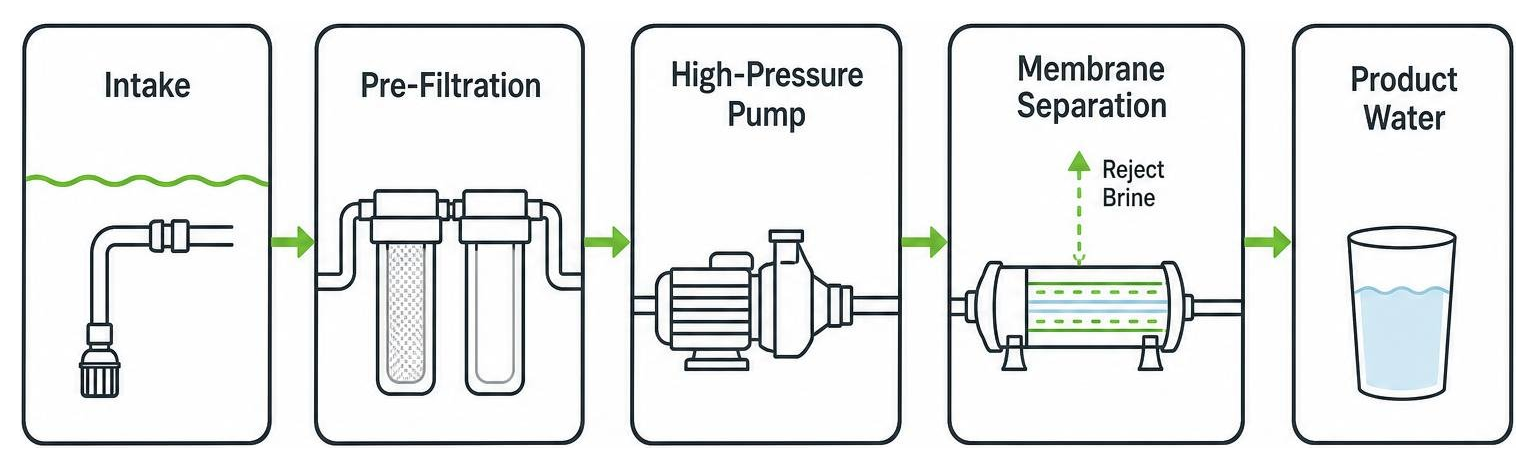
These specialized polyamide thin-film composite membranes filter down to 0.0001 micron. At this microscopic scale, the membrane allows pure water molecules to pass into a central permeate core while rejecting up to 99.7% of dissolved salts, bacteria, and larger organic compounds.
Pre-Filtration and Feed Water Delivery in a Yacht Reverse Osmosis System
Before raw water ever reaches the delicate desalinating core, a dedicated low-pressure feed circuit prepares the fluid. Incoming seawater enters through a dedicated below-waterline seacock and sea strainer, moving directly through coarse and fine particulate filtration stages.
Learning about clean water at sea and marine filters helps captains prevent unexpected mid-voyage shutdowns. The pre-filtration path typically includes:
- A primary coarse strainer to trap large debris, weeds, and jellyfish.
- Plumbed 20-micron and 5-micron sediment filter cartridges to capture suspended solids.
- An optional commercial sand or media pre-filter for turbid coastal waterways.
- A low-pressure booster pump delivering steady feed pressure (typically 0.1 to 3 bar) into the high-pressure pump head without cavitation.
High-Pressure Desalination and Energy Recovery Integration
Once pre-filtered, the seawater enters a high-pressure pump that elevates operating line pressures between 55 and 62 bar (roughly 800 to 900 psi). This extreme force pushes clean permeate through the microscopic barrier while the remaining concentrated brine continuously sweeps across the membrane surface and discharges overboard.
Modern marine watermakers often incorporate sophisticated energy recovery devices. Systems such as the H2O ECO Series utilize energy recovery mechanisms to reclaim up to 14.5% of the power required for desalination, making high-efficiency fresh water production practical even on vessels running on DC battery banks or auxiliary solar arrays. Under normal operating conditions, these systems maintain product water purity well under 450 ppm TDS, providing safe, clear drinking water on demand.
Marine-Specific Causes of Membrane Degradation and System Strain
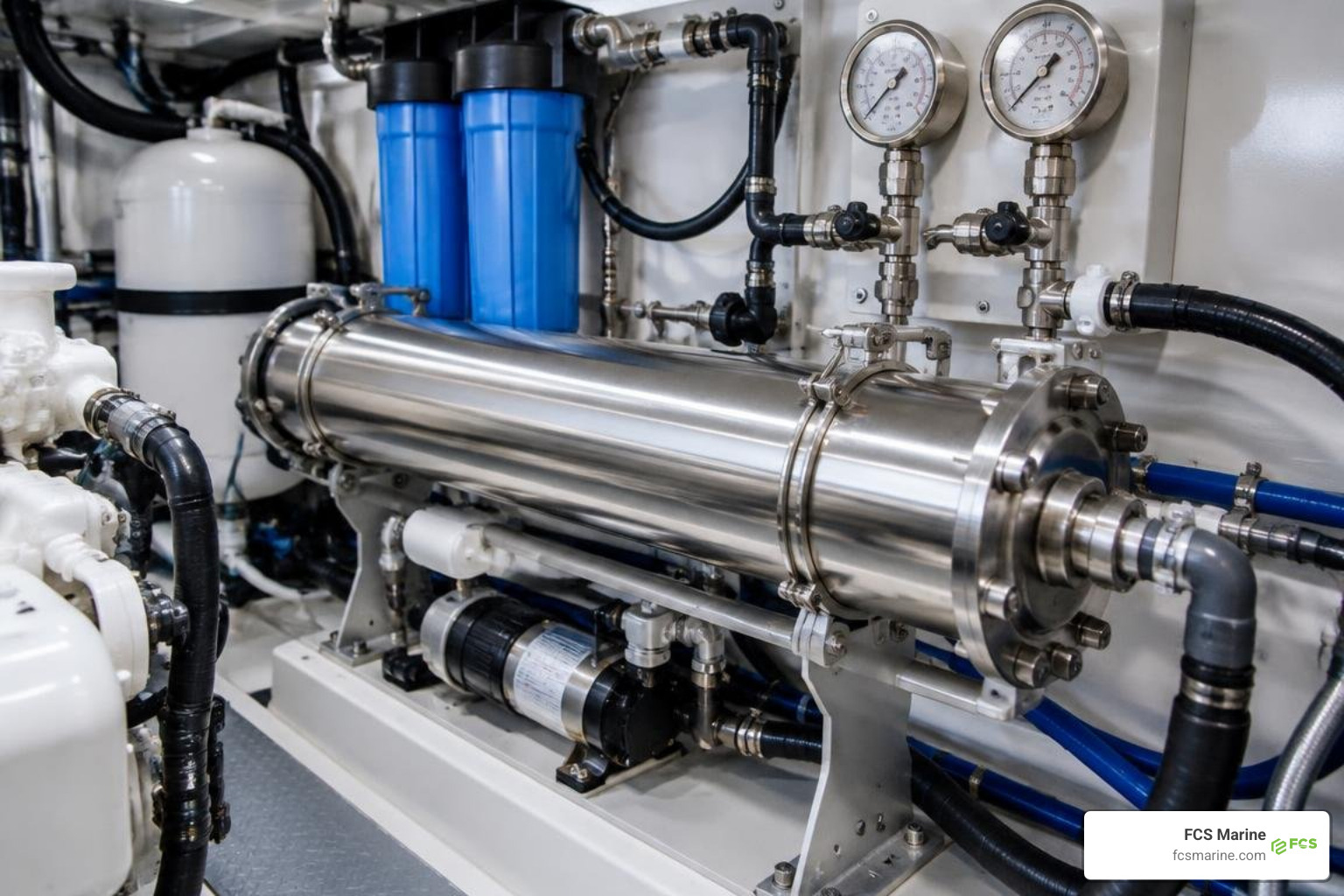
Operating a reverse osmosis system in subtropical regions like South Florida, the Bahamas, and the Caribbean exposes mechanical components to severe environmental challenges. Unlike land-based filtration, marine desalination units must handle fluctuating raw water chemistries, constant motion, and confined engine room spaces.
Several primary environmental factors accelerate membrane wear and hardware failure:
- Biofouling and Organic Silt: Warm shallow waterways promote biological growth. Stagnant seawater left inside an un-flushed membrane housing will form a biological slime layer within 48 to 72 hours, permanently fouling the membrane pores.
- Mineral Scaling: High-calcium seawater and hard dock water cause calcium carbonate scaling on membrane surfaces, gradually restricting freshwater production and driving up line pressures.
- Extreme Ambient Temperatures: Marine RO membranes are typically rated for feed and ambient temperatures up to 40°C (104°F). Installing units inside unventilated engine rooms where operating temperatures exceed these thresholds causes membrane compaction, accelerated fouling, and reduced seal longevity.
- Vibration and Physical Stress: Constant vessel pounding and engine vibration can loosen high-pressure fittings, stress modular plumbing runs, and cause pump misalignment.
| Feature / Metric | Manual Marine RO Units | Automated Marine RO Units | Dockside Purification Systems |
|---|---|---|---|
| Pressure Regulation | Manual needle valve adjustment | Stepper-motor automatic regulator | Fixed low-to-medium pressure |
| Typical Feed Water Source | Seawater (up to 38,000 ppm TDS) | Seawater (up to 38,000 ppm TDS) | Municipal dock water (150–500 ppm TDS) |
| Membrane Flush Cycle | Manual diverter valve operation | Automatic timed freshwater flush | Automated tank top-off & flush |
| Typical Output Range | 15–50 Gallons per Hour | 25–92 Gallons per Hour | 100–130 Gallons per Hour (e.g., SpotZero) |
| Primary Monitoring Focus | Analog pressure gauges & hand refractometer | Integrated TDS sensors & digital LCD | Permeate purity & micron pre-filter differential |
Crucial Maintenance Procedures for Cruising Vessels
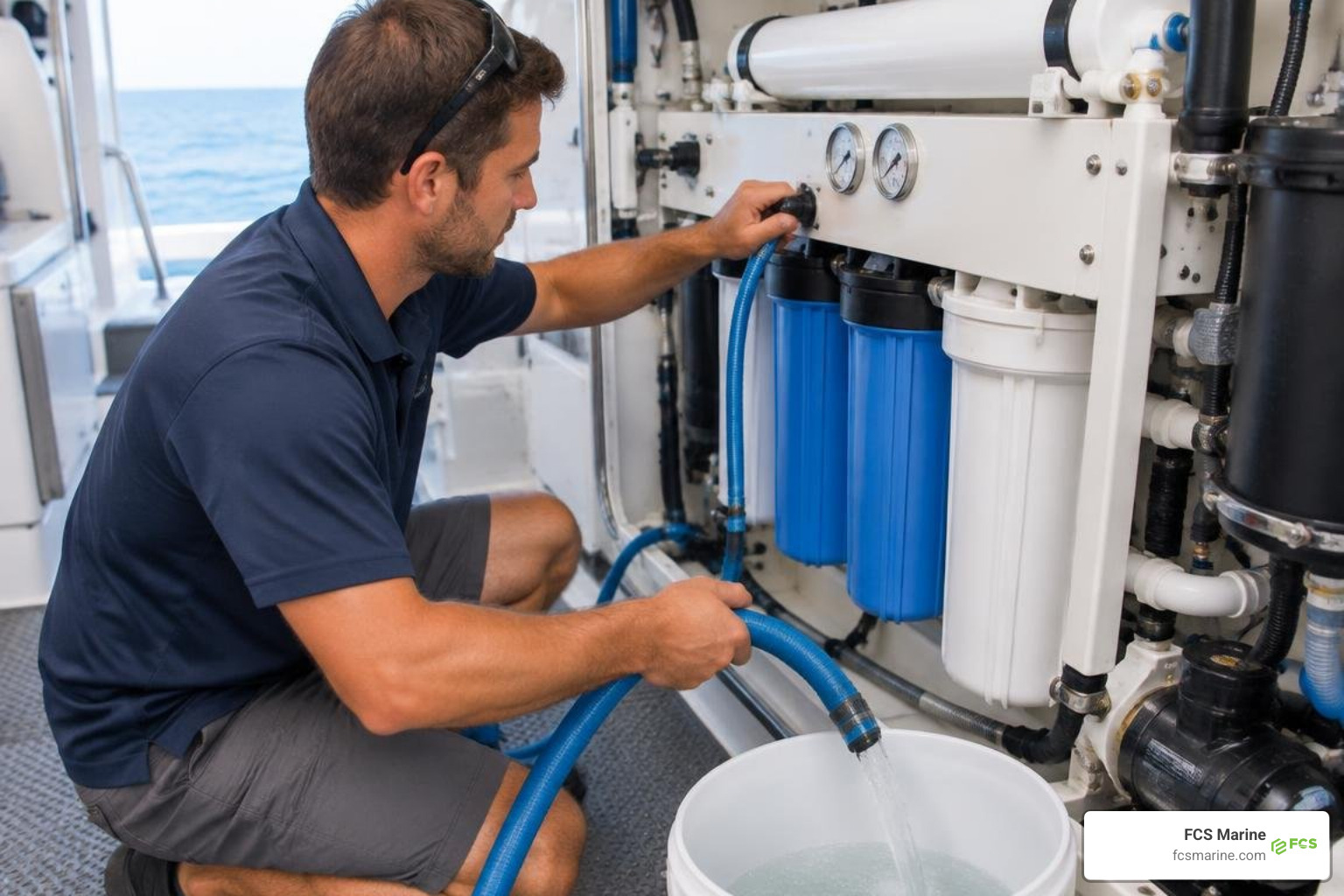
A disciplined maintenance routine protects costly membrane arrays and ensures consistent fresh water availability. Cruising vessels should establish regular service intervals based on run hours and environmental exposure. For newer crew members, reviewing our guide on demystifying the reverse osmosis water filter provides a helpful foundation on component care.
Manufacturers like Evac HEM Flow series emphasize systematic servicing to achieve long membrane lifespans and maintain high salt rejection rates.
Essential maintenance steps include:
- Automated Freshwater Flushing: After every operational cycle, flush the system with non-chlorinated fresh product water to clear raw brine and prevent salt crystallization.
- Pre-Filter Replacements: Monitor the pressure differential across pre-filter canisters. Replace 5-micron and 20-micron pleated cartridges when pressure drops exceed 0.3 bar or after 50 to 100 hours of run time.
- High-Pressure Pump Oil Changes: Change the crankcase lubricating oil in high-pressure plunger pumps after the initial 50-hour break-in period, and every 200 to 500 operating hours thereafter.
- Chemical Membrane Cleaning: When product water output decreases by 10% to 15% at normal operating pressures, perform controlled alkaline cleanings for organic fouling and mild acid cleanings for mineral scale.
- Biocide Pickling and Layup: If the watermaker will sit idle without automated freshwater flushing for more than 7 to 10 days, preserve the membranes using a food-grade sodium metabisulfite solution.
Troubleshooting Low Output in a Yacht Reverse Osmosis System
When water production drops unexpectedly, systematically evaluate these common mechanical points:
- Inspect High-Pressure Hose Lengths: High-pressure delivery hoses between the pump and membrane vessels should not exceed 1 meter. Excessively long flexible runs cause line friction and pressure drops of up to 15%.
- Check for Air Ingress and Cavitation: Loose intake clamps, cracked sea strainer bowls, or seacocks mounted too high on the hull can draw air into the low-pressure circuit, causing pump chatter and rapid pressure fluctuations.
- Evaluate Feed Water Temperature: Cold seawater increases water density and natural osmotic resistance, causing an expected reduction in hourly permeate production.
- Monitor Membrane Seal Integrity: Elevated product TDS alongside normal operating pressure typically indicates worn internal U-cup brine seals or cracked end-plug O-rings.
Why Professional Onboard Water System Service Matters in South Florida
Operating and maintaining marine systems in South Florida presents unique demands. The regional combination of high humidity, warm coastal waters, intense sun exposure, and high biological activity creates an environment where marine equipment requires attentive, professional oversight.
Watermakers rarely operate in isolation. A vessel’s desalination equipment interacts directly with its sea chest plumbing, electrical distribution panels, generator capacities, and freshwater distribution networks. Addressing watermaker problems often requires evaluating related mechanical equipment, such as balancing generator loads alongside high-demand marine air conditioning, maintaining marine refrigeration heat exchangers, or managing engine room ventilation to keep ambient temperatures within manufacturer specifications.
FCS Marine provides mobile, on-site marine service throughout South Florida, traveling directly to your vessel at marinas, private docks, and boat yards. Our technicians inspect, service, troubleshoot, and optimize watermakers and onboard systems without requiring you to move the yacht from its slip.
Frequently Asked Questions About Marine Reverse Osmosis Systems
Can a marine reverse osmosis system purify both seawater and dock water?
Standard marine watermakers are engineered specifically for high-pressure seawater desalination (operating between 55 and 62 bar). Running high-salinity seawater membranes on soft dock water can cause over-fluxing and premature membrane compaction unless the unit features automated pressure control. Dedicated dockside water purifiers operate at lower pressures to remove minerals, chlorine, and municipal contaminants, producing spotless washdown water.
How often should reverse osmosis membranes be flushed and pickled?
A reverse osmosis system should receive a fresh water flush after every operational cycle, or automatically every 7 days when sitting idle at the dock. If the vessel will remain inactive without an automated freshwater flush system for longer than 7 to 10 days, the membrane array must be chemically pickled with a preserving solution to prevent bacterial fouling and biological degradation.
What product water TDS level indicates healthy RO membrane performance?
High-performing marine RO membranes reject 99% or more of dissolved solids. With average seawater TDS around 35,000 ppm, healthy product water should consistently measure below 450 ppm TDS, with many systems delivering water between 150 and 300 ppm. If product water TDS rises above 500 ppm or trends upward alongside a drop in volume output, the membranes require chemical cleaning, seal inspection, or replacement.
Why is my high-pressure pump vibrating or making knocking noises?
High-pressure pump vibration is frequently caused by air bubbles entering the feed line, clogged 5-micron pre-filters starving the pump inlet, or worn internal ceramic plungers and check valves. Verifying that the booster pump delivers steady feed pressure without air leaks will resolve most cavitation issues.
Mobile On-Site Watermaker Care and System Support
Reliable freshwater production is essential for comfortable, safe cruising. Whether preparing for an extended crossing or addressing declining water quality at the dock, professional inspection and maintenance ensure your onboard systems perform when needed.
FCS Marine delivers mobile on-site technical support across South Florida, including Fort Lauderdale, Pompano Beach, Miami, West Palm Beach, Broward County, Palm Beach County, Miami-Dade County, Martin County, and St. Lucie County. Our team provides comprehensive evaluations across essential onboard mechanics—including professional onboard water system service, marine air conditioning repair, marine refrigeration support, yacht insulation, and mold remediation.
To schedule routine maintenance, troubleshoot watermaker output, or prepare your vessel for cruising, contact FCS Marine to have our mobile marine technicians service your yacht directly at your slip or boatyard.