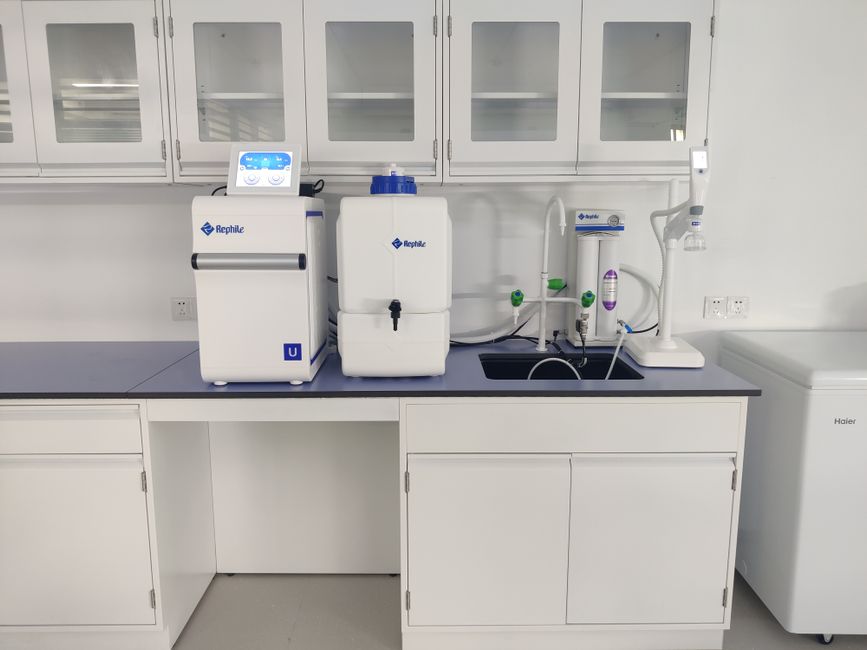
Is Your Home’s Drinking Water Actually Safe?
If you’re looking for the best reverse osmosis water filter for home use, here’s a quick answer before we dive deeper:
Top RO system types at a glance:
| System Type | Best For | Installation | Avg. Capacity |
|---|---|---|---|
| Under-sink (tankless) | Most homes | DIY-friendly | 400–1600 GPD |
| Under-sink (with tank) | Budget buyers | DIY-friendly | 50–75 GPD |
| Countertop | Renters, small spaces | No plumbing needed | 50–125 GPD |
| Whole-house | Full-home coverage | Professional required | 300–7000 GPD |
What an RO system removes: lead, arsenic, PFAS, fluoride, chlorine, nitrates, bacteria, viruses, microplastics, and many more contaminants — up to 90+ in certified systems.
Tap water in South Florida looks clean. But looks can be deceiving.
Municipal water supplies increasingly contain PFAS “forever chemicals,” microplastics, pharmaceuticals, and heavy metals — contaminants that standard pitcher filters and faucet attachments simply can’t handle. The same water quality issues that cause headaches on a yacht can follow you right into your kitchen.
A reverse osmosis system pushes water through a semipermeable membrane so fine it filters particles down to 0.0001 microns — that’s smaller than most viruses. The result is some of the cleanest drinking water you can get without buying bottled water.
And speaking of bottles — the environmental math is hard to ignore. Millions of families have already made the switch to home RO systems to cut down on single-use plastic waste, while getting better-tasting water straight from the tap.
Below, we break down the best home RO systems on the market and help you find the right fit for your needs.
How a Reverse Osmosis System Works and What It Removes
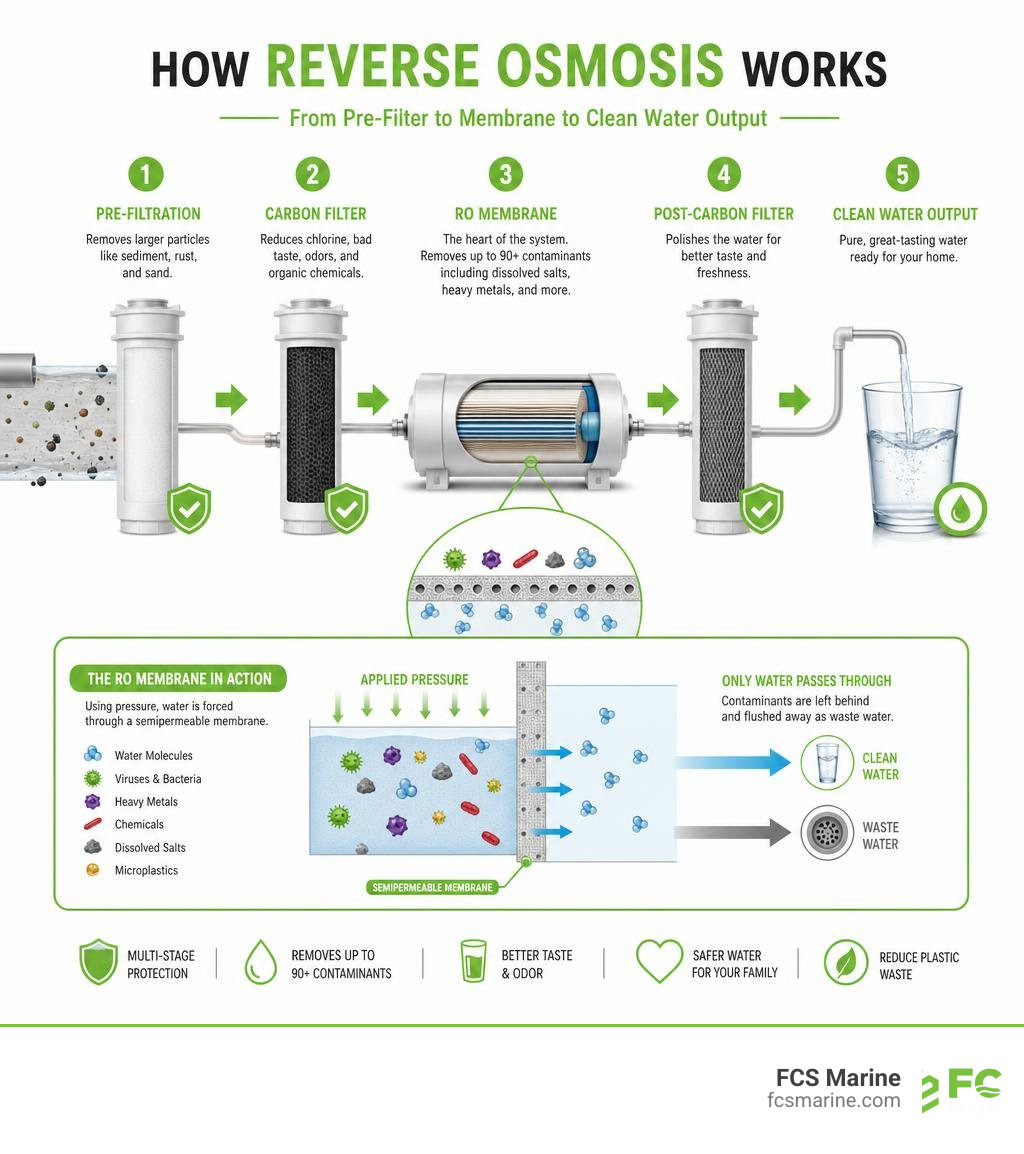
To understand why a reverse osmosis water filter for home use is so effective, it helps to look at the science. Standard filtration relies on a screen to catch larger particles. Reverse osmosis (RO) is much more sophisticated. It uses high pressure to force water through a semipermeable membrane. This membrane has pores so microscopic that only water molecules can easily pass through, leaving dissolved solids, chemicals, and heavy metals behind.
Understanding the Multi-Stage Filtration Process
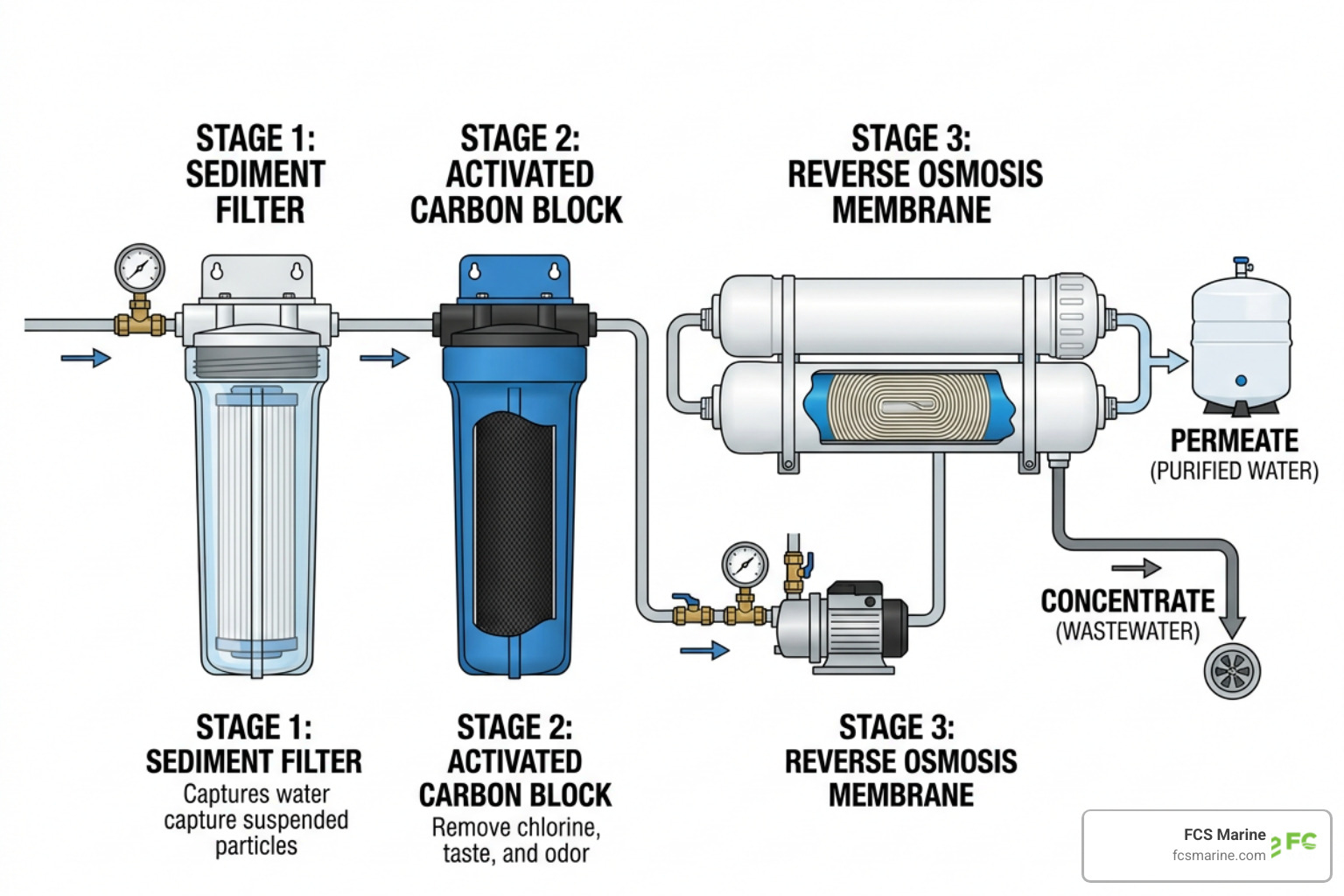
A complete home RO system does not rely on the membrane alone. Because large sediment and chlorine can damage or clog the delicate RO membrane, systems use a multi-stage process:
- Pre-Filtration (Sediment Filter): Captures larger physical particles like dirt, rust, and silt.
- Carbon Block Pre-Filter: Removes chlorine, volatile organic compounds (VOCs), and unpleasant tastes or odors.
- The Reverse Osmosis Membrane: The heart of the system, filtering out microscopic impurities down to 0.0001 microns.
- Post-Filtration (Polishing Filter): A final carbon filter that grooms the water as it leaves the storage tank to ensure a crisp, clean taste.
- Remineralization (Optional but Highly Recommended): Reintroduces healthy minerals like calcium and magnesium to balance pH levels and improve taste.
This sequence ensures a massive reduction in Total Dissolved Solids (TDS), leaving you with exceptionally pure drinking water.
Key Contaminants Targeted by RO Systems
Standard pitcher filters usually only target chlorine taste and odor. In contrast, high-quality RO systems are certified to target over 90 contaminants. This includes:
- Heavy Metals: Lead, arsenic, chromium, and mercury.
- Chemicals & Solvents: PFAS (“forever chemicals”), pesticides, herbicides, and chlorine.
- Microscopic Pollutants: Microplastics and pharmaceutical residues.
- Microbiological Threats: Bacteria, viruses, and parasites (especially important if you rely on well water in rural parts of Palm Beach or Martin County).
- Dissolved Minerals: Excess fluoride, nitrates, and salts.
For perspective, leading reverse osmosis systems are third-party certified to reduce 18 times more contaminants than the leading standard filter pitcher. Whether you are dealing with municipal water in Fort Lauderdale or well water in Loxahatchee, an RO system acts as an impenetrable barrier.
Choosing the Best Reverse Osmosis Water Filter for Home
Choosing the right system depends on your living situation, budget, and water usage. Let’s compare the three primary setups available for residential use.
| Feature | Under-Sink RO | Countertop RO | Whole-House RO |
|---|---|---|---|
| Primary Use | Drinking & cooking water | Single-point drinking water | All household taps & appliances |
| Space Required | Moderate (under kitchen cabinet) | Minimal (countertop footprint) | Large (garage, utility closet, or basement) |
| Installation | Moderate DIY (1-2 hours) | Plug-and-play (no plumbing) | Professional installation required |
| Flow Rate / Capacity | 50 to 1600 GPD | 50 to 125 GPD | 300 to 7000 GPD |
| Water Pressure Needs | Standard municipal pressure | None (uses internal pump) | Requires stable feed pressure & repressurization |
Under-Sink Reverse Osmosis Water Filter for Home Options
Under-sink systems are the most popular choice for South Florida homeowners. They provide a dedicated drinking water faucet right at your kitchen sink without cluttering your counter space.
Modern technology has split under-sink systems into two main designs:
- Traditional Tank Systems: These store purified water in a 3-to-4-gallon pressurized tank. They are highly reliable and budget-friendly, but the tank takes up valuable cabinet space. Many high-quality traditional tank systems can be configured with up to seven stages of filtration. Some advanced models even feature smart monitoring that connects directly to your phone to track water usage, filter life, and local contaminant reduction.
- Tankless Systems: These systems filter water on demand using high-output internal pumps. They save an immense amount of space and eliminate the risk of stale water sitting in a tank. The Waterdrop X Series Undersink Reverse Osmosis System, X16 is a premier tankless model, boasting an incredibly fast 1600 GPD flow rate that can fill a cup in just two seconds. Another excellent high-capacity alternative is the 800 GPD Tankless Reverse Osmosis System – Waterdrop G3P800, which features built-in UV sterilization to neutralize 99.9% of bacteria.
If you have low household water pressure, look for systems equipped with a permeate pump. The neoPure 4 Stage 25 GPD Residential Full Solution RO System, Alkaline Remineralizer, 0.5µ Post Filter and Permeate Pump – Fresh Water Systems uses a non-electric permeate pump to dramatically improve efficiency, reduce wastewater, and keep your storage tank full even with lower incoming water pressure.
If you are looking for professional plumbing integration in Broward or Palm Beach County, it is highly recommended to work with certified local technicians who can ensure your system is integrated seamlessly with your existing plumbing and meets all local building codes.
Countertop and Portable RO Systems
For renters, students, or those who travel frequently in RVs, countertop RO systems are a lifesaver. They require zero plumbing or drilling. You simply set the unit on your counter, fill the supply pitcher with tap water, and let the system filter it into a clean carafe.
While they have a smaller daily capacity (typically 50 to 125 GPD), they perform just as well as under-sink models when it comes to removing heavy metals, PFAS, and microplastics. You can find excellent portable and countertop options on Reverse Osmosis Systems – The Home Depot.
Whole-House Reverse Osmosis Water Filter for Home Systems
If you want pure, mineral-balanced water at every single tap in your home — from the kitchen sink to your master shower — a whole-house (point-of-entry) RO system is the ultimate solution.
These commercial-grade systems are especially popular for coastal Florida properties dealing with highly brackish well water or severe hard water issues. A complete whole-house system typically requires:
- A water softener or pre-filtration system to prevent hard minerals from ruining the RO membranes.
- The primary RO membrane assembly.
- An atmospheric holding tank (ranging from 165 to 500+ gallons) to store the purified water.
- A repressurization booster pump to deliver water to your home’s plumbing.
- A neutralizing/remineralization filter to raise the pH level and protect your copper pipes.
For robust whole-home systems, options like the Whole House Reverse Osmosis System | Crystal Quest – Crystal Quest Water Filters provide modular, expandable flow rates ranging from 300 to 7,000 GPD. Experienced local water treatment specialists can help design, install, and maintain these heavy-duty systems to ensure consistent water quality throughout your property.
For specialized marine applications or custom coastal watermaker designs, working with marine water purification experts ensures you get the industrial-grade durability and performance required for harsh saltwater environments.
Pros, Cons, and Environmental Impact of RO Systems
Like any home improvement investment, reverse osmosis systems come with trade-offs. Understanding these factors helps you maximize the benefits while managing the limitations.
Water Efficiency and the Pure-to-Drain Ratio
The most common criticism of reverse osmosis is that it “wastes” water. To keep the semipermeable membrane clean and prevent clogging, RO systems split the incoming water into two paths: the purified water (permeate) and the wastewater containing concentrated contaminants (concentrate/brine), which is flushed down the drain.
- Traditional Systems: Older or budget-friendly under-sink systems often have a 1:4 ratio, meaning they flush four gallons of water down the drain for every single gallon of pure water produced.
- Modern Tankless Systems: High-efficiency systems have flipped this ratio completely. Premium units like the Waterdrop X16 achieve a 3:1 pure-to-drain ratio, meaning they produce three cups of pure water for every single cup of wastewater.
- WaterSense Standards: The EPA’s WaterSense program certifies highly efficient point-of-use RO systems that generate 2.3 gallons or less of reject water per gallon of treated water. Transitioning to a WaterSense-certified system can save an average household over 3,100 gallons of water per year.
Taste, Minerals, and Alkaline Remineralization
Because reverse osmosis is incredibly thorough, it removes almost everything from your water — including beneficial minerals like calcium and magnesium.
This deep purification can sometimes lower the pH of the water, making it slightly acidic (often below 6.5 pH). Some people notice that demineralized RO water has a “flat” or slightly metallic taste.
To solve this, look for systems that include an alkaline remineralizer cartridge. This stage reintroduces precise amounts of calcium and magnesium back into the water, raising the pH to a perfectly balanced 7.5±. This gives the water a refreshing, slightly sweet taste that rivals premium bottled spring water, while ensuring it won’t corrode your home’s copper plumbing.
Key Considerations Before Buying and Maintaining Your System
Before purchasing a reverse osmosis water filter for home use, keep these practical tips in mind to ensure long-term satisfaction.
NSF/ANSI Certification Standards to Look For
Do not just take a manufacturer’s word for it. Look for systems that have been independently tested and certified by third-party organizations like the WQA (Water Quality Association) or NSF International. Key standards include:
- NSF/ANSI Standard 58: The primary certification for reverse osmosis systems, verifying their ability to reduce TDS, lead, arsenic, fluoride, and other major contaminants under pressure.
- NSF/ANSI Standard 42: Certifies the reduction of aesthetic concerns like chlorine taste and odor.
- NSF/ANSI Standard 372: Verifies that all materials used in the system’s construction are lead-free.
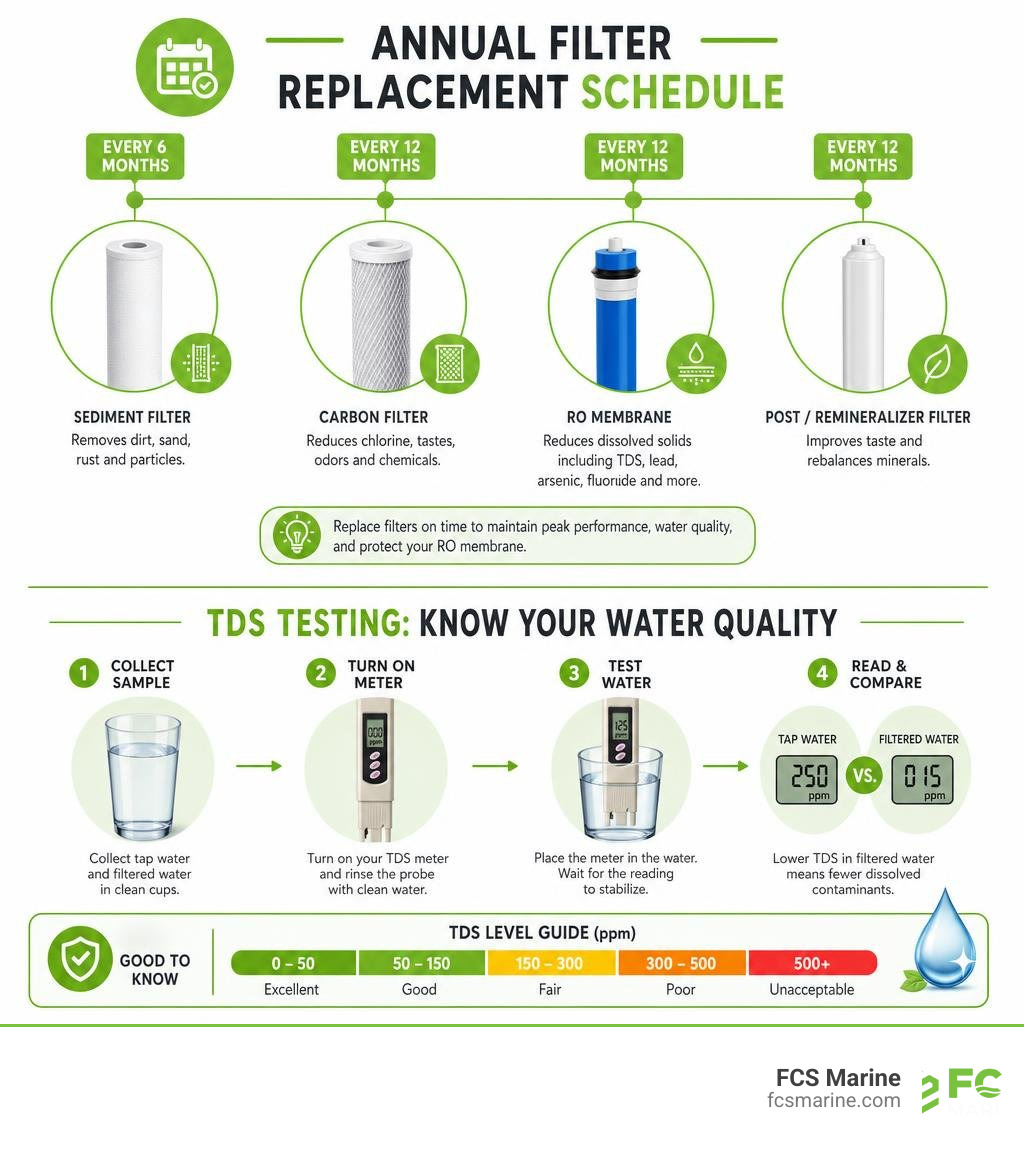
Maintenance and Filter Replacement Schedules
To keep your system running at peak performance, you must adhere to a basic maintenance schedule:
- Pre-Filters (Sediment & Carbon): Replace every 6 to 12 months to protect the main membrane.
- RO Membrane: Typically lasts 24 to 36 months depending on your daily water usage and local water hardness.
- Post-Carbon / Remineralization Filters: Replace every 12 months to maintain optimal taste and pH levels.
- System Sanitization: It is recommended to sanitize the system lines and holding tank annually during a filter swap to prevent any bacterial biofilm from forming.
Frequently Asked Questions about Home RO Systems
How much water does a home RO system waste?
While older systems could be water-intensive, modern high-efficiency RO systems waste very little. Premium tankless systems operate at up to a 3:1 pure-to-drain ratio, meaning they only send one cup of wastewater down the drain for every three cups of pure water produced. Choosing a WaterSense-labeled system or adding a non-electric permeate pump can minimize your environmental footprint even further.
Does reverse osmosis remove beneficial minerals from drinking water?
Yes, the RO membrane is non-selective, meaning it removes healthy minerals like calcium and magnesium along with harmful contaminants. However, this is easily corrected. Most top-tier home RO systems include an alkaline remineralization stage that reintroduces these essential minerals, giving you crisp, great-tasting, alkaline-balanced water.
Can I install a home reverse osmosis system myself?
Absolutely. Most modern under-sink and countertop RO systems are designed for straightforward DIY installation. Under-sink systems typically require mounting a dedicated faucet, connecting a feed water adapter to your cold-water valve, and attaching a saddle valve to your sink’s drain pipe. If you are comfortable with basic hand tools, you can easily complete the setup in under two hours. For whole-house systems, professional installation is highly recommended.
Conclusion
Installing a reverse osmosis water filter for home use is one of the single best upgrades you can make for your family’s health, your wallet, and the planet. By eliminating the need for single-use plastic bottles, you join millions of families in reducing landfill waste while enjoying pure, refreshing water straight from your kitchen tap.
At FCS Marine, we know exactly how important water quality is. Whether we are maintaining complex watermakers and purification systems on a luxury vessel or keeping marine systems running flawlessly, clean water is at the heart of what we do.
If you love spending time on the water as much as you do at home, we are here to help. We are a family-owned South Florida company specializing in premium yacht maintenance, including marine AC repair, refrigeration, insulation, mold cleaning, and marine water purification. We proudly serve Palm Beach County, Broward County, Miami-Dade County, Martin County, and St. Lucie County with fast, dockside service and a 100% satisfaction guarantee.
Ready to ensure your vessel has the same pristine water quality as your home? Learn more about our specialized Yacht Water Purification services and schedule your dockside consultation today!