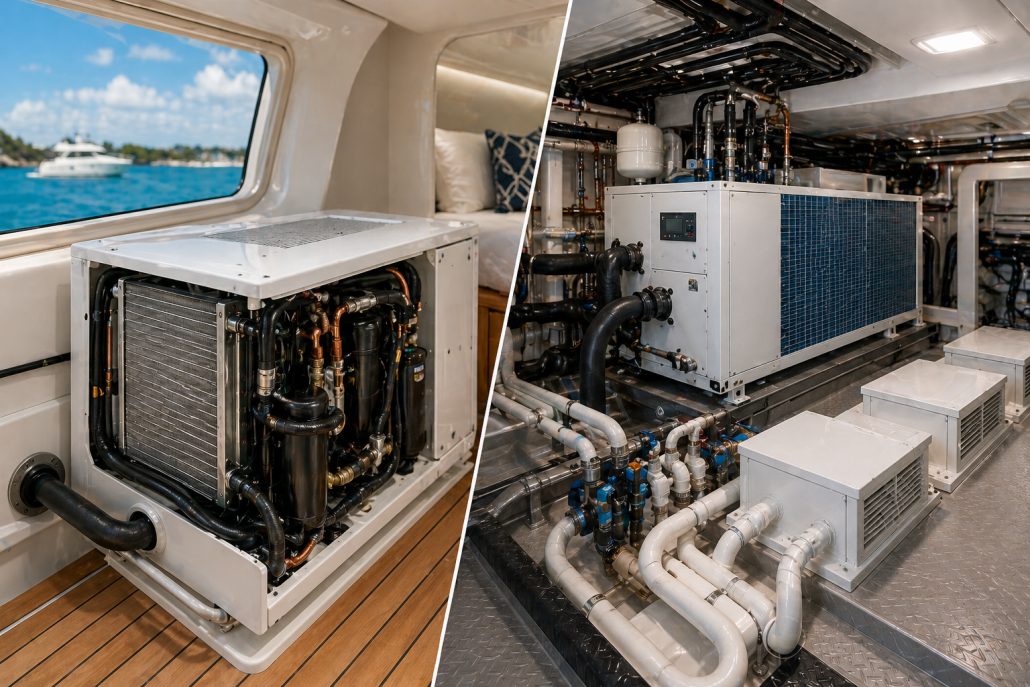
Chilled Water vs Self-Contained Marine AC Systems: Which Is Better for Your Vessel?
Choosing the right marine air conditioning system plays a major role in onboard comfort, humidity control, and long-term reliability. Many boat owners eventually face the decision between installing a self-contained marine AC unit or upgrading to a chilled water system, especially when replacing aging equipment or improving cooling performance.
Each system type is designed for different vessel layouts, usage patterns, and cooling demands. Understanding how they differ helps owners make informed upgrade decisions that support both comfort and efficiency.
This guide explains how chilled water and self-contained marine air conditioning systems work, what separates them, and how to determine which option is best for your vessel.
How Marine Air Conditioning Systems Remove Heat Onboard
Most marine air conditioning systems cool cabin spaces by transferring interior heat into seawater through a condenser heat exchanger. This seawater-cooled design allows vessels to maintain comfortable interior temperatures even in warm coastal environments like South Florida.
While both chilled water and self-contained systems use seawater for heat exchange, the way they distribute cooling throughout the vessel is very different.
What Is a Self-Contained Marine Air Conditioning System?
Self-contained systems are the most common cooling solution for small to mid-size vessels. These units combine the compressor, condenser, evaporator coil, and blower inside a single compact housing installed near the cabin space being cooled.
Because each unit operates independently, cooling zones are created by installing multiple units throughout the vessel.
Self-contained systems are often selected for:
-
center consoles and smaller yachts
-
retrofits where space is limited
-
cabins requiring independent temperature control
-
vessels without centralized mechanical rooms
Installation is generally straightforward compared with larger system designs, which makes them a practical solution for many boat owners.
What Is a Chilled Water Marine Air Conditioning System?
Chilled water systems operate differently. Instead of placing a complete AC unit inside each cabin, a central chiller produces cooled water that circulates through air handlers located throughout the vessel.
These air handlers distribute conditioned air into individual living spaces while the chiller remains installed in a dedicated mechanical compartment.
This centralized design allows chilled water systems to support consistent cooling across larger vessels with multiple cabins.
Chilled water systems are commonly used on:
-
larger yachts
-
multi-deck vessels
-
vessels with multiple climate zones
-
boats requiring quieter cabin operation
Because compressors are located away from living spaces, chilled water systems often operate more quietly than self-contained installations.
Key Differences Between the Two System Types
Although both systems rely on seawater heat exchange, their installation layouts and performance characteristics vary significantly.
Self-contained systems place individual cooling units near each cabin zone, while chilled water systems rely on a centralized chiller connected to distributed air handlers. This difference affects noise levels, maintenance access, installation complexity, and long-term scalability.
Understanding these differences helps vessel owners choose the right solution for both current needs and future upgrades.
Advantages of Self-Contained Marine AC Systems
Self-contained systems remain popular because they are efficient, compact, and easier to install.
Common advantages include:
-
simpler installation compared with centralized systems
-
lower upfront equipment cost
-
independent temperature control in each cabin
-
practical retrofit compatibility
-
reduced mechanical complexity
These systems are especially effective on vessels where cabin spaces are separated and cooling requirements are moderate rather than extensive.
For many recreational boat owners, self-contained units provide dependable cooling without requiring major system redesign.
Advantages of Chilled Water Marine AC Systems
Chilled water systems offer important benefits for larger vessels where centralized climate control improves comfort and efficiency.
Advantages typically include:
-
quieter cabin operation because compressors are installed remotely
-
improved cooling consistency across multiple cabins
-
centralized service access within a mechanical room
-
scalability for additional cooling zones
-
better airflow balance throughout the vessel
These systems are commonly preferred on yachts with multiple living areas or extended cruising plans.
Because airflow equipment is distributed separately from compressors, chilled water systems also help reduce vibration and sound levels inside sleeping spaces.
Which System Is Easier to Maintain?
Maintenance requirements differ depending on system layout.
Self-contained systems are easier to troubleshoot because each unit operates independently. If one cabin loses cooling, technicians can often diagnose the issue quickly without affecting other zones.
Chilled water systems, however, benefit from centralized service access. Instead of servicing multiple compressors throughout the vessel, technicians can inspect the primary cooling equipment in one location.
Both systems still require routine inspection of seawater circulation, refrigerant pressure, airflow components, and electrical connections to maintain reliable operation.
Which System Provides Better Cooling Performance?
Cooling performance depends less on system type and more on vessel size, layout, and installation quality.
Self-contained units perform very well on smaller vessels and single-deck layouts where airflow distances are short. Chilled water systems perform better on larger vessels where centralized distribution improves temperature consistency between cabins.
Humidity control is another important factor. Larger yachts often benefit from chilled water systems because centralized airflow improves moisture removal throughout enclosed interior spaces.
Choosing the right system ensures cabins remain comfortable even during extended cruising in South Florida’s warm coastal climate.
When a System Upgrade May Be Worth Considering
Many vessel owners consider upgrading their marine AC systems when older equipment becomes unreliable or when cooling demands increase.
Upgrade considerations often include:
-
repeated compressor repairs
-
uneven cooling between cabins
-
rising humidity inside interior spaces
-
increasing electrical load from aging equipment
-
expanding onboard living areas
Upgrading to the right system configuration helps improve comfort while reducing long-term maintenance concerns.
Professional evaluation helps determine whether replacing individual units or transitioning to a centralized system makes the most sense for your vessel.
Choosing the Right Marine AC System for South Florida Boating
South Florida vessels operate in warm water temperatures and high humidity conditions year-round. These environmental factors make proper airflow balance, seawater circulation, and equipment reliability especially important.
Both chilled water and self-contained systems can perform extremely well when installed correctly and maintained regularly. The best solution depends on vessel size, usage patterns, and interior layout rather than a single universal recommendation.
Working with experienced marine HVAC technicians helps ensure the selected system matches both your vessel configuration and cruising plans.
Planning a Marine AC Upgrade? Talk With FCS Marine
Choosing between chilled water and self-contained marine air conditioning systems depends on vessel size, cabin layout, and long-term cooling goals.
FCS Marine helps boat owners evaluate system performance, plan upgrades, and install reliable marine HVAC solutions designed for South Florida conditions.
Contact FCS Marine today to discuss the best marine air conditioning solution for your vessel.