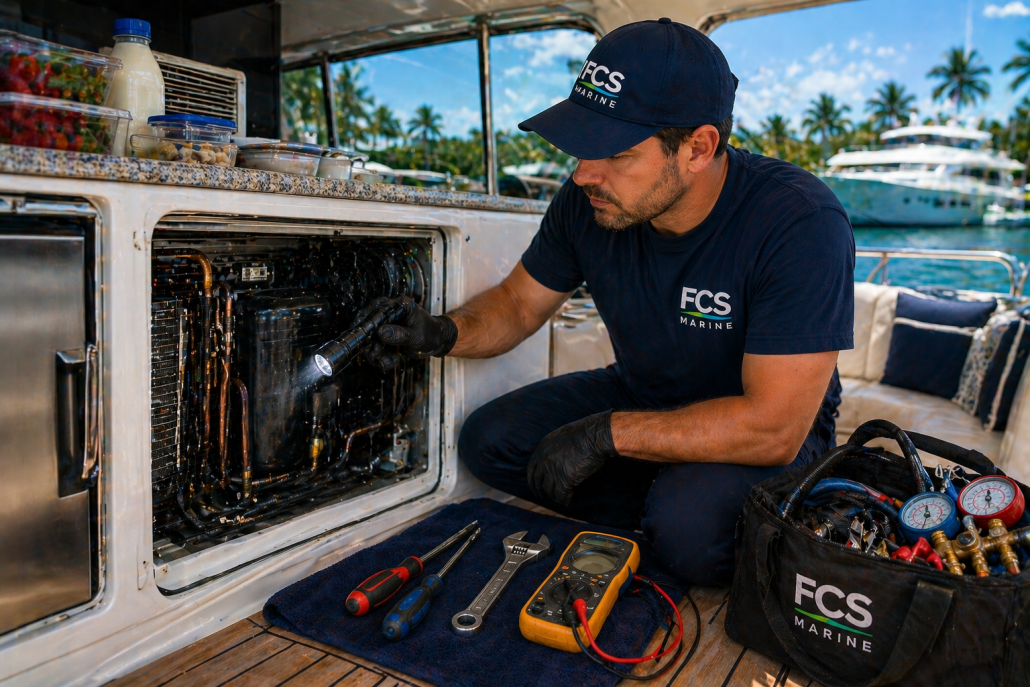
Common Causes of Marine Refrigeration Failure in South Florida
Marine refrigeration systems operate in one of the most demanding environments possible. Warm seawater temperatures, high humidity levels, and constant vibration place additional strain on onboard cooling equipment compared with residential refrigeration systems.
In South Florida, these environmental conditions can accelerate wear on compressors, circulation components, and electrical connections. Understanding the most common causes of marine refrigeration failure helps vessel owners respond quickly when cooling performance changes.
This guide explains what typically causes refrigeration problems onboard vessels operating in South Florida waters and when professional service should be scheduled.
Why Marine Refrigeration Systems Fail Faster in Coastal Environments
Marine refrigeration equipment depends on multiple systems working together at the same time. Electrical delivery, refrigerant pressure balance, airflow circulation, and seawater heat exchange must all remain stable for cooling to perform properly according to standard marine refrigeration system operating principles.
Warm coastal water temperatures increase the workload placed on condensers, while salt exposure affects wiring connections and fittings over time. Because these systems operate continuously during extended trips, even small performance issues can develop into larger failures if they are not addressed early.
Routine inspection helps reduce the likelihood of unexpected refrigeration interruptions during peak boating season.
Restricted Seawater Flow Is One of the Most Common Causes
Many marine refrigeration systems rely on seawater circulation to remove heat from the condenser. When intake strainers become partially blocked or circulation pumps begin losing efficiency, cooling performance drops quickly.
Reduced seawater flow often leads to:
-
rising refrigerator compartment temperatures
-
compressors running longer than normal
-
inconsistent cooling performance
-
system shutdowns designed to protect equipment
Warm South Florida waters encourage marine growth inside intake hoses and strainers faster than many vessel owners expect, making circulation inspection especially important throughout the year.
Refrigerant Pressure Imbalance Can Reduce Cooling Performance
Marine refrigeration systems rely on sealed refrigerant loops to maintain consistent cooling temperatures. If pressure levels fall outside the recommended operating range, cooling efficiency declines even when airflow appears normal.
Common causes include:
-
aging hose connections
-
vibration-related wear
-
corrosion at fittings
-
small refrigerant leaks developing over time
Because these systems operate under pressure, refrigerant diagnostics should always be performed by trained marine technicians.
Early pressure testing helps prevent compressor strain and protects long-term system reliability.
Compressor Wear From Continuous Operation
Unlike residential units that cycle periodically, marine refrigeration systems often operate continuously during offshore trips and extended marina stays. This constant operation increases wear on compressors, especially in warm coastal climates.
Signs that compressor performance may be declining include slower cooling response, longer operating cycles, and difficulty maintaining stable compartment temperatures.
Routine diagnostics help determine whether adjustments, component replacement, or system upgrades are recommended.
Electrical Supply Instability Can Interrupt Cooling
Electrical reliability plays an important role in refrigeration performance onboard vessels. Shore power connections, generators, breaker panels, and control systems must all deliver stable voltage for compressors to operate correctly.
Salt exposure can affect terminals and wiring connections over time. Even minor corrosion may lead to intermittent cooling interruptions or unexpected shutdowns.
Owners should schedule inspection if they notice breaker trips, delayed compressor startup, or inconsistent system response during operation.
Airflow Restrictions Inside Refrigeration Compartments
Marine refrigeration systems depend on proper airflow around evaporator assemblies to maintain stable cooling temperatures. When airflow pathways become restricted by stored items or debris buildup, cooling efficiency declines quickly.
Airflow limitations often cause:
-
uneven compartment temperatures
-
frost buildup inside refrigeration spaces
-
longer cooling cycles
-
increased compressor workload
Maintaining clear ventilation pathways helps improve refrigeration performance and reduce unnecessary equipment strain.
Condenser Heat Exchange Efficiency Drops in Warm Water Conditions
South Florida vessels operate in warmer seawater than boats in many other regions. Higher intake temperatures reduce condenser efficiency and increase the workload required to remove heat from refrigeration systems.
When condenser performance declines, refrigeration units may continue running but struggle to maintain consistent internal temperatures.
Routine inspection of seawater-cooled condensers helps ensure reliable performance during peak boating months.
Thermostat or Sensor Calibration Issues Can Affect Cooling Accuracy
Sometimes refrigeration problems originate within the control system rather than the compressor itself. Sensors that drift out of calibration may cause compartments to appear warmer or cooler than they actually are.
These issues often lead to unnecessary compressor cycling or inconsistent temperature regulation inside storage spaces.
Professional diagnostics help determine whether recalibration or component replacement is needed.
When Marine Refrigeration Failure Requires Professional Diagnostics
Although some cooling changes begin gradually, certain warning signs indicate that professional service should be scheduled quickly.
Owners should consider inspection if they notice:
-
refrigeration compartments warming unexpectedly
-
compressors running continuously
-
frost buildup forming inside storage areas
-
reduced cooling consistency during trips
-
breaker interruptions during operation
If your system is no longer maintaining stable temperature, professional diagnostics can identify the cause quickly. Learn more about available support on the
Schedule Marine Refrigeration Diagnostics With FCS Marine
Marine refrigeration systems operating in South Florida waters benefit from routine inspection and early troubleshooting when cooling performance changes.
FCS Marine provides dockside marine refrigeration diagnostics and repair throughout Fort Lauderdale, Palm Beach, and surrounding South Florida marinas.
Contact FCS Marine today to schedule professional marine refrigeration service and restore reliable cooling onboard your vessel.