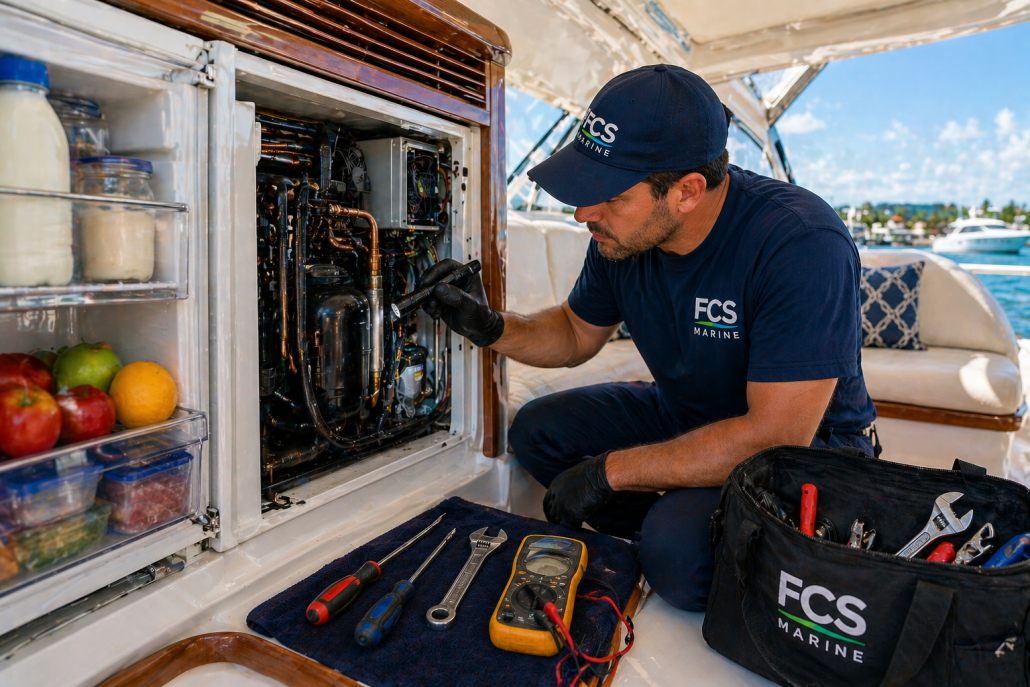
Emergency Marine Refrigeration Repair: What to Do When Cooling Stops Offshore
Marine refrigeration systems are critical for storing food, protecting provisions, and supporting safe offshore travel. When cooling suddenly stops, the situation can quickly become urgent—especially during extended trips or before departure from the marina.
Knowing what to check first and when to call a marine refrigeration technician can help prevent spoilage, protect onboard systems, and restore reliable operation as quickly as possible.
This guide explains what vessel owners should do when marine refrigeration stops working and when professional dockside service is recommended.
Why Marine Refrigeration Failures Require Immediate Attention
Unlike residential refrigeration systems, marine units operate in environments exposed to vibration, salt air, humidity, and seawater-cooled condensers. These conditions increase the likelihood of performance issues if maintenance is delayed.
When cooling stops unexpectedly, common risks include:
-
food spoilage during offshore travel
-
freezer thawing during multi-day trips
-
increased compressor strain from repeated restart attempts
-
moisture buildup inside storage compartments
-
disruption to charter or cruising schedules
Responding quickly helps reduce both inconvenience and repair complexity.
First Steps to Take When Marine Refrigeration Stops Cooling
Before assuming a major system failure has occurred, there are several quick checks vessel owners can safely perform.
Start by confirming that shore power or generator supply is operating normally. Many refrigeration interruptions are related to electrical delivery rather than compressor failure. Breaker panels should also be checked to ensure circuits have not tripped during operation.
Next, inspect airflow around refrigeration compartments. Blocked ventilation areas can reduce cooling efficiency and cause temperature rise inside storage spaces.
If the system continues running but does not cool properly, the issue may involve refrigerant pressure imbalance, seawater circulation restriction, or thermostat control concerns.
Check Seawater Circulation on Water-Cooled Systems
Many marine refrigeration systems rely on seawater circulation to remove heat through condenser heat exchangers using a seawater-cooled condenser heat exchange process. If seawater flow becomes restricted, cooling performance can drop quickly.
Signs of circulation problems often include reduced discharge flow, rising compartment temperatures, or compressors running continuously without reaching target temperatures.
Warm South Florida waters can accelerate marine growth inside intake strainers and hoses, making circulation inspection especially important during summer months.
Warning Signs That Indicate an Urgent Refrigeration Issue
Some symptoms suggest the system requires professional service immediately rather than routine troubleshooting.
Owners should schedule emergency inspection if they notice:
-
refrigerator or freezer temperature rising rapidly
-
compressor running continuously without cooling
-
frost buildup forming unexpectedly inside compartments
-
unusual vibration or mechanical noise
-
repeated breaker trips during operation
-
system alarms or control panel warnings
Addressing these warning signs early helps prevent larger component damage.
Why Compressors Should Not Be Restarted Repeatedly
When refrigeration systems stop cooling, repeatedly restarting compressors can sometimes make the situation worse. If refrigerant pressure is already outside the recommended operating range, restart attempts may increase internal strain on system components.
Allowing technicians to evaluate compressor performance safely helps prevent additional mechanical wear.
Professional diagnostics identify whether cooling loss is related to airflow restriction, electrical delivery concerns, refrigerant imbalance, or condenser performance issues.
Dockside Marine Refrigeration Service Allows Faster Repairs
One advantage of marine refrigeration systems is that many problems can be diagnosed directly at the vessel’s location. Dockside service allows technicians to inspect the system under real operating conditions without requiring relocation to a repair facility.
During emergency service visits, technicians typically evaluate:
-
electrical supply stability
-
seawater circulation performance
-
refrigerant pressure levels
-
evaporator airflow condition
-
condenser heat exchange efficiency
These inspections help identify the root cause quickly and restore cooling performance as efficiently as possible.
If your system is no longer holding temperature, professional diagnostics are often the fastest solution. Learn more about available support on the
Preventing Food Loss During a Refrigeration Emergency
While waiting for service, vessel owners can take simple steps to protect stored provisions. Keeping refrigerator doors closed as much as possible helps maintain internal temperature longer. Moving critical items into insulated storage containers can also help reduce spoilage risk.
If freezer compartments are affected, limiting door openings is especially important to preserve cold air inside the storage space.
These temporary steps help maintain safe storage conditions until technicians arrive.
When Emergency Marine Refrigeration Service Should Be Scheduled
Emergency inspection is recommended whenever cooling stops completely or compartment temperatures begin rising quickly. Systems that continue running without reaching target temperature also require prompt evaluation.
Other signs that indicate immediate service is needed include persistent frost buildup, unusual compressor noise, or electrical interruptions during operation.
Early diagnostics help prevent more extensive repairs later and restore reliable cooling performance faster.
Schedule Emergency Marine Refrigeration Repair With FCS Marine
When refrigeration stops working onboard, fast diagnostics can help protect provisions, restore system reliability, and prevent additional component damage.
FCS Marine provides dockside marine refrigeration diagnostics and repair throughout Fort Lauderdale, Palm Beach, and surrounding South Florida marinas.
Contact FCS Marine today to schedule emergency marine refrigeration repair and restore dependable cooling onboard your vessel.