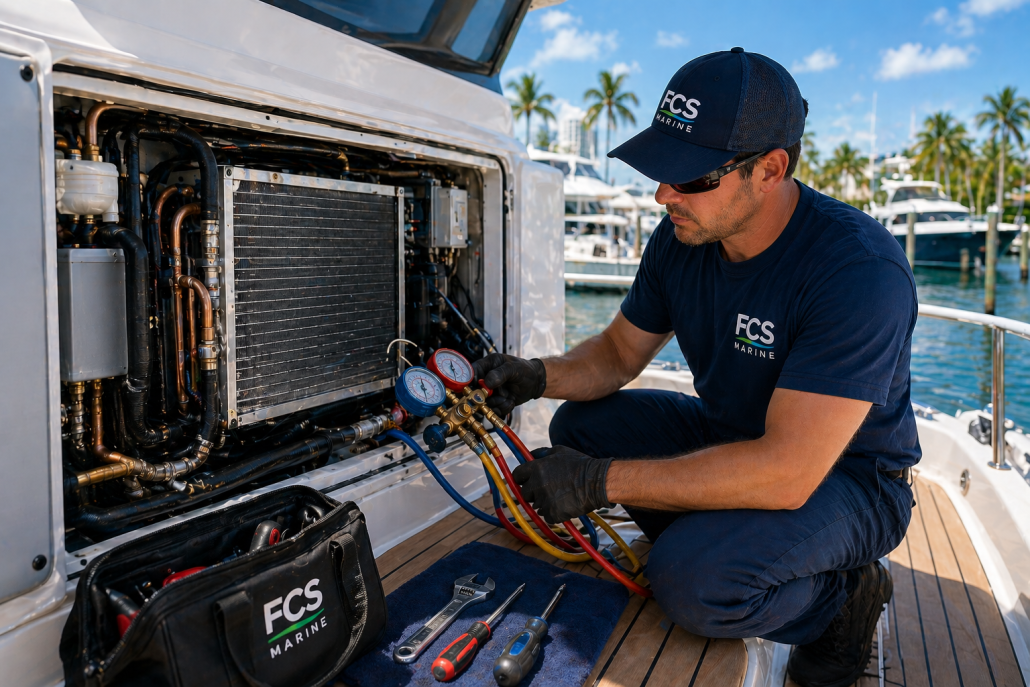
How Marine AC Service Works in South Florida (What Boat Owners Should Expect)
Marine air conditioning systems are essential for maintaining comfort onboard vessels operating in South Florida’s warm coastal climate. When cooling performance drops or airflow becomes inconsistent, dockside service allows technicians to inspect and repair the system directly at your marina without requiring vessel relocation.
Understanding how dockside marine AC service works helps vessel owners prepare for maintenance visits and respond quickly when cooling issues develop.
This guide explains what to expect during dockside marine air conditioning service and when scheduling professional inspection is recommended.
Why Dockside Marine AC Service Is the Preferred Option for Many Boat Owners
Unlike residential HVAC equipment, marine air conditioning systems are installed inside compact mechanical compartments and connected to seawater circulation components unique to vessel operation.
Dockside service allows technicians to evaluate these systems in their operating environment while maintaining access to:
-
seawater intake fittings
-
circulation pumps
-
electrical supply connections
-
evaporator assemblies
-
condenser heat exchangers
Because the system is inspected under real operating conditions, technicians can identify airflow restrictions and circulation problems more accurately.
For many vessel owners, dockside service reduces downtime and avoids the need for unnecessary transport to a repair facility.
What Happens During a Dockside Marine AC Inspection
Professional dockside service begins with a system performance evaluation. Technicians inspect airflow strength, seawater discharge levels, thermostat response, and cooling consistency across cabin zones.
This initial inspection helps determine whether the issue involves airflow restriction, refrigerant pressure imbalance, seawater circulation limitations, or electrical supply concerns.
Once the inspection is complete, technicians continue with component-level diagnostics tailored to the vessel’s system configuration.
Seawater Circulation Testing Is One of the First Steps
Marine air conditioning systems depend on steady seawater flow to remove heat from the condenser. Reduced circulation is one of the most common causes of cooling performance problems in South Florida waters.
During dockside service, technicians typically evaluate:
-
seawater strainer condition
-
intake hose flow
-
circulation pump operation
-
discharge outlet strength
Maintaining steady circulation helps prevent overheating conditions and protects compressor performance.
Airflow Performance Is Checked Throughout the Cabin
After circulation testing, technicians inspect airflow distribution inside the vessel. Uneven airflow often indicates evaporator coil buildup, duct pathway obstruction, or thermostat calibration concerns.
Balanced airflow ensures cooling performance remains consistent between sleeping areas, helm stations, and shared living spaces.
Restoring airflow efficiency often improves cabin comfort immediately after service.
Refrigerant Pressure Testing Helps Identify Cooling Loss
If airflow and seawater circulation appear normal but cooling performance remains weak, technicians evaluate refrigerant pressure levels.
Pressure testing helps identify:
-
small system leaks
-
aging hose connections
-
vibration-related fitting wear
-
compressor efficiency concerns
Early refrigerant diagnostics help prevent larger failures later.
Because marine HVAC systems operate under pressure, these inspections require specialized equipment and trained technicians.
Electrical System Checks Support Reliable Operation
Electrical supply stability plays an important role in marine air conditioning performance. Shore power connections, breaker panels, generators, and thermostat control systems are inspected during dockside service visits.
Electrical inspections typically focus on:
-
wiring condition
-
terminal corrosion
-
voltage delivery consistency
-
control panel response
Boat owners interested in learning more about onboard maintenance practices that support system reliability.
Routine inspection helps reduce the likelihood of unexpected shutdowns during operation.
Cleaning May Be Recommended During Dockside Service
If technicians identify airflow restrictions inside the system, professional cleaning may be recommended during the service visit.
Cleaning often includes:
-
evaporator coil inspection
-
condenser heat exchanger flushing
-
seawater strainer cleaning
-
duct airflow pathway evaluation
These steps help restore cooling performance and improve humidity control inside cabin spaces.
Routine cleaning also helps extend compressor lifespan.
When Dockside Marine AC Service Should Be Scheduled
Dockside inspection is recommended whenever cooling performance changes or airflow conditions become inconsistent inside the vessel.
Owners should consider scheduling service if they notice:
-
reduced cooling output
-
weak seawater discharge
-
rising cabin humidity levels
-
unusual operating sounds
-
uneven cabin temperatures
Early diagnostics help prevent larger repairs later and support reliable system performance throughout the boating season.
Why Routine Dockside Service Supports Long-Term System Reliability
Marine HVAC systems operate in environments exposed to salt air, vibration, and warm seawater conditions year-round. These factors increase wear compared with land-based air conditioning equipment.
Routine dockside inspection helps technicians identify developing issues before they affect cooling performance or cabin comfort.
Preventative service also helps reduce the likelihood of unexpected downtime during peak cruising months.
Schedule Dockside Marine AC Service With FCS Marine
Dockside service allows marine air conditioning systems to be inspected, cleaned, and repaired without relocating your vessel.
FCS Marine provides dockside marine AC diagnostics, maintenance, cleaning, and repair throughout Fort Lauderdale, Palm Beach, and surrounding South Florida marinas.
Contact FCS Marine today to schedule dockside marine air conditioning service for your vessel.