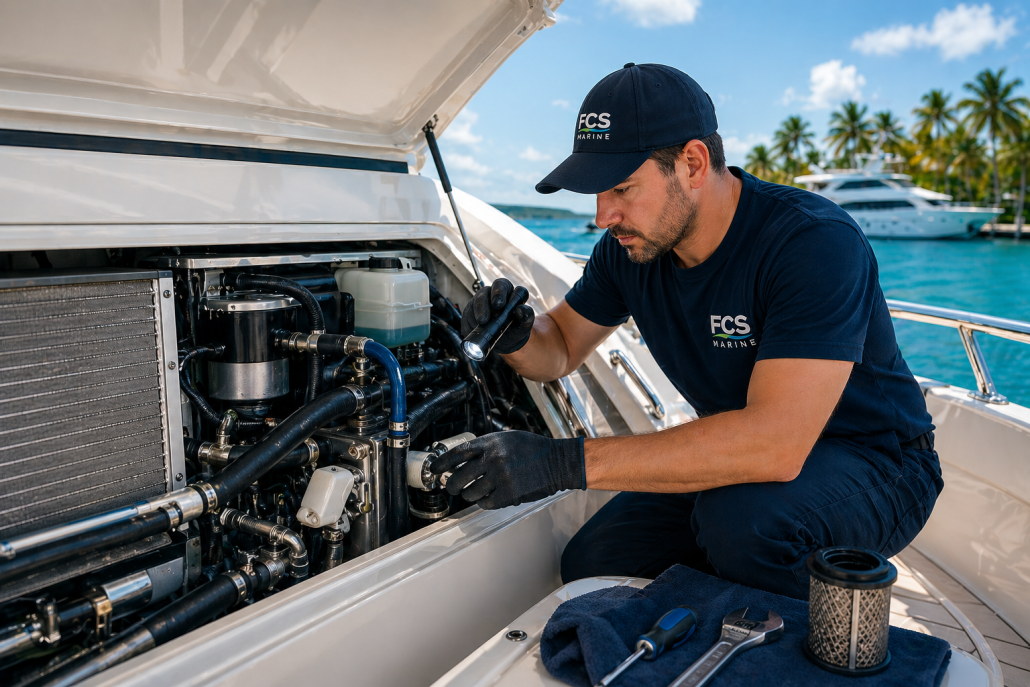
Marine Air Conditioning Maintenance Checklist for Yacht Owners (2026 Guide)
Marine air conditioning systems play an essential role in onboard comfort, humidity control, and equipment protection—especially in South Florida’s warm coastal environment. When properly maintained, these systems operate efficiently throughout the boating season. When maintenance is delayed, however, cooling performance can decline quickly and small issues may develop into expensive repairs.
Routine inspection helps protect compressors, circulation pumps, electrical components, and airflow systems while reducing unexpected downtime.
This guide explains what yacht owners should include in a marine air conditioning maintenance routine and when professional service is recommended.
Why Marine AC Maintenance Matters More in South Florida
Marine HVAC systems operate in one of the most demanding environments possible. Salt exposure, warm seawater temperatures, humidity, and vibration all accelerate wear compared with land-based air conditioning systems.
Because most marine AC systems depend on seawater circulation to remove cabin heat, even minor restrictions inside intake lines or strainers can reduce cooling performance quickly. Manufacturer guidance on marine climate-control systems explains how these seawater-cooled units support reliable onboard comfort when properly maintained:
Preventative maintenance helps ensure systems continue operating efficiently throughout extended cruising periods.
How Marine Air Conditioning Systems Operate
Most marine air conditioning systems transfer heat from inside the vessel into seawater using a condenser heat exchanger. This cooling cycle depends on four key elements working together:
-
steady seawater circulation
-
proper refrigerant pressure
-
unrestricted airflow
-
stable electrical supply
If any of these conditions change, cooling performance declines.
Understanding how these systems function makes it easier to recognize early warning signs before they become service interruptions.
Monthly Marine AC Maintenance Checks Yacht Owners Can Perform
Basic monthly inspections help identify developing problems early. These simple observations require no special tools and can help vessel owners recognize when service should be scheduled.
Recommended monthly checks include:
-
confirming strong seawater discharge from the outlet port
-
inspecting the seawater strainer for debris buildup
-
checking airflow strength from cabin vents
-
verifying thermostat response and temperature accuracy
-
listening for unusual vibration or operating noise
Reduced discharge flow is often the earliest indicator of restricted circulation inside the cooling system.
Seasonal Maintenance Tasks That Protect Cooling Performance
At the beginning of each boating season, marine HVAC systems benefit from a more detailed inspection routine. Seasonal servicing improves reliability during periods of heavy system use and helps prevent unexpected shutdowns during peak cruising months.
Typical seasonal maintenance includes inspection of seawater intake fittings, circulation pump operation, evaporator coil condition, condenser efficiency, refrigerant pressure levels, and electrical terminal corrosion.
Routine seasonal servicing protects both cooling performance and long-term equipment lifespan.
Why Seawater Circulation Requires Special Attention
Marine air conditioning systems rely heavily on seawater flow to remove heat from inside the cabin. Even small restrictions inside intake hoses or strainers can affect performance quickly.
Warm South Florida waters encourage marine growth inside cooling lines faster than many vessel owners expect. When discharge flow weakens, the condenser cannot release heat efficiently and the system may shut down automatically to protect internal components.
Regular inspection of seawater circulation components helps maintain reliable cooling performance throughout the boating season.
Evaporator and Condenser Coil Cleaning Improves Airflow
Evaporator coils inside the air handler and condenser heat exchangers outside the cabin both play essential roles in maintaining cooling performance. Over time, salt particles and airborne debris accumulate on coil surfaces and restrict airflow.
This often leads to longer cooling cycles and uneven temperature distribution between cabins.
Professional coil cleaning restores airflow balance and helps reduce compressor workload while improving humidity control throughout the vessel interior.
Refrigerant Pressure Testing Helps Prevent Cooling Loss
Marine air conditioning systems rely on sealed refrigerant loops to maintain cooling performance. If pressure levels fall outside the recommended operating range, cooling output decreases even when airflow appears normal.
Refrigerant pressure testing helps identify small leaks before they become larger system failures. Because marine HVAC systems operate under pressure, this inspection should always be handled by trained technicians.
Early detection helps protect compressors from unnecessary strain and extends system lifespan.
Electrical Connection Inspection Improves Reliability
Electrical stability plays a major role in marine air conditioning performance. Shore power connections, onboard generators, breaker panels, and thermostat control systems must all operate consistently for proper cooling.
Salt exposure can affect wiring terminals over time and lead to intermittent system behavior. Routine inspection helps reduce the risk of unexpected shutdowns during operation.
Boat owners interested in learning more about onboard maintenance practices that support system reliability can review BoatUS Foundation guidance.
Heat Exchanger Flushing Maintains Cooling Efficiency
Marine heat exchangers transfer cabin heat into seawater through narrow internal passages. Over time, mineral deposits and biological growth can restrict these pathways and reduce cooling performance.
Signs that flushing may be needed include reduced cooling output even when airflow remains strong and seawater discharge appears normal.
Routine flushing helps maintain efficient heat transfer across the system and prevents overheating conditions during extended operation.
Signs Your Marine AC System Needs Professional Maintenance
Even with regular owner inspections, some maintenance tasks require specialized tools and diagnostic equipment.
Professional service is recommended if you notice:
-
weaker airflow from vents
-
rising cabin humidity levels
-
inconsistent cooling between cabins
-
unusual operating noise
-
reduced seawater discharge
-
frequent system cycling on and off
Addressing these symptoms early helps prevent larger repairs later.
How Often Yacht Owners Should Schedule Marine AC Service
Most vessels operating in South Florida benefit from annual marine air conditioning service. Boats used year-round or frequently during warmer months often benefit from additional mid-season inspections.
Preventative maintenance schedules help extend system lifespan, protect onboard electronics, and reduce unexpected downtime during peak boating periods.
Routine inspection also supports better humidity control inside enclosed cabin spaces.
Schedule Preventative Marine AC Maintenance With FCS Marine
Routine maintenance helps reduce unexpected breakdowns and keeps marine air conditioning systems operating efficiently throughout the boating season.
FCS Marine provides dockside marine AC inspections, seawater circulation checks, coil cleaning, refrigerant diagnostics, and electrical system evaluations designed specifically for South Florida vessels.
Contact FCS Marine today to schedule preventative marine air conditioning maintenance for your vessel.