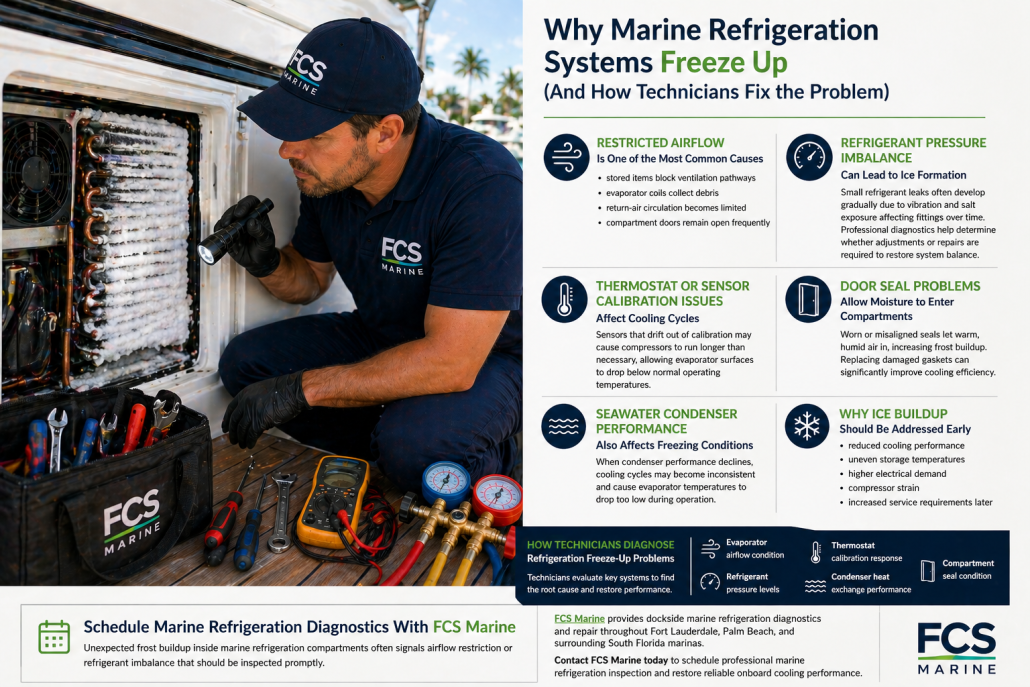
Why Marine Refrigeration Systems Freeze Up (And How Technicians Fix the Problem)
Marine refrigeration systems are designed to maintain stable temperatures even in warm coastal environments. When frost begins forming unexpectedly inside refrigeration compartments or evaporator assemblies, however, it often signals that airflow or refrigerant balance inside the system has changed.
Although light frost can sometimes appear during normal operation, excessive ice buildup usually indicates a condition that requires inspection. Addressing the cause early helps prevent cooling loss, compressor strain, and food storage problems during offshore travel.
This guide explains why marine refrigeration systems freeze up and how technicians restore proper cooling performance.
Why Frost Buildup Happens Inside Marine Refrigeration Systems
Marine refrigeration systems remove heat and moisture from enclosed compartments through evaporator coils. When airflow becomes restricted or refrigerant pressure shifts outside the recommended range, moisture can accumulate and freeze along coil surfaces.
Over time, this ice buildup reduces cooling efficiency and blocks airflow circulation inside the compartment.
If frost continues to increase, the system may struggle to maintain stable temperatures even while running continuously.
Restricted Airflow Is One of the Most Common Causes
Proper airflow allows refrigeration systems to circulate cooled air evenly throughout storage compartments. When airflow becomes restricted, moisture collects along evaporator surfaces and freezes into visible frost.
Airflow restrictions often develop when:
-
stored items block ventilation pathways
-
evaporator coils collect debris
-
return-air circulation becomes limited
-
compartment doors remain open frequently
Restoring airflow balance is one of the first steps technicians take during diagnostics.
Refrigerant Pressure Imbalance Can Lead to Ice Formation
Marine refrigeration systems rely on stable refrigerant pressure to maintain consistent cooling performance. When pressure levels drop below recommended operating conditions, evaporator coils may become colder than expected and allow moisture to freeze along their surfaces.
Small refrigerant leaks often develop gradually due to vibration and salt exposure affecting fittings over time. Although cooling performance may appear normal at first, frost buildup inside compartments is often an early warning sign that pressure testing is needed.
Professional diagnostics help determine whether adjustments or repairs are required to restore system balance.
Thermostat or Sensor Calibration Issues Affect Cooling Cycles
Temperature sensors control how long refrigeration compressors run during operation. When sensors drift out of calibration, compressors may continue running longer than necessary, allowing evaporator surfaces to drop below normal operating temperatures.
This condition can increase frost formation even when airflow remains unrestricted.
Technicians evaluate sensor response during inspection to determine whether recalibration or replacement is needed.
Door Seal Problems Allow Moisture to Enter Compartments
Refrigeration door gaskets help maintain stable internal airflow conditions by preventing warm, humid air from entering storage compartments. When seals become worn or misaligned, additional moisture enters the compartment and increases frost buildup inside the evaporator area.
Inspecting door seals is often one of the simplest steps technicians take during troubleshooting.
Replacing damaged gaskets can significantly improve cooling efficiency.
Seawater Condenser Performance Also Affects Freezing Conditions
Many marine refrigeration systems rely on seawater-cooled condensers to remove heat efficiently. When condenser performance declines, cooling cycles may become inconsistent and cause evaporator temperatures to drop too low during operation.
Warm South Florida waters can also influence condenser efficiency if circulation pathways become partially restricted.
Why Ice Buildup Should Be Addressed Early
Although frost buildup may appear minor at first, ignoring the issue can reduce airflow inside compartments and force compressors to run longer than necessary.
Over time, this can lead to:
-
reduced cooling performance
-
uneven storage temperatures
-
higher electrical demand
-
compressor strain
-
increased service requirements later
Early inspection helps restore proper airflow and refrigerant balance before more complex repairs become necessary.
How Technicians Diagnose Refrigeration Freeze-Up Problems
Professional refrigeration diagnostics focus on identifying whether ice formation is caused by airflow restriction, refrigerant imbalance, sensor response issues, or condenser performance limitations.
During inspection, technicians typically evaluate:
-
evaporator airflow condition
-
refrigerant pressure levels
-
thermostat calibration response
-
condenser heat exchange performance
-
compartment seal condition
These checks help determine the fastest and most reliable solution.
If frost buildup is affecting temperature stability inside your storage compartments, professional diagnostics can identify the cause quickly.
Schedule Marine Refrigeration Diagnostics With FCS Marine
Unexpected frost buildup inside marine refrigeration compartments often signals airflow restriction or refrigerant imbalance that should be inspected promptly.
FCS Marine provides dockside marine refrigeration diagnostics and repair throughout Fort Lauderdale, Palm Beach, and surrounding South Florida marinas.
Contact FCS Marine today to schedule professional marine refrigeration inspection and restore reliable onboard cooling performance.