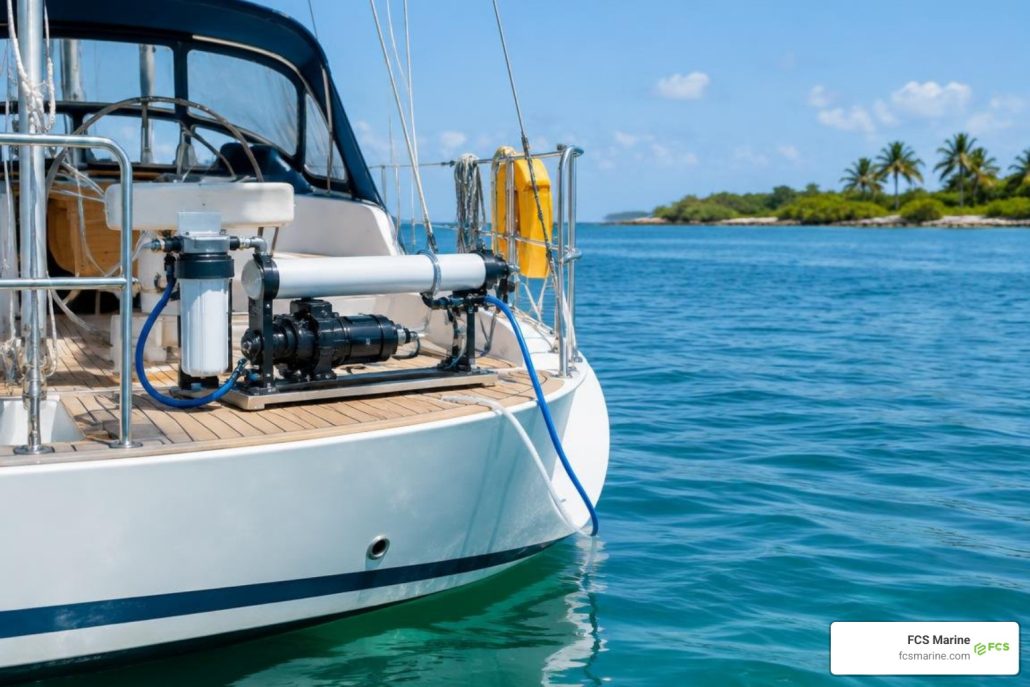
Choosing a 12 Volt Marine Water Maker for Your Boat
A 12 volt marine water maker is a good fit for a cruising sailboat that relies on batteries and solar. It runs on the boat’s DC system without an inverter. To choose one, estimate how much water your crew uses each day, then compare each model’s output and energy use in watt-hours per gallon. Check that your battery bank can handle the run time and your solar array can replace the power used.
In South Florida, warm seawater and long days at anchor make intake placement, filtration, and routine flushing worth planning before installation. FCS Marine helps owners address these needs through onboard water system service at the vessel.
Power and Efficiency Comparison for 12 Volt Marine Water Makers
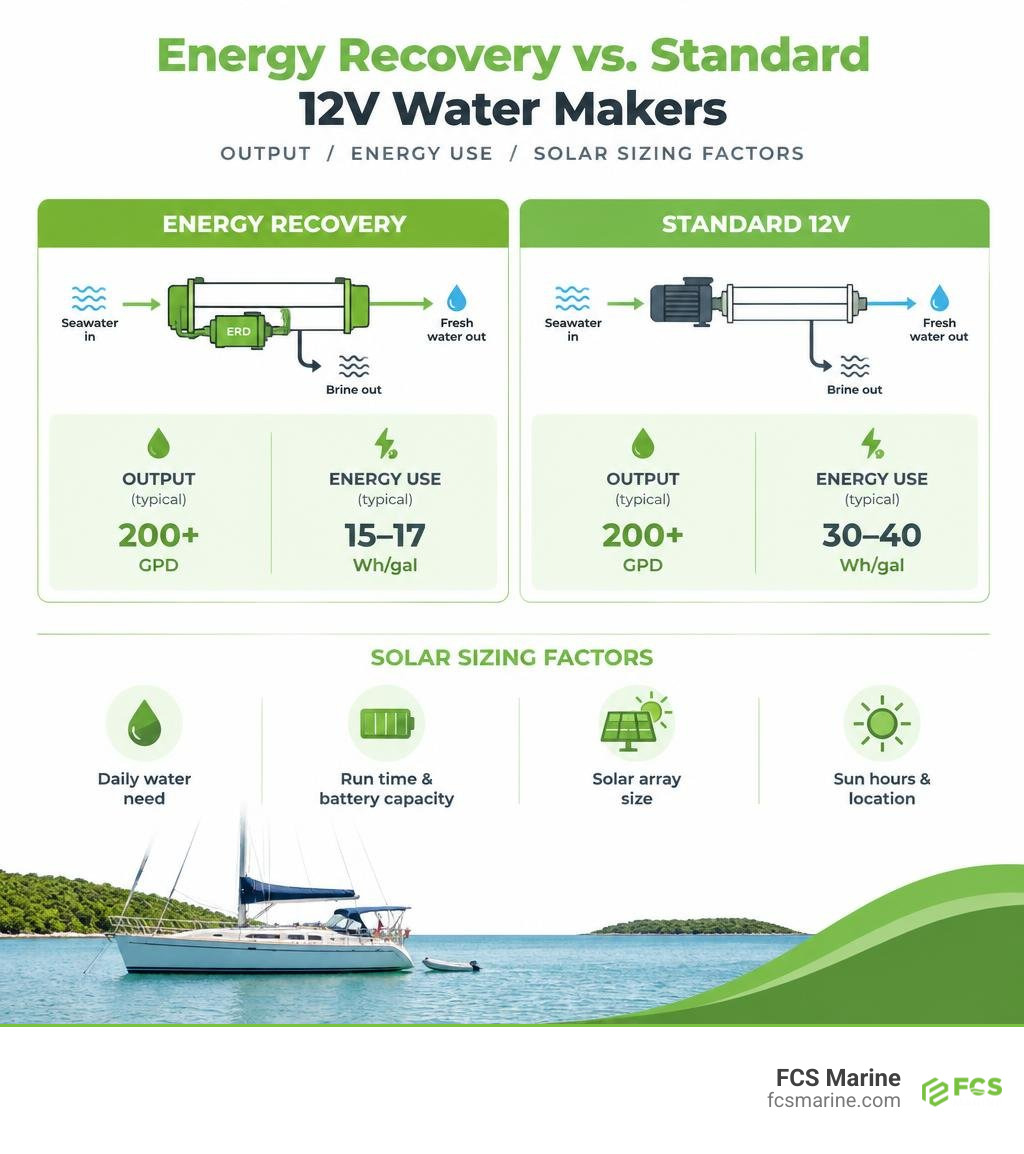
When evaluating 12 volt marine water makers, power consumption is best measured in watt-hours per gallon (Wh/gal) or watt-hours per liter (Wh/L). Relying solely on raw amperage can be deceptive because a unit drawing higher amps might complete its cycle in a fraction of the time, resulting in lower total energy consumption. Modern direct-current desalination systems fall primarily into two engineering categories: systems equipped with energy recovery devices (ERDs) and conventional high-pressure direct-drive setups.
An energy recovery watermaker uses the energy in the rejected brine stream to help pressurize incoming raw seawater. By recycling this hydraulic energy through an intensifying pump mechanism, these units cut the mechanical workload of the electric motor significantly. As a result, energy-recovery 12V systems consume roughly 15 to 17 Wh per gallon. In contrast, standard DC units without energy recovery push seawater against high-pressure reverse osmosis membranes (typically 800 psi in full seawater) using raw motor force, consuming 30 to 40 Wh per gallon.
For vessels equipped with diesel generators, larger 120V or 230V AC units deliver higher flow rates (20 to 32 gallons per hour) while drawing around 1,100 watts (~33 Wh/gal). However, for cruisers aiming to eliminate generator run-time, DC units integrated with marine water purification systems provide reliable freshwater directly from house batteries.
| Watermaker Category | Typical Hourly Output | Power Draw | Energy Efficiency | Primary Power Source |
|---|---|---|---|---|
| 12V DC with Energy Recovery | 9 – 16 GPH (35 – 60 L/h) | 100W – 240W (8 – 20A @ 12V) | 15 – 17 Wh/gal | Solar array & 12V house battery bank |
| Standard 12V DC (Non-Recovery) | 8 – 40 GPH (30 – 150 L/h) | 250W – 1000W (20 – 80A @ 12V) | 30 – 40 Wh/gal | High-output solar, alternator, or battery |
| 230V / 120V AC Modular System | 20 – 32 GPH (75 – 120 L/h) | 1,100W (4.8A @ 230V) | ~33 Wh/gal | Marine diesel generator or high-capacity inverter |
| 12V DC Portable Unit | 2.6 – 5.3 GPH (10 – 20 L/h) | 200W – 220W (16 – 18A @ 12V) | 38 – 42 Wh/gal | Direct battery connection / auxiliary solar |
Sizing Battery Banks and Solar for 12 Volt Marine Water Makers
Running a watermaker strictly on renewable energy requires balancing daily production needs against usable battery capacity and average solar harvest. A cruising couple consuming 15 gallons of fresh water daily using an energy-recovery unit (drawing ~18 amps at 12V to produce 14 GPH) will run the system for roughly 1.1 hours per day, consuming about 20 amp-hours (Ah) of 12V DC electricity.
To sustain this cycle entirely on solar power without tapping into emergency reserves:
- Solar Array Sizing: A dedicated solar capacity of 300W to 400W paired with an MPPT charge controller easily offsets this consumption during peak daylight hours. For larger crews consuming 40 to 60 gallons daily, a 600W to 1,000W solar array accommodates both watermaker operation and standard domestic loads (like refrigeration and navigation instruments).
- Battery Bank Chemistry: Lithium Iron Phosphate (LiFePO4) banks excel here because they sustain higher voltage under steady loads and accept fast charge rates during midday solar peaks. For lead-acid or AGM banks, maintain sufficient total capacity to prevent the watermaker’s continuous current draw from exceeding a 50% depth of discharge (DoD).
- Operational Timing: Run your watermaker between 10:00 AM and 2:00 PM when solar production peaks. This powers the pump directly from the solar panels, bypassing unnecessary battery cycling.
Energy Recovery Systems vs. Standard DC Reverse Osmosis
The core engineering difference lies in how pressure is sustained within the membrane housing. Seawater desalination requires overcoming natural osmotic pressure, demanding stable feed pressures between 750 and 850 psi.
Standard DC systems use an electric motor to turn a positive-displacement plunger pump continuously against this high resistance. Energy recovery systems employ a hydraulic intensifier valve. As pressurized brine rejects out of the membrane, instead of dumping that hydraulic force overboard, the energy recovery device channels the brine against the back side of an opposing piston. This mechanism recycles up to 80% of the mechanical pressure required to process incoming seawater.
While energy-recovery units minimize amp draw, they require clean seawater free of heavy silt or biological growth. In coastal cruising grounds, understanding algal blooms and suspended organic matter is essential, as fine suspended particulates can cause premature wear on close-tolerance hydraulic valves if pre-filtration is neglected.
Marine-Specific Installation and Operating Challenges
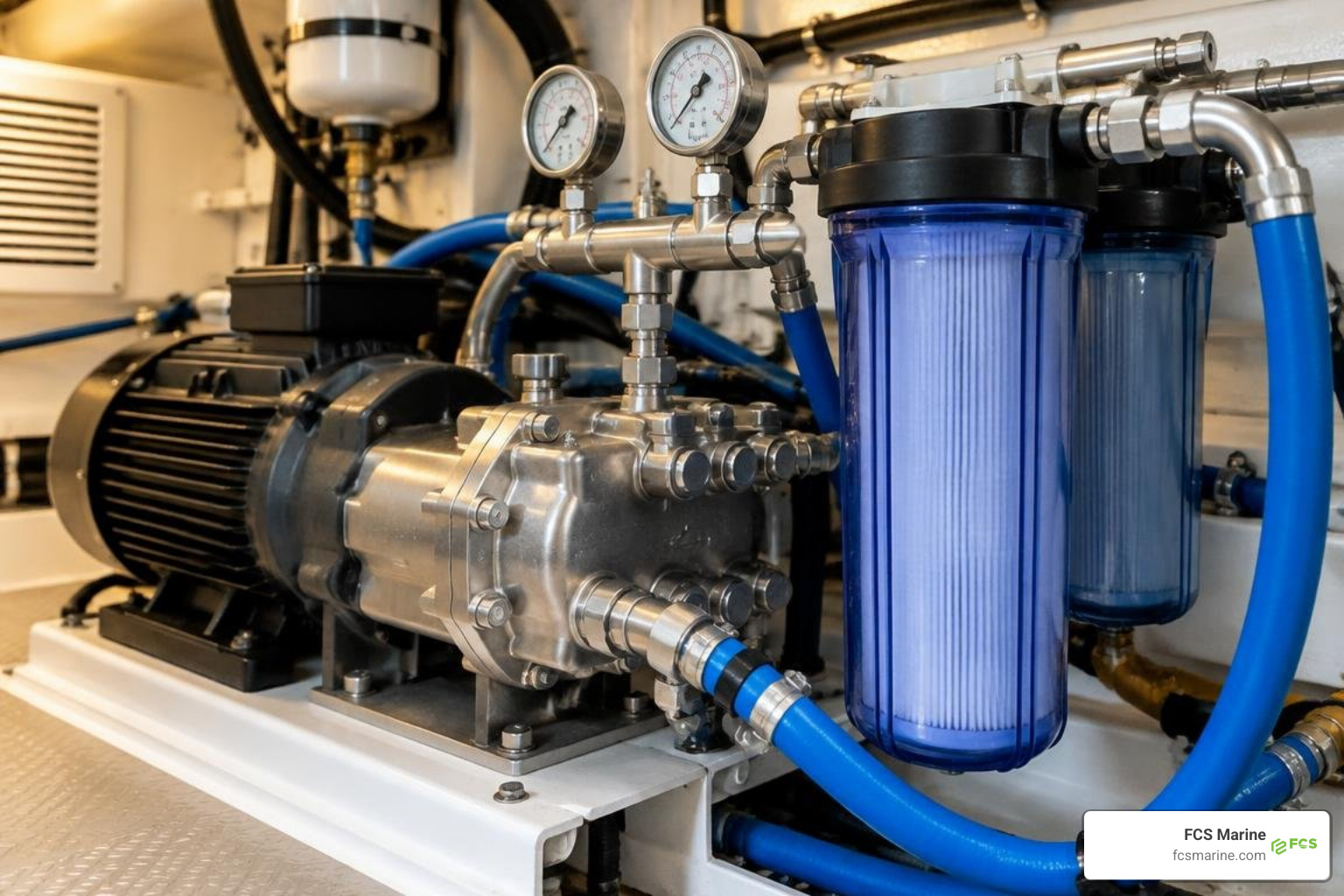
Installing a 12V DC watermaker in South Florida’s coastal waters presents distinct environmental and electrical hurdles. High ambient engine room temperatures, humid air, and warm coastal seawater directly influence equipment longevity and daily water quality. Integrating these units properly requires a solid understanding of boat water systems and DC electrical principles.
- Voltage Drop in 12V Circuits: Direct-current systems operating at 12 volts pull high amperage compared to 24V or AC units. A 12V motor pulling 30 to 80 amps experiences significant voltage drop across long wiring runs. Undersized cables lead to motor overheating, reduced pump RPM, and dropped membrane feed pressure. Marine-grade tinned copper conductors sized according to ABYC standards for a 3% maximum voltage drop are mandatory.
- Seawater Temperature and Membrane Flux: Seawater in South Florida and the Bahamas regularly reaches 85°F (29°C) or higher in shallow anchorages, according to coastal temperature monitoring from the NOAA National Ocean Service. Warmer water passes through reverse osmosis membranes more easily (higher flux), lowering required operating pressures but slightly increasing total dissolved solids (TDS) passage. Conversely, winter cruising in cooler northern waters stiffens membranes, requiring higher feed pressures to maintain rated output.
- Biofouling in Warm Coastal Waters: Warm subtropical waters accelerate biological growth inside pre-filters and plumbing lines. If raw seawater sits idle inside a watermaker for more than two to three days without a fresh water flush, anaerobic bacteria generate hydrogen sulfide, fouling membranes and damaging pump seals.
Key Plumbing and Through-Hull Sizing for 12 Volt Marine Water Makers
A watermaker requires an uninterrupted, air-free supply of seawater while at anchor or underway. Selecting the correct dedicated through-hull fitting prevents cavitation and pump starvation:
- Dedicated Seacock Placement: Never tee the raw water intake into an existing engine or generator cooling pickup, as suction competition can starve either system. Install a dedicated, forward-facing scoop or standard mushroom through-hull positioned well below the waterline, forward of discharge outlets and head thru-hulls.
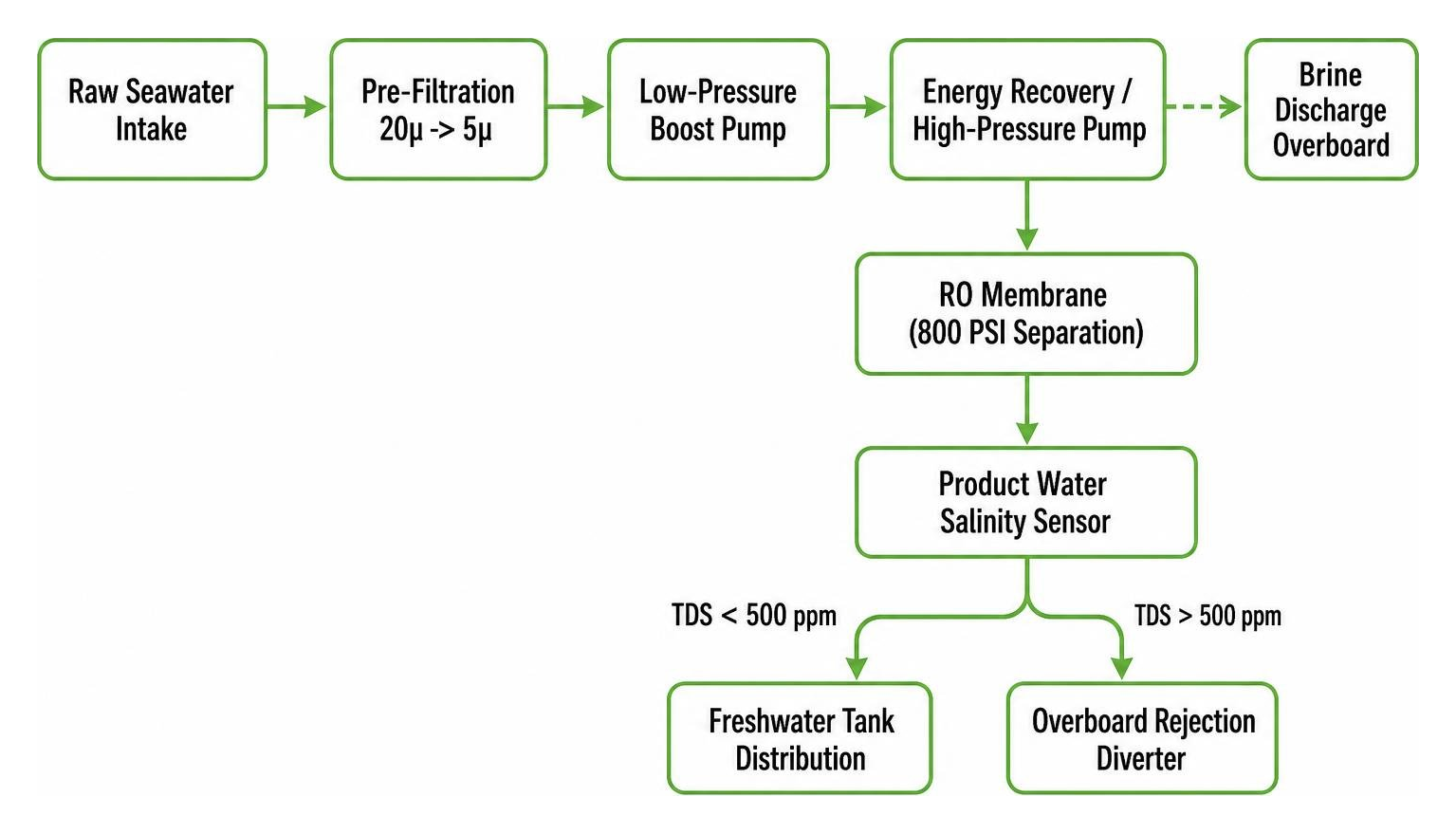
- Pre-Filtration Architecture: Install a coarse sea strainer to trap sea grass and jellyfish, followed sequentially by a 20-micron and a 5-micron sediment filter. This stepped filtration traps fine silts before they enter the high-pressure pump.
- Brine Discharge Routing: Plumb the brine discharge above the waterline through an independent overboard fitting. Avoid connecting it to galley sink drains or cockpit scuppers where gurgling noise can disrupt the cabin.
Control Panels and Automation: Basic, Digital, and Touch Interfaces
Control panels range from simple manual needle valves to fully automated touchscreen interfaces:
- Basic Manual Controls: Utilize manual pressure regulating valves, mechanical pressure gauges, and physical toggle switches. They offer high reliability offshore with no sensitive circuit boards to fail, though they require manual monitoring during operation.
- Digital & Touchscreen Panels: Provide one-touch automated startup, automated system purging, real-time product salinity (TDS) readouts, and hour tracking. Advanced models integrate directly with onboard NMEA 2000 networks or multifunction displays.
- Integrated Salinity Diverters and Manual Backups: Quality automated systems incorporate an automatic three-way solenoid valve that routes freshwater to the tank only when product water registers below 500 ppm TDS. Selecting a system with a manual mechanical override ensures you can still produce fresh water if the electronic controller malfunctions offshore.
For smaller vessels, trailered boats, or temporary cruising setups, compact self-contained portable units offer a practical alternative to permanent modular installations, drawing 16 to 18 amps without requiring dedicated hull penetrations.
Preventative Maintenance and Service for Offshore Reliability
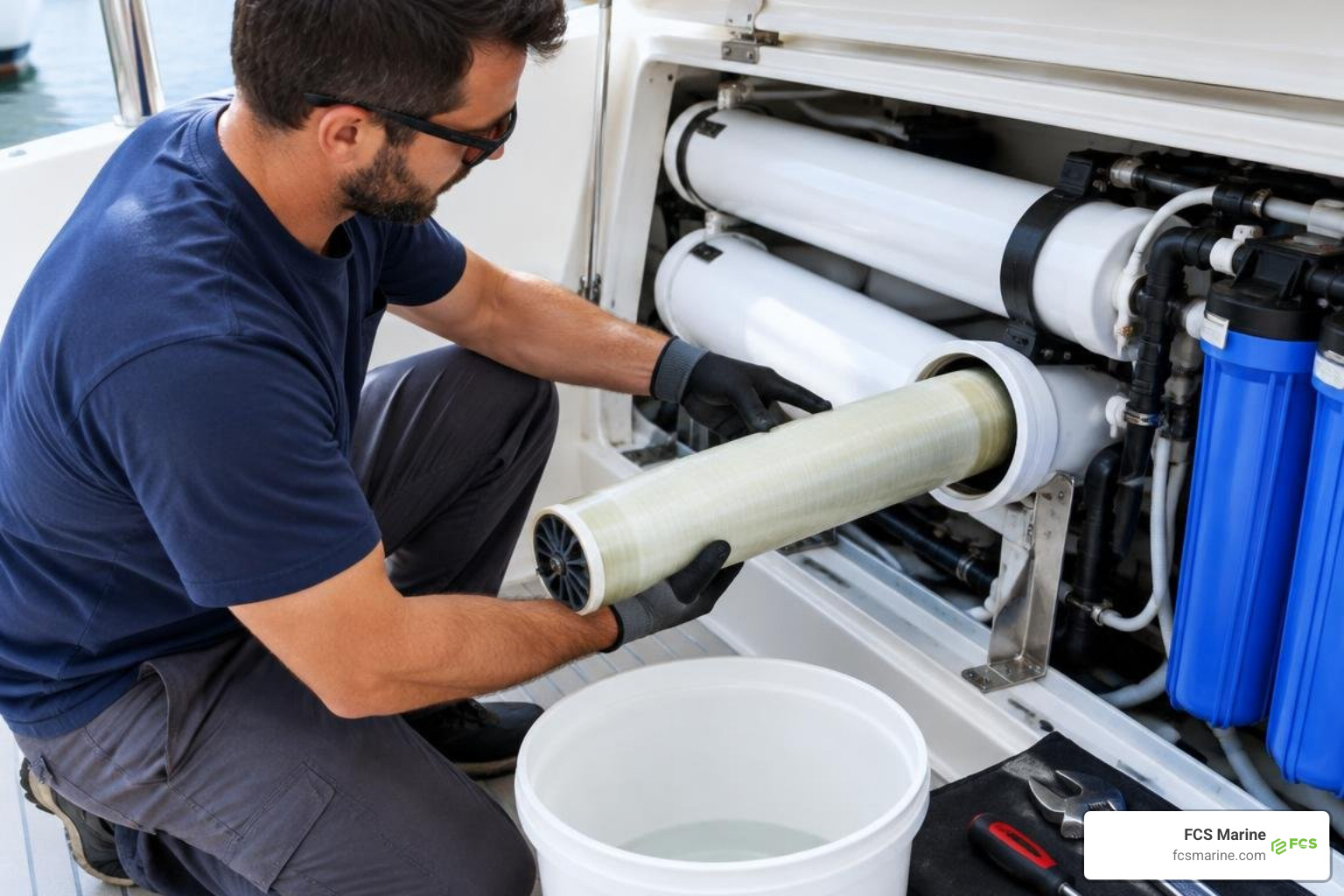
A marine reverse osmosis watermaker is a precision filtration system that requires regular preventative maintenance. Salt crystallization, sediment accumulation, and biological growth are the primary causes of premature component wear. Following structured maintenance protocols keeps your system running reliably:
- Regular Fresh Water Flushing: The most critical maintenance step is performing a fresh water flush using non-chlorinated tank water after every run, or at least every 7 to 10 days when idle. Flushing clears corrosive brine and organic organisms from the pump head and membrane housing, extending membrane life beyond five to seven years.
- Pre-Filter Replacements: Monitor the differential pressure gauge across your 20-micron and 5-micron pre-filters. Replace filter cartridges when vacuum levels increase or sediment discoloration appears. Cruisers should review marine filtration essentials to maintain spare supplies before embarking on extended passages.
- Membrane Chemical Cleaning and Pickling: If mineral scale or organic bio-slime degrades output by more than 10-15%, run dedicated alkaline or acid chemical wash cycles. If leaving the vessel decommissioned for more than two weeks without an automated flush cycle, pickle the membrane using food-grade sodium metabisulfite to inhibit biological growth.
- High-Pressure Pump Lubrication: Check high-pressure pump oil levels regularly. Change pump crankcase oil after the initial 50-hour break-in period and every 500 operating hours thereafter using manufacturer-specified synthetic lubricants.
Frequently Asked Questions About 12V Marine Watermakers
Can a 12V watermaker run solely on solar power without a generator?
Yes. Energy-recovery 12V watermakers consuming 100W to 240W can run entirely on a solar array of 400W to 800W. By scheduling production runs during peak sun hours (10:00 AM to 2:00 PM), the watermaker consumes direct solar output without depleting house battery banks.
How do portable 12V watermakers compare to fixed modular systems?
Portable 12V units are compact, self-contained systems housed in carry cases, utilizing drop-over-the-side intake hoses. They produce 2.5 to 5 GPH and are well suited for smaller boats, center consoles, or temporary setups. Fixed modular systems produce higher output (9 to 40+ GPH) and integrate permanently into the vessel’s primary plumbing and electrical systems for seamless operation.
How often do reverse osmosis membranes need replacement?
With proper pre-filtration, routine fresh water flushing, and periodic pickling during lay-up periods, a marine RO membrane typically lasts 5 to 8 years. Premature failure usually results from operating in silty water, chlorine contamination from unbuffered shore water flushes, or leaving stagnant seawater inside the housing.
Professional Mobile Watermaker Service in South Florida
Operating a 12-volt marine desalination system in South Florida requires reliable mechanical components, tight plumbing joints, and balanced DC electrical circuits. Whether you are outfitting a cruising catamaran in Fort Lauderdale, preparing a sailboat in Miami for a crossing to the Bahamas, or managing onboard systems at a private dock in Palm Beach, proper installation and scheduled servicing prevent costly offshore breakdowns.
FCS Marine provides mobile, on-site marine service throughout South Florida, traveling directly to your vessel’s location in marinas, boat yards, and private docks across Palm Beach County, Broward County, Miami-Dade County, Martin County, and St. Lucie County. Our technicians handle complete watermaker commissioning, membrane testing, high-pressure pump rebuilds, and plumbing integration. In addition to water purification systems, our team provides comprehensive support for marine air conditioning, marine refrigeration, yacht insulation, marine mold remediation, and specialized marine equipment rentals.
Ensure your vessel has dependable, clean freshwater wherever your cruising itinerary leads. Contact FCS Marine to schedule professional mobile watermaker service at your dock today.