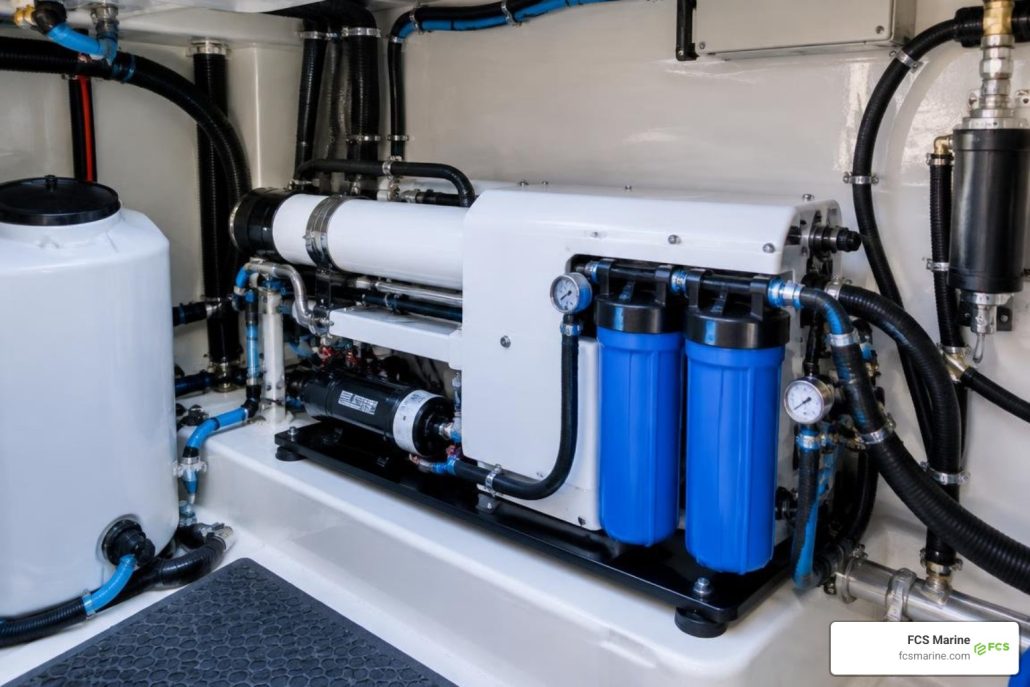
What Boat Water Maker Prices Really Include
Boat watermakers cost roughly $2,800 to more than $20,000 for the unit. Price rises with water output, power needs, and system design. Budget another $200-$500 for DIY installation materials or about $1,500-$4,000 for professional installation. Filters, membrane care, and power add to the cost over time.
For a South Florida boat owner, the useful comparison is not just the purchase price. It is the cost of making enough water for your crew while keeping the system practical to maintain. At FCS Marine, we help owners assess those needs through onboard water system service at the vessel.
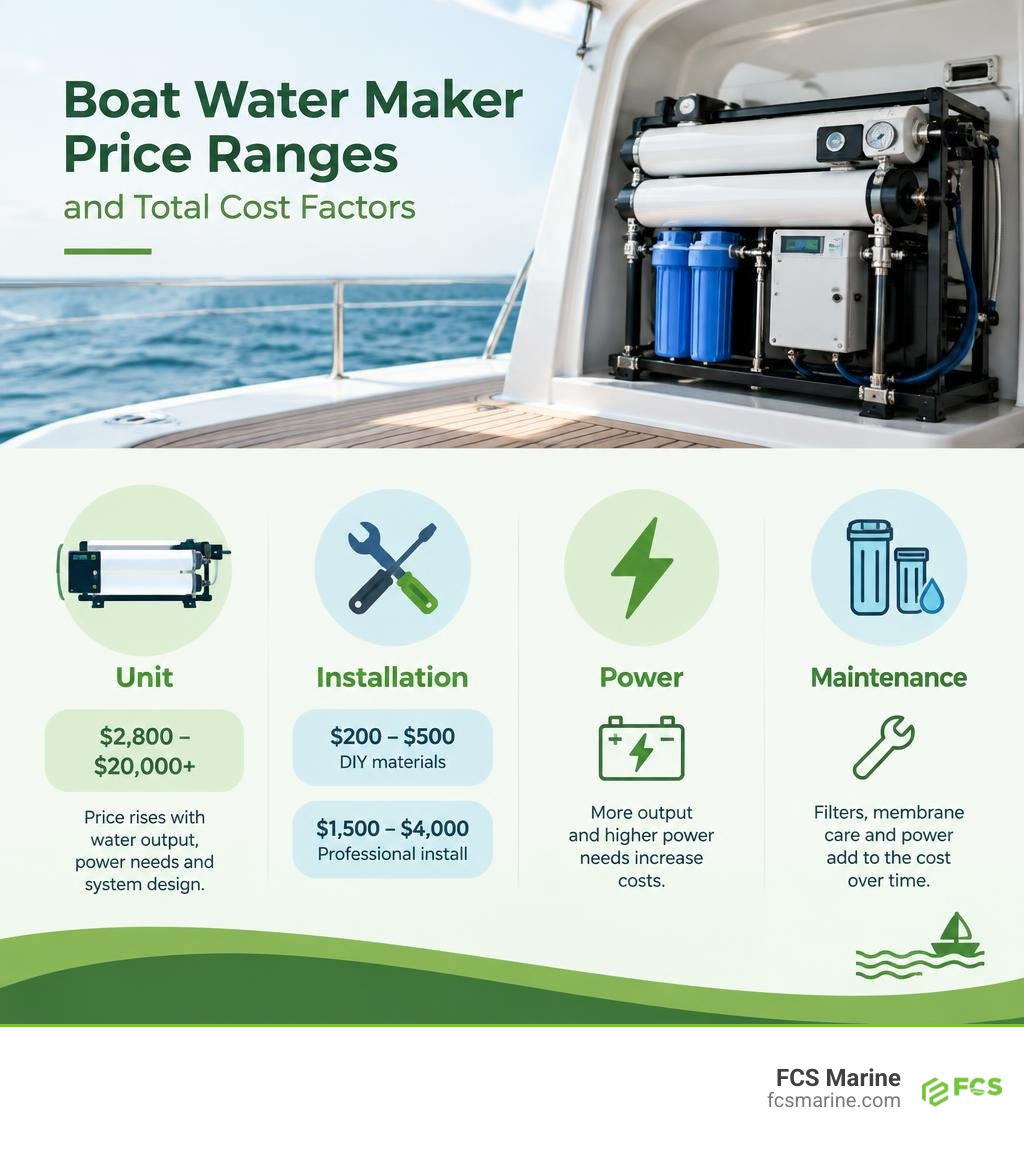
Easy boat water maker prices glossary:
Comprehensive Breakdown of Boat Water Maker Prices by System Type
Marine desalinators come in a wide range of hardware tiers, production capacities, and engineering configurations. The upfront purchase price reflects output volume, physical footprint, automation level, and power efficiency.
- Entry-Level and Budget Compact Units ($2,800 to $5,500): Systems like Cruise RO Water ($2,800 to $5,500) and entry Village Marine units ($3,200 to $7,500) provide straightforward manual controls producing 4 to 12 gallons per hour (GPH). They rely on standard industrial components that keep hardware replacement costs low.
- Mid-Range Energy-Efficient DC Systems ($4,500 to $10,000): Engineered for cruising vessels relying on battery banks and solar, units like the Schenker Zen 30 (€4,775 / ~30 liters per hour at 9 amps) and Katadyn Powersurvivor 40E (€4,165 / ~5.7 liters per hour at 4 amps) offer mechanical energy recovery to minimize electrical draw.
- Fully Automated and High-Capacity Cruising Units ($10,000 to $16,500): Advanced modular systems such as the Spectra Catalina 340c Connect Automated ($14,500 to $16,500) produce 14 GPH (53 LPH) on 12V, 24V, or 48V DC, featuring automated salinity monitoring, freshwater flushing, and remote control integration.
- Commercial-Grade and High-Output AC Systems ($7,000 to $20,000+): High-output options like ECHOTec ($5,500 to $16,000+) and HRO/Sea Recovery ($7,000 to $20,000+) deliver 20 to 60+ GPH. Units like the Village Marine LTM-500 ($5,990.25) generate 41 GPH (500 GPD) on 110V AC power, suited for generator-supported motor yachts.
| System Type | Typical Price Range | Average Output (GPH / LPH) | Power Source & Typical Draw | Ideal Vessel & Crew Profile |
|---|---|---|---|---|
| Portable 12V Units | $4,800 – $5,500 | 2.5–5 GPH (10–20 LPH) | 12V DC (8–12A) | Weekend cruisers, small sailboats (1–2 crew) |
| Compact DC Modular | $3,500 – $8,000 | 4–8 GPH (15–30 LPH) | 12V/24V DC (4–15A) | 30–45ft coastal/offshore cruisers on solar |
| Automated DC Systems | $9,500 – $16,500 | 14–15 GPH (53–56 LPH) | 12V/24V/48V DC (9–18A) | 40–55ft liveaboards & passage-makers (3–5 crew) |
| High-Capacity AC Systems | $5,900 – $20,000+ | 20–60+ GPH (75–230+ LPH) | 110V/220V AC (3–18A) | Large motoryachts, catamarans with generators |
For owners planning extended itineraries, carrying a dedicated spares package—such as the Schenker Cruising Kit—adds roughly $400 to $1,200 for backup pre-filters, seals, and preservation solutions.
Comparing Portable vs. Fixed Boat Water Maker Prices
Portable desalinators have emerged as a no-modification alternative to traditional installations. The LEDI Scout portable watermaker, for example, starts at $4,899, weighs roughly 18 kg (40 lbs), and produces 10 to 20 liters per hour.
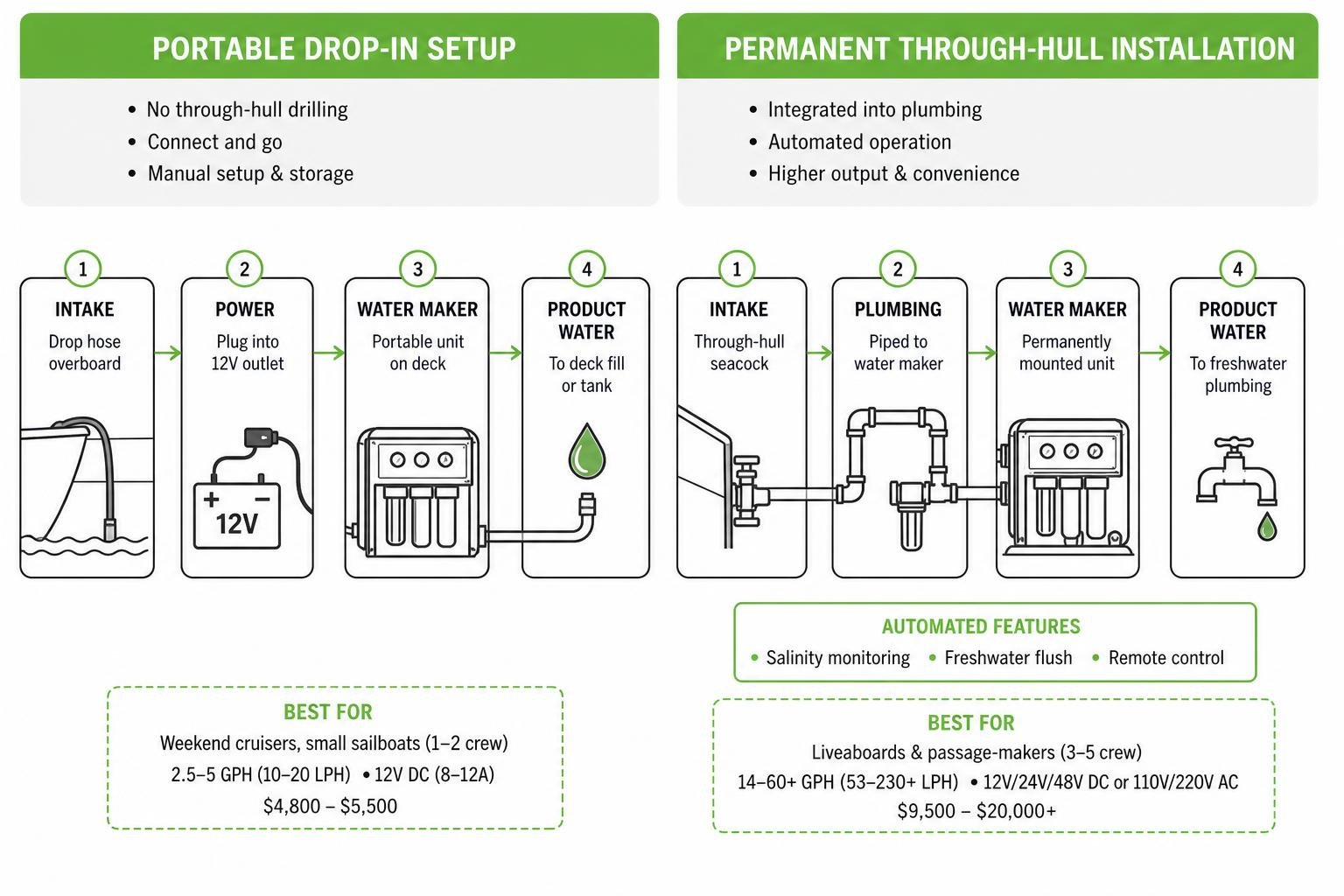
Portable systems require no through-hull drilling, fixed plumbing, or dedicated electrical runs. You drop the intake hose overboard, power the unit via an existing 12V outlet, and route clean product water straight to your deck fill.
The trade-off comes down to convenience and output. Fixed systems integrate directly into your vessel’s freshwater plumbing with automated flush cycles. Portable units demand manual setup, teardown, and physical storage each time you make water.
DC Energy-Efficient Systems vs. High-Capacity AC Desalinators
Choosing between a 12V/24V DC unit and a 110V/220V AC desalinator impacts both initial investment and onboard energy infrastructure:
- Energy-Recovery DC Units: Ultra-efficient systems draw 7 to 13 amps on 12V (85 to 155 watts) by using energy-recovery pumps to recycle pressure from the brine discharge. While these units carry higher purchase prices ($8,000 to $15,000), they run directly on surplus solar and house lithium banks without running an auxiliary generator.
- Traditional AC Watermakers: Systems powered by AC run standard high-pressure plunger pumps, drawing 3 to 18 amps at 110V AC (330 to 1,980 watts). These units cost less upfront ($3,500 to $7,000 for high-volume hardware), but require a running generator or heavy inverter support.
If your vessel already carries a large solar array and ample house battery capacity, an energy-recovery DC system avoids additional engine hours and fuel consumption.
Marine Operating Factors That Impact Desalination Performance and Lifespan
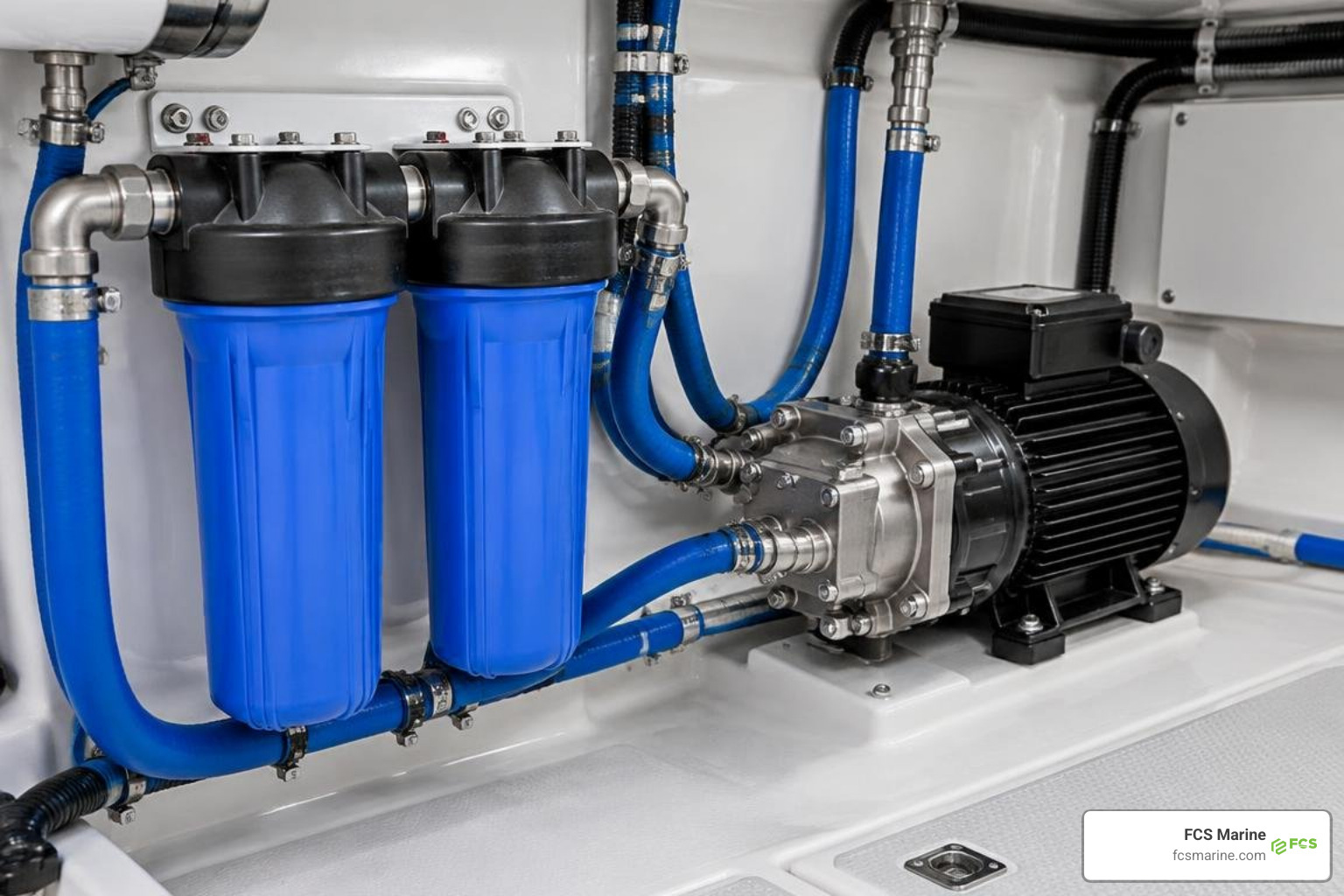
Operating a reverse osmosis unit in South Florida’s coastal waters introduces environmental demands that directly impact equipment lifespan and maintenance schedules:
- High Water Temperatures: Warmer seawater in South Florida and the Bahamas increases membrane permeability. While this raises freshwater production, it also increases salt passage if operating pressures are not adjusted properly.
- Bio-Fouling and Silt Loading: High nutrient levels, algae blooms, and shallow sandy anchorages foul pre-filters rapidly. Running a watermaker in turbid inland waters or poorly flushed marinas can exhaust 5-micron pre-filters in hours.
- Severe Vibration: Marine engine operation, wave chop, and pump pulses loosen mechanical fittings and high-pressure hose crimps over time, leading to seawater leaks.
- Humidity and Salt Spray: Confined engine rooms and lazarettes experience elevated heat and humidity, which corrodes electric motor housings, electrical terminals, and stainless steel fittings.
To protect system membranes from early fouling, learning the operational requirements of making potable water offshore with reverse osmosis systems ensures your hardware maintains rated salt rejection.
Installation Costs: DIY Challenges vs. Professional Mobile Service
The total installed cost of a marine desalinator depends heavily on how the unit is plumbed and wired.
- DIY Installation ($200 to $500 for parts): Installing a watermaker yourself eliminates professional labor charges. However, it requires drilling below-the-waterline through-hull penetrations, securing dedicated seacocks, running marine-grade tinned copper electrical lines, fabricating mounting brackets, and assembling high-pressure plumbing rated up to 1,000 PSI. Mistakes in intake plumbing or wiring sizing lead to cavitation, pressure drops, or electrical safety hazards.
- Professional Mobile Marine Installation ($1,500 to $4,000 for labor): Professional installation ensures proper seacock placement, vibration isolation, noise dampening, automated freshwater flush plumbing, and electrical circuit protection adhering to marine industry safety standards.
Understanding baseline plumbing requirements from an essential guide to boat water systems helps captains evaluate equipment placement, intake routing, and product delivery lines before commissioning.
Long-Term Maintenance and Total Cost of Ownership
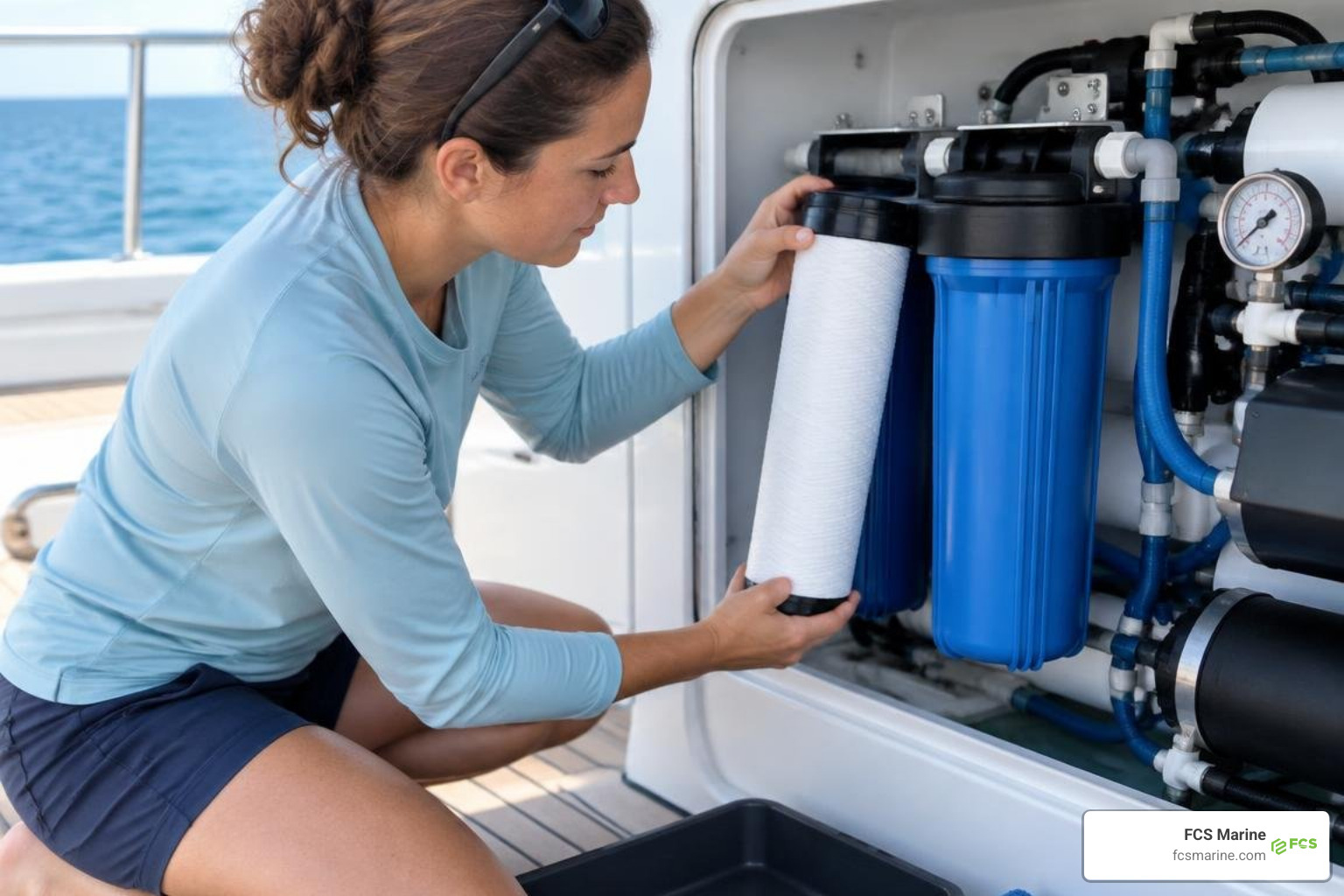
A watermaker requires consistent maintenance to ensure water safety and hardware reliability. The total cost of ownership diverges significantly between budget and premium platforms over 5 to 15 years.
A budget manual system costing $3,500 upfront typically requires around $400 annually in replacement parts, pre-filters, pump oil, and seals. Over a 10-year period, combined with shorter component life (5 to 7-year design life), total ownership costs reach approximately $7,300.
A premium desalinator costing $8,500 upfront uses titanium pump heads, commercial membranes, and energy-recovery mechanics. Requiring roughly $300 annually in routine consumables across a 15-year operational lifespan, total long-term ownership costs average around $11,500.
Long-Term Ownership Costs and Hidden Boat Water Maker Prices
Budgeting for a desalinator must account for regular consumables and periodic component overhauls:
- 5-Micron and 20-Micron Pre-Filter Cartridges: $10 to $25 each (replaced every 50 to 100 operating hours depending on water clarity).
- Active Carbon Flush Filters: $20 to $45 each (replaced every 6 months to prevent municipal chlorine from degrading RO membranes during flushes).
- Reverse Osmosis Membranes: $450 to $900 per element. In well-maintained systems, membranes last 5 to 7 years (3,000 to 5,000 hours). In moderate conditions, lifespan averages 3 to 5 years, while chronic fouling or chemical exposure can ruin a membrane in 2 to 3 years.
- Membrane Cleaning & Pickling Chemicals: $30 to $60 per kit for alkaline/acid cleaners and sodium metabisulfite preserving solutions when laying up the system for more than 7 to 10 days.
- High-Pressure Pump Servicing: $150 to $400 for seal kits, crankcase oil, and valve replacements every 500 to 1,000 run hours.
Following disciplined marine filter maintenance guidelines and understanding reverse osmosis filtration fundamentals prevents premature membrane fouling and unexpected repair bills.
Marina Water Costs vs. Independent Offshore Water Production
Buying dockside water or hauling jugs on extended cruises incurs direct and indirect expenses:
- Marina Water Fees: Marina dockage in South Florida and the Bahamas frequently bills metered water at $0.15 to $0.50+ per gallon, or daily water hookup fees ranging from $10 to $25 per night.
- Logistical Costs: Fuel burned motoring into crowded marinas, transient slip fees ($3.00 to $6.00+ per foot per night), and the risk of taking on contaminated dock water add up quickly.
- Self-Generated Water Costs: Once installed, an onboard desalinator produces fresh drinking water for roughly $0.02 to $0.05 per gallon in consumable filter wear and electrical power.
Reviewing a comprehensive yacht water maker comparison guide shows that active cruisers breaking away from marina slips often recover their system investment within two to three seasons of anchor-out cruising.
Frequently Asked Questions About Marine Watermaker Costs
How long do marine reverse osmosis membranes last before needing replacement?
Marine RO membranes typically last 5 to 7 years (or 3,000 to 5,000 operating hours) when regularly flushed with fresh, unchlorinated product water and kept clear of oil, silt, and biological growth. In vessels with irregular use or untreated storage, biological fouling can reduce membrane life to 2 to 3 years. Monitoring product water Total Dissolved Solids (TDS) with a digital meter ensures salinity stays below 500 PPM.
Is a 12V DC watermaker sufficient for liveaboard cruising on solar power?
Yes. Modern energy-recovery 12V DC watermakers draw between 7 and 13 amps (producing 8 to 14 GPH), allowing an average 2-person crew (consuming 10 to 18 gallons daily) to run the watermaker for 1 to 2 hours during peak solar generation. This fully replenishes daily freshwater reserves without relying on engine charging or a generator.
What hidden expenses should I budget for after purchasing a boat desalinator?
Beyond the base purchase price, plan for initial plumbing and electrical materials ($200 to $500 for DIY, or $1,500 to $4,000 for professional installation), an annual consumable budget ($250 to $500 for pre-filters, carbon flush elements, pump oil, and pickling chemicals), and membrane replacement every 5 to 7 years ($450 to $900).
Maximize Reliability with Mobile On-Site Marine Service
An onboard watermaker provides freedom from marina slips and ensures water security wherever you drop anchor. Ensuring that system operates dependably requires proper high-pressure plumbing, matched power connections, and clean intake filtration.
At FCS Marine, we provide mobile, on-site marine service throughout South Florida. Our technicians travel directly to your vessel—whether you are berthed at a marina in Fort Lauderdale, moored at a private dock in Pompano Beach, or hauled in a boatyard across Palm Beach, Broward, Miami-Dade, Martin, or St. Lucie counties. From marine watermakers and water purification systems to marine air conditioning, marine refrigeration, yacht insulation, mold remediation, and specialized marine equipment rentals, we handle complete onboard equipment care at your location.
Schedule professional onboard water system service with FCS Marine today to inspect, maintain, or commission your vessel’s watermaker.