Marine Insulation Contractors in Fort Lauderdale: What to Look For
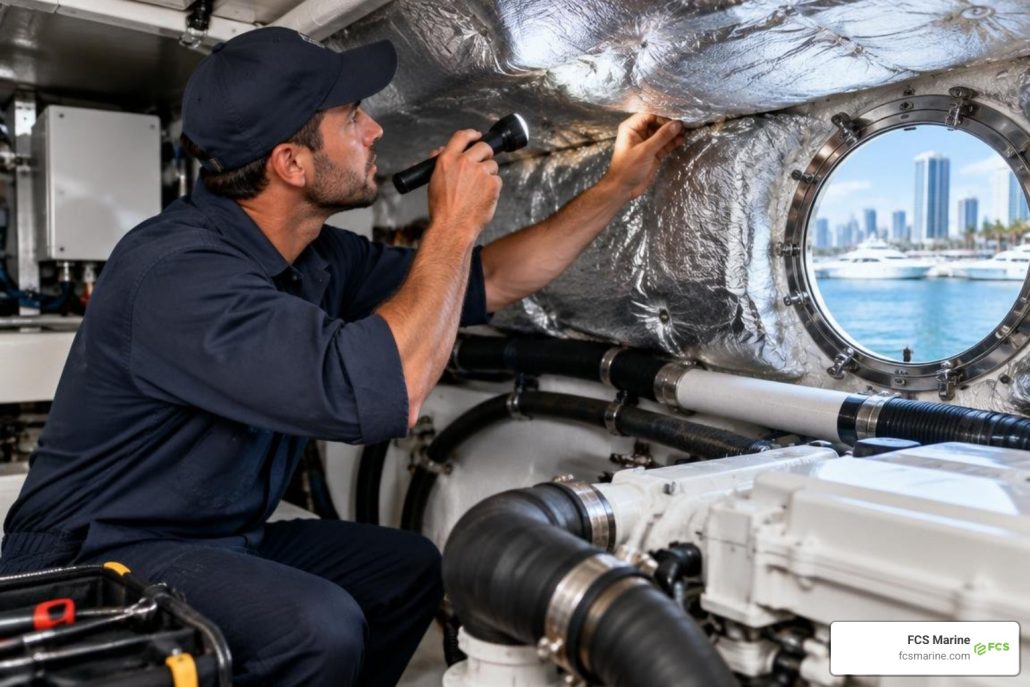
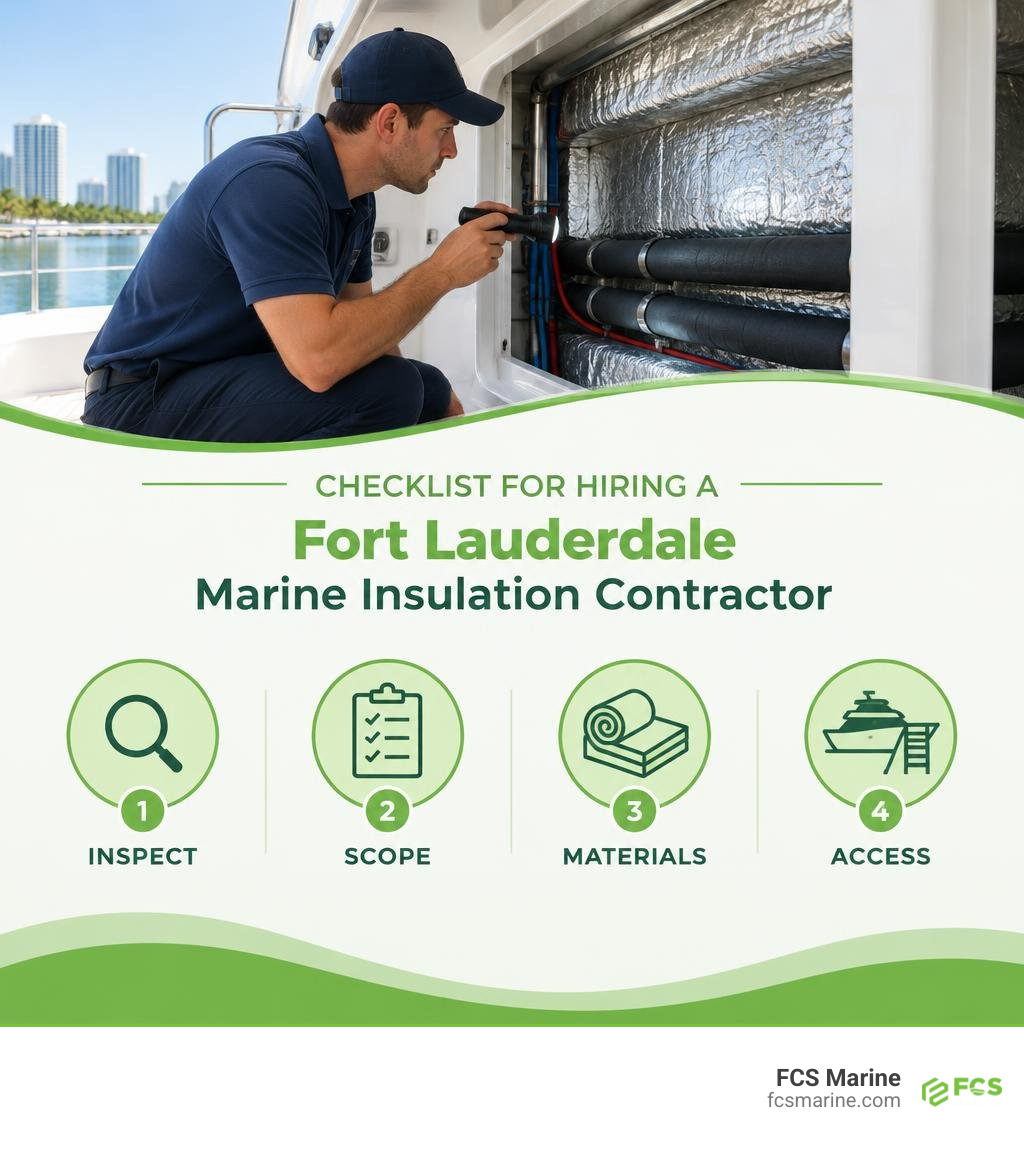
If you need marine insulation contractors in Fort Lauderdale, start with an on-site inspection. Ask the contractor to check where heat, noise, or moisture is getting through, explain which areas need work, and provide a written scope. For a yacht, that may mean insulation around hull spaces, bulkheads, or chilled-water pipes. Ask how the proposed materials fit each space and what access the work will require.
South Florida heat and humidity can make weak insulation more than a comfort issue. Condensation near onboard systems can also create conditions for mold. We’re FCS Marine, a family-owned South Florida yacht maintenance company that provides on-site insulation service.
Key terms for marine insulation contractors fort lauderdale:
Why South Florida Vessels Require Marine Insulation Contractors in Fort Lauderdale
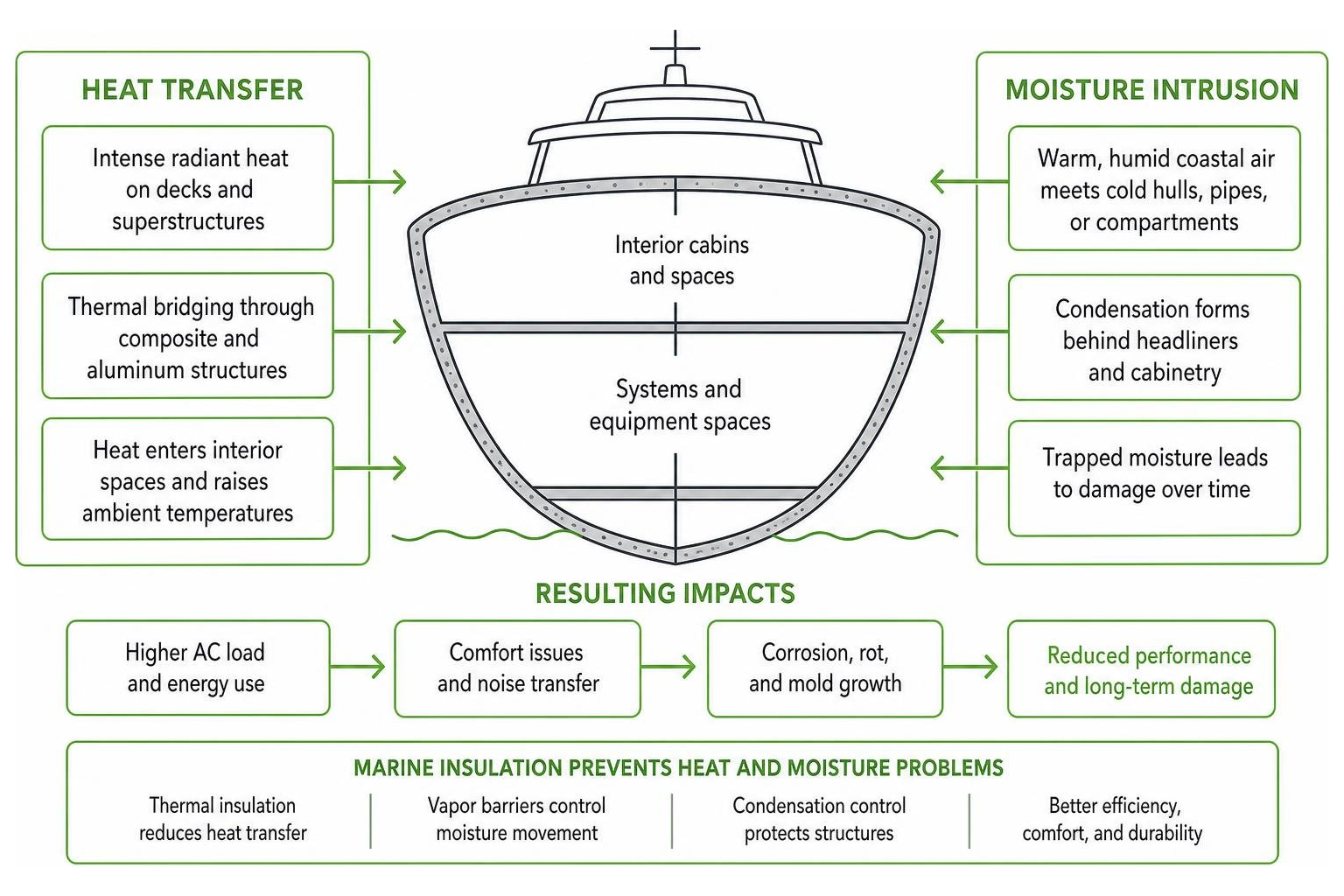
Operating a yacht or commercial vessel in South Florida exposes every onboard system to intense sub-tropical conditions. Intense radiant heat beating down on composite and aluminum superstructures creates massive thermal bridging into interior cabins. Without specialized thermal insulation, onboard marine air conditioning systems must run constantly, driving up fuel burn, electrical draw, and wear on compressor components.
Beyond thermal control, moisture mitigation is an ongoing priority. When warm, humid coastal air meets cold aluminum hulls, chilled-water HVAC plumbing, or refrigerated compartments, condensation forms rapidly behind headliners and cabinetry. Over time, trapped moisture rots joinery, causes corrosion, and leads to persistent biological growth. Working with experienced marine insulation contractors in Fort Lauderdale ensures your vessel maintains proper boundary protection against heat, acoustic transfer, and hidden moisture intrusion. For a deeper look at structural thermal barriers, explore our ultimate guide to yacht insulation.
Core Vessel Systems Managed by Marine Insulation Contractors in Fort Lauderdale
Comprehensive marine insulation covers several distinct engineering zones across a vessel:
- Engine Rooms and Machinery Spaces: Thermal blanket wraps for exhaust dry risers, turbochargers, and generator exhausts manage extreme ambient heat while structural bulkheads receive mineral wool and acoustic barriers to prevent engine roar from entering guest staterooms.
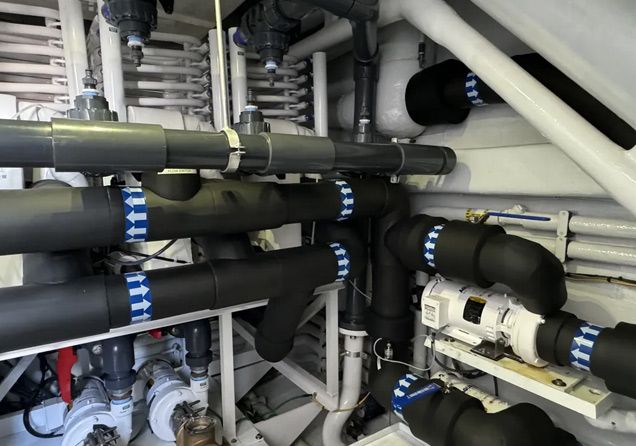
- Chilled Water and Refrigeration Piping: Closed-cell elastomeric foam and vapor-sealed barriers insulate HVAC loop lines and marine refrigeration piping to eliminate pipe sweating and maximize cooling efficiency.
- Hull and Overhead Bulkheads: Closed-cell urethane foam, lightweight acoustic dampening tiles, and ceramic thermal coatings isolate hull plates from exterior ambient water and sun-soaked decks.
- Fuel and Water Tanks: Thermal separation prevents structural fuel tanks and potable water reservoirs from heating up, preserving water quality and reducing engine room thermal loads.
Compliance and Maritime Fire Safety Standards
Marine insulation is a vital fire-safety and life-safety system. Commercial vessels, charter yachts, and private pleasure craft operating under class registries must adhere to strict fire boundary classifications governed by international and domestic regulations.
The International Maritime Organization (IMO) mandates strict criteria under the International Convention for the Safety of Life at Sea (SOLAS). Insulation installed on structural bulkheads (such as A-Class and B-Class fire divisions) must be non-combustible and carry Marine Equipment Directive (MED) wheelmark certifications. These fire-rated systems prevent the spread of flames and restrict thermal transmission across adjacent compartments during an emergency.
In domestic waters, commercial vessels and inspected passenger craft must align with U.S. Coast Guard structural fire protection standards. When choosing insulation, technicians must verify that every adhesive, facing foil, mechanical pin, and core material complies with low flame-spread and low smoke-generation standards, preventing toxic gas accumulation in enclosed bilge and cabin spaces.
Marine-Specific Causes of Thermal and Acoustic Insulation Breakdown
Marine insulation does not fail in a vacuum; it degrades under the harsh conditions of the South Florida marine environment:
- High Ambient Humidity and Salt Air: Salt crystals penetrate porous open-cell materials, attracting and retaining water, which degrades thermal R-values and accelerates corrosion under insulation (CUI) on steel and aluminum framing.
- Continuous Structural Vibration: Constant engine propulsion and wave impact loosen poorly secured mechanical pins, cause spray foam to delaminate from slick bulkheads, and break down acoustic vinyl decoupling layers.
- Trapped Condensation Sweating: If a vapor barrier is breached by a screw puncture or failing seam tape, humid air condenses against cold hull plating, waterlogging standard insulation materials and promoting mold growth.
- Cramped Mechanical Access: Narrow wire chases, tight bilge compartments, and obstructed exhaust runs make field repairs difficult. When technicians select or install the wrong materials for these spaces, gaps form that allow thermal bridging. Discover practical selection criteria in our guide on how to choose the best yacht insulation materials.
Warning Signs That Vessel Insulation Requires Professional Service
Captains, chief engineers, and yacht owners should watch for these common symptoms of failing or saturated insulation:
- Condensation and Pipe Sweating: Water droplets collecting along overhead valances, chilled-water trunk lines, or engine room bulkheads indicate compromised vapor barriers.
- Overhead Hot Spots in Living Areas: Walking on salon floors or touching stateroom bulkheads directly adjacent to machinery spaces reveals noticeable heat transfer.
- Persistent Musty or Mold Odors: Damp, sour smells circulating through air handlers often point to wet insulation hidden behind headliners or mechanical bulkheads.
- Elevated Interior Sound Levels: Increased low-frequency engine hum or high-frequency generator whine inside guest cabins indicates delaminating acoustic decoupling barriers.
- HVAC and Refrigeration Short-Cycling: Air conditioning chillers running continuously without reaching setpoint temperatures signal severe thermal infiltration from uninsulated hull voids.
Technical Comparison of Marine Insulation Materials and Applications
Selecting the correct insulation material requires balancing thermal efficiency, acoustic attenuation, fire rating, and moisture resistance.
| Insulation Material | Primary Marine Application | Temperature Resistance | Acoustic Dampening | Moisture Tolerance | Key Surface Preparation Required |
|---|---|---|---|---|---|
| Closed-Cell Urethane Foam | Hull plates, voids, refrigeration boxes | Up to 200°F (93°C) | Moderate (decouples resonance) | High (hydrophobic barrier) | Mechanical surface profiling, degreasing, and dry substrate |
| Marine Mineral Wool Boards | Engine room bulkheads, fire divisions | Up to 1200°F+ (649°C) | High (excellent mid-to-high frequency) | Moderate (requires intact foil vapor facings) | Welded or bonded insulation pins, clean primer coat |
| Mass Loaded Vinyl (MLV) / Foam Composites | Acoustic engine room linings, floor underlayments | Up to 220°F (104°C) | Superior (blocks airborne noise transmission) | High (closed-cell foam backing) | High-bond contact adhesives, seam tape sealing |
| Ceramic Thermal Coatings | Overhead ceilings, tight mechanical bulkheads | Up to 400°F (204°C) | Low (anti-resonant only) | High (seamless direct-to-metal barrier) | Sandblasting or wire-brush profiling, direct-to-clean-metal application |
Proper surface preparation is mandatory before applying any of these systems. Substrates must be free of grease, salt deposits, flaking paint, and oxidation. Applying insulation over dirty or damp marine plating leads to premature delamination and concealed structural corrosion.
Selecting Professional Marine Insulation Services in Broward County
Finding reliable yacht insulation contractors in South Florida requires evaluating a contractor’s mobile capabilities, safety practices, and marine-specific expertise.
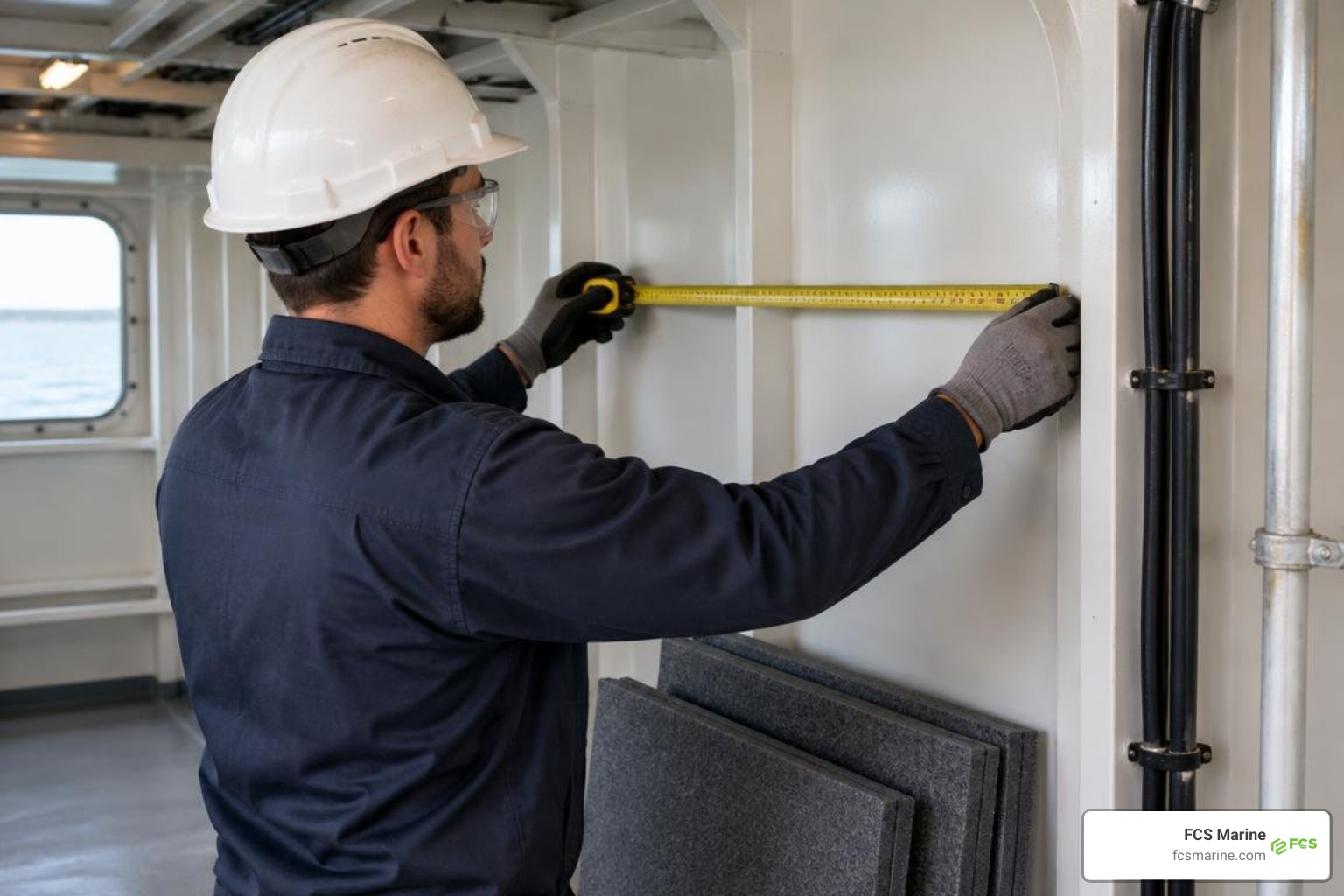
Key Criteria for Evaluating Marine Insulation Contractors in Fort Lauderdale
When reviewing marine service providers in Broward County and surrounding waters, ensure they meet these core qualifications:
- Mobile On-Site Tooling and Containment: Marine insulation work creates dust and debris. Contractors must use clean cutting equipment, HEPA-filtered air scrubbers, and proper floor-covering protection to preserve yacht joinery and teak decks.
- Strict Adherence to Marine Safety Ratings: Contractors should readily provide material safety data sheets (MSDS) and classification compliance documents confirming low-smoke, non-combustible ratings.
- Comprehensive Marine Insurance Coverage: Technicians working in South Florida shipyards and private marinas must carry complete marine general liability and Ship Repairer’s Liability insurance.
- Coordination with Complementary Mechanical Trades: Insulation technicians must work alongside marine AC engineers, electricians, and exhaust specialists to ensure insulation wraps do not obstruct maintenance access to valves, wiring harnesses, or raw water plumbing.
Mobile On-Site Marine Service Across Fort Lauderdale Boatyards
At FCS Marine, we know that moving a vessel to a distant facility for routine maintenance or insulation retrofits disrupts cruising schedules and adds significant operating expenses. We provide mobile, on-site marine service that travels directly to where your vessel is located throughout South Florida.
Whether your yacht is hauled out at a commercial boatyard along the New River, tied up at a marina in Bahia Mar or Pier 66, or berthed at a private dock in Palm Beach County, Broward County, or Miami-Dade County, our mobile technicians arrive fully equipped to perform thorough thermal assessments and precision insulation installations on-site.
Frequently Asked Questions About Marine Insulation in Fort Lauderdale
What materials do marine insulation contractors use for yacht hulls and engine rooms?
Engine rooms rely primarily on foil-faced marine mineral wool boards, high-density mass loaded vinyl composites, and custom-stitched silica or fiberglass exhaust blankets for high-heat components. Hull sides and overhead ceilings typically use closed-cell elastomeric foam, closed-cell spray polyurethane foam, or spray-applied ceramic thermal barrier coatings that deliver high thermal resistance without absorbing moisture.
How long does a typical vessel insulation project take on-site?
Most targeted marine insulation projects—such as replacing chilled-water pipe insulation or reinsulating an engine room bulkhead—take between one and four days on-site. The timeline depends on the ease of access behind cabinetry, the required surface preparation, and the drying times of specialized adhesives or coatings. Larger refits involving full hull stripping are scheduled in phased stages to coordinate smoothly with other onboard trades.
What is the estimated cost range for professional marine insulation?
Project costs depend on vessel length, compartment accessibility, and material specifications. A localized repair on exhaust wraps or chilled-water lines involves lower material volume, while a complete engine room acoustic overhaul or full-hull thermal barrier refit requires specialized fire-rated composite panels and extensive labor in tight spaces. An initial on-site inspection provides an accurate, itemized scope based on your vessel’s unique layout.
Can marine insulation reduce mold growth aboard South Florida vessels?
Yes. Condensation forms whenever warm, humid cabin air touches uninsulated, cold metal or composite hulls and chilled-water AC pipes. By eliminating cold spots and sealing vapor barriers, professional marine insulation prevents moisture accumulation, directly eliminating the damp environments where mold flourishes.
Contact FCS Marine for Professional Marine Service
Maintaining clean thermal boundaries and quiet living spaces is essential for comfortable cruising in South Florida. FCS Marine provides mobile, on-site yacht maintenance services throughout Fort Lauderdale, Pompano Beach, and the surrounding South Florida waterways.
From precision yacht insulation installations and marine air conditioning repairs to marine refrigeration, mold remediation, and water purification systems, our family-owned team delivers dependable on-site vessel support backed by our satisfaction guarantee. Contact FCS Marine today to schedule an on-site insulation evaluation for your vessel.