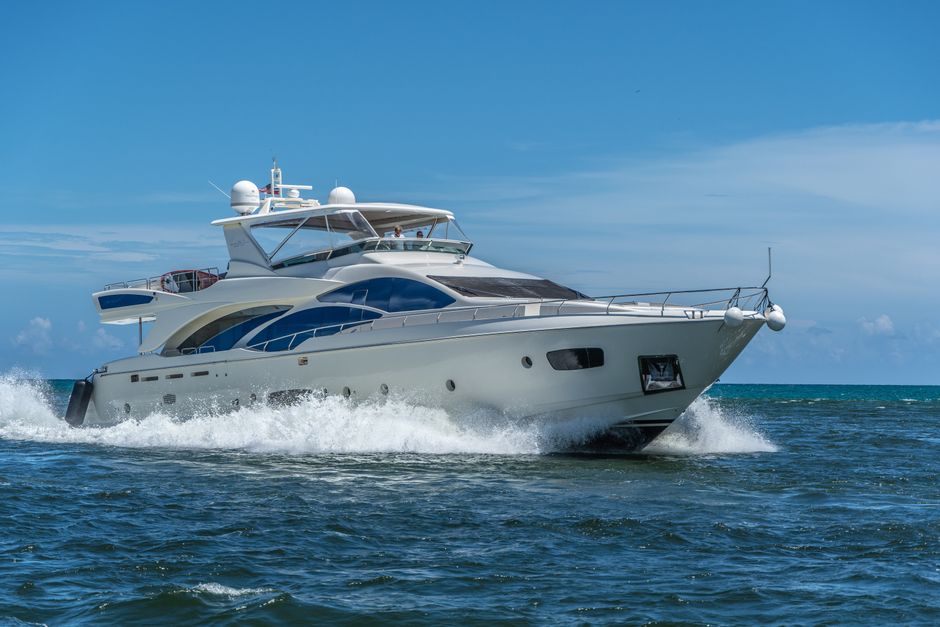
Why Yacht Insulation Materials in Miami Make or Break Onboard Comfort
If you’re researching yacht insulation materials in Miami, here are the most important options to know about:
| Material | Best For | Key Benefit |
|---|---|---|
| Closed-cell polyolefin foam | HVAC ducts, refrigeration, pipes | Prevents condensation and mold |
| Stone wool (SeaRox® FB 6050) | Fire-rated A-class divisions | Lightweight, non-combustible |
| Closed-cell PIR/XPS foam | High-moisture zones | Zero water absorption |
| Phenolic panels | Engine rooms | Heat and flame resistance |
| Composite acoustic panels | Cabins, interior walls | Combines thermal and sound control |
Miami’s marine environment is brutal on yachts. The combination of extreme heat, near-constant humidity, and salt air puts more stress on onboard insulation than almost any other climate in the U.S. When insulation fails — or was never right to begin with — the consequences show up fast: condensation dripping from AC ducts, mold spreading through cabin walls, refrigeration systems working overtime, and engine room heat bleeding into living spaces.
This isn’t just a comfort problem. Poor insulation drives up energy costs, accelerates corrosion on metal piping and structural components, and creates the kind of moisture conditions where mold and mildew take hold quickly. In South Florida waters, that cycle can start within weeks of a vessel sitting at the dock.
The good news is that modern marine-grade insulation materials are specifically engineered to handle these conditions — with certified performance, fire safety compliance, and moisture resistance built in from the start.
FCS Marine provides professional yacht insulation services for vessel owners, captains, and project managers across Miami-Dade County and South Florida, coming directly to where your vessel is located to assess, remove, and replace failing insulation systems.
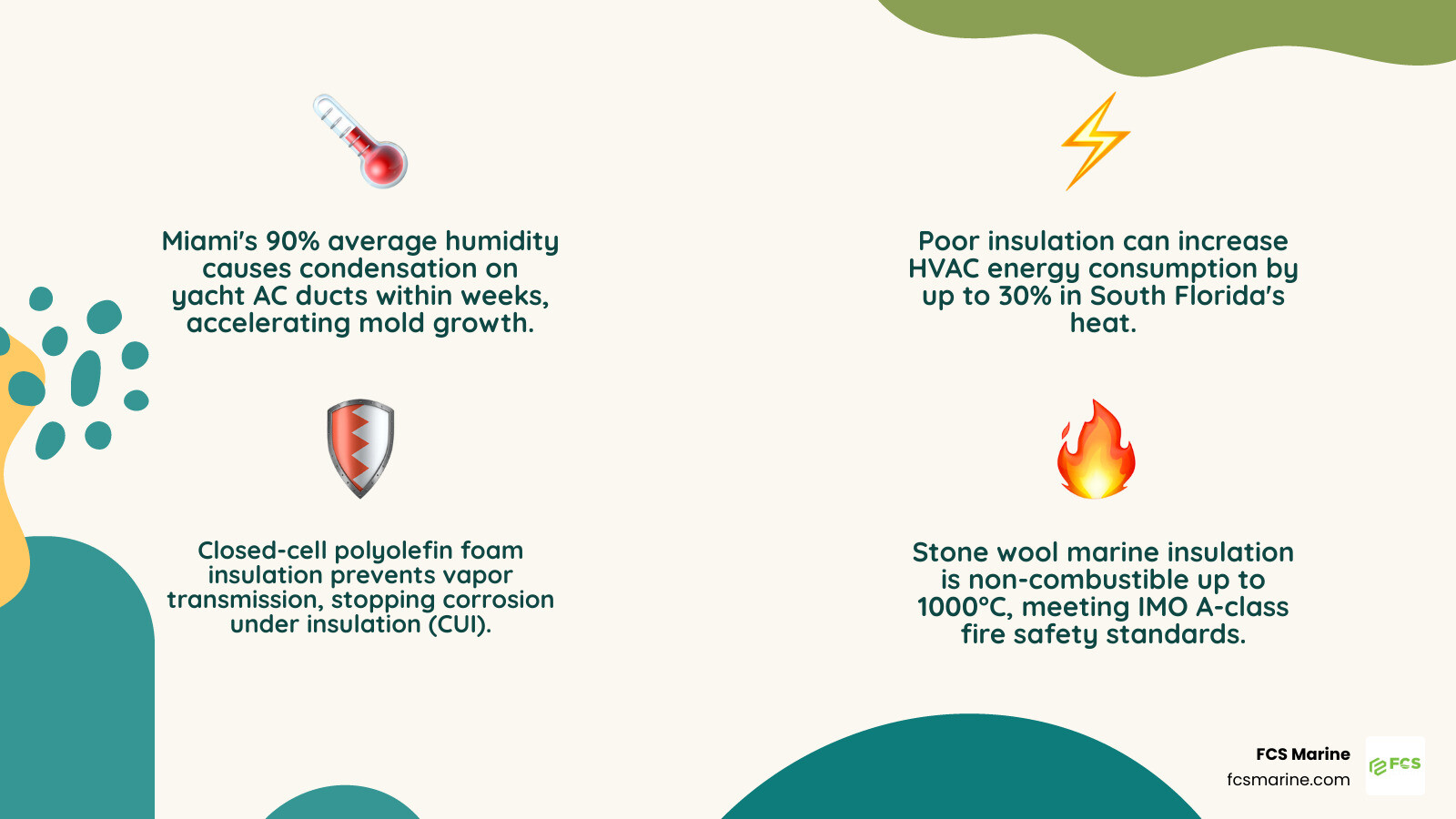
Yacht insulation materials miami word roundup:
The Core Challenges of Yacht Insulation in South Florida’s Climate
Operating a vessel in South Florida means dealing with a relentless tropical climate. Whether your yacht is docked in the luxury marinas of Miami-Dade County, cruising through Broward County, or moored in Palm Beach County, the heat transfer from the intense Florida sun is constant.
Without high-performance yacht insulation materials in Miami, the temperature difference between your cooled indoor cabins and the sweltering outdoor air creates a breeding ground for thermodynamic issues. Heat naturally wants to migrate into your air-conditioned spaces, forcing your marine AC systems to run continuously. This thermal transfer is not just an efficiency killer; it is the primary driver behind the two most destructive forces on any vessel: condensation and corrosion.
Preventing Condensation and Mold in Miami-Dade County
In high-humidity environments, any cold surface that is not properly insulated will instantly sweat. When your marine air conditioning system pumps chilled air through metal ductwork, those ducts become cold. If the surrounding air in the ceiling voids or behind panels is warm and humid, moisture condenses on the exterior of the ducts.
This dripping moisture quickly pools in inaccessible areas, soaking surrounding materials. Before long, you are dealing with a serious indoor air quality crisis. Moisture plus warmth equals mold and mildew.
To understand the difference between these two fungi and how they take hold, you can read our breakdown of mildew vs mold. Once mold spores begin to multiply behind your yacht’s beautiful wood paneling, simple cleaning won’t cut it. You will require specialized marine mold remediation and yacht sanitization to safely restore your vessel’s air quality and protect the health of your guests and crew.
Combating Corrosion Under Insulation (CUI) in Saltwater Environments
Salt air is highly corrosive, but when it is trapped against metal piping, chillers, or structural hulls by wet, absorbent insulation, the destruction accelerates exponentially. This phenomenon is known as Corrosion Under Insulation (CUI).
Traditional insulation materials like standard fiberglass batts act like a sponge. They absorb moisture, holding the saltwater mist directly against steel or aluminum pipes and hulls. Because the insulation covers these areas, the corrosion remains hidden from view until a pipe bursts or structural integrity is compromised.
To prevent CUI, modern yacht builders and refit yards use advanced materials like the ThermaSmart Marine 4.0 Sheet. This material features a water vapor diffusion resistance factor (µ) greater than 18,000 (for 25 mm thickness). This means it forms an almost impenetrable barrier against water vapor, keeping moisture completely away from the underlying metal and eliminating the threat of CUI.
Selecting High-Performance Yacht Insulation Materials Miami
When choosing yacht insulation materials in Miami, you have to look beyond basic R-values. In a marine environment, thermal conductivity, water vapor diffusion resistance, fire safety, and weight are all equally critical.
| Performance Metric | Polyolefin Foam (e.g., ThermaSmart®) | Stone Wool (e.g., SeaRox®) | Traditional Fiberglass |
|---|---|---|---|
| Thermal Conductivity (λ) | 0.035 W/m·K (at 10°C) | Highly Efficient | Moderate |
| Moisture Resistance | Excellent (µ > 18,000) | Hydrophobic (water absorption ≤ 1 kg/m²) | Poor (absorbs water) |
| Fire Safety | IMO Certified, Low/Non-toxic Smoke | Non-combustible (A-class approved) | Melts at lower temps |
| Weight | Ultra-lightweight (≤ 40 kg/m³) | Lightweight (70 kg/m³ nominal) | Heavy when wet |
Closed-Cell Polyolefin Foam for HVAC and Refrigeration Systems
For chilled water lines, AC ductwork, refrigeration systems, and water tanks, closed-cell polyolefin foam is the gold standard. Materials like ThermaSmart® Marine – Premium Ship Insulation Solution are engineered from direct-extruded, closed-cell polyolefin foam reinforced with a black aluminum foil layer.
Because it has a closed-cell structure of over 85%, it does not absorb water. It is completely resistant to mold and fungus growth (certified under ASTM C1338-19). Furthermore, with a service temperature range of -80°C to +95°C, it is versatile enough to insulate extreme-cold cryogenic freezers as well as hot water lines.
Using high-performance polyolefin foam on your marine air conditioning lines ensures your HVAC system maintains maximum thermal efficiency, saving fuel and preventing the “floating sauna” effect.
Lightweight Stone Wool for Fire Safety and Structural Protection
While polyolefin foam is perfect for HVAC and refrigeration, structural bulkheads and engine rooms require materials that can withstand extreme heat and prevent the spread of fire. This is where lightweight stone wool, manufactured from natural volcanic rock, excels.
Products like SeaRox® FB 6050 lightweight A-class marine insulation boards are non-combustible and specifically approved for A-class steel and aluminum structural divisions. Despite its robust fire protection, SeaRox® FB 6050 has a nominal density of only 70 kg/m³.
This lightweight profile is incredibly important for modern yacht construction. By reducing the overall weight of the vessel’s insulation package, owners enjoy improved fuel efficiency, higher speeds, and increased payload capacity without compromising on safety.
Key Regulatory Standards and Certifications for Marine Insulation
You cannot simply use residential or commercial building insulation on a yacht. Marine vessels are subject to strict international maritime safety and quality regulations. When we perform on-site yacht service in South Florida, we always ensure that the materials selected carry the proper marine certifications.
Always look for:
- Lloyd’s Register Type Approval: Ensures the material has been rigorously tested and approved for maritime use.
- MED Certification (Wheelmark): Confirms compliance with the Marine Equipment Directive for European and international vessels.
- DNV-GL Certification: Another leading international marine classification society standard that guarantees quality and safety.
Fire Safety Compliance and Low-Smoke Yacht Insulation Materials Miami
In the unfortunate event of an onboard fire, the toxicity of the smoke generated is often a greater threat to life than the flames themselves. Enclosed vessel spaces can trap toxic fumes quickly, making low-smoke performance a lifesaving feature.
The International Maritime Organization (IMO) sets strict fire safety standards under the IMO 2010 FTP Code. Advanced materials, such as those highlighted in the Sustainable Insulation Solutions for Maritime Industry guide, are completely halogen-free and PFAS-free. In a fire, they produce minimal, non-toxic smoke, giving passengers and crew critical time to evacuate safely.
Environmental Sustainability and Halogen-Free Standards
Modern yacht owners and builders are increasingly focused on reducing their environmental footprint. Selecting sustainable, eco-friendly yachting materials is no longer just an afterthought.
Halogen-free and PFAS-free insulation materials do not release harmful chemicals into the environment during production, use, or disposal. Additionally, high-quality thermoplastic polyolefin foams are 100% recyclable. Choosing these certified sustainable materials ensures your vessel complies with both EPA sustainability standards and global environmental goals.
Installation Best Practices and Custom Fabrication
Even the most advanced insulation material will fail if it is poorly installed. Achieving a continuous, airtight, and vapor-tight seal is absolute key to preventing condensation and CUI in South Florida’s humid climate.
Custom Fabrication of Yacht Insulation Materials Miami
No two yachts are built exactly alike. Tight engine rooms, curved hulls, and complex overhead duct designs require custom solutions.
To solve this, custom fabrication services (such as those provided by APM domestically in the USA) allow for the creation of tailored composite panels. These panels can combine thermal insulation, acoustic dampening (like acoustic wood fiber panels), and decorative finishes into a single, high-performing structural component. This custom approach ensures a perfect fit for unique yacht designs while speeding up the installation process.
Professional Installation and Vapor Barrier Integrity
When installing polyolefin tube or sheet insulation, traditional chemical glues can degrade over time due to heat, humidity, and vibration.
To ensure long-term performance, we utilize advanced installation techniques:
- Glueless Welded Connections: Utilizing heatplates to thermally weld polyolefin foam joints together. This creates a homogeneous, airtight, and vapor-tight bond without relying on adhesives.
- Seam Sealing: All longitudinal and front-side connections must be sealed using specialized self-adhesive Marine Black Tape (with a minimum width of 50 mm) to guarantee vapor barrier integrity.
- Complete System Coverage: Ensuring no gaps are left around valves, hangers, or bends, which are common failure points where condensation can start.
If you are inspecting your vessel’s systems, refer to our marine AC maintenance checklist to identify early warning signs of insulation failure or HVAC wear.
Frequently Asked Questions about Yacht Insulation
What is the best insulation to prevent mold on a yacht?
The best material to prevent mold is closed-cell polyolefin elastomer foam, such as ThermaSmart® Marine 4.0. Because it has a closed-cell structure (>85% closed cells) and is certified under ASTM C1338-19, it does not absorb water or support fungal growth. Keeping your yacht insulated with closed-cell materials is a key step in learning how to stop your yacht from turning into a floating sauna.
How does lightweight insulation improve yacht fuel efficiency?
Every pound saved on a vessel directly translates to less fuel burned. Lightweight marine insulation boards like SeaRox® FB 6050 have a nominal density of only 70 kg/m³ while providing excellent A-class fire protection. Replacing heavy, waterlogged traditional insulation with lightweight, hydrophobic modern materials reduces the vessel’s deadweight, lowering fuel costs and increasing range.
Why is acoustic insulation important for luxury yachts?
Acoustic insulation is vital for passenger comfort. Engine rooms, generators, and HVAC chillers generate high decibel levels and structural vibrations. High-performance insulation boards provide dual-benefit thermal control and sound absorption (for example, SeaRox® boards have a sound absorption rating of αw = 0.55). This dampens airborne noise and structural vibrations, keeping cabins quiet and peaceful.
Conclusion: Protect Your Vessel with Professional Marine Service
Choosing the right yacht insulation materials in Miami is a critical investment in your vessel’s longevity, safety, and comfort. From preventing mold and CUI to optimizing your marine air conditioning and refrigeration systems, high-performance insulation is your yacht’s first line of defense against South Florida’s demanding climate.
At FCS Marine, we specialize in providing high-quality mobile marine service in South Florida. Our experienced team comes directly to your vessel’s location — whether you are docked at a private residence, a boat yard, or a local marina in Miami-Dade County, Broward County, or Palm Beach County. We assess your thermal and acoustic insulation needs, remove failed materials, and professionally install certified, marine-grade solutions with a satisfaction guarantee.
Don’t let failing insulation compromise your comfort or damage your yacht’s systems. Contact FCS Marine today to schedule professional on-site yacht service and keep your vessel protected.