Why Reliable Yacht Refrigerator Service in Florida Is Non-Negotiable
If you’re dealing with a warm icebox, spoiled provisions, or a compressor that won’t quit cycling, yacht refrigerator service Florida is what stands between a great day on the water and a very expensive emergency call.
Here’s what you need to know right now:
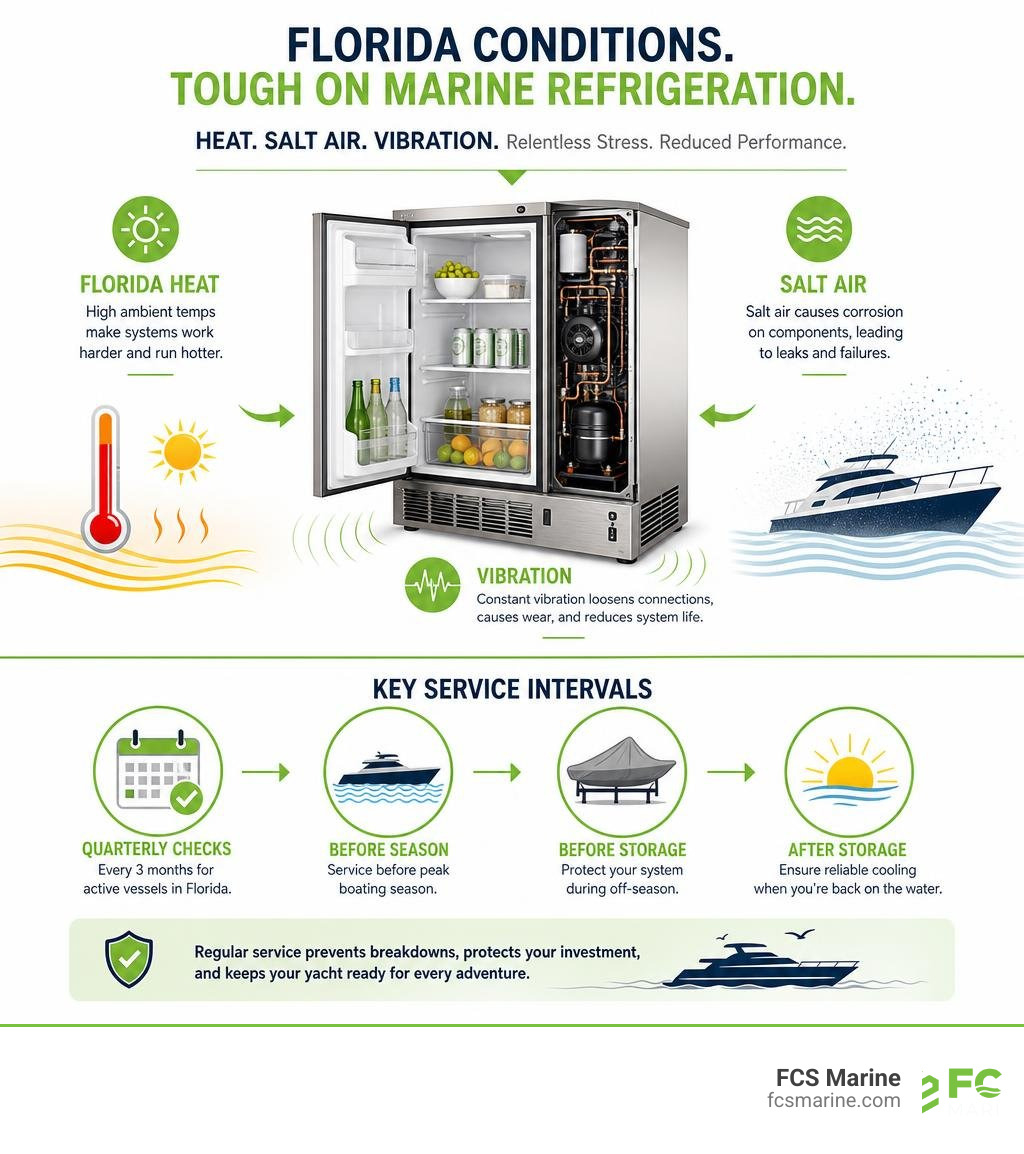
- Service frequency: Active vessels in Florida need quarterly refrigeration checks, plus service before and after storage periods.
- Top warning signs: Fridge runs constantly but stays warm, ice cream goes soft, compressor clicks on and off, or you hear buzzing and rattling.
- Common culprits: Dirty condenser coils, low refrigerant, salt air corrosion, and restricted seawater flow.
- What to do: Schedule a dockside diagnostic with a marine-certified technician — most repairs can be completed on the first visit when the tech carries OEM parts.
- Who to call: FCS Marine provides dockside marine refrigeration repair and service across South Florida, including Palm Beach, Broward, Miami-Dade, Martin, and St. Lucie counties.
Florida’s heat is brutal on marine refrigeration. Ambient temperatures regularly top 90°F, and engine rooms can hit 130°F or higher. That means your yacht’s refrigeration system works three to four times harder than a residential unit — and it’s doing it in salt air, with constant vibration, and often on fluctuating shore power.
A system that ran perfectly up north can fail within a season in South Florida without the right maintenance.
This guide walks you through exactly what regular service looks like, what causes failures, and how to keep your galley cold all year.
Understanding Yacht Refrigeration Systems in Florida’s Climate
To keep your drinks frosty and your fresh-caught mahi-mahi perfectly preserved, you need to understand how marine cooling units function in South Florida. Unlike home refrigerators that sit in temperature-controlled kitchens, yacht systems are subjected to brutal ambient temperatures and high humidity.
When your yacht is docked at a marina in Pompano Beach FL or cruising through Fort Lauderdale, the surrounding air temperature is often in the high 90s. If your refrigeration condensing unit is located in the engine room or a tight lazarette, it has to reject heat into an environment that can easily reach 130°F.
To cope with this extreme load, marine systems rely on specialized designs. While some smaller boats use simple air-cooled units, larger yachts utilize seawater cooling systems. These systems pump raw ocean water through a coaxial condenser to shed heat much more efficiently than air. However, seawater cooling introduces its own set of maintenance challenges, such as marine growth, scale buildup, and pump failures.
To help you visualize the differences, here is a comparison of the three primary types of marine refrigeration systems commonly found on yachts in South Florida:
| System Type | How It Works | Best Suited For | South Florida Pros & Cons |
|---|---|---|---|
| Self-Contained Systems | Hermetically sealed compressor and evaporator in a single, compact cabinet. | Galley drawer units, flybridge beverage centers, salon fridges. | Pros: Easy to install, reliable. Cons: Struggles if ventilation is poor; rejects heat directly into cabin space. |
| Holding Plate (Cold Plate) Systems | A compressor runs to freeze a dense eutectic solution inside a stainless steel plate, which slowly releases cold. | Deep freezers, active cruising sailboats, offshore sportfishers. | Pros: Extremely energy-efficient; holds temperature for hours without power. Cons: High initial cost; takes up more box space. |
| Thermoelectric Units | Uses the Peltier effect (electrical current passing through two different metals) to create a temperature difference. | Small countertop coolers, wine chillers. | Pros: No moving parts, quiet, no refrigerant. Cons: Very low cooling capacity; completely inadequate for Florida’s 90°F+ summers. |
For a deeper dive into these configurations and to see which setup is right for your vessel, check out our comprehensive guide on Marine Refrigeration.
Self-Contained and Holding Plate Systems
When we look closely at high-performance marine refrigeration systems, self-contained and holding plate designs dominate the luxury yacht market.
In a self-contained system, the compressor, condenser, and evaporator are engineered to fit into tight cabinetry. These are highly popular for salon beverage centers and standard galley configurations. Brands like Isotherm and Vitrifrigo build exceptional self-contained units. For instance, top-tier boatbuilders like Viking Yacht Company rely heavily on these space-saving, highly engineered cabinets to maximize galley efficiency.
Holding plate systems, on the other hand, are the heavy lifters of the marine world. They utilize a compressor to cycle refrigerant through an evaporator coil embedded inside a thick, sealed plate filled with eutectic fluid. Think of it as a heavy-duty, reusable ice pack that is permanently mounted inside your freezer box.
Because the holding plates store “cold energy,” the compressor only needs to run once or twice a day to freeze the plate. This makes them incredibly popular for liveaboards and long-range cruisers who want to minimize generator runtime while anchored in the Florida Keys. However, if the compressor fails or the fluid leaks, you will need specialized yacht refrigerator service Florida to restore system balance.
Why Florida Heat Demands Specialized Yacht Refrigerator Service Florida
It is a simple law of thermodynamics: refrigeration does not actually “create” cold; it removes heat. The higher the temperature outside the refrigerator box, the harder the system has to work to dump that heat.
In South Florida, we regularly experience a 90-degree ambient temperature on the dock, which easily translates to a suffocating 130-degree engine room. This extreme heat increases the load on your condenser exponentially. If your condenser coils are coated in dust, pet dander, or salt crust, they act as an insulating blanket. The compressor will run continuously, overheating its internal motor windings until the thermal overload switch trips.
Without proactive maintenance, this vicious cycle leads directly to system failure. To understand what else might be going wrong behind your galley cabinetry, read about the Common causes of marine refrigeration failure to keep your system protected before the summer heat peaks.
How the Marine Environment Affects Your Yacht Refrigerator
Operating a refrigerator on land is easy. Operating one on a yacht is a constant battle against three relentless elements: salt, motion, and unstable power.

When a refrigerator is installed on a yacht, it is exposed to highly corrosive salt air that accelerates the degradation of every metal component. Unlike residential units, marine refrigerators must also withstand constant vibration from diesel propulsion engines, generator sets, and hull impact against the waves. Over time, this vibration creates microscopic cracks in copper refrigerant lines and loosens electrical spade connectors.
Furthermore, marine systems must cope with fluctuating power supplies. Yachts constantly transition between shore power, generator power, and battery-driven inverters, subjecting the refrigerator’s sensitive electronic control modules to damaging voltage spikes.
If your system is struggling with these environmental stressors, it can lead to ice accumulation and airflow blockages. You can learn more about this specific issue by reading our guide on Why marine refrigeration systems freeze up.
Salt Air Corrosion and Vibration Damage
Salt air is the ultimate enemy of marine machinery. It triggers galvanic corrosion, particularly where different metals meet—such as copper refrigerant tubing making contact with steel chassis plates or aluminum evaporators.
As salt crust builds up on the condenser coils, it restricts airflow and degrades the metal. Eventually, this corrosion eats through the thin walls of the copper lines, causing slow, hard-to-detect refrigerant leaks.
Vibration compound these issues. A yacht running at cruising speed through South Florida’s coastal waters subjects its galley appliances to continuous structural stress. This constant movement can cause:
- Rubbing between copper refrigerant lines, leading to friction leaks.
- Loosened electrical contacts on the compressor start relay.
- Fractured solder joints on the main electronic control board.
- Misaligned door hinges, which break the magnetic seal and allow humid air to pour inside.
Power Fluctuations and Voltage Spikes
Your yacht’s electrical grid is a dynamic environment. When you disconnect from dockside shore power in Pompano Beach and fire up your generator, or when your heavy-duty air conditioning chillers cycle on, the boat’s voltage can sag or spike.
Residential refrigerators are designed for a steady, clean 120V feed. Marine units—especially luxury brands like Sub-Zero—rely on highly sensitive electronic control boards to manage variable-speed compressors and digital thermostats. A sudden voltage spike during a generator transfer can instantly fry these control boards.
If you suspect your luxury cooling system has suffered electrical damage, it is critical to have a marine-certified technician inspect the control boards and wiring to prevent further damage and restore reliable operation.
Step-by-Step Guide to Yacht Refrigerator Service Florida
While major repairs require professional equipment and EPA-certified technicians, there are several key maintenance steps that yacht captains and owners can perform to keep their systems running efficiently.

Proactive care is the absolute best way to protect your investment and avoid the dreaded $2,000 emergency service call when you have guests onboard. By following a structured maintenance routine, you can significantly extend the operational lifespan of your appliances.
To get an idea of what to expect regarding the longevity of your onboard cooling systems, read our expert analysis on How long marine refrigeration systems last.
Step 1: Clean the Condenser Coils and Check Seawater Flow
For air-cooled systems, the condenser coil is usually located at the bottom or back of the unit. For seawater-cooled systems, it is a heat exchanger located in the mechanical space.
For Air-Cooled Condensers:
- Locate the condenser unit (often behind a slotted teak grille or metal intake vent).
- Use a soft-bristled brush or a vacuum cleaner with a brush attachment to gently remove dust, pet hair, and salt crust from the delicate aluminum fins.
- Ensure that nothing is blocking the intake or exhaust vents. Yachtsmen often pack dry goods or storage boxes right against these vents, suffocating the compressor.
For Seawater-Cooled Condensers:
- Inspect the raw water sea strainer. Clean out any grass, shells, or marine debris.
- Check the overboard discharge port while the system is running to ensure a steady flow of water.
- If you notice a weak flow or high compressor temperatures, the condenser may need to be flushed with a mild descaling acid to remove barnacles and calcium scale that restrict heat rejection.
Step 2: Inspect Door Gaskets and Seals
In South Florida’s humid climate, a compromised door gasket is a major energy drain. It allows warm, moisture-laden air to constantly enter the cold cabinet.
- The Dollar Bill Test: Open the refrigerator door, place a dollar bill across the gasket, and close the door. Pull the bill. If it slides out easily with no resistance, your gasket is not sealing properly. Repeat this test around the entire perimeter of the door.
- Clean the Gaskets: Wipe down the magnetic door seals with warm, soapy water. Avoid harsh chemicals, which can dry out and crack the vinyl.
- Check Latch Alignment: Because yachts move and flex, door latches can slip out of alignment. Adjust the hinges or latch mechanism to ensure the door is pulled tightly against the cabinet frame when closed.
Step 3: Monitor Electrical Connections and Refrigerant Levels
This step bridges the gap between routine owner maintenance and professional service.
- Inspect Wiring: Visually check the wiring harness leading to the compressor. Look for frayed insulation, green copper corrosion on terminals, or signs of overheating (melted plastic connectors).
- Measure Voltage: Using a digital multimeter, verify that the unit is receiving clean, stable voltage (typically 12V/24V DC or 120V AC, depending on your system). Low voltage causes the compressor to draw high amperage, leading to overheating.
- Observe System Pressures (Professional Only): If the compressor is running but the evaporator coil is only partially frosting, you likely have a refrigerant leak. Under federal law, only technicians with EPA 608 certification are permitted to connect pressure gauges, locate leaks, and recharge the system with marine-grade refrigerant.
When to Call a Professional for Yacht Refrigerator Service Florida
While keeping your coils clean is a great DIY task, certain symptoms point to deeper mechanical or electrical failures that require a professional touch.
You should call us immediately if you experience:
- Soft Ice Cream: This is the classic first sign of a failing system. Freezers must maintain 0°F to keep high-fat items like ice cream solid. If your ice cream is mushy, your system is losing cooling capacity.
- Constant Running: If your compressor never shuts off, it is struggling to reach the set temperature. This will quickly burn out the motor.
- Clicking Noises: A distinct “click-clack” sound coming from the compressor area every few minutes indicates that the compressor is trying to start but is tripping on its thermal overload switch.
- Heavy Frost Accumulation: If your evaporator turns into a massive block of ice within a few days, you either have a severe air leak or a failed defrost component.
When your cooling stops unexpectedly, timing is everything. Read about our rapid-response Emergency marine refrigeration repair services to see how we quickly save your provisions and get your yacht back to peak performance.
Frequently Asked Questions about Yacht Refrigeration
Keeping your galley cold in South Florida requires reliable information. Here are the answers to the most common questions we receive from captains, yacht managers, and owners.
How often should yacht refrigeration systems be serviced in Florida?
At FCS Marine, we recommend a quarterly maintenance check for active vessels operating in South Florida. The extreme heat and humidity of Palm Beach, Broward, and Miami-Dade counties mean that your equipment works year-round without a winter break.
Our standard recommended maintenance schedule includes:
- Monthly: Check and clean air vents, inspect sea strainers, and verify water flow.
- Quarterly: Deep clean condenser coils, inspect door gaskets, check latches, and test electrical connections.
- Annually: Perform a full system diagnostic, check refrigerant pressures, inspect electrical control boards, and chemically flush seawater-cooled condensers.
- Before & After Storage: If you lay up your vessel for the season or prepare for a crossing, a full service ensures you don’t return to a moldy, warm refrigerator.
What are the most common marine refrigeration brands serviced in Florida?
The South Florida luxury yacht market utilizes several premier marine refrigeration brands, each engineered for specific onboard applications:
- Vitrifrigo: Renowned for sleek, Italian-designed stainless steel drawer units and double-door configurations.
- Isotherm: Highly regarded for their energy-efficient AC/DC compressors and innovative holding plate systems.
- Frigoboat: Famous for their highly efficient keel-cooled systems, which use the yacht’s hull to reject heat without requiring a raw-water pump.
- Dometic: A marine industry giant offering everything from portable cooling boxes to built-in galley units.
- Sub-Zero: The gold standard for luxury yacht galleys, providing residential-grade capacity and performance engineered to withstand marine power profiles.
No matter where your yacht is docked along the coast, we provide factory-trained diagnostics for these top brands. If you are located in the northern counties of our service area, including Martin and St. Lucie counties, our team is fully equipped to handle high-end luxury brands like Sub-Zero directly at your dock.
How do technicians handle dockside service for yachts?
At FCS Marine, we know that moving a luxury yacht to a boatyard just to fix a galley fridge is highly impractical. That is why our entire service model is built around fast, dockside service.
When you contact us for support, our process is designed to minimize disruption to your schedule:
- On-Site Diagnostics: Our technicians travel directly to your marina or private dock in Pompano Beach, Fort Lauderdale, or Miami.
- Fully Stocked Mobile Units: Our service trucks operate as mobile parts warehouses. We carry genuine OEM marine parts, digital manifold gauges, leak detection equipment, and marine-grade corrosion-replacement components.
- Care for Your Vessel: We respect your yacht. Our technicians use protective floor runners, wear shoe covers, and leave your galley spotless.
- Comprehensive System Testing: After completing a repair, we don’t just pack up. We perform temperature pull-down tests and monitor amperage draw to verify that your system is running at peak energy efficiency.
We proudly provide this direct dockside support across all major South Florida yachting hubs. You can find our specialized regional teams directly through our local service pages:
Conclusion
A warm refrigerator on a yacht is more than an inconvenience; it can ruin a highly anticipated trip, spoil thousands of dollars in fine provisions, and leave your guests uncomfortable. In the demanding marine environment of South Florida, your appliances require specialized, professional care to survive.
At FCS Marine, we are a family-owned company dedicated to keeping South Florida’s yachting community running smoothly. We specialize in comprehensive yacht maintenance services, including marine AC repair, water purification, and high-performance refrigeration service. Our commitment to you is simple: fast, dockside service backed by a 100% satisfaction guarantee.
Don’t wait for your ice cream to melt or your compressor to fail in the middle of a cruise. Keep the galley cold, the drinks frosty, and the party going. Schedule professional marine refrigeration service with our expert team today!