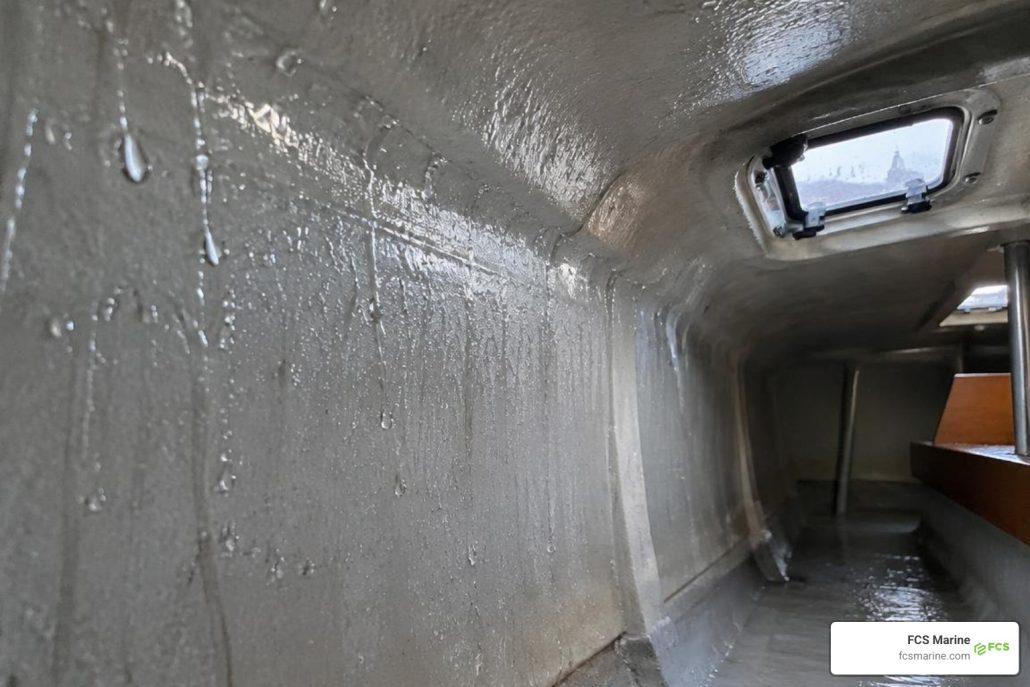
How Boat Insulation Helps Prevent Condensation
To use boat insulation to prevent condensation, start with a clean, dry hull. Bond moisture-resistant, closed-cell insulation directly to the surface, then seal the seams and gaps around frames. This helps keep humid cabin air from reaching cold spots where water can form. Insulate sweating AC ducts and address damp windows, too.
In South Florida, insulation works best alongside working air conditioning and ventilation that keep cabin humidity in check. FCS Marine provides on-site yacht insulation to help boat owners tackle damp surfaces and the mold problems that can follow.
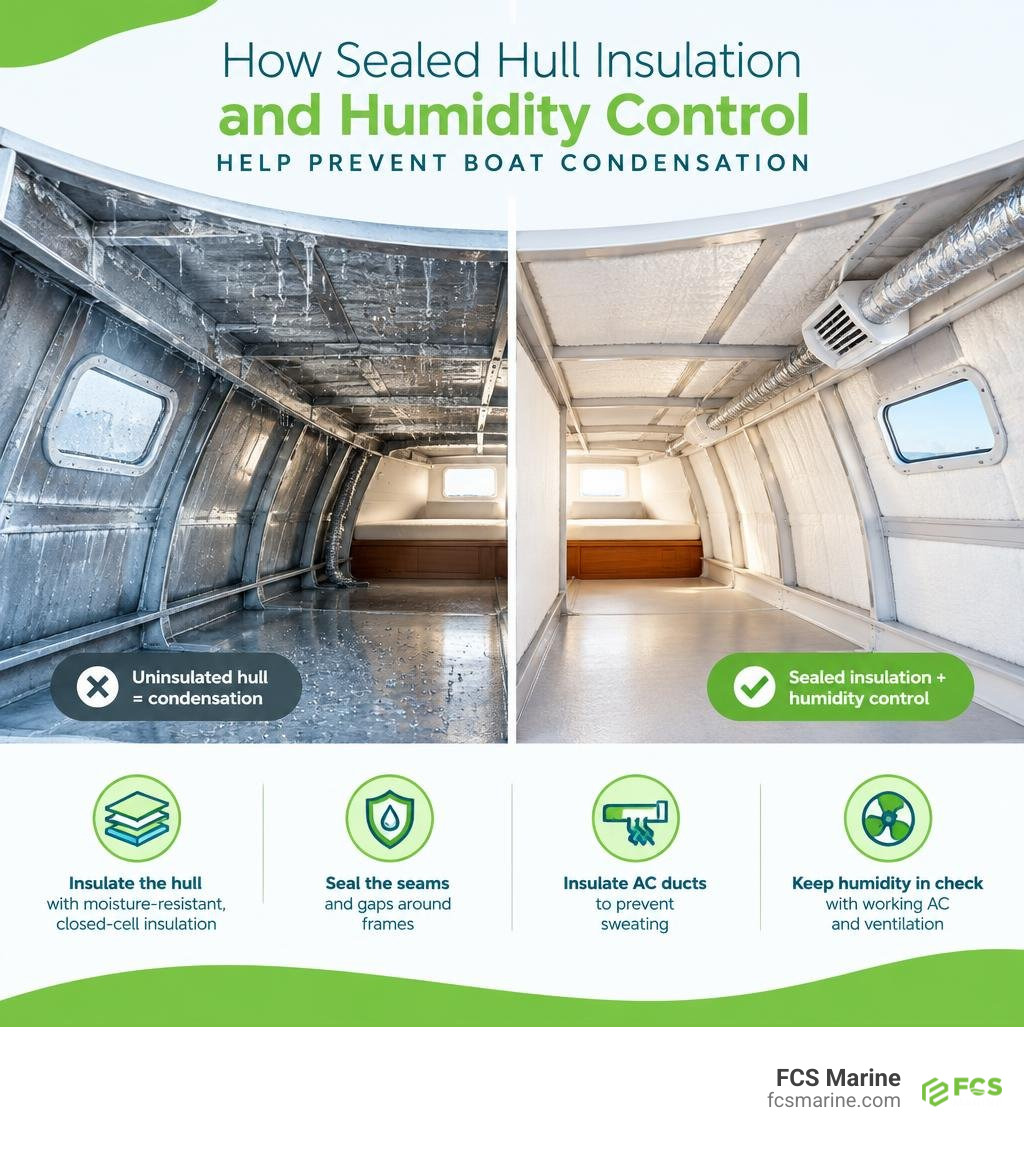
Boat insulation prevent condensation terminology:
The Core Problem of Marine Condensation and Structural Dampness
Condensation inside a boat cabin is not just an annoying damp spot on a pillow; it is a physical process driven by temperature differences and relative humidity. When warm, moisture-laden air inside the vessel comes into contact with a cooler surface—such as an uninsulated hull submerged in ocean water or a bare aluminum window frame—the air cools rapidly. Cooler air cannot hold as much moisture vapor as warm air. When the surface drops below the dew point, that invisible water vapor transforms into liquid moisture.
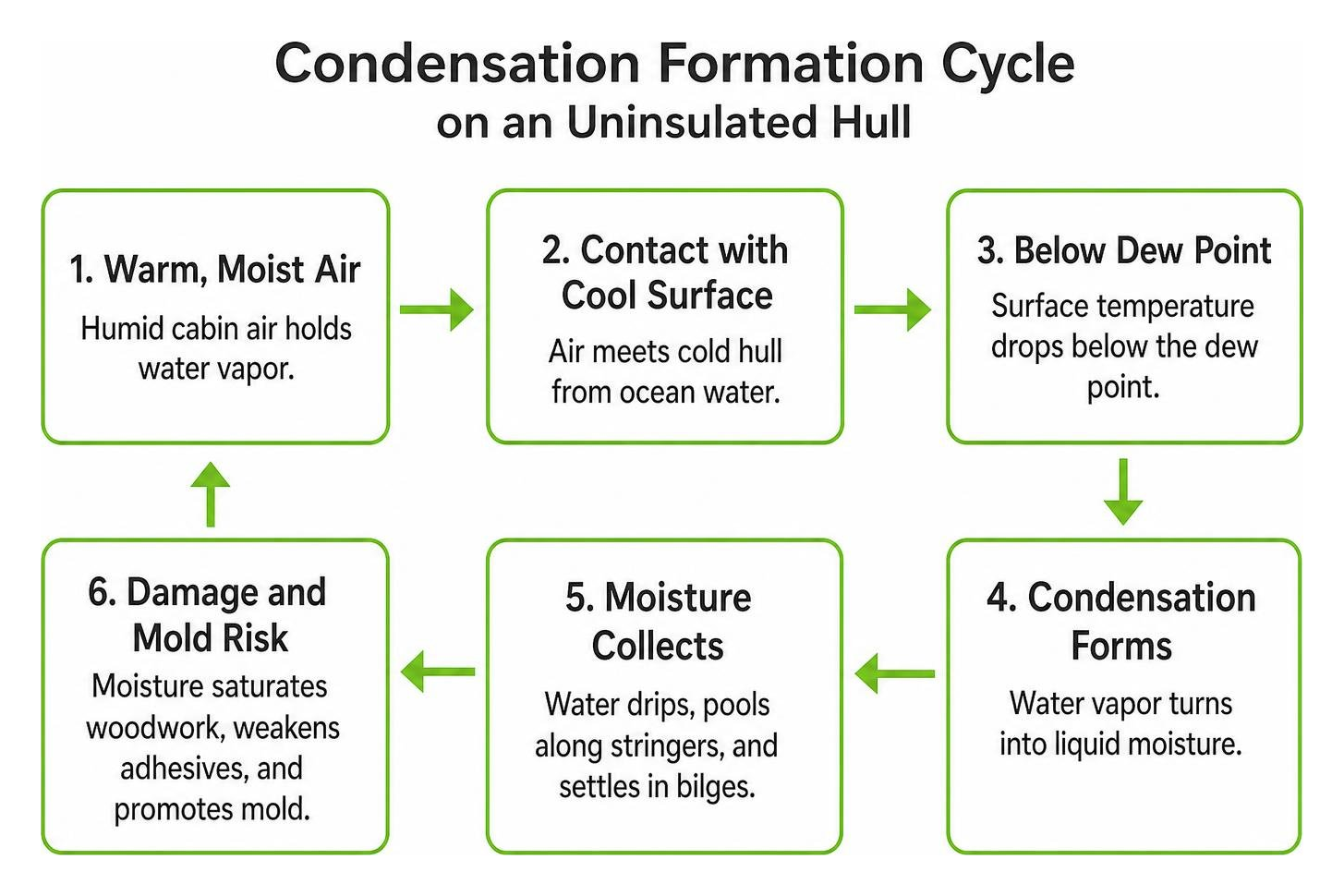
Without proper intervention, this moisture collects behind headliners, pools along stringers, and settles into low-lying bilges. Over time, standing moisture saturates woodwork, degrades structural adhesives, and releases mold spores throughout living quarters. Managing cabin humidity and isolating bare hull surfaces is essential to prevent moisture condensation and maintain a healthy, dry interior.
Marine-Specific Environmental Factors Driving Moisture Accumulation
Boats in coastal environments face constant exposure to high humidity, shifting water temperatures, and salt air. These distinct marine factors accelerate moisture buildup across multiple areas of a vessel:
- Subtropical Humidity and Heat: High ambient moisture means indoor air reaches saturation quickly with everyday living activities like cooking, showering, or even breathing.
- Seawater Temperature Swings: The lower section of a hull rests against seawater that is often significantly cooler than the air inside an air-conditioned or heated cabin, creating a constant temperature differential.
- Thermal Bridges: Highly conductive structural elements like aluminum window frames, bare deck stringers, and stainless steel fasteners bypass interior paneling, creating localized cold surfaces where condensation concentrates.
- Air Conditioning Duct Heat Loss: Uninsulated air conditioning ducts can lose up to 15% of their cooling capacity over a standard 10-foot run, causing the exterior ducting to sweat heavily behind ceilings and bulkheads.
- Vibration and Hull Flexing: Constant movement from waves causes rigid, non-marine insulation materials to crack, loosen, or separate from the substrate, opening gaps where moist air circulates against cold fiberglass or metal.
Critical Warning Signs of Inadequate Vessel Insulation
Moisture issues rarely start in plain sight. They generally develop behind decorative wall panels and headliners long before becoming obvious on the salon floor. Watch for these common indicators:
- Persistent Musty Odors: A damp, earthy smell that remains even after running the air conditioning points to hidden mold growth behind bulkheads.
- Sweating Ports and Windows: Water beads running down glass and pooling on trim indicate severe temperature transfer and insufficient thermal isolation.
- Sagging Headliners and Peeling Veneers: Water accumulating behind overhead panels degrades glues, causing fabrics to detach and fine wood veneers to bubble or rot. Selecting durable South Florida boat interior wall materials helps mitigate surface damage, but backing them with proper insulation solves the root cause.
- Corroded Wiring and Electrical Terminals: Moisture condensing inside wire chases and behind electrical distribution panels leads to green oxidation on copper terminals, sparking, and component failure.
- Damp Mattresses and Under-Bunk Storage: Moisture trapped between exterior hull plating and storage lockers regularly leaves linens, life jackets, and cushions damp to the touch.
How Boat Insulation Helps Prevent Condensation in Marine Environments
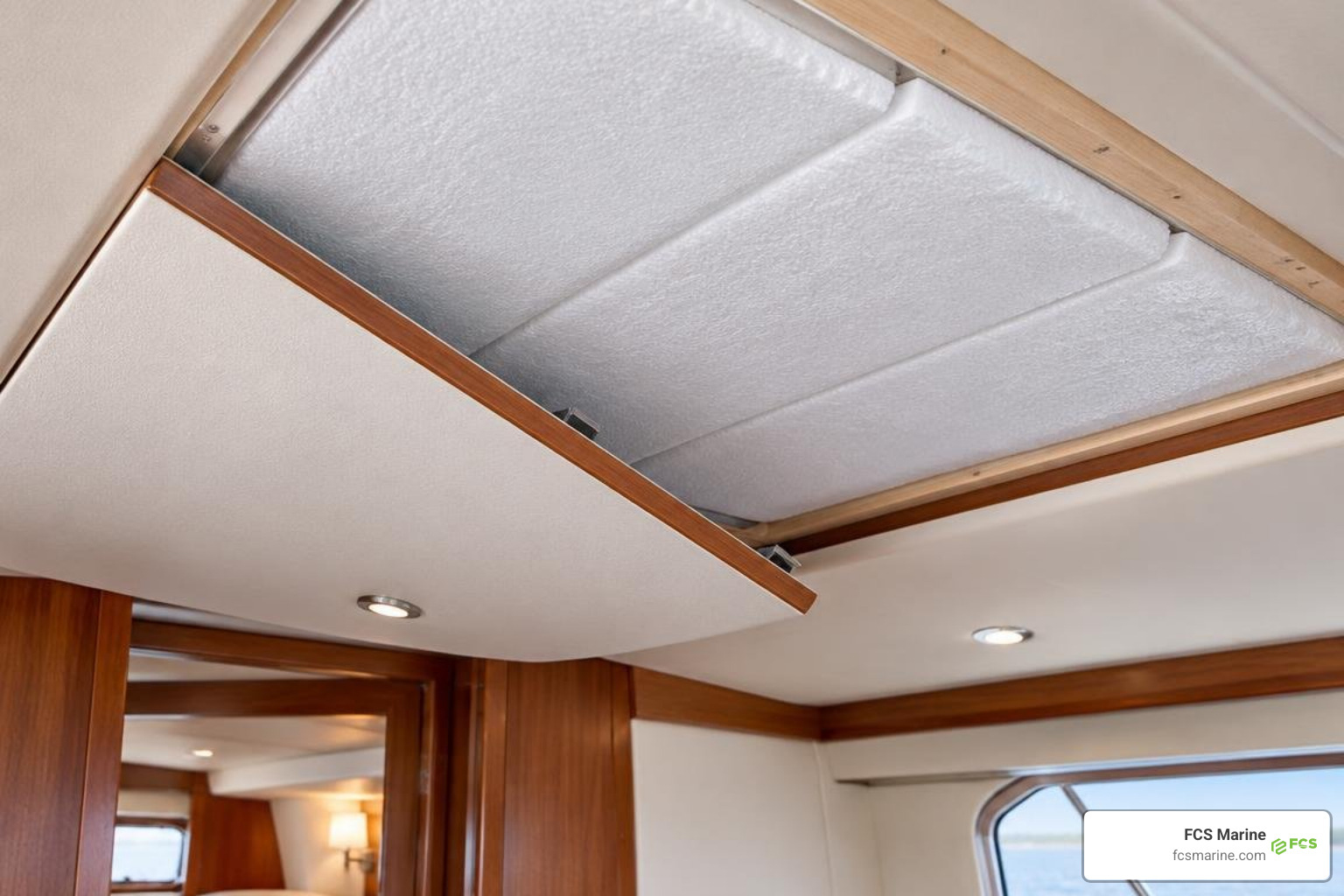
The primary goal of boat insulation is to raise the surface temperature of the interior hull and structural elements above the dew point of the cabin air. By creating a continuous thermal barrier, insulation prevents warm, moist air from touching cold hull substrates.
According to practical field testing published by Dirt-cheap Winter Insulation for Liveaboards – Practical Sailor, a tightly bonded half-inch layer of closed-cell foam prevents sweating on non-cored hull sections under standard marine operating conditions. In colder climates, high-end cruisers like the Elling E6 Review (2019 Edition) demonstrate that combining thorough hull and deck insulation with double-glazed thermo-break windows allows steady climate control and long-range efficiency without condensation buildup.
Choosing Closed-Cell Boat Insulation to Prevent Condensation
Selecting the right insulation material is critical for marine durability. Unlike residential buildings, boats cannot use materials that absorb water or hold vapor.
| Material Type | Typical Thickness | Moisture Absorption | Ideal Marine Application |
|---|---|---|---|
| Closed-Cell Elastomeric (e.g., Armaflex) | 10 mm – 25 mm | Near Zero | Ceilings, hull sides, tight curves, AC ducts |
| Closed-Cell Spray Foam (PUR) | 25 mm – 50 mm | Near Zero | Large hull spans, bulkheads, stringers |
| Sprayed Cork Coating | 1 mm – 4 mm | Low (Breathable) | Curved hulls, interior linings, anti-condensation |
| Nanotech Ceramic Coating | 1 mm – 4 mm | Zero | Low-clearance cabins, metal framing, tight voids |
| Open-Cell Foam / Fiberglass | Variable | High (Acts as sponge) | Not recommended for marine hull contact |
Open-cell foams and unfaced fiberglass absorb ambient water vapor, holding trapped water directly against the hull where it breeds mold and accelerates metal corrosion or fiberglass blistering. Closed-cell polyurethane and flexible elastomeric foams feature sealed cellular walls that prevent moisture penetration entirely, making them the standard choice for marine condensation control.
Installing Boat Insulation to Prevent Condensation Around Thermal Bridges
Installing insulation effectively requires meticulous surface preparation and attention to detail:
- Surface Cleaning and Degreasing: Remove all old adhesive, oil, dust, and salt residues using marine-grade degreasers. The hull substrate must be completely dry and kept above 5°C (41°F) for optimal adhesive bonding.
- Dehumidification: Run a desiccant or rotary dehumidifier inside the vessel before and during installation to draw out all trapped ambient moisture.
- Direct Contact Adhesion: Bond insulation directly to the hull substrate using high-tack, marine-grade contact adhesives or self-adhesive backings. Eliminate all air pockets between the foam and the hull where condensation could form.
- Seam Sealing: Butt insulation joints tightly and seal every seam with heavy-duty vapor-barrier tape or marine sealant (such as polyurethane or MS polymer caulk) to create an airtight thermal envelope.
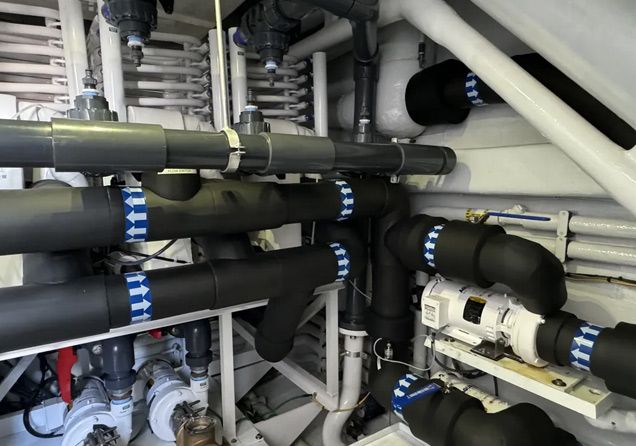
- Mitigating Thermal Bridges: Cover metal ribs, stringers, portlight frames, and hatch surrounds with flexible elastomeric foam to ensure no uninsulated metal surfaces remain exposed to cabin air.
- Safety Precautions: When cutting materials or spraying coatings, always wear personal protective equipment (PPE), including safety glasses, chemical-resistant gloves, protective coveralls, and a well-fitted half-mask respirator rated for organic vapors and airborne particulates.
Comprehensive Climate Control and Preventive Maintenance
Insulation works as part of an integrated climate control system alongside proper ventilation, dehumidification, and mechanical cooling.
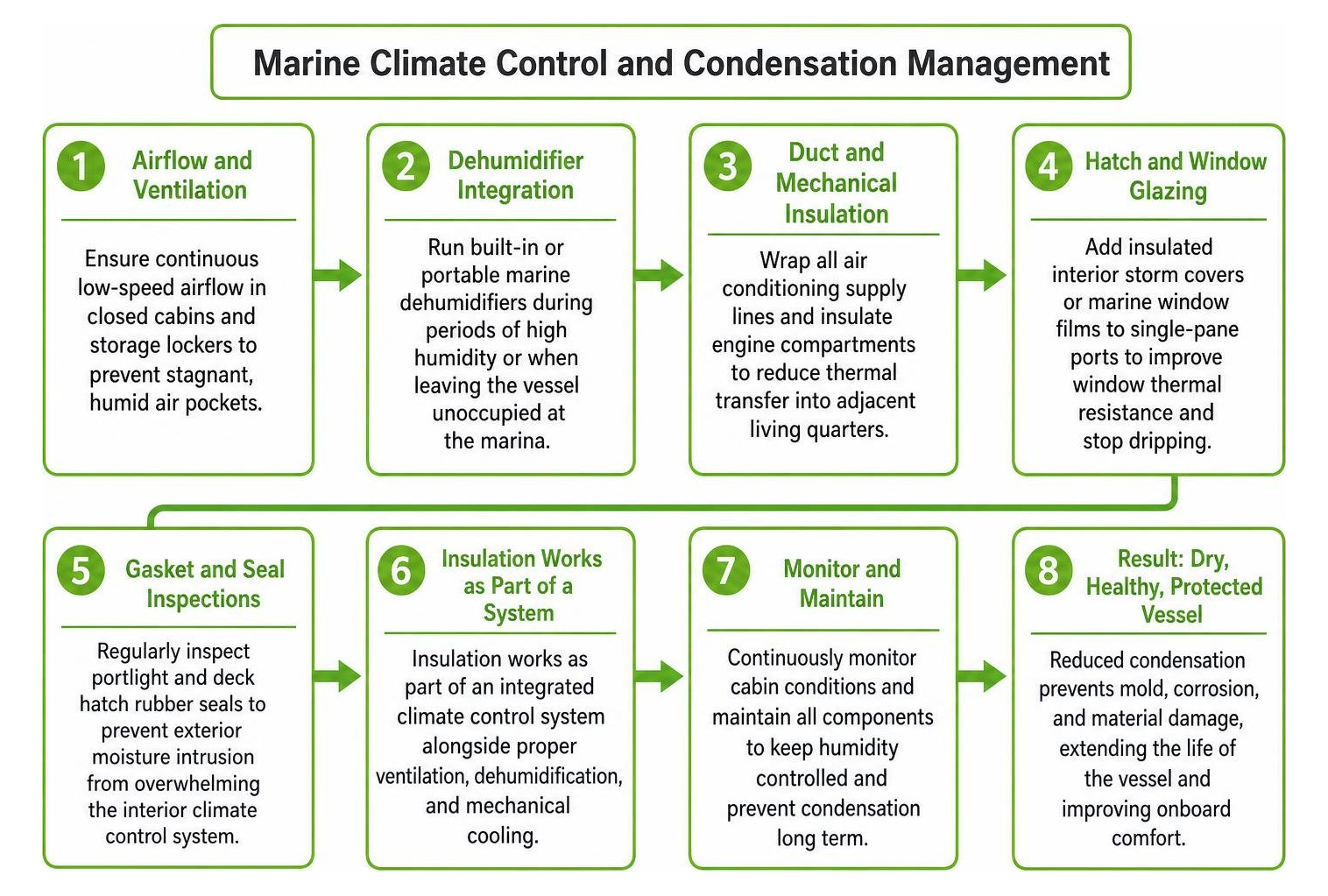
- Airflow and Ventilation: Ensure continuous low-speed airflow in closed cabins and storage lockers to prevent stagnant, humid air pockets.
- Dehumidifier Integration: Run built-in or portable marine dehumidifiers during periods of high humidity or when leaving the vessel unoccupied at the marina.
- Duct and Mechanical Insulation: Wrap all air conditioning supply lines and insulate engine compartments to reduce thermal transfer into adjacent living quarters. For detailed mechanical cooling advice, review our guide on engine bay thermal maintenance.
- Hatch and Window Glazing: Add insulated interior storm covers or marine window films to single-pane ports to improve window thermal resistance and stop dripping.
- Gasket and Seal Inspections: Regularly inspect portlight and deck hatch rubber seals to prevent exterior moisture intrusion from overwhelming the interior climate control system.
Professional Marine Insulation and Moisture Remediation Services
While small DIY patch jobs are common, insulating complex hull geometries, behind headliners, and around engine rooms requires professional marine service. Improperly installed insulation that leaves hidden voids can trap moisture against structural bulkheads, accelerating hidden wood rot and corrosion.
FCS Marine provides comprehensive yacht insulation, air conditioning repair, refrigeration, and mold remediation services throughout South Florida. We deliver mobile, on-site marine service directly to your vessel at marinas, private docks, and boat yards. Whether you need a full thermal audit to pinpoint cold bridges, custom insulation installation complying with Miami marine wall insulation requirements, or ductwork resealing, our team ensures your vessel remains dry, efficient, and comfortable.
South Florida Vessel Service Areas
Our mobile marine technicians provide on-site services across coastal South Florida, traveling directly to your yacht’s location:
- Broward County: Fort Lauderdale, Pompano Beach, Dania Beach, and Hollywood marinas. If you need local support, connect with our marine insulation contractors in Fort Lauderdale.
- Miami-Dade County: Miami, Coconut Grove, Miami Beach, Key Biscayne, and North Miami private docks and yards. Learn more about working with Miami Dade yacht insulation contractors.
- Palm Beach County: West Palm Beach, Boca Raton, Jupiter, and Palm Beach Gardens.
- Martin & St. Lucie Counties: Stuart, Jensen Beach, Port St. Lucie, and Fort Pierce boat yards and waterways.
Frequently Asked Questions About Marine Condensation and Insulation
What insulation thickness is recommended to stop condensation on a boat hull?
A continuous layer of 12 mm to 25 mm (roughly 1/2 inch to 1 inch) of closed-cell elastomeric foam or closed-cell polyurethane spray foam is generally sufficient to prevent condensation on non-cored fiberglass and metal hulls in humid environments. In extreme temperature differentials or cold-weather cruising, thicknesses of 25 mm to 50 mm provide optimal thermal resistance and energy efficiency.
Why is open-cell foam unsuitable for marine insulation projects?
Open-cell foam consists of interconnected air chambers that absorb water and ambient vapor like a sponge. When installed inside a boat hull, it absorbs humidity, traps moisture against the vessel structure, promotes rapid mold growth, and causes hidden structural rot and corrosion. Marine applications require non-absorbent, closed-cell materials.
How do uninsulated air conditioning ducts worsen boat condensation?
When cold air passes through uninsulated ductwork, the outer surface of the duct drops below the dew point of the warm, humid air in the ceiling void. Moisture condenses on the exterior of the duct and drips onto headliners, wiring, and cabinetry, creating persistent leaks and mold behind interior panels.
Can spray-applied cork or ceramic coatings replace thick foam insulation?
Thin spray coatings (ranging from 1 mm to 4 mm) provide effective thermal barriers and humidity regulation in tight spaces where traditional foam cannot fit, such as metal framing, port surrounds, and curved hull sections. However, for maximum thermal efficiency and sound dampening in large living spaces, thicker closed-cell foam panels or marine polyurethane spray foam remain the industry standard.
Contact FCS Marine for Professional Marine Service
Preventing condensation requires the right balance of high-performance insulation, functional marine air conditioning, and active moisture management. If you are experiencing sweating hulls, musty cabin odors, or dripping overheads, our team is ready to help.
FCS Marine offers mobile, on-site vessel support throughout South Florida, specializing in professional yacht insulation, marine AC repair, refrigeration maintenance, mold remediation, water purification systems, and marine equipment rentals. Contact FCS Marine today to schedule an on-site thermal inspection and keep your boat dry, comfortable, and protected year-round.