Why Choosing the Right Boat Interior Wall Materials Can Make or Break Your Vessel
Choosing the right boat interior wall materials is one of the most consequential decisions you’ll make during a refit or new build. Here’s a quick comparison to help you decide:
| Material | Best For | Moisture Resistance | Weight | Cost Range |
|---|---|---|---|---|
| Marine plywood (BS1088) | Structural walls, cabinets | Good (with WBP glue) | Medium | Moderate |
| PVC panels (e.g., Trusscore) | Wet areas, boathouses | Excellent | Low | Moderate |
| Marine vinyl (soft lining) | Cabin walls, headliners | Excellent | Very Low | Moderate–High |
| Aluminum honeycomb | Commercial/superyacht partitions | Excellent | Very Low | High |
| WPC (Wood Plastic Composite) | Houseboats, interior cladding | Very Good | Low–Medium | Moderate |
| Teak/traditional wood | Luxury aesthetics | Poor without treatment | High | High |
The short answer: For South Florida’s humid, salt-heavy marine environment, closed-cell PVC panels and marine-grade vinyl linings are the most practical choices for most boat owners. Marine plywood remains viable when properly sealed with WBP phenolic resin adhesive. Avoid standard residential drywall and untreated wood entirely — they will fail.
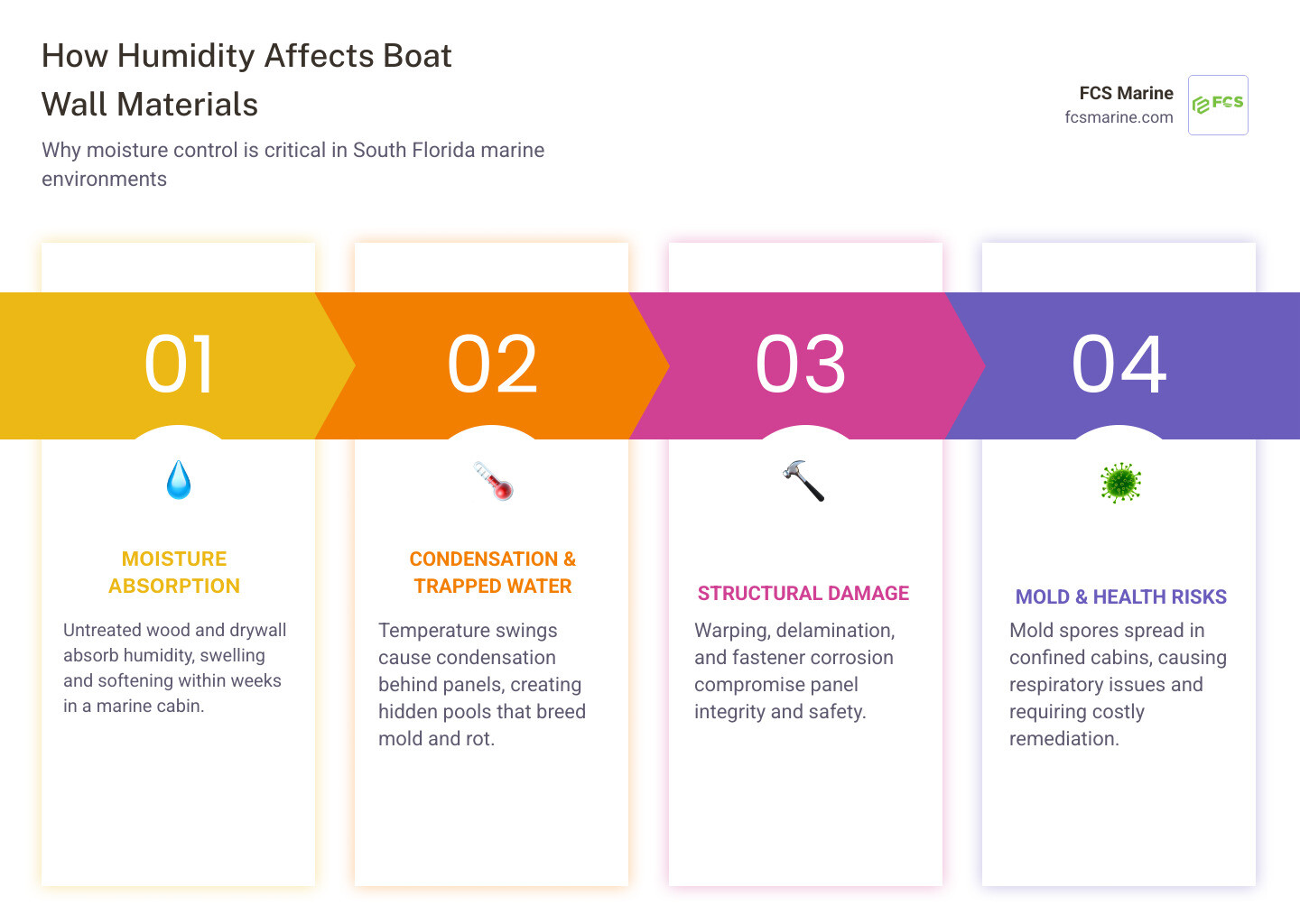
South Florida’s coastal climate is unforgiving. The combination of intense heat, salt air, and near-constant humidity puts extraordinary stress on every surface inside your cabin. What works fine in a home renovation will often rot, warp, delaminate, or grow mold within a single boating season on the water.
And it’s not just about aesthetics. A wall panel that traps moisture behind it becomes a breeding ground for mold — a serious health risk in the confined spaces of a cabin or berth. One forum member working on a classic steel-hulled yacht renovation put it plainly: every surface in a condensation-prone vessel should be smooth and cleanable down to a microscopic level. That’s a high bar, but it’s the right standard to aim for.
The material you choose also affects your vessel’s weight, fire safety, acoustic comfort, and how easy it is to access plumbing and wiring during maintenance. Get it wrong, and you’re looking at a costly rip-out and redo.
At FCS Marine, we work with yacht and boat owners across South Florida — from Fort Lauderdale marinas to Palm Beach private docks — helping vessels stay protected, comfortable, and properly insulated from the inside out.
Related content about boat interior wall materials:
The Core Challenge of Selecting Boat Interior Wall Materials
When planning a yacht interior refit, selecting the right substrates and finish materials is a delicate balancing act. Unlike a stationary home, a boat is a dynamic, high-vibration environment constantly exposed to moisture, temperature extremes, and salt-laden air.
To ensure long-term durability and onboard comfort, any material selected for marine walls must address several critical performance factors:
- Moisture and Rot Resistance: High humidity and condensation are constants on the water. Non-porous or closed-cell materials are essential to prevent water absorption, warping, and fungal decay.
- Weight Reduction: Excess weight reduces fuel efficiency, lowers the vessel’s center of gravity, and impacts overall performance. Advanced lightweight materials allow you to save weight on the wall substrates, giving you more freedom to incorporate heavy, high-end luxury finishes like solid stone or custom hardwood elsewhere.
- Durability and Impact Resistance: Cabin walls must withstand constant movement, structural vibrations, and physical impacts from passengers or shifting gear without cracking or delaminating.
- Acoustic and Vibration Control: Engine noise and hull vibrations can quickly ruin the luxury experience. High-performance wall systems incorporate sound-dampening cores to isolate guest cabins from machinery spaces.
- Fire Safety: Materials must meet strict flame-retardant standards to protect the vessel and its occupants in the event of an emergency.
Key Properties of High-Performance Boat Interior Wall Materials
To stand up to these challenges, top-tier marine wall panels rely on advanced material science. One of the most critical features to look for is a closed-cell structure. Unlike open-cell materials, which act like sponges, closed-cell PVC or foam-core composites cannot absorb water, making them inherently mold-proof and dimensionally stable.
For soft wallcoverings and headliners, UV protection and lightfastness are equally vital. Premium marine vinyl materials are engineered to resist fading and UV degradation. For example, technical PVC linings like GISATEX® SENSUAL TOUCH feature a 4 mm thick cushioned structure with a high lightfastness rating (DIN EN ISO 105-BO2 >6) and robust adhesion properties (~1670 N/m) to prevent peeling under intense South Florida sunlight.
Furthermore, safety compliance is non-negotiable. For commercial charter yachts or vessels built to international standards, materials must carry marine-grade certifications such as DNVGL, ABS, or NK, and comply with IMO/MED (Wheelmark) regulations. These standards ensure the panels meet strict flame-retardant, low-smoke, and non-toxic off-gassing criteria. To learn more about how engineering and certification impact material choice, you can explore the technical designs of Marine Interior Panels & Superyacht Panels | TABB interior systems .
Traditional vs. Modern Boat Interior Wall Materials
The marine industry has evolved far beyond traditional wood joinery. While classic teak and mahogany veneers still have a place in luxury aesthetics, modern composites and synthetics offer vastly superior physical properties.
- Marine Plywood: High-quality marine plywood (complying with the BS1088 specification) remains a trusted staple. It utilizes premium hardwood veneers bonded with Water & Boil-Proof (WBP) phenolic resin adhesive, allowing it to withstand extreme moisture without delaminating. However, it requires careful sealing and is significantly heavier than modern synthetic alternatives.
- PVC-Based Materials: Modern PVC panels, such as Trusscore Wall&CeilingBoard, are 100% water-resistant, non-porous, and incredibly lightweight. They weigh 40% less than drywall and install up to four times faster. These materials are highly impact-resistant and can be easily cleaned or pressure-washed, making them ideal for high-utility marine environments.
- Aluminum Honeycomb Panels: Often used in high-end yacht construction, these panels combine lightweight aluminum or galvanized steel skins with a structural honeycomb core. They offer an exceptional strength-to-weight ratio, are inherently fireproof, and provide excellent dimensional stability. For technical specifications on these advanced substrates, refer to Aluminum Honeycomb Panels Marine Wall Panels Interior Boat 1220x2440mm .
- Wood-Plastic Composites (WPC): Ideal for houseboats and casual cruisers, WPC wall cladding blends the natural aesthetic of wood with the durability of polymer. A typical high-quality WPC panel consists of 30% treated wood/bamboo fiber, 65% PVC resin, and 5% chemical additives (including anti-UV, anti-oxidation, and anti-fungus stabilizers) to deliver a low-maintenance, rot-proof finish.
Why Wall Failures and Mold Happen on Marine Vessels
In South Florida’s humid coastal climate, boat cabins are highly susceptible to moisture-related failures. The primary culprit is condensation. When warm, humid South Florida air collides with a boat hull cooled by the surrounding seawater, moisture rapidly condenses on the backside of your wall panels.
Without proper ventilation, thermal insulation, or moisture-resistant substrates, this trapped water has nowhere to go. Over time, it saturates the wall materials, leading to structural rot, delamination, and severe mold outbreaks. Understanding the difference between Mildew vs Mold is crucial here, as true mold can deeply penetrate porous substrates, requiring professional remediation to completely eradicate.
The Danger of Residential Materials on Boats
It can be tempting to use budget-friendly residential materials like standard drywall, household wood paneling, or cheap Styrofoam during a DIY boat project. However, this is a recipe for disaster.
Drywall is highly porous and relies on a paper backing that acts as food for mold. When exposed to marine humidity, drywall absorbs moisture, loses its structural integrity, sags, and crumbles. Residential wood paneling lacks the WBP phenolic resins of marine-grade plywood, leading to rapid warping and rot.
Furthermore, household insulation materials like standard Styrofoam are highly flammable and release highly toxic black smoke when burned, presenting a severe safety hazard in an enclosed marine cabin.
The Role of Insulation and Condensation Control
To prevent condensation and mold from taking over your cabin, you must establish an effective thermal barrier behind your boat interior wall materials. This is where high-quality yacht insulation plays a critical role.
Using specialized insulation materials like high-density Rockwool (typically 40–50 kg/m³ density) or marine-grade closed-cell sheet foam prevents warm cabin air from reaching the cold hull. Additionally, professional installers recommend leaving a physical air gap (up to 6 inches on larger vessels) between the interior wall panels and the insulated hull. This air gap allows the boat to “breathe” and directs any minor condensation down into dedicated bilge run-offs rather than letting it pool behind your bulkheads.
For a deeper look at designing these thermal barriers, read The Ultimate Guide to Yacht Insulation.
Warning Signs and Best Practices for Marine Wall Panels
Vessel owners and captains should regularly inspect their cabin interiors for early warning signs of wall failure. Catching these issues early can save you from an incredibly expensive structural refit. Key warning signs include:
- Musty Odors: A persistent damp, earthy smell is often the first indicator of hidden mold growing behind your wall linings.
- Warping or Bowing: Wall panels that are beginning to warp or pull away from their frames indicate water absorption and structural weakening.
- Peeling Vinyl or Delamination: If marine vinyl wallcoverings are bubbling or peeling, the adhesive is failing due to high humidity or water intrusion.
- Soft Spots: Pressing on wood panels and finding soft, spongy areas is a clear sign of advanced dry rot.
If you suspect hidden moisture or discover active fungal growth, it is vital to seek professional Marine Mold Remediation Yacht Sanitization to safely clean, sanitize, and restore your cabin’s air quality.
Installation and Fastening Systems
Installing marine wall panels on curved or irregular hull surfaces requires specialized techniques. Standard rigid fasteners will crack or stress panels under the boat’s natural twisting and flexing forces.
To achieve a flawless finish on complex curves, professional refitters use flexible sub-surfaces or highly stretchable technical textiles, such as marine velours, which easily conform to tight angles.
For mounting the panels, modern yacht builders rely on specialized fastening systems:
- Blind Fasteners and Heavy-Duty Velcro: Using hidden, dual-lock fastening systems allows wall and ceiling panels to be securely mounted while remaining easily removable. This ensures that crew or technicians can quickly access hidden wiring, plumbing, and mechanical systems during routine maintenance without damaging the high-end finishes.
- Adhesives: When bonding soft linings or vinyl directly to substrates, a full-surface adhesive application is required to prevent sagging. High-quality marine adhesives, such as water-resistant emulsion adhesives, ensure a permanent bond that can withstand temperature extremes and constant vibration. For more on custom panel engineering and acoustic dampening cores, refer to the Superyacht technical guide.
Why Professional Marine Service Matters for South Florida Vessels
South Florida’s intense climate demands professional marine-grade solutions. The high-salinity air, extreme summer heat, and oppressive humidity in regions like Palm Beach, Broward, and Miami-Dade counties will rapidly expose any shortcuts taken during an interior refit.
Whether your vessel is docked at a Fort Lauderdale marina, a Miami yacht club, or a private dock in Palm Beach, general residential contractors simply do not have the specialized knowledge required to handle marine systems. Proper material selection, thermal insulation barrier design, and marine-compliant fire safety installations require experienced marine professionals.
At FCS Marine, we provide premier, mobile marine service across South Florida. Our experienced technicians come directly to where your vessel is located — whether it’s at a local boatyard, marina, or private dock. We specialize in ensuring your vessel’s interior systems, including marine AC, refrigeration, insulation, and mold remediation, work in perfect harmony to keep your cabin dry, comfortable, and mold-free.
Frequently Asked Questions about Boat Interior Wall Materials
Can I use standard residential drywall on a boat?
No. Standard residential drywall is highly porous and will absorb airborne moisture and condensation inside a boat cabin. This leads to rapid mold growth, structural sagging, and cracking due to the vessel’s constant movement and vibration. Always opt for 100% water-resistant marine materials like closed-cell PVC, marine vinyl, or BS1088 marine plywood.
What is the best insulation to use behind boat wall panels?
The best insulation options are high-density Rockwool (which provides excellent thermal and fire-resistant properties) and closed-cell sheet foam. These materials prevent warm cabin air from contacting the cold hull, eliminating the temperature differential that causes condensation and subsequent mold growth.
How do I install wall panels on curved boat hulls?
Installing panels on curved hulls requires using flexible sub-surfaces and highly stretchable marine technical fabrics (like specialized velour or flexible PVC soft linings). Creating precise on-site templates and utilizing blind fastening systems or heavy-duty marine Velcro allows the panels to conform to the hull’s natural shape while remaining removable for future maintenance.
Conclusion: Keep Your Vessel Protected and Comfortable
Choosing the right boat interior wall materials is about far more than just creating a beautiful cabin — it is about protecting your investment, ensuring structural longevity, and maintaining a healthy, comfortable environment for everyone on board. By opting for high-performance, moisture-resistant substrates and backing them with professional insulation, you can prevent mold, reduce cabin noise, and enjoy peace of mind on the water.
If your vessel is showing signs of rising humidity, musty odors, peeling wallcoverings, or poor climate control, we are here to help. FCS Marine provides expert mobile marine service across South Florida, including Palm Beach, Broward, Miami-Dade, Martin, and St. Lucie counties.
Keep your vessel comfortable, protected, and ready for the water. Yacht Insulation Services from our professional team will ensure your boat’s interior is built to withstand the elements. Contact us today to schedule your on-site yacht service.