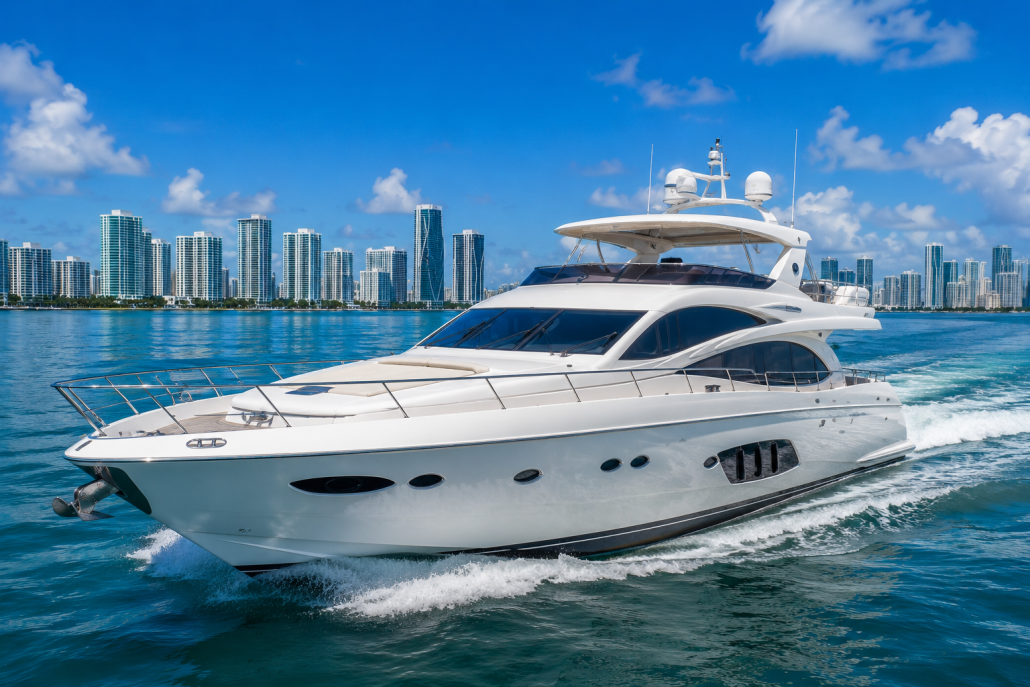
Marine Yacht Insulation in Miami: Where to Upgrade First
For marine yacht insulation in Miami, start with the areas causing the most trouble: sweating chilled-water pipes, hot cabin bulkheads, or heat and noise from the engine room. Moisture-resistant insulation on cold pipes and suitable thermal barriers near machinery can reduce condensation and heat entering the cabin. Engine-room materials also need to suit the space’s fire and heat demands.
Miami’s humid air makes gaps and failed insulation hard to ignore. If your AC runs often, surfaces feel damp, or a musty smell keeps returning, inspect the insulation alongside the cooling system and any leaks. FCS Marine provides on-site yacht insulation and marine AC service in South Florida to help identify the cause before an upgrade.
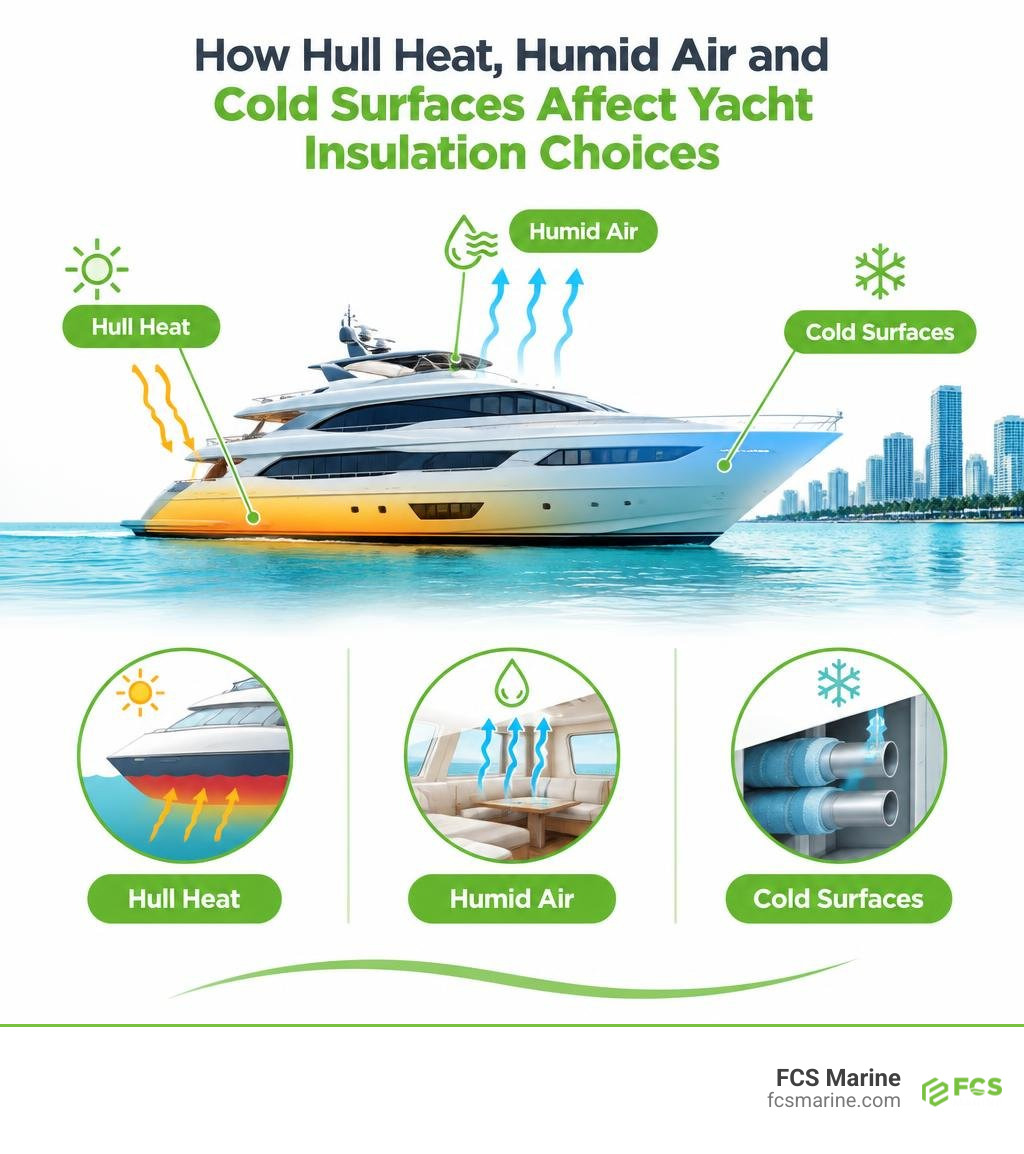
Marine yacht insulation miami vocab explained:
How Heat Gain and Thermal Bridging Strain Marine HVAC Systems
Thermal bridging occurs when heat bypasses non-continuous barriers and travels directly through high-conductivity vessel structures, such as aluminum framing, steel stringers, or uninsulated fiberglass hull sides. In the subtropical waters of South Florida, intense solar radiation combined with warm surface water turns an inadequately insulated hull into a massive thermal conductor. When solar heat transfers unimpeded into interior bulkheads and overheads, the vessel’s marine HVAC equipment must work continuously to counteract the thermal gain.
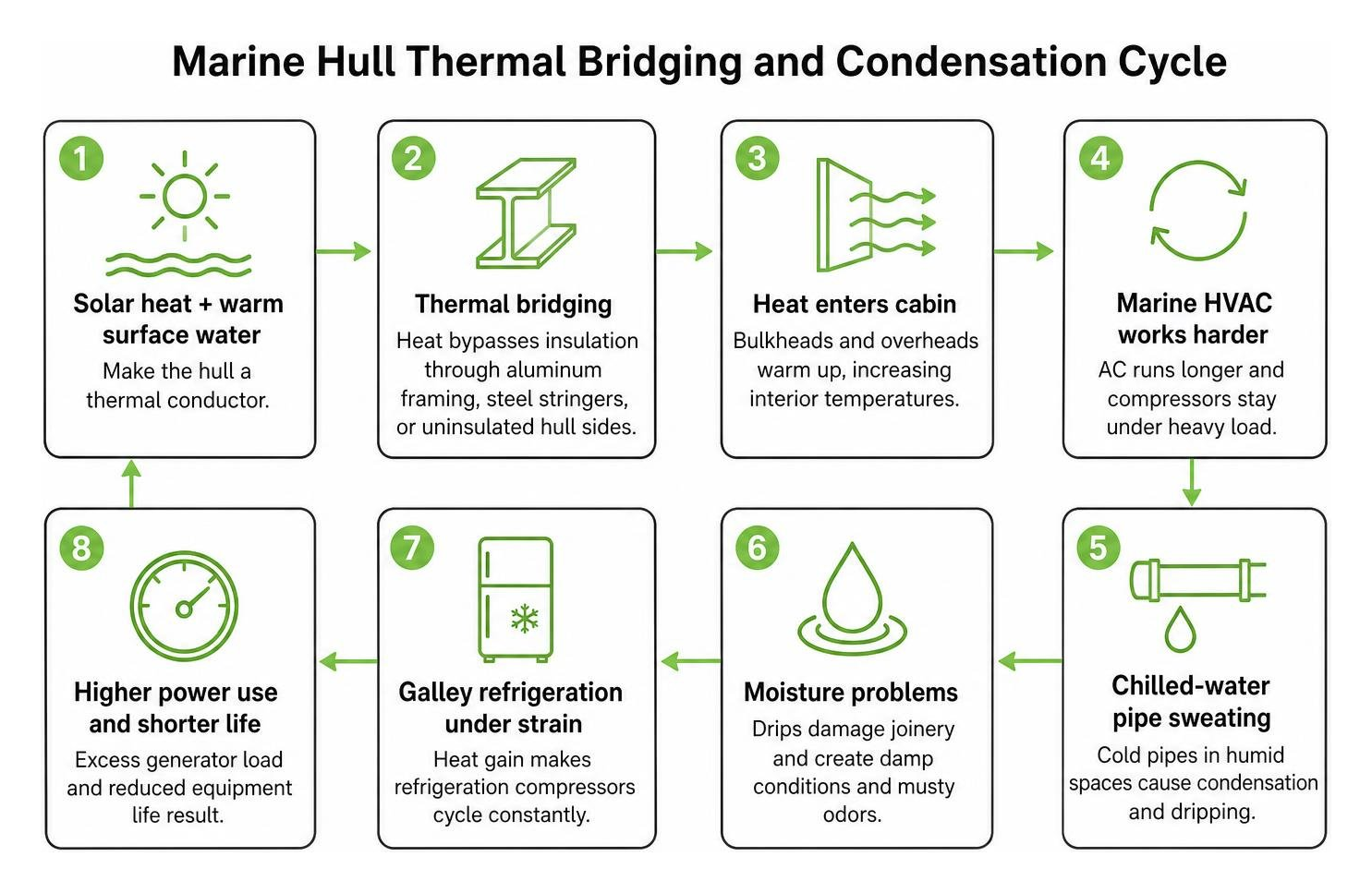
This constant thermal transfer directly affects air conditioning compressors, chillers, and air handlers. Instead of cycling efficiently once a cabin reaches its target temperature, cooling compressors remain under heavy load. The problem escalates along chilled-water loops: when cold supply piping passes through humid, unconditioned cavities behind cabinetry and headliners, the temperature differential causes continuous pipe sweating. This moisture drips onto interior joinery while stripping cooling capacity before the chilled water even reaches the cabin air handlers.
Galley refrigeration and freezer systems face identical challenges. When surrounding bulkheads radiate heat from adjacent machinery spaces, refrigeration compressors cycle constantly, consuming excess auxiliary generator power and shortening equipment life. A properly engineered thermal envelope stabilizes interior compartment temperatures, allowing marine climate systems to operate within their optimal design parameters.
| Marine Insulation Material | Thermal Performance (Per Inch) | Moisture Absorption Resistance | Primary Application |
|---|---|---|---|
| Closed-Cell Elastomeric Foam | R-4 to R-6 | Exceptional (Impermeable Vapor Barrier) | Chilled-water piping, air ducting, hull sides |
| Foil-Faced Polyurethane Board | R-6 to R-6.5 | High (When seams are sealed) | Bulkheads, cabin partitions, overheads |
| Closed-Cell Polyurethane Spray | ~R-6.5 | High (Continuous seamless bond) | Irregular hull cavities, void spaces |
| Marine-Grade Mineral Wool | ~R-4 | Moderate (Requires vapor facing) | Engine room firewalls, acoustic partitions |
| Traditional Fiberglass Batts | R-3 to R-3.5 | Poor (Wicks water and collapses) | Not recommended for humid marine use |
Subtropical Marine Challenges: Salt Air, Extreme Humidity, and Engine Heat
According to climate data from the NOAA National Centers for Environmental Information, ambient humidity across coastal South Florida regularly exceeds 80%. When saturated, salt-laden marine air enters exterior vents or hull penetrations, it carries moisture throughout interstitial vessel cavities. If these humid air currents encounter surfaces cooled below the atmospheric dew point—such as air-conditioned bulkheads or uninsulated chilled lines—condensation immediately forms.
This hidden moisture leads directly to mold colonization behind interior wall coverings, headliners, and subflooring. Because saltwater accelerates galvanic and atmospheric corrosion, trapped moisture behind degraded insulation quickly damages structural fasteners, electrical wiring harnesses, and metal hull plates. Implementing targeted boat insulation strategies to reduce condensation in humid climates is essential to elevate surface temperatures above the dew point and halt this destructive cycle.
Mitigating Engine Room Heat Transfer and Machinery Acoustics
Marine propulsion engines, diesel generators, and auxiliary machinery compartments produce extreme heat that easily radiates into adjacent living spaces, owner staterooms, and salon areas. Without heavy-duty thermal barrier bulkheads, this heat migration forces living-area air conditioners to run at maximum capacity even while underway at night.
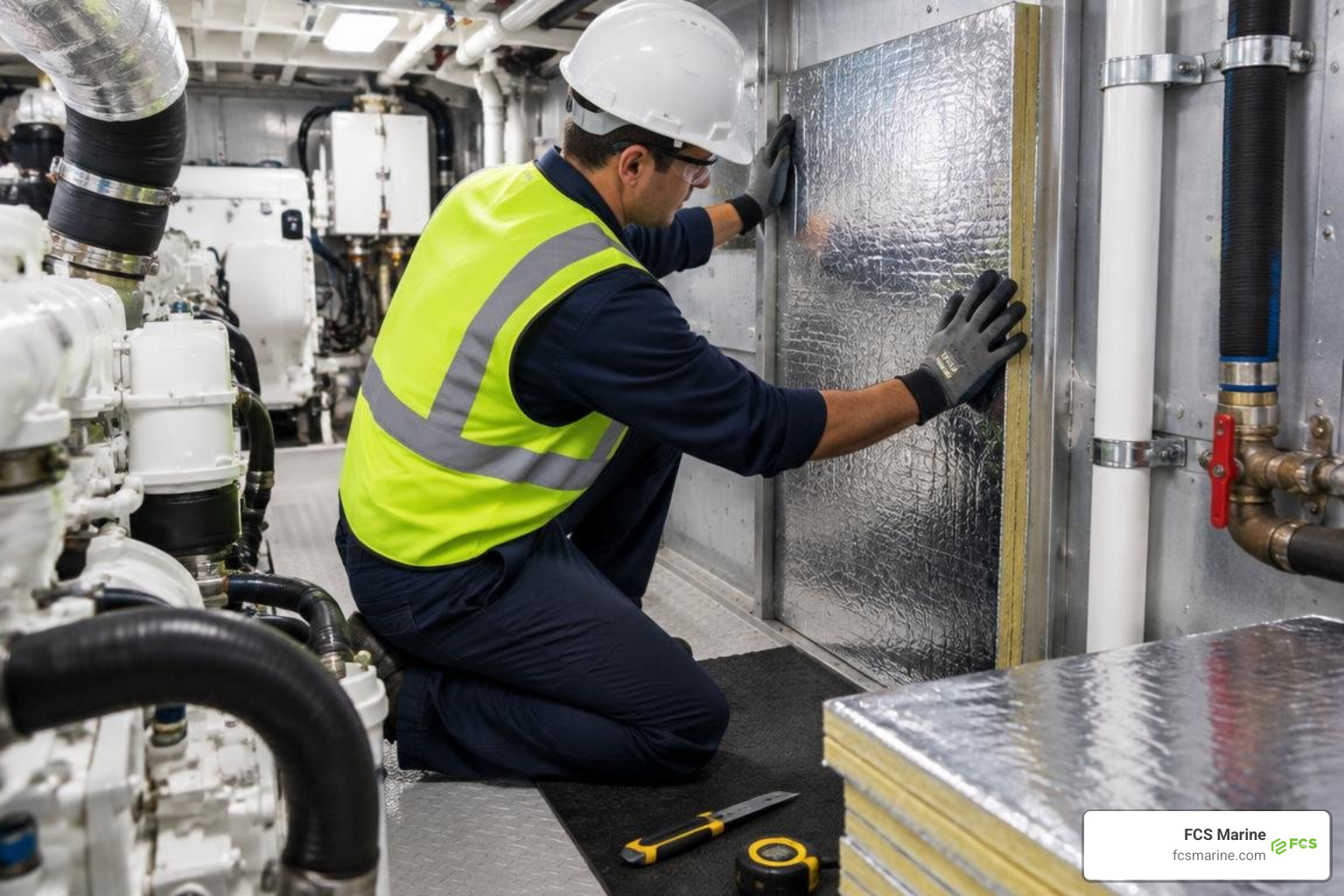
Effective machinery space management requires a combined thermal and acoustic approach, as detailed in our guide to engine room insulation for marine vessels. Insulating exhaust manifolds and dry exhaust risers with high-temperature thermal barriers contains heat at the source. For bulkhead partitions, pairing dense, non-combustible thermal cores with mass-loaded vinyl (MLV) barriers dampens airborne machinery noise while arresting the transmission of low-frequency engine vibration through the vessel’s hull frames.
Selecting High-Performance Marine Yacht Insulation in Miami
Selecting appropriate materials requires matching each product’s physical properties to specific compartment demands. Standard residential insulation materials like un-faced fiberglass batts must never be installed on a vessel; they absorb airborne humidity, sag under vessel motion, hold salt moisture against hull frames, and promote rapid mold growth.
Vessel refits require non-wicking, dimensionally stable materials engineered to withstand mechanical vibration and temperature extremes. When planning an upgrade, reviewing how to choose the best yacht insulation materials in Miami helps owners and captains balance R-value, weight, fire resistance, and acoustic performance.
Closed-Cell Foam and Vapor Barriers for Marine Yacht Insulation in Miami
Closed-cell elastomeric foam is one of the most reliable options for marine yacht insulation in Miami’s demanding climate. Delivering thermal resistance ratings of R-4 to R-6 per inch, its closed internal cell structure prevents moisture absorption even if exposed to continuous humidity or minor leaks.
Because the material acts as a built-in vapor retarder, encapsulating chilled-water loops, air conditioning ducting, and hull transition zones with elastomeric foam stops warm, moist cabin air from contacting cold pipe surfaces. Sealing all panel joints with reinforced, marine-grade vapor-barrier tape creates an unbroken thermal boundary that protects interior carpentry from moisture damage and mold.
Warning Signs Your Yacht Insulation Requires Replacement
Insulation materials in marine environments degrade over time due to engine vibration, temperature cycling, and persistent humidity.
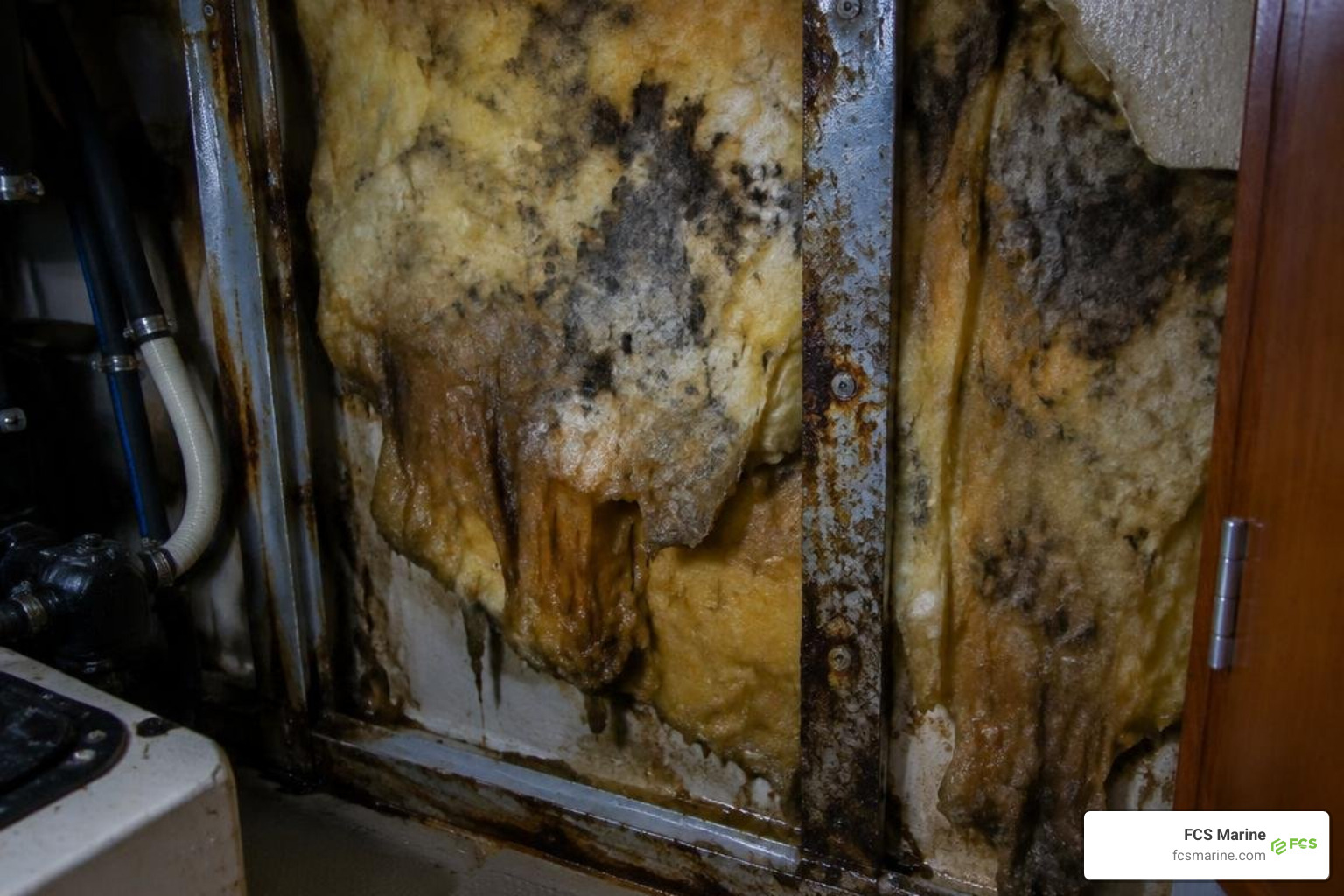
Watch for these warning signs that indicate your vessel’s thermal barriers need professional attention:
- Damp Surfaces and Sweating Bulkheads: Visible water droplets on interior cabinetry, hull linings, or near air conditioning discharge grilles indicate uninsulated cold zones contacting humid air.
- Persistent Musty Odors: Lingering mold or mildew smells that survive basic cabin cleaning often stem from damp, rotting insulation hidden behind headliners or wall panels.
- Short-Cycling or Overworked Marine HVAC: Air conditioning compressors that run continuously without pulling down cabin temperatures usually point to excessive thermal transfer from the hull or engine room.
- Hot Spots on Living Area Soles and Walls: Bulkheads or floors shared with the engine room or generator space that feel warm to the touch indicate thermal barrier breakdown.
- Escalating Machinery Noise in Cabins: A noticeable increase in engine whine, generator hum, or pump vibration inside staterooms means sound-dampening acoustic layers have detached or deteriorated.
- Visible Material Degradation: Sagging panels, crumbling foam, or degraded foil facings discovered during mechanical maintenance require immediate replacement.
Maritime Safety Codes and Permitting Considerations
Marine insulation retrofits must prioritize safety and structural compliance. Unlike land-based structures, marine installations are governed by strict safety standards set by the American Boat and Yacht Council (ABYC) and the U.S. Coast Guard Marine Safety Center Standards.
These standards specify strict flame-spread indexes and critical smoke-generation thresholds for materials installed inside engine rooms, machinery spaces, and accommodation compartments. Marine insurance surveyors inspect these spaces thoroughly during periodic renewal surveys; installing non-compliant, flammable residential materials can void vessel insurance coverage and compromise passenger safety.
Permitting and Compliance for Marine Yacht Insulation in Miami
Navigating regulatory requirements in South Florida requires understanding vessel classification:
- Standard State-Registered and Documented Vessels: Recreational motor yachts, sportfishers, and commercial vessels docked at marinas, private docks, or repair yards do not require municipal building permits from Miami-Dade County for interior insulation or mechanical refits. They must comply with USCG safety regulations, ABYC guidelines, and environmental rules enforced by the Miami-Dade Division of Environmental Resources Management (DERM).
- Permanently Moored Floating Structures: Permanently moored houseboats or commercial floating venues connected directly to municipal shore utilities fall under the jurisdiction of the Miami-Dade County Building Department and must satisfy High Velocity Hurricane Zone (HVHZ) provisions of the Florida Building Code.
- Physical Installation Clearances: All insulation installations must maintain mandatory physical clearances around electrical distribution panels, breaker boxes, and high-temperature exhaust piping to prevent fire hazards and ensure service accessibility.
Mobile On-Site Marine Service Across South Florida
Major insulation repairs and thermal upgrades do not always require scheduling costly haul-outs or moving your vessel to a busy shipyard. FCS Marine provides mobile, on-site marine services that travel directly to where your vessel is berthed, whether at private residential docks, commercial slips, or local boatyards.
Our mobile technicians provide on-site diagnostics, HVAC servicing, and specialized thermal installations throughout our key service locations:
- Miami-Dade County: Miami, Miami Beach, Coconut Grove, Coral Gables, Key Biscayne, and Fisher Island (learn more about our marine climate services in Miami-Dade County).
- Broward County: Fort Lauderdale, Pompano Beach, Hollywood, and Dania Beach.
- Palm Beach County: West Palm Beach, Boca Raton, Delray Beach, and Palm Beach.
- Northern Service Areas: Dedicated vessel support across Martin County and St. Lucie County.
Frequently Asked Questions About Marine Yacht Insulation
Do I need a building permit for boat wall insulation in Miami-Dade?
For standard state-registered recreational boats or federally documented yachts docked at private berths, marinas, or boatyards, municipal building permits from Miami-Dade County are not required. Marine installations must adhere to ABYC standards and USCG safety guidelines instead. However, permanently moored floating residential structures or house barges fixed to shore utilities fall under local municipal building department jurisdiction and require standard building permits.
How does proper marine insulation prevent mold and pipe sweating?
Insulation prevents mold and sweating by eliminating thermal bridging and maintaining interior surface temperatures above the atmospheric dew point. In humid environments where ambient relative humidity exceeds 80%, uninsulated chilled-water lines or hull bulkheads quickly drop below the dew point, causing water vapor to condense on surfaces. Non-wicking, closed-cell insulation isolates cold surfaces from moist air, denying mold spores the moisture needed to grow.
Can yacht insulation upgrades be completed while docked in Miami?
Yes. Professional mobile marine technicians can complete yacht insulation retrofits, chilled-water pipe re-insulation, and engine room acoustic upgrades directly at your marina slip or private dock. Performing the work on-site eliminates the need for expensive yard haul-outs, minimizes vessel downtime, and allows technicians to address thermal and HVAC issues simultaneously.
Upgrade Your Yacht Climate Protection
Failing, water-damaged, or inadequate insulation compromises onboard comfort, overworks your air conditioning compressors, and creates hidden moisture problems inside your vessel. Upgrading your vessel’s thermal and acoustic envelope stabilizes cabin temperatures, reduces generator power consumption, and protects your interior cabinetry from condensation and mold.
FCS Marine provides comprehensive on-site solutions for yacht owners, captains, and management teams across South Florida. From detailed thermal barrier inspections and chilled-water pipe insulation to marine air conditioning diagnostics, yacht refrigeration service, watermaker maintenance, and professional marine mold remediation, our experienced team delivers reliable mobile service directly to your slip.
To schedule an on-site thermal evaluation or book mobile marine climate service for your vessel, explore our professional yacht insulation solutions and contact FCS Marine today.