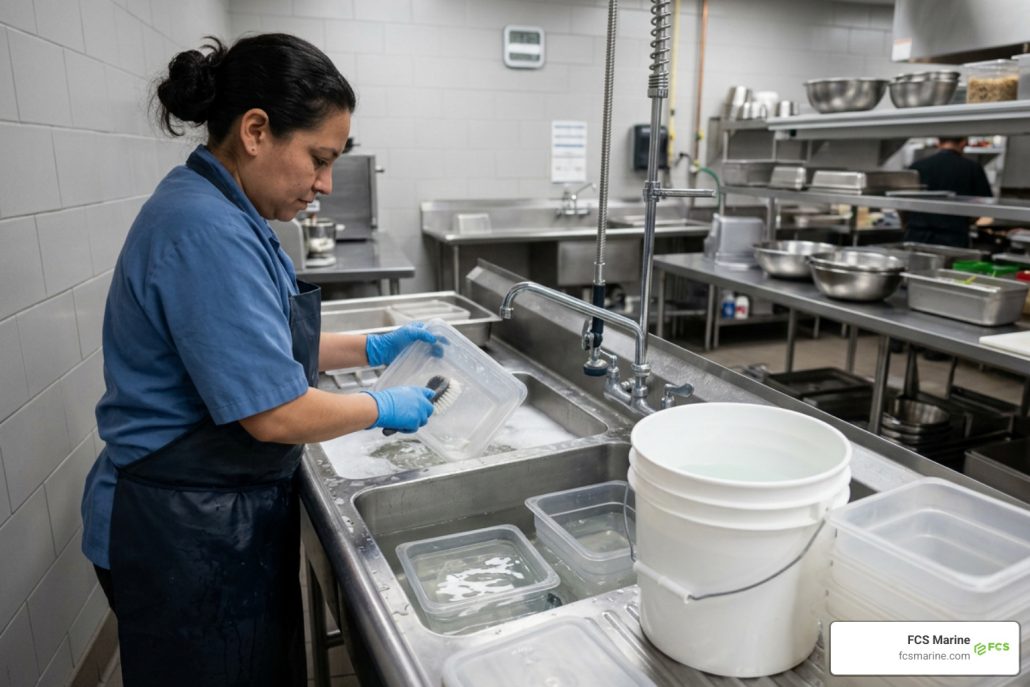
Can You Reuse Tupperware That Had Mold in It? The Material Science
You can safely reuse Tupperware that had mold in it if the plastic is completely smooth, unscratched, and properly sanitized. However, you must discard containers that show warping, cloudiness, deep scratches, or persistent odors, as microscopic surface fissures permanently harbor fungal spores and mycotoxins.
When determining whether to salvage or toss a container, material science provides the clearest answers. Plastic food containers—most commonly molded from polypropylene (PP, recycling resin code #5) or high-density polyethylene (HDPE, resin code #2)—are semi-rigid polymers that interact with biological contaminants differently than impervious surfaces like glass or ceramic.
Under normal conditions, plastic surfaces seem completely smooth. However, polymer surfaces possess microscopic textures where fungal hyphae and bacterial colonies establish resilient biofilms. According to research on mold persistence on plastic, food residues and migrating plasticizers serve as a carbon base that sustains fungal growth long after the primary food source is emptied.
Standard EPA Method 8331A laboratory testing demonstrates that over 92% of Ochratoxin A (a potent mycotoxin produced by common food-spoiling fungi) adsorbs directly onto polypropylene surfaces. Crucially, tests reveal that standard household cleaners—including 3% hydrogen peroxide, 5% citric acid, and 10% white vinegar solutions—desorb less than 7% of this bound toxin after 60 minutes of direct contact.
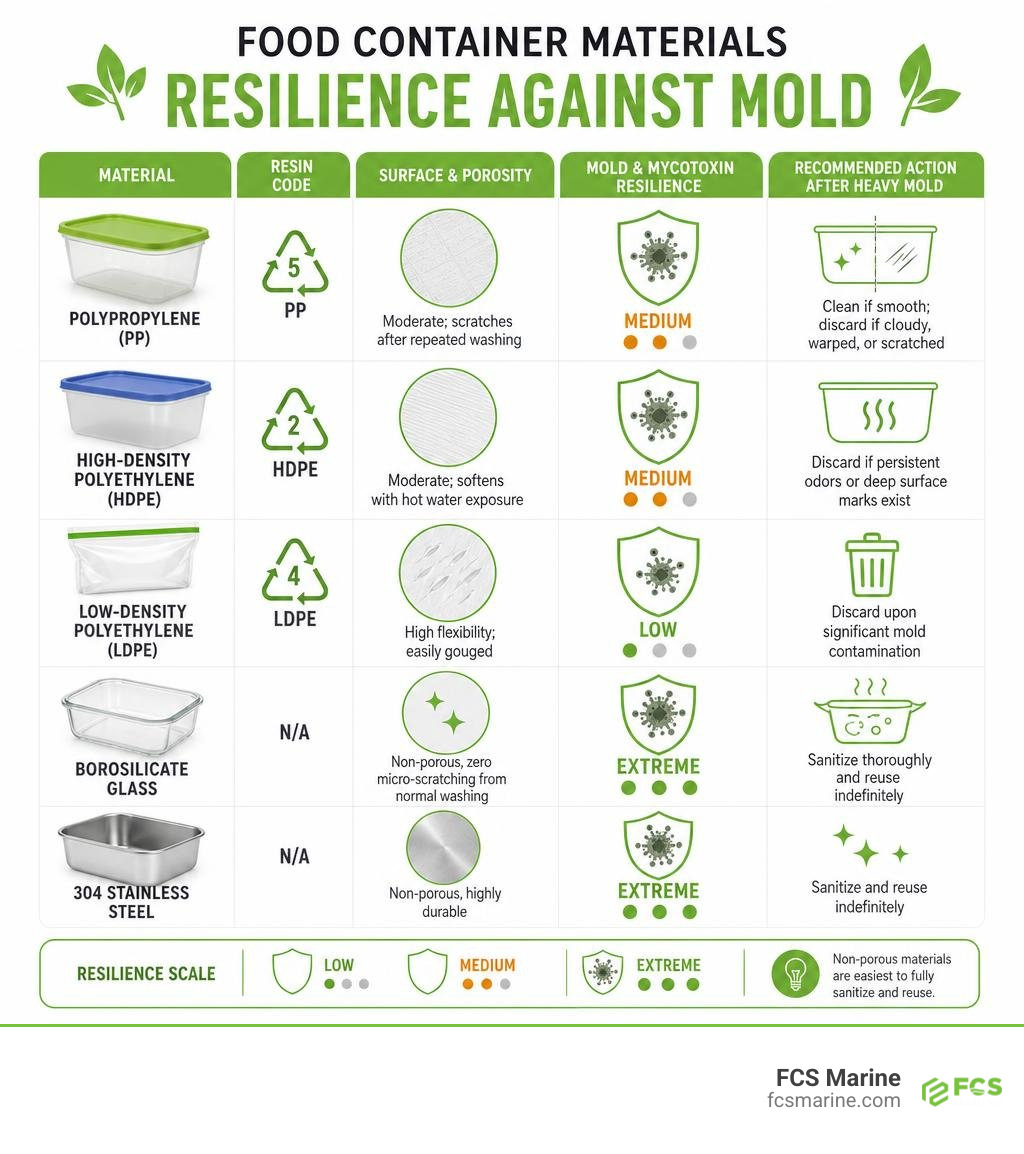
| Plastic / Material Grade | Resin Code | Porosity & Surface Wear | Mold & Mycotoxin Resilience | Recommended Action After Heavy Mold |
|---|---|---|---|---|
| Polypropylene (PP) | #5 | Moderate; scratches after repeated washing | Medium; binds mycotoxins tightly in surface abrasions | Clean if smooth; discard if cloudy, warped, or scratched |
| High-Density Polyethylene (HDPE) | #2 | Moderate; softens with hot water exposure | Medium; porous to oily residues and persistent odors | Discard if persistent odors or deep surface marks exist |
| Low-Density Polyethylene (LDPE) | #4 | High flexibility; easily gouged | Low; readily harbors spores in knife marks | Discard upon significant mold contamination |
| Borosilicate Glass | N/A | Non-porous, zero micro-scratching from normal washing | Extreme; fully sanitizable at boiling temperatures | Sanitize thoroughly and reuse indefinitely |
| 304 Stainless Steel | N/A | Non-porous, highly durable | Extreme; completely resistant to hyphal penetration | Sanitize and reuse indefinitely |
Understanding the Difference Between Mildew vs Mold on Kitchenware
People often confuse surface fungal growth on food containers with benign kitchen residue. Differentiating between mildew vs mold is essential for food safety:
- Mildew: Typically appears flat, powdery, and white or light gray. It remains largely superficial and wipes away easily from non-porous barriers.
- Mold: Presents as fuzzy, raised colonies in shades of dark green, black, blue, or vibrant pink. Mold develops vegetative root structures called hyphae that delve directly into organic matter and micro-crevices.
Because mold produces microscopic branching networks, it anchors itself securely into microscopic fissures. Onboard vessels cruising through Palm Beach County, Broward County, and Miami-Dade County, high marine humidity accelerates hyphal expansion, allowing spores to colonize galley cabinets and galley storage lockers rapidly.
Health Risks and Signs of Mold Contamination
Ingesting food from contaminated storageware or inhaling airborne spores when opening a compromised seal exposes you to mycotoxins. These secondary fungal metabolites cause acute and chronic health complications, including:
- Upper respiratory tract inflammation and sinus congestion
- Allergic contact dermatitis and skin irritation
- Pediatric gastrointestinal sensitization
- Persistent fatigue and cognitive fog associated with systemic mold toxicity
Warning signs that a container has compromised your storage environment include a persistent, musty smell that returns even after thorough washing, clouding within clear plastic walls, or family members experiencing unexplained respiratory flare-ups when preparing meals.
How to Clean and Sanitize Plastic Food Containers
If a container shows no physical surface damage and the mold growth was caught early, a methodical cleaning process can safely restore it. Understanding the difference between mildew vs mold helps assess how deeply spores may have anchored before treatment. Consult established expert guidelines on cleaning moldy food containers to avoid cross-contaminating your kitchen or galley spaces.
Step-by-Step Bleach and Vinegar Sanitizing Methods
Always perform cleaning steps wearing protective gloves in a well-ventilated space. Never mix bleach and vinegar together, as combining them produces hazardous chlorine gas.
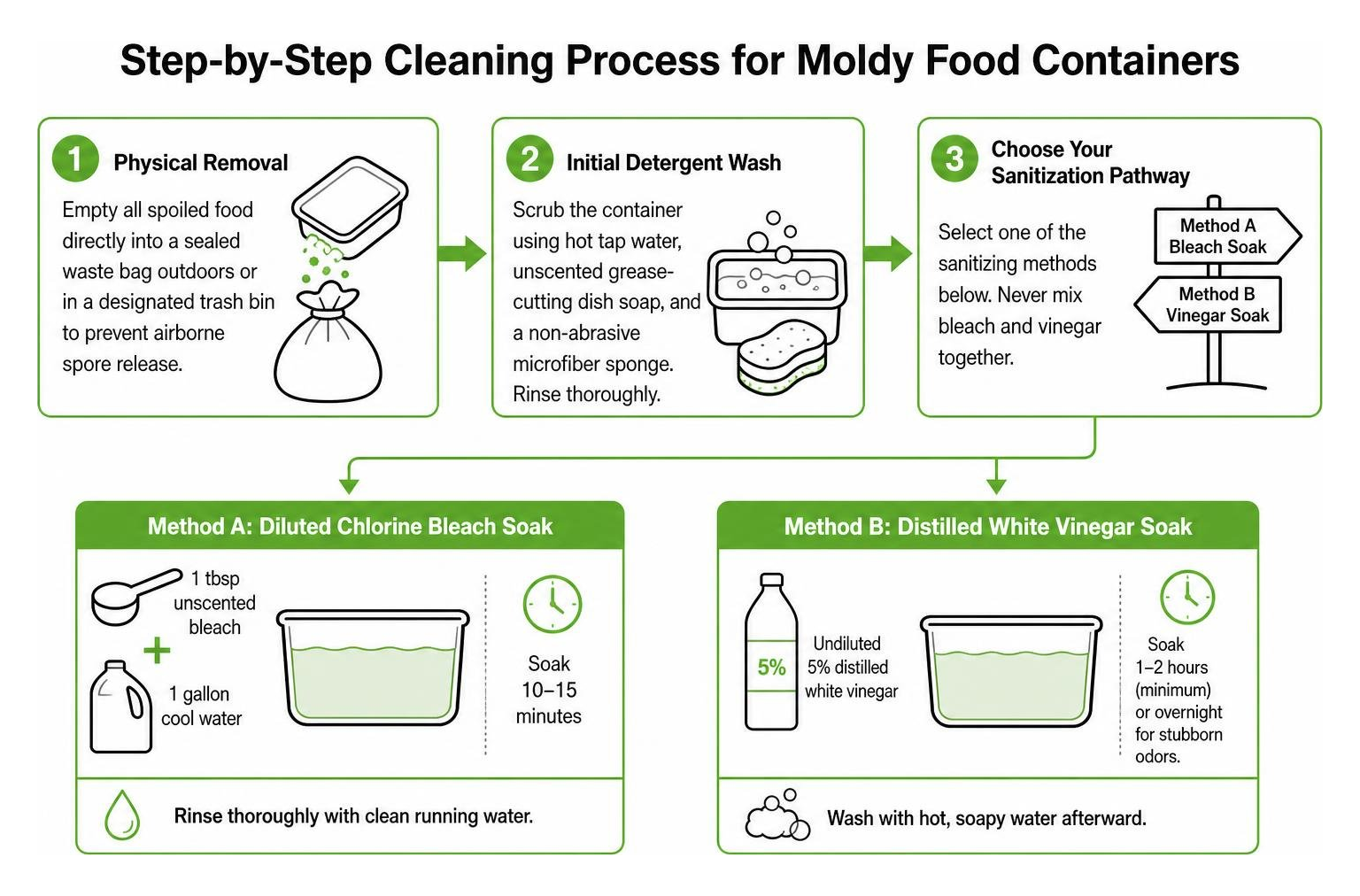
- Physical Removal: Empty all spoiled food directly into a sealed waste bag outdoors or in a designated trash bin to prevent airborne spore release inside your living area.
- Initial Detergent Wash: Scrub the container using hot tap water, unscented grease-cutting dish soap, and a non-abrasive microfiber sponge. Rinse thoroughly.
- Choose Your Sanitization Pathway:
- Method A (Diluted Chlorine Bleach Soak): Mix 1 tablespoon of unscented household bleach per 1 gallon of cool water. Submerge the container and lid completely for 10 to 15 minutes. Rinse thoroughly with clean running water.
- Method B (Distilled White Vinegar Soak): Fill the container with undiluted 5% distilled white vinegar and let it sit for a minimum of 1 to 2 hours (or overnight for stubborn odors). Wash with hot, soapy water afterward.
- Odor Elimination (Optional): If a faint smell remains, make a paste of baking soda and warm water, spread it along the inner walls, let it stand for 4 hours, and wash clean.
- Complete Air-Drying: Place the container inverted on a clean drying rack in an area with good air circulation for at least 4 to 6 hours before storing.
Cleaning Silicone Seals and Lids Thoroughly
Lids with removable rubber or silicone gaskets require dedicated attention. A 2023 study published in the Journal of Applied Polymer Science revealed a 40% reduction in the tensile strength of silicone lids after just one year of standard household use. This natural degradation produces tiny microcracks that trap moisture, grease, and fungal spores out of reach of ordinary sponges.
Pry the gasket gently out of its seating channel using a blunt, rounded tool (like a butter knife or silicone spatula). Clean the channel using a soft toothbrush dipped in a sanitizing solution. If your seals show persistent black spotting that cannot be scrubbed away, mastering techniques for removing mould from silicone will prevent the growth from ruining the entire lid assembly.
When to Throw Away Tupperware with Mold Instead of Reusing It
Cleaning is not always the safest choice. Knowing when to discard compromised plastic protects your family from persistent chemical and fungal exposure.
Can You Reuse Tupperware That Had Mold in It After Microscopic Scratches Form?
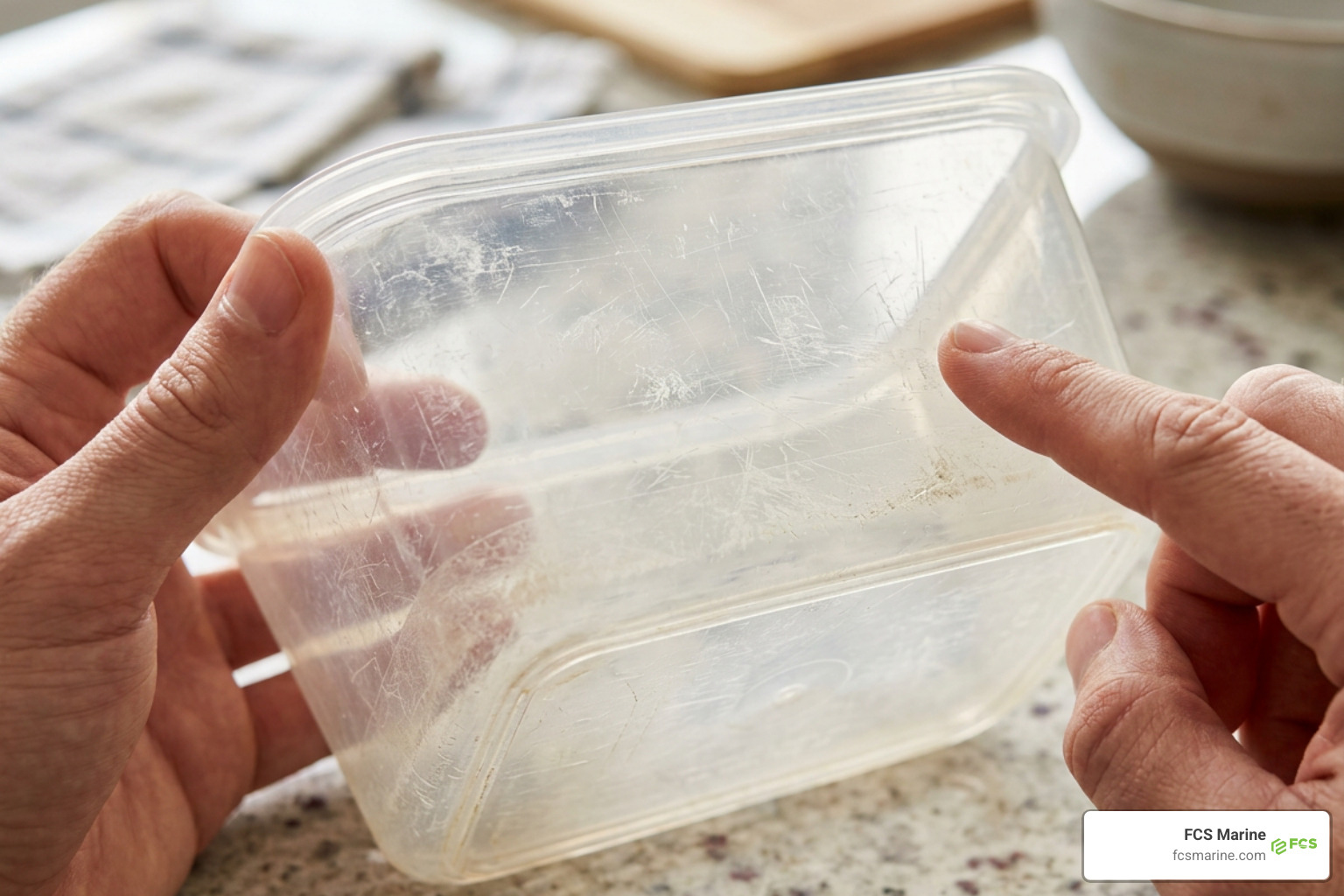
All reusable plastic containers develop microscopic surface scratches (depths $le 0.5text{ }mutext{m}$) after just 10 to 15 normal dishwasher cycles—even when utilizing gentle liquid detergents. These microscopic abrasive tracks alter the surface topography of the polymer, creating sheltered anchor points where mold hyphae evade detergents, chemical sanitizers, and mechanical friction.
You should immediately discard a container if you notice:
- Interior hazing, white stress lines, or permanent yellowing
- Rough, scuffed, or knife-scored floor textures
- Deep surface pitting or plastic warping caused by microwave overheating
- Musty odors that persist after a complete bleach or vinegar soak
When discarding, avoid throwing biological hazards directly into single-stream recycling bins. In modern automated processing centers, RIN (Recycling Identification Number) optical scanners detect biological contamination; a single mold-encrusted container can trigger the rejection of up to 500 kg of recyclable plastic, sending entire bales directly to landfills.
Safe Food Storage Alternatives and Prevention Habits
Upgrading your storage containers minimizes fungal risks permanently. For long-term reliability in humid coastal climates like Fort Lauderdale, Pompano Beach, FL, and throughout Martin County and St. Lucie County, consider non-porous materials:
- Borosilicate Tempered Glass: Completely impervious to mycotoxin adsorption, odor-resistant, dishwasher-safe, and capable of high-heat sterilization.
- Grade 304 Stainless Steel: Extremely lightweight, shatterproof, zero-porosity, and well-suited for chilled leftovers.
- Platinum-Cured Silicone Bags: Premium, high-durability food-grade silicone that resists microcracking longer than standard plastics.
Implement the standard 2-2-2 Food Storage Rule to keep mold from forming: refrigerate cooked meals within 2 hours of preparation, consume refrigerated leftovers within 2 days, and freeze items you plan to store for up to 2 months. Always label containers with dates using water-soluble grease pencils or painter’s tape.
Frequently Asked Questions About Moldy Food Storage Containers
Can you reuse Tupperware that had mold in it if you boil it?
Boiling moldy plastic containers in a home or boat galley is not recommended. While water boiling at 212°F (100°C) kills many active vegetative fungal cells, standard food-storage plastics like polypropylene can warp or leach additives under sustained boiling temperatures on galley stoves. Furthermore, certain heat-resistant fungal spores and pre-formed mycotoxins remain stable and chemically active even after 30 minutes of boiling.
Does freezing moldy containers kill the fungal spores?
No, freezing in marine freezers or domestic units does not kill mold spores. Hardy species such as Aspergillus easily survive temperatures as low as -112°F (-80°C) for years in suspended animation. Sub-zero temperatures merely halt active cellular division. As soon as the container thaws in a warm boat cabin and encounters ambient humidity, dormant spores reactivate and begin colonizing available food residues.
How do you prevent mold from growing back in plastic food containers?
To prevent fungal recurrence in residential kitchens and marine galleys:
- Ensure containers and lids are 100% dry before nesting them in closed boat storage lockers or kitchen cupboards.
- Store containers unsealed or with lids stored separately to allow passive airflow in enclosed vessel compartments.
- Maintain indoor and yacht cabin humidity levels below 50% using proper marine air conditioning and dehumidification.
- Wash containers immediately after use rather than letting them sit unrinsed in galley sinks.
Conclusion: Keeping Food Storage Clean and Safe

Deciding whether to salvage or discard a mold-affected food container comes down to the physical condition of the polymer. When containers are smooth, unscratched, and properly sanitized, reusing them is safe and cost-effective. However, once micro-abrasions, cloudiness, or warping compromise the plastic, discarding the item is the safest path to protecting your household from persistent mycotoxins.
Maintaining clean, dry, and well-ventilated storage environments stops fungal growth before it starts. For tips on handling stubborn fungal growth around critical fixtures, learn how to clean silicone sealant like a pro to protect your living areas.
When deep fungal problems extend beyond the kitchen into onboard environments, FCS Marine provides comprehensive on-site yacht service across South Florida. Whether you need yacht refrigeration maintenance, air conditioning service, or professional marine mold remediation, FCS Marine comes to where the vessel is located to keep your systems running smoothly and your air clean. Contact our team today to schedule an inspection for your vessel.