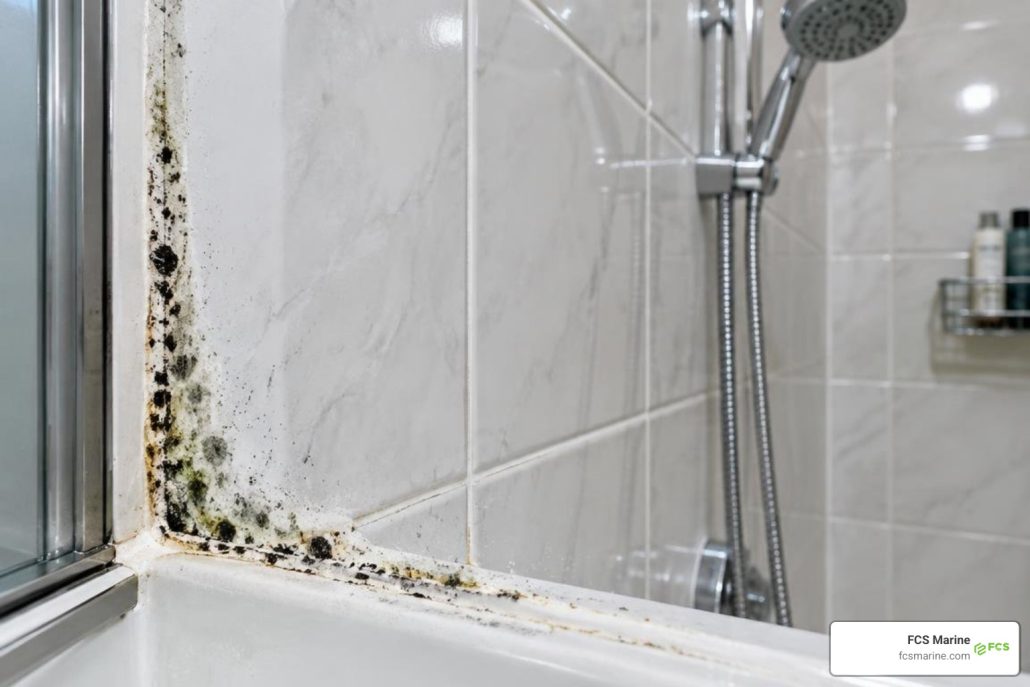
How to Remove Mold on Silicone on Your Boat
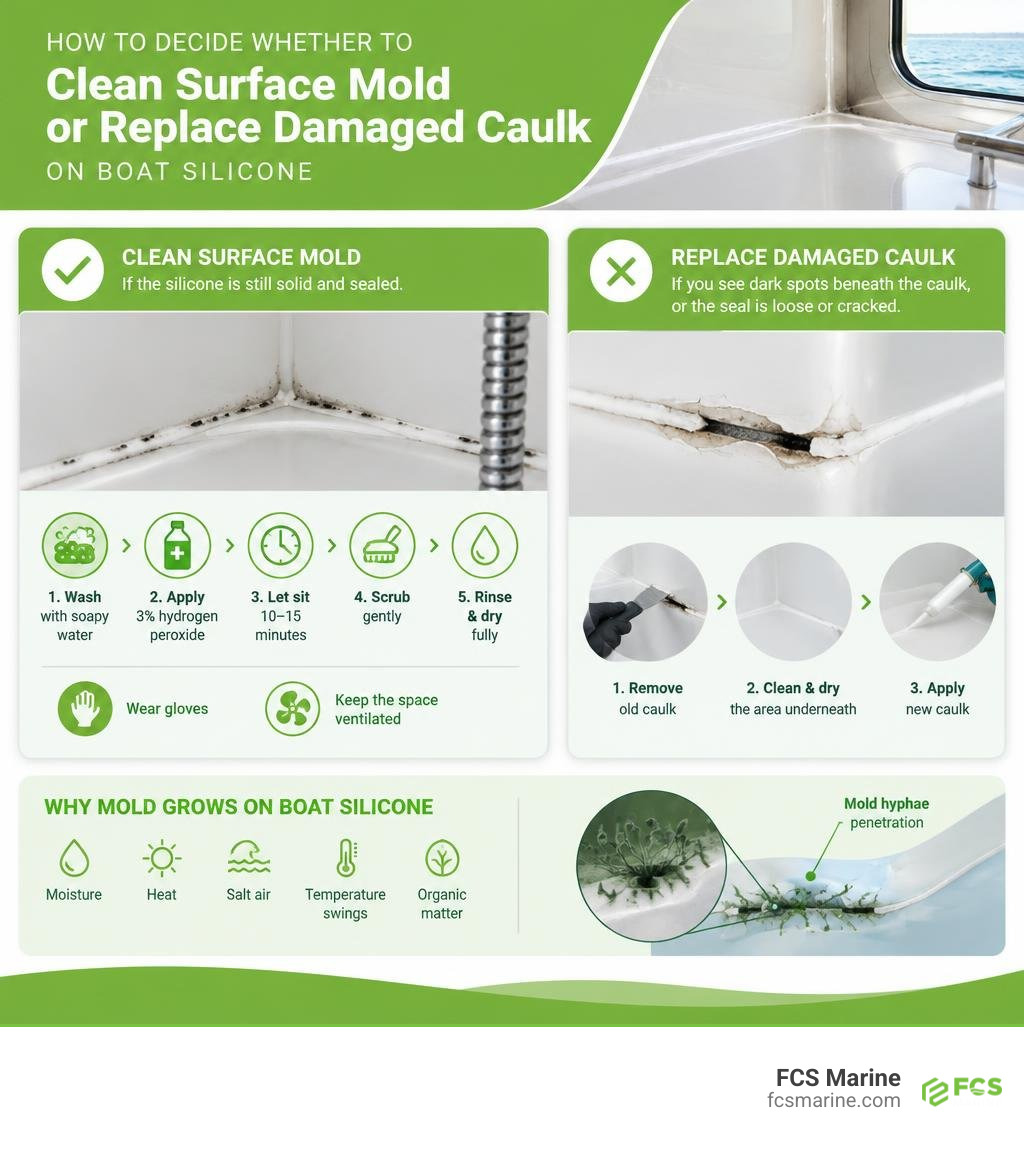
For surface mold on silicone, wash the area with soapy water, apply 3% hydrogen peroxide, let it sit for 10 to 15 minutes, then scrub gently, rinse, and dry it fully. Wear gloves and keep the space ventilated. If dark spots appear beneath the caulk, or the seal is loose or cracked, cleaning the surface will not fix it. The caulk needs to be removed and replaced after the area underneath is cleaned and dried.
In South Florida, damp yacht showers and galleys can keep silicone wet long enough for mold to return. FCS Marine provides mobile marine mold remediation and yacht sanitization at vessel locations across South Florida.
Understanding What Causes Mold on Silicone in Marine Environments
Boats operate in environments where moisture, heat, and organic matter constantly intersect. While pure silicone rubber is non-porous, flexible, and naturally water-resistant, it is subjected to harsh conditions aboard marine vessels. Salt air, constant humidity above 60%, engine heat, and rapid temperature shifts create ideal conditions for fungal colonization.
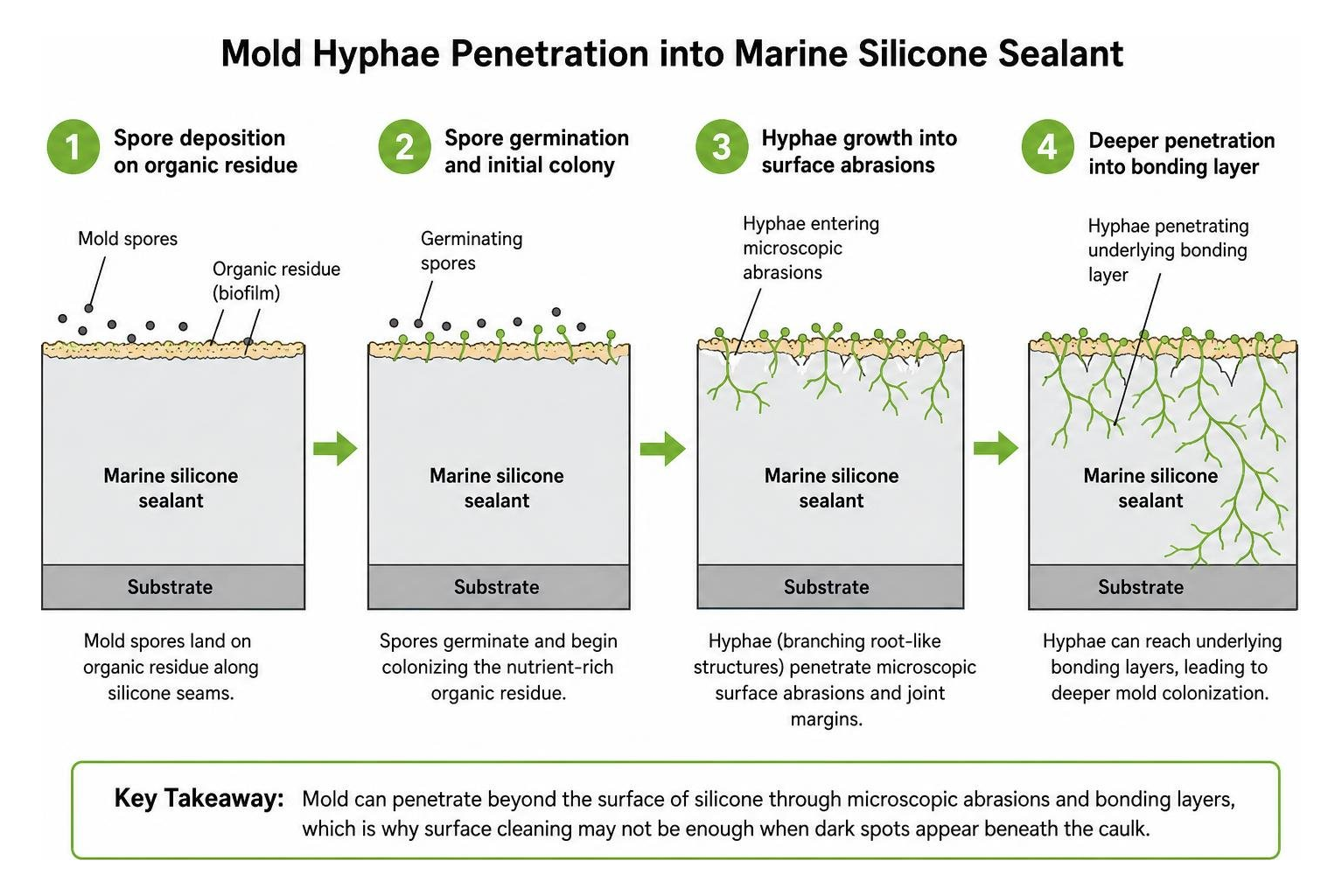
When organic residues such as body oils, soap scum, dust, or food splatters collect along silicone seams, they create a nutrient-rich biofilm. Mold spores land on this residue and begin colonizing. As the colony grows, fungal hyphae (branching root-like structures) can work their way into microscopic surface abrasions, joint margins, or underlying bonding layers. Understanding the difference between surface mildew vs mold is essential: while powdery mildew sits on top of finishes, fungal mold penetrates deeper and requires thorough removal to protect indoor air quality.
Unchecked fungal colonization presents genuine health risks within enclosed boat cabins. According to the Florida Department of Health mold safety guidelines, exposure to airborne mold spores and mycotoxins can trigger allergic reactions, chronic coughing, respiratory irritation, and severe issues for individuals with asthma or weakened immune systems.
Warning Signs and Damage on Marine Vessels
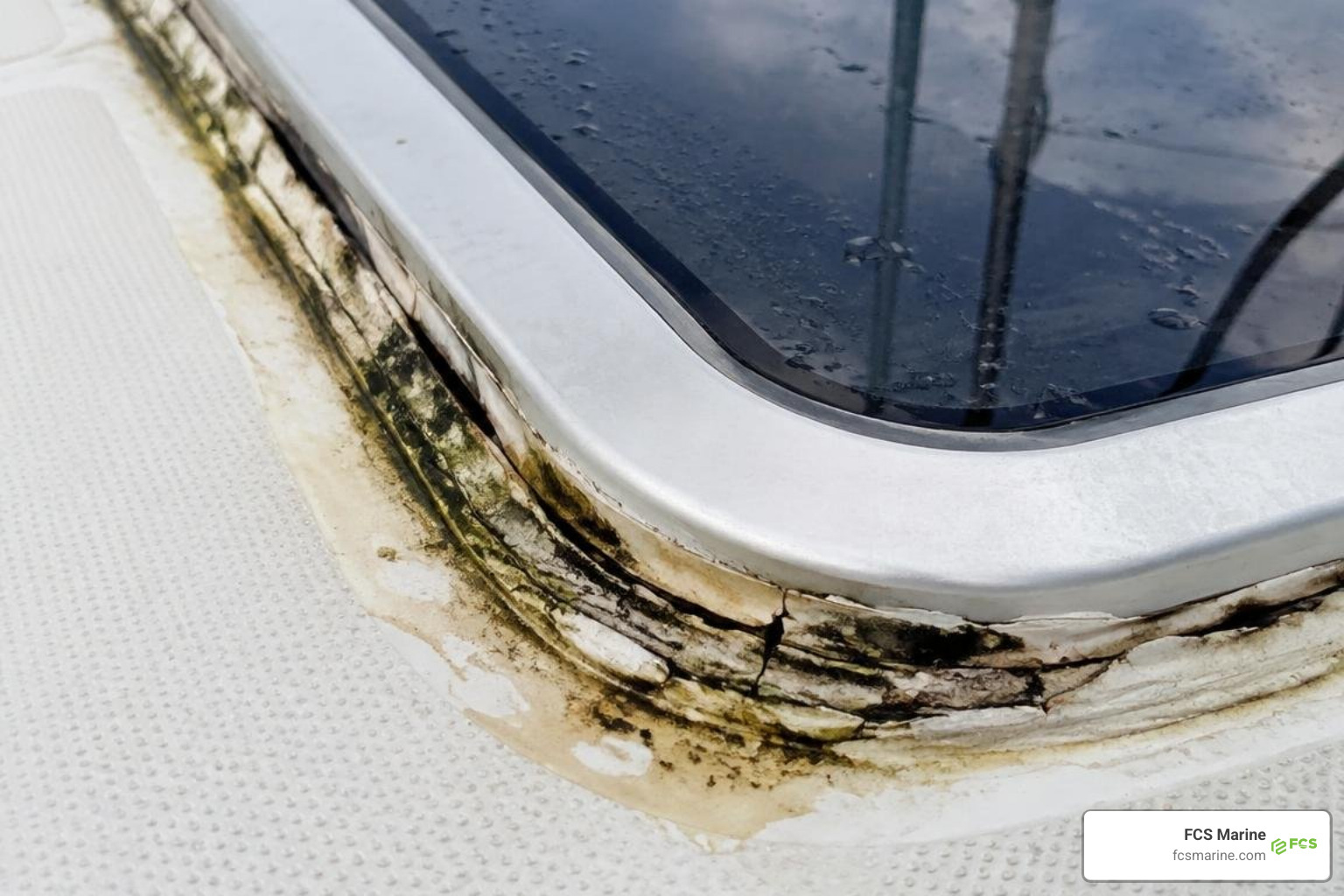
Detecting mold on silicone early prevents structural wood rot, water intrusion, and poor air quality inside yacht cabins. Vessel operators and captains should look for specific indicators:
- Visible Spotting and Discoloration: Dark black, green, or brown spots appearing across silicone caulk beads or rubber gaskets.
- Sub-Seal Shadowing: Dark patches that appear behind or underneath translucent silicone, indicating water has worked behind the bond line.
- Spongy or Detached Caulk: Sealant that lifts easily, feels gummy, or loses its firm elasticity when pressed.
- Persistent Musty Odors: Stale, damp smells lingering in heads, galleys, staterooms, or bilge access lockers even after standard surface cleaning.
- Localized Water Ingress: Minor leaks around portlights, deck hatches, or shower basins, which often trace back to compromised silicone joints.
When fungal growth is left untreated, it compromises water barriers. Moisture trapped behind joint seals degrades surrounding substrates, corrodes fasteners, and feeds airborne mold blooms throughout vessel HVAC ducting.
Proven Methods for Cleaning and Removing Silicone Contamination
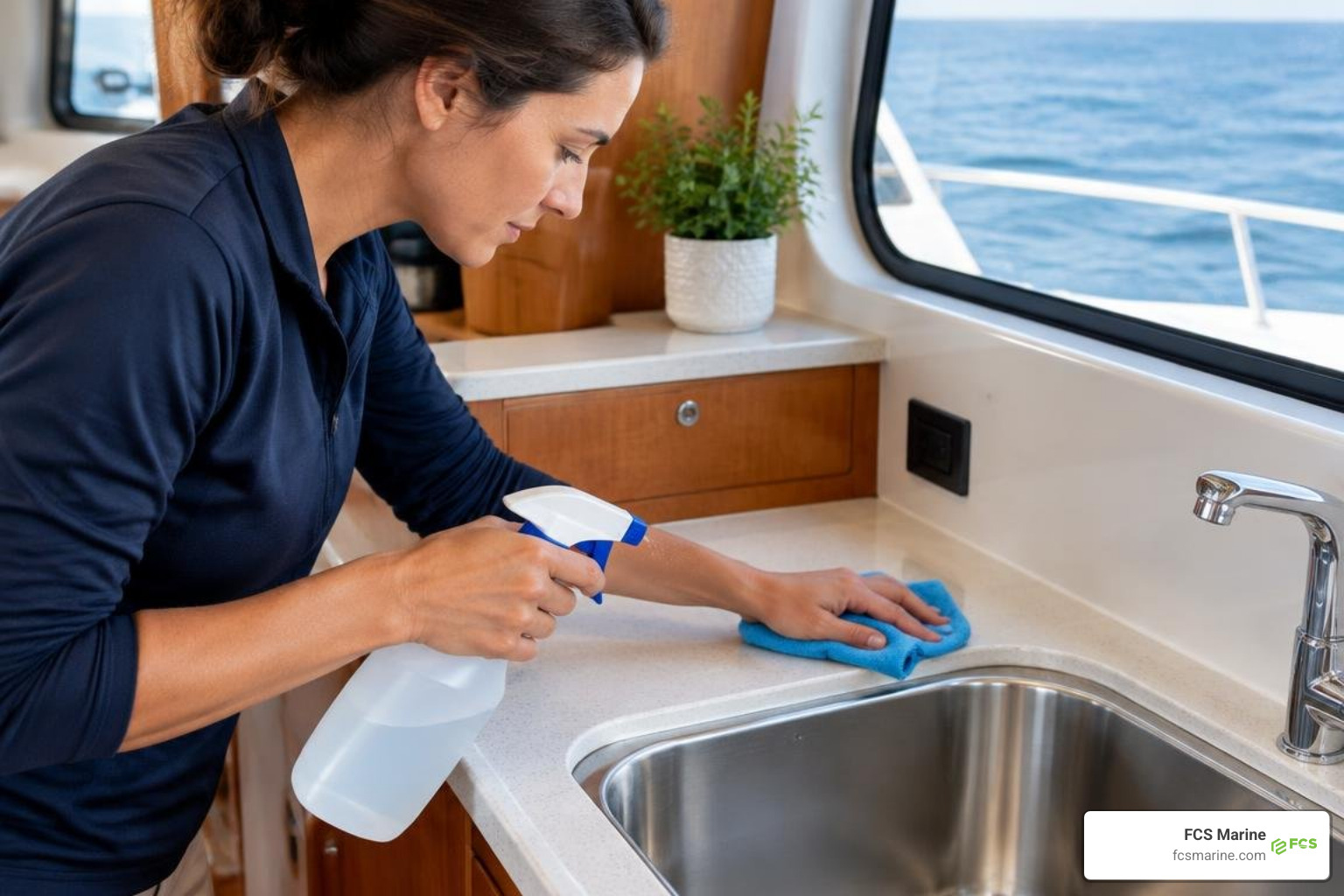
Treating silicone requires agents that eradicate fungal organisms without breaking down the elastomer. While household cleaners are widely used, their chemistry dictates how well they work on marine silicone. The U.S. Environmental Protection Agency notes that mold can grow on any surface where moisture and organic matter are present, making proper cleaning and moisture control essential in enclosed yacht cabins.
| Cleaning Agent | Best Application | Dwell Time | Silicone Safety | Effectiveness on Embedded Mold |
|---|---|---|---|---|
| Distilled White Vinegar (5% Acidity) | Mild surface mold, routine head/galley maintenance | 30 minutes to Overnight | High (Gentle on elastomers) | Moderate (Penetrates surface hyphae) |
| Hydrogen Peroxide (3%) | Active mold patches, organic biofilm breakdown | 10 to 15 minutes | High (Non-corrosive, safe for food areas) | High (Oxidizes fungal structures) |
| Baking Soda Paste | Stubborn discoloration, mechanical stain lifting | 15 to 30 minutes | High (Non-scratching mild abrasive) | Moderate (Best paired with peroxide/vinegar) |
| Diluted Chlorine Bleach (1 tbsp/gal) | Rapid surface disinfection | 5 to 10 minutes | Low to Moderate (Can degrade elasticity if overused) | Low (Bleaches surface stains, misses deep roots) |
Learning techniques for cleaning mold from silicone sealant helps maintain clean seals without damaging delicate cabin finishes.
Safe DIY Methods to Eliminate Mold on Silicone
For surface-level growth, follow these structured steps:
- Safety and Preparation: Put on nitrile gloves, eye protection, and ensure cabin hatches or exhaust blowers are running to maintain fresh airflow.
- Degrease the Surface: Wash the silicone line with warm water and mild dish soap to remove surface grime and salt crusts. Rinse and pat dry.
- Apply the Treatment Agent: Spray undiluted distilled white vinegar or 3% hydrogen peroxide directly onto the affected silicone. For vertical surfaces, saturate cotton strips or paper towels with the solution and press them against the caulk line to keep the liquid in direct contact.
- Allow Proper Dwell Time: Let vinegar dwell for 30 to 60 minutes (or overnight for severe staining). If using 3% hydrogen peroxide, allow 10 to 15 minutes of contact time.
- Scrub Gently: Use a soft-bristled nylon detail brush or toothbrush to agitate the seam. Avoid wire brushes or harsh scouring pads, which score the silicone and create deeper crevices for mold to take root.
- Rinse and Dehydrate: Wipe clean with fresh water and dry the area completely using a clean microfiber cloth.
For persistent head and galley areas, our guide on how to clean shower caulk provides additional step-by-step practices.
When to Replace Severely Compromised Silicone Caulk
When mold roots penetrate deep beneath the sealant bead, surface cleaning is no longer effective. If caulk pulls away from gelcoat or tile, it must be stripped and replaced:
- Cut Away Old Sealant: Use a dedicated caulk removal tool or plastic razor scraper to slice the old silicone away from the joint without gouging underlying gelcoat, fiberglass, or stone.
- Clean the Substrate: Remove lingering silicone residue with a specialized silicone remover, followed by an isopropyl alcohol wipe-down to leave a bare, oil-free surface.
- Disinfect the Channel: Treat the open joint gap with hydrogen peroxide to kill dormant spores resting behind the old seal, then dry the area completely.
- Apply Marine-Grade Silicone: Lay a smooth, continuous bead of mold-resistant, 100% marine-grade RTV silicone caulk. Tool the joint to create a clean seal that sheds water.
- Allow Full Curing: While marine silicone can skin over in 60 minutes, allow a full 24 hours to cure before exposing it to water, high humidity, or cleaning chemicals.
Long-Term Maintenance and Prevention for Boat Owners
Preventing mold from returning requires active control of onboard moisture and environmental conditions:
- Run Marine Air Conditioning & Dehumidifiers: Keep cabin relative humidity below 50% to prevent spores from germinating on galley and head surfaces.
- Wipe Down Wet Surfaces: Use a squeegee or dedicated towel to clear water droplets off shower walls and silicone seals after every use.
- Inspect Hatches and Portlights: Check exterior silicone seals and rubber gaskets seasonally for dry rot, shrinkage, or gaps that allow rainwater and sea spray to enter.
- Service HVAC Systems Regularly: Clean condensate drain pans, flush air handler coils, and replace cabin return filters to keep airborne spore counts low.
Preventing Recurrent Mold on Silicone Caulking and Seals
Use mold-resistant marine sealants formulated with fungicides in heads, galleys, and engine compartments. Ensure proper slope along joint lines so water runs off rather than pooling along silicone beads. Regularly washing silicone gaskets with a mild vinegar solution prevents organic biofilms from building up, keeping rubber flexible and clear.
Mobile Marine Mold Remediation and Sanitization in South Florida
When mold spreads through yacht cabins, under bedding, behind bulkheads, or into marine HVAC systems, DIY surface cleaning may not resolve the problem. FCS Marine provides mobile, on-site marine services throughout South Florida, traveling directly to your vessel at marinas, private docks, and boat yards across Fort Lauderdale, Miami, Palm Beach County, Broward County, Miami-Dade County, Martin County, and St. Lucie County.
Our technicians perform comprehensive mold cleaning, onboard sanitization, marine AC repair, and insulation renewal to resolve moisture issues at their source.
Frequently Asked Questions About Mold on Boat Silicone
Can bleach ruin silicone seals on a boat?
Yes. Frequent use of concentrated chlorine bleach can cause silicone to lose its elasticity, leading to cracking, premature shrinking, and adhesive failure. Bleach also only lightens surface pigment without eliminating the fungal hyphae anchored deep within the material.
Why does mold keep returning to shower and hatch caulk?
Mold returns when moisture stays trapped behind or beneath the silicone bead, or when indoor cabin humidity consistently exceeds 60%. If the caulk was applied over a damp surface, or if fungal roots remain inside micro-abrasions, mold will quickly resurface.
Can heat or boiling water kill mold on removable silicone parts?
Yes. Pure 100% silicone rubber can withstand temperatures up to 450°F (232°C). Removable items like food-grade storage gaskets, silicone bottle seals, or small parts can be submerged in boiling water for 10 minutes to kill mold spores and neutralize embedded odors.
How do I know if mold has grown completely through the silicone?
If dark spots remain visible after thorough scrubbing and soaking with peroxide or vinegar, or if the discoloration sits on the back side of a translucent bead, the mold has grown entirely through the silicone matrix. In this situation, the caulk must be removed and replaced.
Conclusion
Keeping silicone surfaces clean preserves both your vessel’s interior and the health of everyone on board. For stubborn infestations, systemic moisture issues, or complete cabin sanitization, contact our team to schedule mobile, on-site service at your slip or boatyard. Contact FCS Marine today for professional marine air conditioning, refrigeration, insulation, and mold remediation services across South Florida.