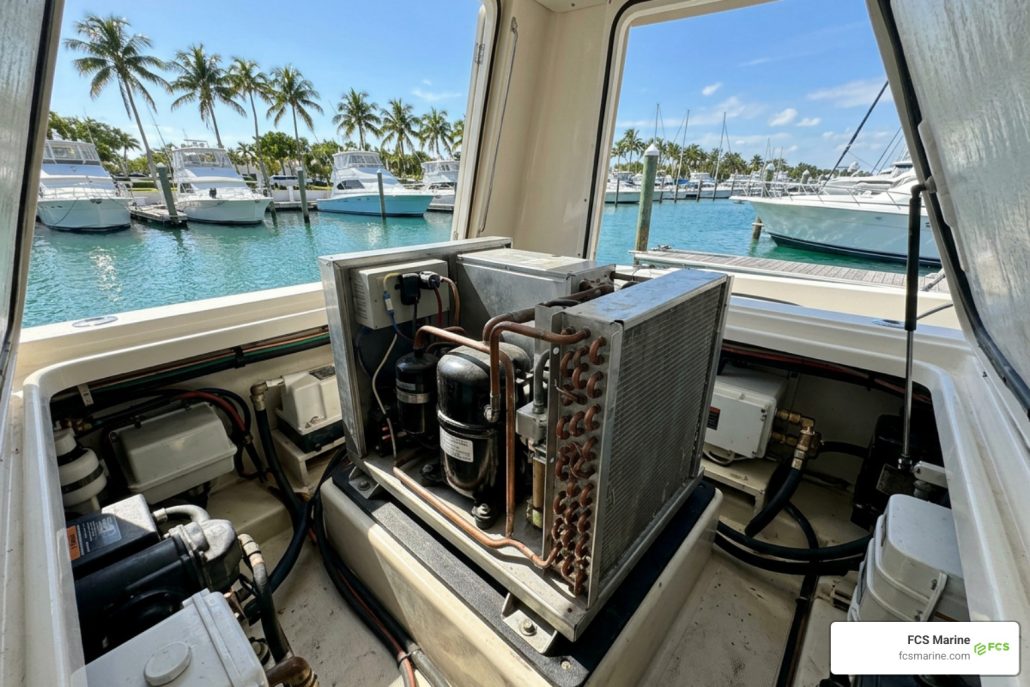
Why Refrigeration Troubleshooting in Pompano Beach Is Different on the Water
Refrigeration troubleshooting in Pompano Beach looks different when your “kitchen” is floating in a coastal marina exposed to salt air, high humidity, and summer heat that rarely lets up.
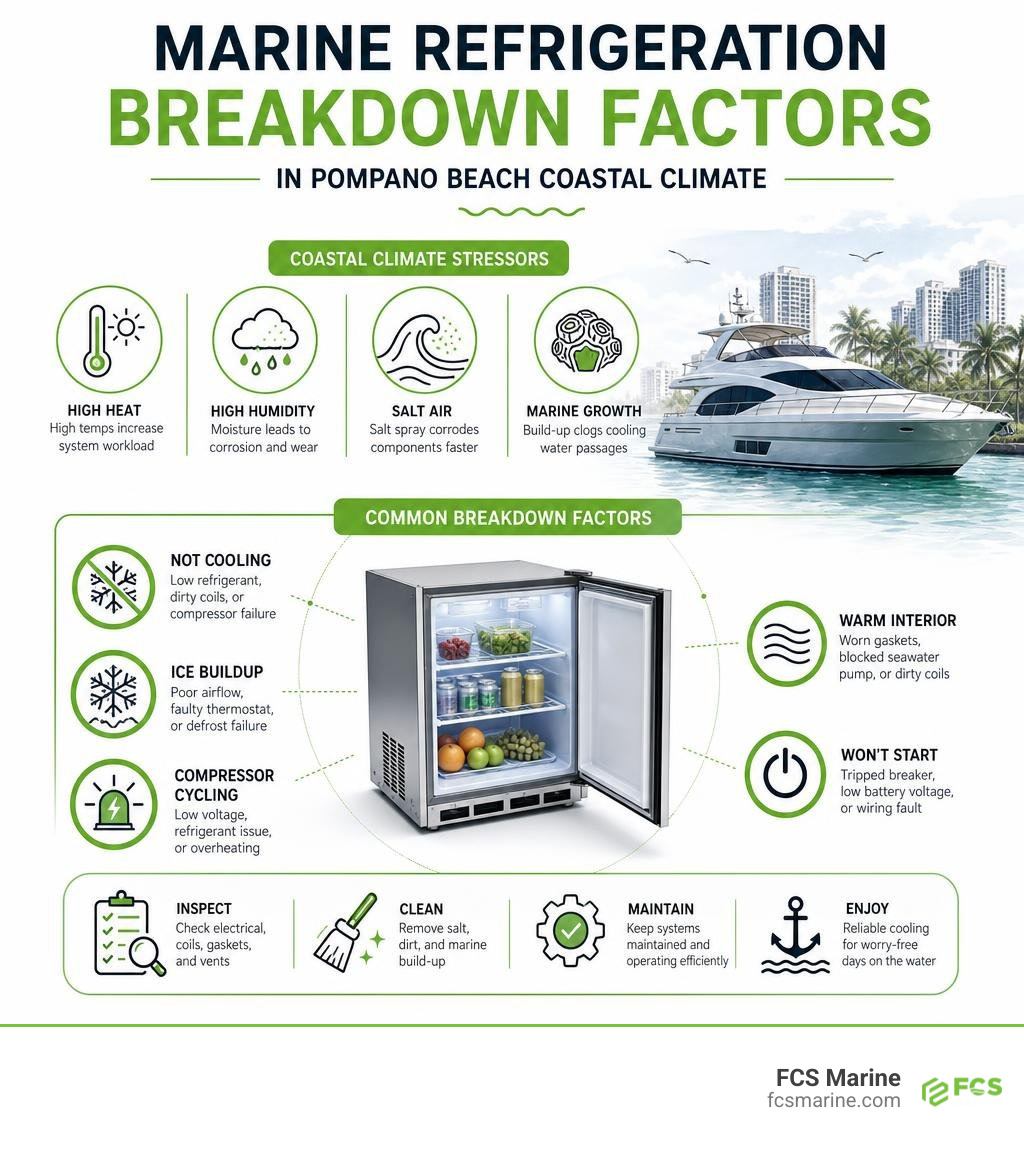
Here is a quick overview of the most common marine refrigeration issues Pompano Beach vessel owners deal with — and what causes them:
| Problem | Most Likely Cause |
|---|---|
| Unit not cooling | Low refrigerant charge, clogged condenser coil, or failed compressor |
| Frost or ice buildup on evaporator | Poor airflow, faulty thermostat, or defrost system failure |
| Compressor clicking on and off | Low voltage, refrigerant issue, or overheating |
| Warm interior despite unit running | Worn door gaskets, blocked seawater pump, or dirty coils |
| Unit not starting | Tripped breaker, low battery voltage, or wiring fault |
Coastal systems face challenges that landlocked refrigerators never encounter. Salt spray corrodes components faster. High ambient humidity raises the heat load. Seawater cooling circuits clog with marine growth. According to data from Pompano Beach HVAC and cooling professionals, coastal systems can deteriorate 25 to 40% faster than units operating in inland environments — and marine refrigeration systems are no exception.
If your vessel’s refrigerator is running but not keeping temperature, making unusual sounds, or showing ice buildup, this guide will walk you through the key troubleshooting steps before you call for service.
At FCS Marine, we provide professional mobile marine refrigeration repair and service for yacht owners, captains, and vessel operators across Pompano Beach and South Florida — coming directly to where your vessel is located.
Essential Steps for Marine Refrigeration Troubleshooting in Pompano Beach
When a marine refrigerator or freezer fails in the middle of a trip along the Intracoastal Waterway, it can spoil provisioning and ruin a day on the water. Proper refrigeration troubleshooting Pompano Beach boaters perform begins with systematic, non-invasive checks to isolate electrical, mechanical, or thermal causes.
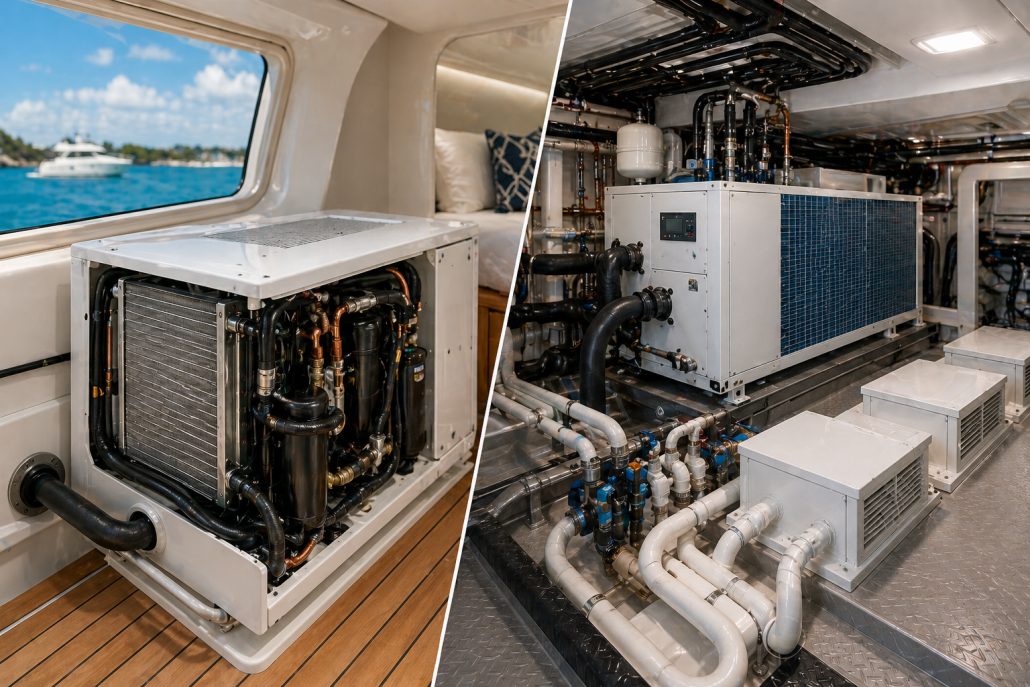
Marine refrigeration systems rely on tight balance. Whether you have an air-cooled compressor unit in a salon galley or a raw-water cooled condensing system, basic maintenance oversights are often behind sudden cooling loss. South Florida’s high humidity and warm sea temperatures create an environment where small operational flaws quickly compound into complete cooling failures.
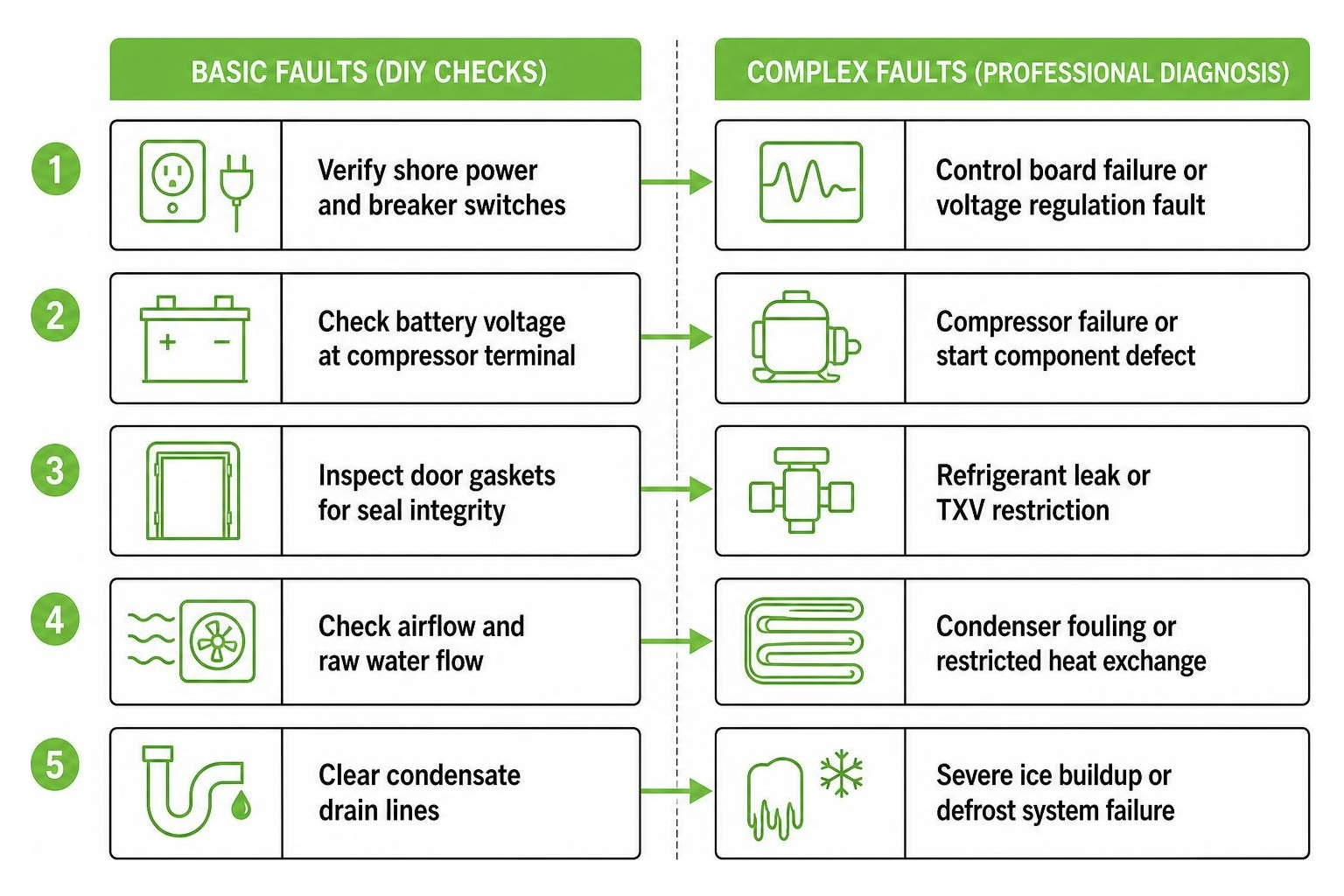
Key initial DIY inspection steps include:
- Verifying shore power connection and checking AC/DC breaker switches.
- Inspecting battery voltage at the compressor terminal to rule out voltage drop under load.
- Checking cabinet door gaskets for cracks, tears, or proper magnetic suction.
- Checking air circulation around air-cooled condenser coils or inspecting raw water output from seawater pumps.
- Confirming that condensate drain lines are free of algae and standing water.
Initial Refrigeration Troubleshooting Pompano Beach Boaters Can Perform
Before opening refrigerant lines or removing cabinet panels, start at the electrical supply panel. Marine cooling systems often operate on dual-voltage automatic switching power supplies (12V/24V DC and 120V AC). A sudden voltage drop when the compressor attempts to start will trigger the electronic control module’s low-voltage protection circuit, preventing compressor startup to safeguard the motor windings.
Inspect marine battery banks and power wiring connections for signs of green copper oxide corrosion caused by moist coastal air. Loose or corroded terminals cause resistance and voltage drops that look like motor failures.
If power supply levels are nominal, evaluate cabinet sealing. South Florida’s high ambient humidity continuously forces moist air into cold spaces through damaged door gaskets. Inspect seal edges thoroughly using the paper test—close the cabinet door on a dollar bill and feel for resistance when pulling it out. A damaged gasket allows moist air to enter continuously, leading to rapid evaporator frosting, heavy condensation, and excessive heat loads.
Finally, verify that condensate drain tubes remain completely unobstructed. Condensate water that builds up around internal coils can re-evaporate into cabinet spaces or freeze into blockages, severely hindering internal airflow and promoting mold growth.
Diagnosing Seawater Pumps and Condenser Coils
For vessels equipped with water-cooled marine refrigeration, raw water flow is crucial for system operation. Seawater pumps draw ocean water through a sea cock and strainers to absorb heat from the refrigerant coils before discharging it overboard.
If raw water circulation degrades due to weed accumulation, barnacles, worn pump impellers, or air-bound pump heads, high condensing pressures will trigger thermal overload safety cutouts. Check the vessel’s overboard discharge port to confirm steady water flow while the unit operates. Clean the raw water strainer basket regularly, check sea cock valves, and inspect heat exchanger tubing for scale deposits.
For a deeper look into mechanical wear factors, explore our article on common causes of marine refrigeration failure to see how salt exposure impacts system lifespans.
Identifying Severe Coastal Cooling Failure Symptoms
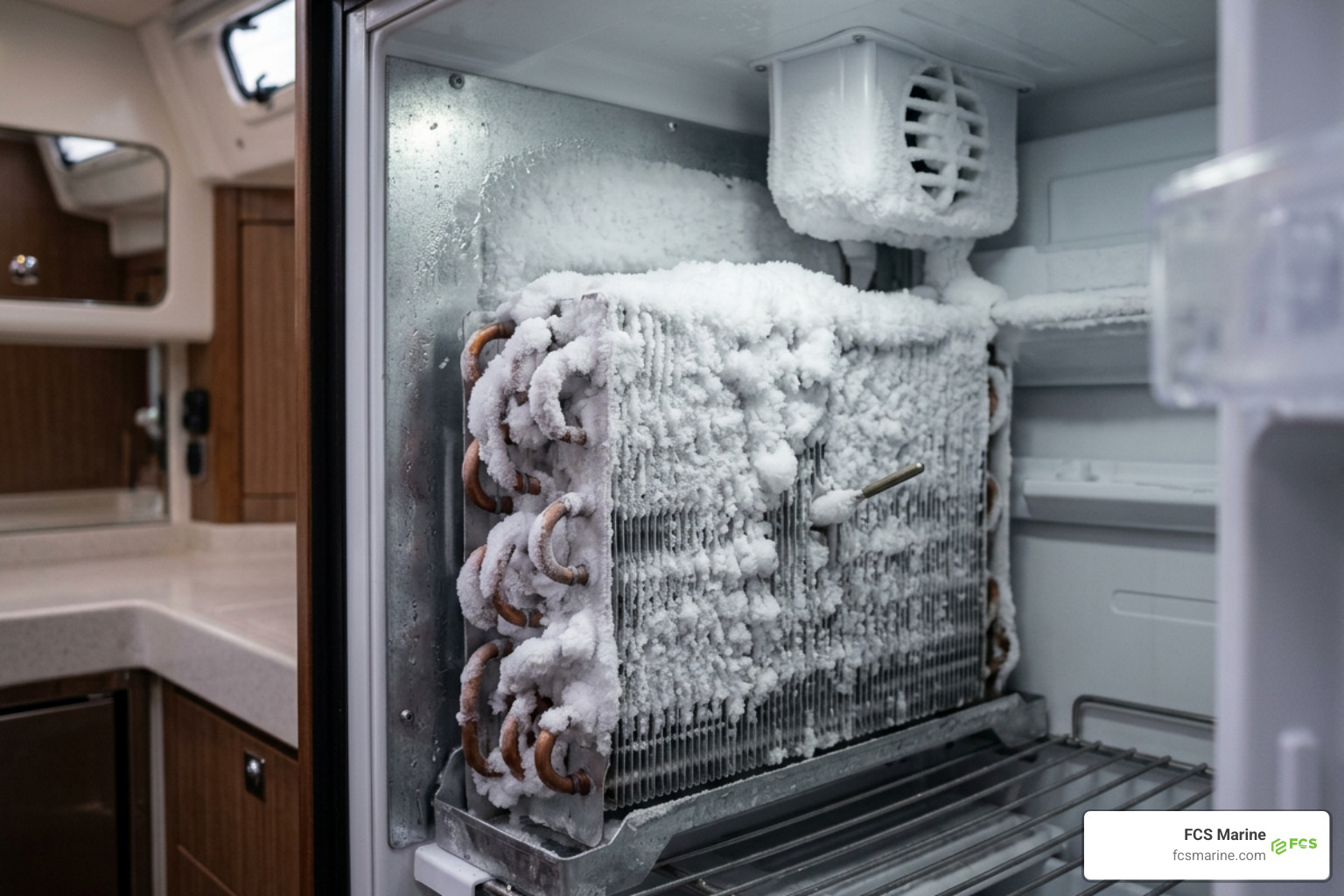
Recognizing early warning signs prevents minor thermal balance issues from escalating into major compressor failures. Symptoms like rapid frost accumulation, rapid thermal recycling, or continuous click-clack starting attempts point directly to specific system stresses.
When an evaporator plate freezes into a solid block of ice, heat transfer stops completely. While vessel owners may suspect a lack of cooling power, the issue usually stems from restricted cabinet airflow, faulty defrost sensors, stuck solenoids, or slight refrigerant loss. Understanding why these issues happen helps captains take appropriate corrective action before components suffer permanent damage. Review our detailed guide on why marine refrigeration systems freeze up for additional diagnostic details.
Advanced Refrigeration Troubleshooting Pompano Beach Vessel Owners Should Know
When initial electrical checks and strainer cleaning fail to restore cooling performance, advanced diagnostics become necessary. Issues like thermal expansion valve (TXV) restriction, compressor valve failure, internal moisture contamination, or micro-leaks in copper tubing require specialized tools and expert technical knowledge.
According to weather reports from the NOAA National Weather Service, South Florida summer temperatures regularly exceed 90°F with humidity levels above 80%. Under extreme thermal loads, even minor refrigerant leaks lead to severe cooling drops. High ambient temperatures combined with reduced cooling charge cause thermal overload switches to trip repeatedly, threatening compressor health and causing food spoilage.
If you observe compressor unit short-cycling, abnormal operating noises, or oil stains on copper joints, shut the system off immediately and arrange for professional service to prevent electrical motor burnouts.
Frequently Asked Questions About Marine Refrigeration Repair
What are the most common marine refrigeration problems in Pompano Beach?
The most common issues include clogged raw water strainers, salt-spray air coil corrosion, battery voltage drops from weak house banks, worn door gasket seals, and micro-leaks in copper tubing. Extreme summer heat and rapid marine growth in waterways like Hillsboro Inlet accelerate these breakdown factors in South Florida waters.
How does the South Florida climate affect yacht refrigerators?
South Florida’s coastal air accelerates metal corrosion by 25% to 40% compared to inland environments. High ambient humidity forces compressors to work harder to condense water vapor, making proper moisture control vital. The EPA Moisture Control Guidance highlights that maintaining relative humidity between 30% and 50% minimizes mold growth and equipment wear — a threshold that requires proactive maintenance and properly functioning equipment on boats.
When should a captain call for professional on-site marine repair?
You should contact professional marine repair services when the compressor short-cycles, refrigerant leaks are suspected, frost repeatedly coats evaporator plates despite defrosting, or electrical breaker switches trip continuously. Continuing to run a malfunctioning unit can cause permanent compressor damage. When cooling failures put fresh provisions or charter itineraries at risk, explore our resources on emergency marine refrigeration repair for immediate assistance.
Conclusion: Mobile Marine Service in Broward County
When DIY checks fail to restore stable cooling onboard, having access to fast, on-site expertise makes all the difference. FCS Marine provides complete mobile marine service across Broward County and neighboring South Florida coastal communities, servicing your vessel directly at its slip, mooring, dry stack, or haul-out facility.
Whether you operate a private center console out of Hillsboro Inlet or manage a commercial charter yacht docked in Pompano Beach, our mobile technicians bring specialized diagnostic equipment, pressure gauges, and repair tools directly to where your vessel rests. You never have to move your boat across town to begin the service process.
Beyond specialized marine refrigeration repairs and diagnostics, our team provides comprehensive marine air conditioning maintenance, yacht insulation upgrades, mold remediation, and water purification services to keep your vessel in peak condition year-round.
If your onboard cooling systems show signs of performance loss, contact the expert team at FCS Marine today to schedule professional, mobile marine service where your vessel is located.