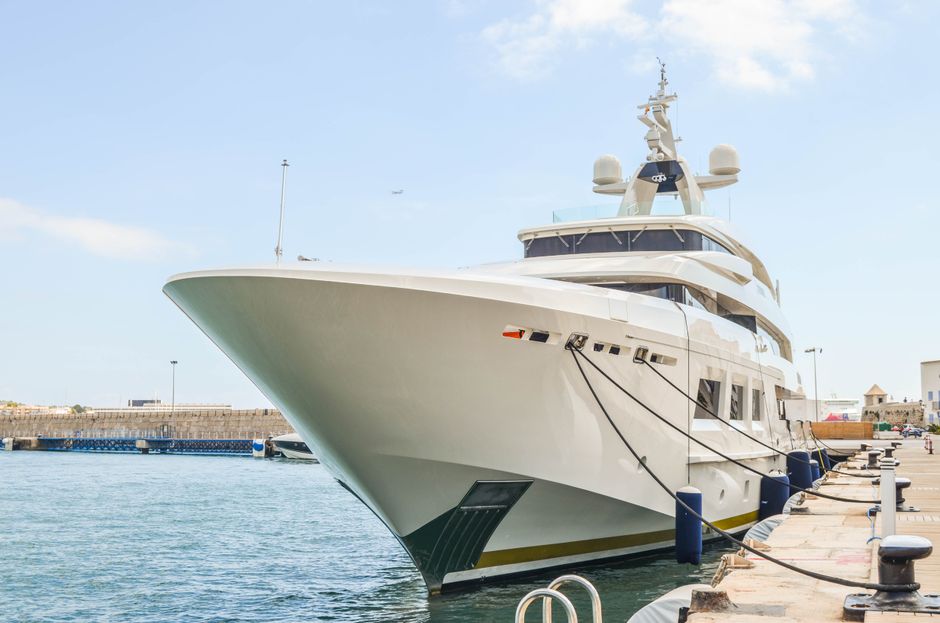
Why Every Yacht Owner Needs to Understand Thermal Insulation
Yacht thermal insulation is the system of materials installed inside a vessel’s hull, deck, and bulkheads to control heat transfer, prevent condensation, and reduce noise.
Quick answer — what you need to know:
- What it does: Slows heat moving between the outside environment and your interior living spaces
- Best materials: Closed-cell foam (like Armaflex), mineral wool, polyolefin foam, and cellular glass
- Why it matters: Reduces HVAC load, prevents mold, dampens engine noise, and improves fire safety
- Who needs it most: Owners of metal (aluminium or steel) hulls, liveaboards, and anyone cruising in extreme climates
- Key stat: 25 mm of Armaflex foam delivers the same insulating performance as 250 mm of mineral wool
If you keep your yacht in South Florida, you already know the problem. The sun hammers your deck all day. Humidity sneaks into every corner. Your air conditioning runs constantly — and still struggles to keep up. What many yacht owners don’t realise is that a big part of that battle isn’t the AC unit itself. It’s the lack of proper insulation behind the walls.
Metal hulls make this worse. Aluminium and steel conduct heat rapidly, meaning the temperature outside your hull becomes the temperature inside your cabin — fast. Even fibreglass (GRP) yachts aren’t immune. Without a proper thermal barrier, you’re fighting the climate with one hand tied behind your back.
And it’s not just about comfort. Poor insulation leads to condensation, which leads to mold — a familiar headache for any liveaboard or long-distance cruiser. It also puts extra strain on your HVAC system, drives up fuel and energy costs, and can quietly damage your interior over time.
This guide covers everything you need to know: which materials work best, where to apply them, and how to avoid the common mistakes that leave so many boats damp, noisy, and expensive to cool.
Why Yacht Thermal Insulation is Essential for Comfort and Efficiency
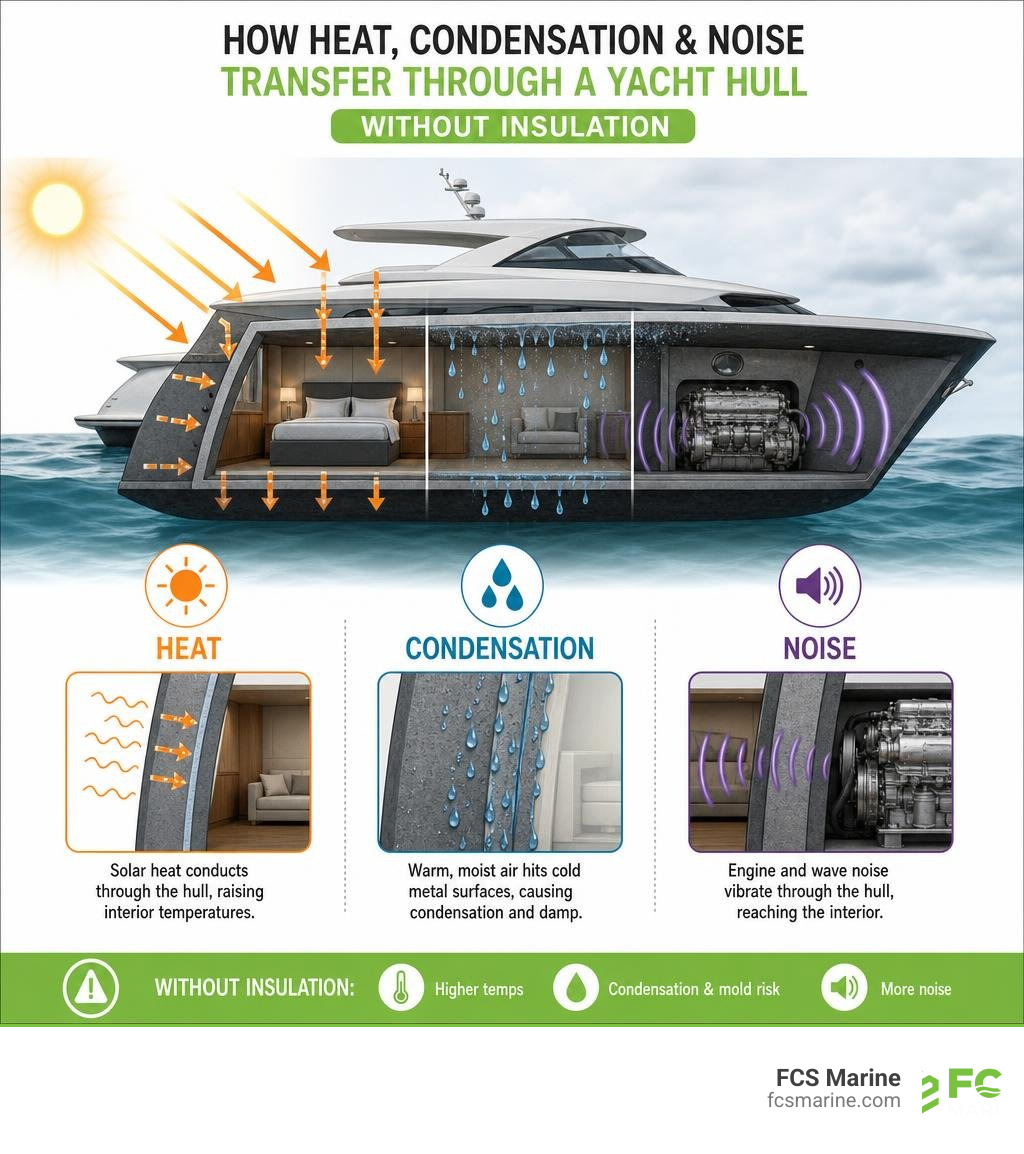
When we think about luxury onboard a yacht, we usually picture plush cabins, high-end electronics, and state-of-the-art propulsion. However, true luxury starts with basic thermal comfort. Without high-quality yacht thermal insulation, your vessel is essentially a large conductor exposed to the elements. Solar radiation beats down on the deck, raising interior temperatures to sweltering levels, while the surrounding water conducts heat away from or into the hull.
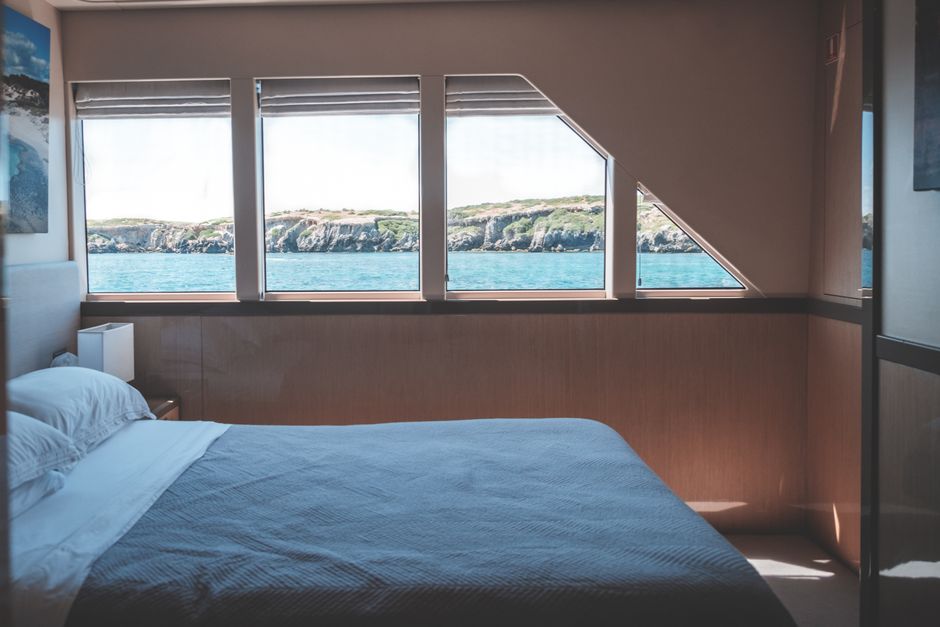
Proper insulation acts as a protective blanket, maintaining a stable indoor climate regardless of external weather. This thermal barrier is directly linked to the efficiency of your Marine Air Conditioning system. When your hull is uninsulated, your AC must work twice as hard to cool the cabins. This constant operation increases the electrical load on your generators, burns more fuel, and accelerates wear and tear on expensive HVAC components. By investing in professional insulation, you significantly reduce the thermal load on your air conditioning, allowing it to cycle off naturally and run far more efficiently.
Many production boatbuilders omit robust thermal insulation as a standard feature to reduce manufacturing expenses, weight, and space. For instance, on luxury vessels like the Leopard 50, comprehensive hull insulation is often only offered as an optional upgrade at an additional cost. When production boats skip this step, they typically leave only a token amount of space for insulating materials. But as seasoned cruisers know, cutting corners on the thermal barrier inevitably leads to drafty cabins, high utility bills, and a noisy interior.
Preventing Condensation and Mold Growth
One of the most destructive consequences of poor insulation is condensation. In the hot, humid environments of South Florida—from Palm Beach down to Miami-Dade County—the air carries a massive amount of moisture. When your marine air conditioning cools the interior of your yacht, the temperature of the hull or deck plates can drop below the dew point of the surrounding air.
When warm, humid air meets these cold, uninsulated surfaces, water droplets form. This moisture pools behind cabinetry, under floorboards, and inside bulkheads. Over time, this hidden dampness creates the perfect breeding ground for mold and mildew. Mold not only ruins expensive woodwork and upholstery, but it also poses a serious health risk to everyone on board, contaminating your indoor air quality.
To prevent this, we must establish a continuous moisture barrier. Closed-cell insulation materials are highly effective because they do not absorb water and prevent humid air from reaching the cold metal or GRP surfaces. If you are already experiencing a musty smell or suspect mold is growing in your HVAC ducts due to moisture buildup, it is vital to address it quickly. You can Learn why your Yacht AC System Needs Cleaning to protect your health and restore your system’s efficiency.
Optimizing Yacht Thermal Insulation for Extreme Climates
Whether you are planning to cruise through frozen high-latitude passages or spend your summers lounging in the tropical heat of Fort Lauderdale and Pompano Beach, your insulation needs to be up to the task.
In cold climates, a well-insulated boat is a matter of survival. Without a proper thermal barrier, heat escapes rapidly through the hull. Liveaboards in sub-zero climates, such as those spending winters in Northern Europe, have shown that a properly insulated hull (achieving 20 mm to 30 mm of high-performance closed-cell foam) can easily maintain a comfortable interior temperature of 22°C (71°F) with a modest 800W heater, even when external temperatures plunge to -5°C.
Conversely, in tropical climates, the goal is to block radiant heat from the sun. The decks and topsides of a yacht can easily reach temperatures exceeding 60°C (140°C) under direct South Florida sunlight. High-quality thermal insulation prevents this heat from radiating down into your sleeping quarters, keeping your cabins cool and reducing the strain on your refrigeration and AC systems.
Comparing Common Marine Insulation Materials
Choosing the right material for your yacht is a balancing act between thermal performance, weight, moisture resistance, and fire safety. The table below outlines how the most common marine insulation materials stack up against each other:
| Insulation Material | Thermal Conductivity ($lambda$ at 10°C) | Moisture Resistance | Fire Safety Rating | Primary Marine Application |
|---|---|---|---|---|
| Elastomeric Foam (Armaflex) | ~0.035 W/m·K | Excellent (Closed-Cell) | Class 0 / Low Smoke | Hulls, bulkheads, engine rooms, pipes |
| Polyolefin Foam (ThermaSmart) | ~0.035 W/m·K | Excellent (Integrated Vapor Barrier) | IMO FTP Code Compliant | Chilled water pipes, AC ducts, hulls |
| Mineral Wool / Stone Wool | ~0.035 – 0.040 W/m·K | Poor (Requires protective cladding) | Non-Combustible (A1/A2) | Fire bulkheads, high-temp exhaust pipes |
| Cellular Glass | ~0.040 W/m·K | Outstanding (Impervious to water) | Non-Combustible | Engine rooms, heavy-duty industrial decks |
| PVC / Epoxy Foam | Varies | Good | Moderate (Can off-gas) | Structural cores, light cabin panels |
For a deeper dive into modern maritime standards, you can explore Sustainable Insulation Solutions for Maritime Industry to see how eco-friendly engineering is shaping the future of yacht building.
Closed-Cell Foam and Elastomeric Insulation
Closed-cell elastomeric foam, widely known by the brand name Armaflex, is a favorite among professional yacht builders and refit yards. Because of its closed-cell structure, it does not absorb water, making it highly resistant to mold and rot.
One of the most impressive statistics in marine insulation is that 25 mm of Armaflex foam provides the equivalent insulating capacity of 250 mm of mineral wool. This massive difference is a game-changer for yachts, where space is always at a premium. Instead of sacrificing several inches of cabin space to accommodate thick fiberglass batting, you can achieve superior thermal resistance with a thin, flexible layer of elastomeric foam.
Modern polyolefin foams, such as those featured in the ThermaSmart Marine 4.0 Sheet , represent the cutting edge of this technology. These materials are halogen-free, PFAS-free, and come with an integrated aluminum vapor barrier. This ensures that even if humid air finds its way behind your cabin lining, it cannot penetrate the insulation or cause corrosion on the metal hull beneath.
Mineral Wool and Stone Wool Slabs
Mineral wool and stone wool (such as SeaRox slabs) are made by spinning molten rock or slag into fibrous mats. These materials are highly valued in commercial shipping and luxury yacht construction primarily for their outstanding fire resistance and high-temperature tolerance.
Stone wool can comfortably withstand operating temperatures up to 250°C (and even higher for specialized industrial applications), making it the standard choice for insulating engine exhausts, machinery spaces, and fire-rated bulkheads. To understand how these systems are engineered to prevent heat loss and control processes in high-temperature environments, refer to the technical guides on Thermal insulation solutions | ROCKWOOL Technical Insulation .
However, stone wool has a major drawback when used in standard hull applications: it is highly porous. If a leak occurs or condensation forms, mineral wool can act like a sponge, absorbing water and holding it directly against the hull. This leads to rapid corrosion in steel and aluminium vessels, and structural rot in wooden or GRP boats. Therefore, if stone wool is used, it must be meticulously sealed with a protective, watertight cladding.
The Critical Role of Insulation in Fire Safety and Acoustic Comfort
Insulation on a yacht does much more than block heat; it is also your primary defense against fire and noise.
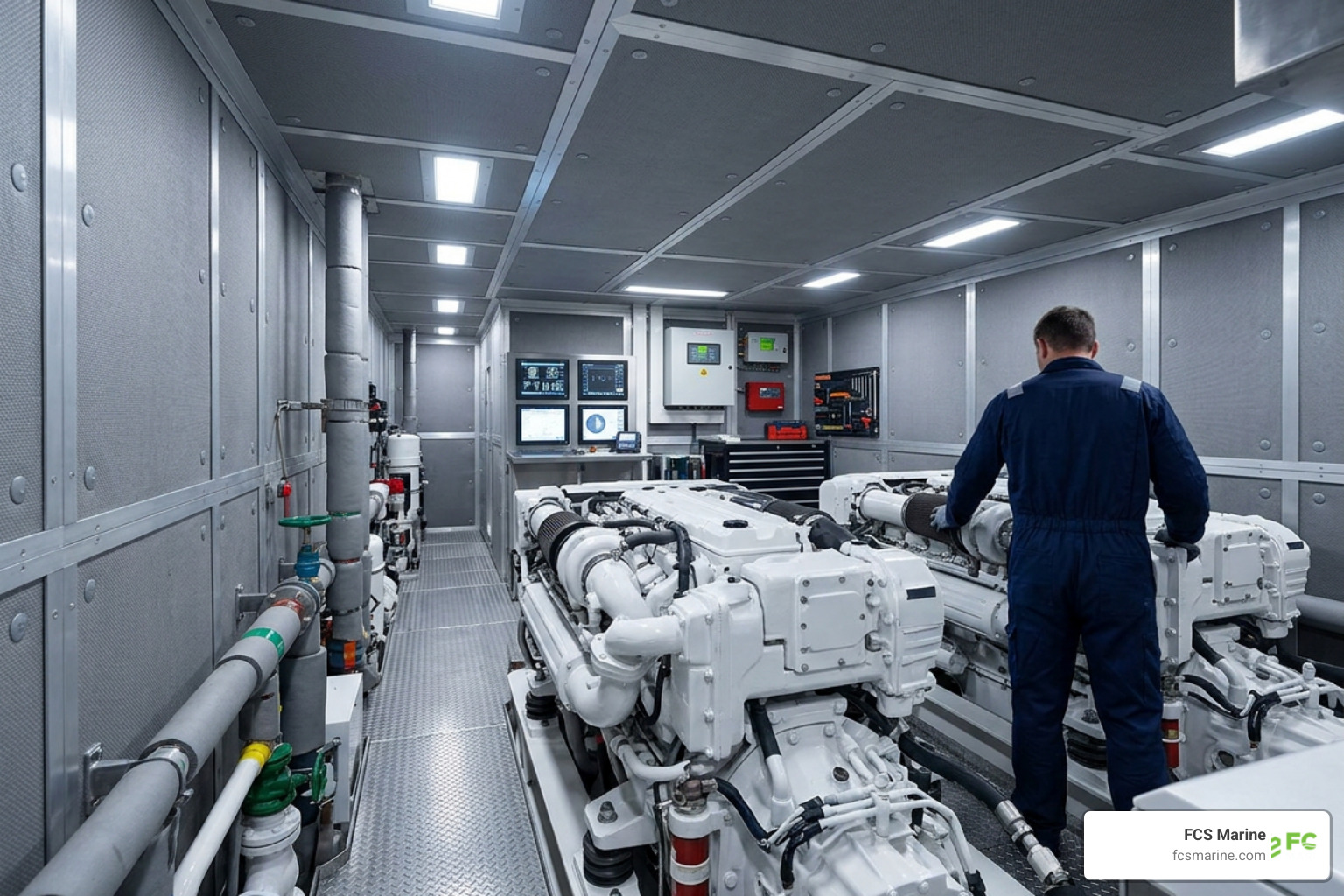
When we insulate engine compartments, generator rooms, and galley bulkheads, we use materials that act as thermal and acoustic barriers. These materials must meet strict international maritime safety standards, such as the International Maritime Organization (IMO) FTP Code and BS476 Class 0 fire resistance standards. These certifications ensure that the insulation will not easily ignite, support a flame, or produce toxic fumes in an emergency.
Fire Protection and Smoke Performance
In an emergency at sea, fire is exceptionally dangerous due to your distance from shore-based emergency services. High-quality marine insulation acts as a passive fire protection system, slowing the spread of flames and giving the crew valuable time to suppress the fire or safely evacuate.
Modern polyolefin and elastomeric insulation materials are designed with advanced fire safety in mind. For example, the halogen-free formulations used in cruise ship retrofits, as discussed in ThermaSmart® Marine 2.0 on Princess Cruises | Thermaflex , produce minimal, non-toxic smoke when exposed to flame. In a shipboard fire, smoke inhalation and toxic off-gassing are often more hazardous than the heat itself. Using certified, low-smoke materials significantly increases onboard safety.
Acoustic Dampening and Vibration Reduction
A quiet yacht is a comfortable yacht. Noise from roaring diesel engines, humming generators, and rushing air conditioning fans can quickly turn a relaxing cruise into an exhausting ordeal. Acoustic insulation improves onboard comfort by absorbing airborne noise and dampening structural vibrations.
Materials like Armaflex foam have natural sound-absorbing properties that reduce decibel levels throughout the vessel. For high-noise areas like engine rooms, we often use composite panels—such as Vetus Prometech, which combines specialized foam with heavy damping layers—to block low-frequency engine rumble.
In luxury cabin interiors, using Soundproof Marine Plywood (which sandwiches a rubber or cork core between wood veneers) further isolates living spaces from propeller and shaft vibrations, ensuring a peaceful night’s sleep.
Key Challenges and Best Practices for Insulating a Yacht Hull
Insulating a boat hull is a precise task that leaves no room for error. The marine environment is incredibly harsh, characterized by constant motion, vibration, saltwater exposure, and extreme temperature swings.
The primary challenge of hull insulation is avoiding air gaps. If there is a gap between the insulation material and the hull, warm, humid cabin air will eventually find its way into that space, condense against the cold hull, and pool out of sight. This hidden water leads to corrosion, mold, and ruined cabinetry.
Why Metal and Aluminium Yachts Require Special Attention
Insulating steel or aluminium yachts is an absolute necessity. Unlike GRP (fiberglass), which has some modest natural insulating properties, metals are highly efficient conductors of heat. An uninsulated metal hull will rapidly transfer the temperature of the outside water and air directly into the yacht’s interior.
Furthermore, metal yachts are highly susceptible to thermal bridging. Structural elements like frames, stringers, and bulkheads weld directly to the outer hull skin. If you only insulate the flat hull plates and leave these metal ribs exposed, they will act as “cold highways,” pulling heat out of the cabin and dripping with condensation.
When insulating aluminium, we must also be careful to avoid trapping saltwater against the metal, which can trigger rapid galvanic corrosion. Every single square inch of the metal interior above the waterline must be seamlessly sealed with a high-performance vapor barrier.
Best Practices for Installing Yacht Thermal Insulation
To ensure your insulation performs flawlessly for decades, we recommend following these industry best practices:
- Surface Preparation: Before applying any insulation, the hull must be completely dry, clean, and free of grease, rust, or loose paint. Running a desiccant dehumidifier inside the boat for a couple of weeks beforehand is highly recommended.
- Seamless Bonding: Use self-adhesive foam rolls or high-quality marine contact cement to bond the insulation directly to the hull. Press the material firmly across the entire surface to eliminate any potential air pockets.
- Staggered Seams & Taping: When applying multiple layers of insulation, stagger the joints to eliminate thermal bridges. Every single seam must be sealed with specialized, moisture-resistant tape (at least 50 mm wide) to maintain a continuous vapor barrier.
- Precision Fitting: For professional builds and refits, utilizing CAD data and CNC-cut insulation tiles ensures an exact fit around complex hull curves, frames, and stringers.
- Protect Your Systems: While upgrading your insulation, it is the perfect time to review your overall vessel maintenance. Be sure to consult our Marine AC Maintenance Checklist to ensure your climate control systems are clean and ready to run efficiently alongside your new insulation.
Frequently Asked Questions about Yacht Insulation
Why do production boatbuilders often omit high-quality insulation?
Production boatbuilders operate in a highly competitive market where weight, interior volume, and manufacturing costs are tightly controlled. High-quality insulation requires several inches of space, adds weight, and involves labor-intensive installation.
Because insulation is hidden behind beautiful wood paneling and liners, it is rarely a major selling point at boat shows. As a result, many manufacturers provide only token insulation, leaving it to the owner to pay for expensive aftermarket upgrades if they plan to cruise in extreme climates.
Should I insulate my yacht below the waterline?
This is a common debate among cruisers. Some argue that because water temperatures rarely drop below freezing (even in polar regions, sea water remains above 0°C), insulation below the waterline is unnecessary.
However, water is an excellent conductor of heat. In tropical South Florida waters, the sea can easily reach 30°C (86°F), constantly transferring heat into your bilge and lower cabins. Insulating below the waterline helps maintain a stable interior climate and prevents bilge condensation. The key is using a strictly closed-cell material that cannot absorb water if your bilge floods.
How does hull insulation impact my marine AC system?
Hull insulation drastically reduces the thermal load on your marine AC system. Without insulation, your air conditioning has to constantly fight the heat radiating through the hull and deck.
With a proper thermal barrier, your cabins retain cool air much longer, allowing your AC compressor to cycle off. This not only slashes your energy consumption but also extends the lifespan of your equipment. If you are designing or upgrading your vessel’s climate control, understanding the difference between Chilled Water vs Self-Contained AC Systems will help you choose the most efficient setup to pair with your new insulation.
Conclusion
Upgrading your yacht thermal insulation is one of the smartest investments you can make for your vessel. It is the secret to lower energy bills, a whisper-quiet cabin, complete freedom from musty mold, and a yacht that remains comfortable whether you are cruising the frozen north or docked in the tropical heat of South Florida.
At FCS Marine, we understand the unique challenges of keeping a yacht in prime condition. As a family-owned business serving Palm Beach, Broward, Miami-Dade, Martin, and St. Lucie counties, we specialize in high-quality marine AC repair, refrigeration, mold remediation, and professional insulation services. We provide fast, dockside service with a complete satisfaction guarantee across Fort Lauderdale, Pompano Beach, and the surrounding coastal waters.
Ready to stop your vessel from turning into a floating sauna? Contact us today to learn more and Get professional Yacht Insulation services tailored to your boat.