Marine Fridge Repair in Palm Beach Starts With an Onboard Diagnosis
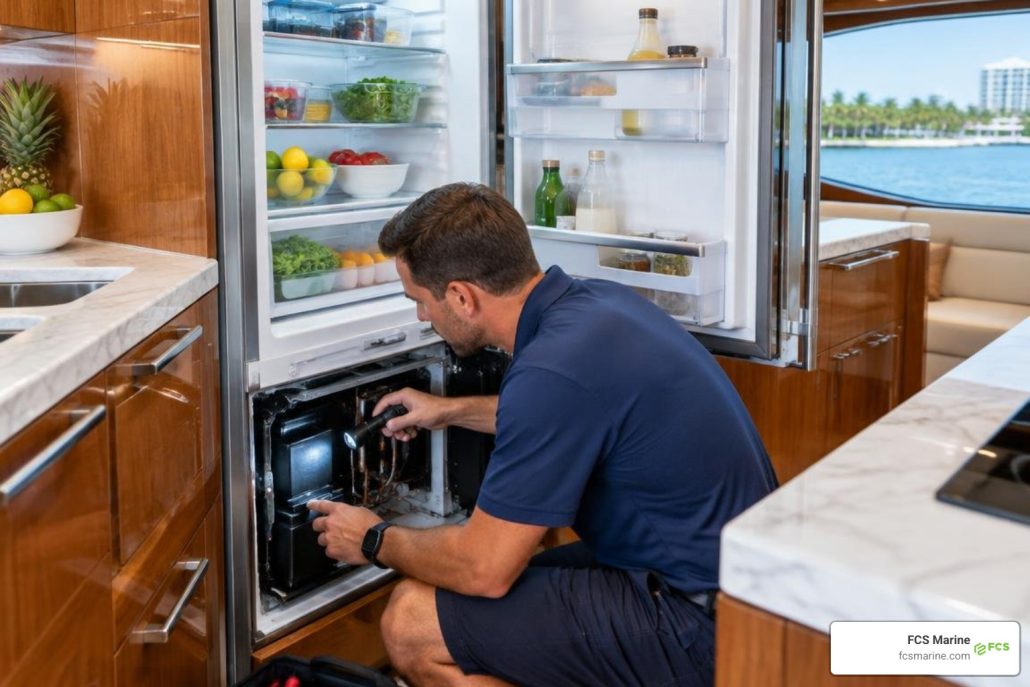
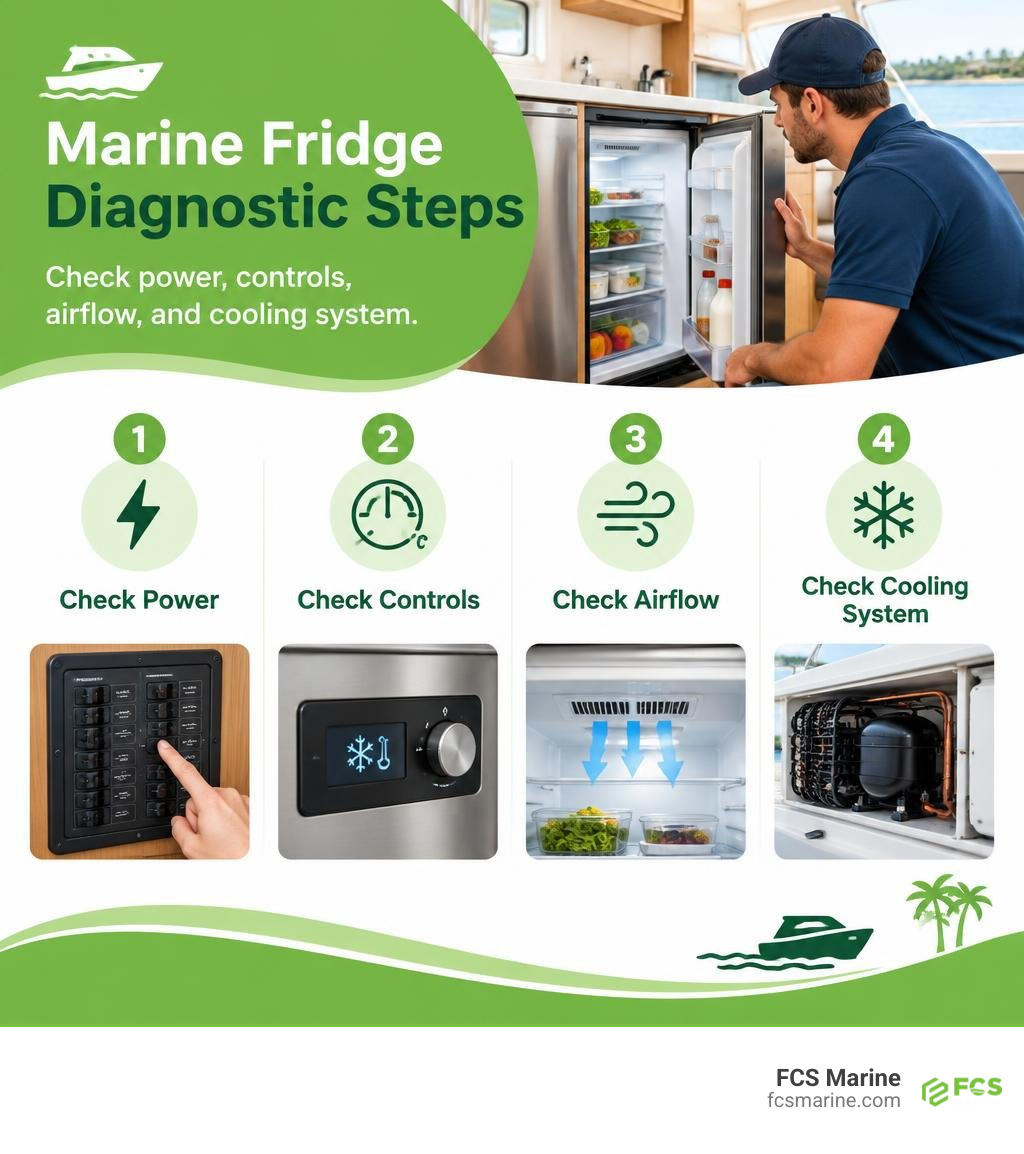
If your boat fridge is warm, check the breaker, power source, thermostat, and door seal first. Keep the door closed to protect your provisions. If it still will not cool, arrange a marine refrigeration inspection at the vessel. A technician can test the power supply, airflow, and cooling system before recommending a repair.
South Florida heat and salt air can make fridge problems harder to ignore. FCS Marine provides mobile marine refrigeration service for boats and yachts at marinas, boatyards, and private docks in the Palm Beach area. When marine galley equipment fails, scheduling professional marine fridge repair Palm Beach boaters trust helps prevent spoiled provisions and costly compressor replacements. Whether your vessel needs seasonal cooling maintenance, comprehensive boat AC service Palm Beach support, or focused refrigeration troubleshooting Pompano Beach captains rely on, early intervention keeps your galley systems running reliably.
Common Issues Requiring Marine Fridge Repair Palm Beach Boaters Face
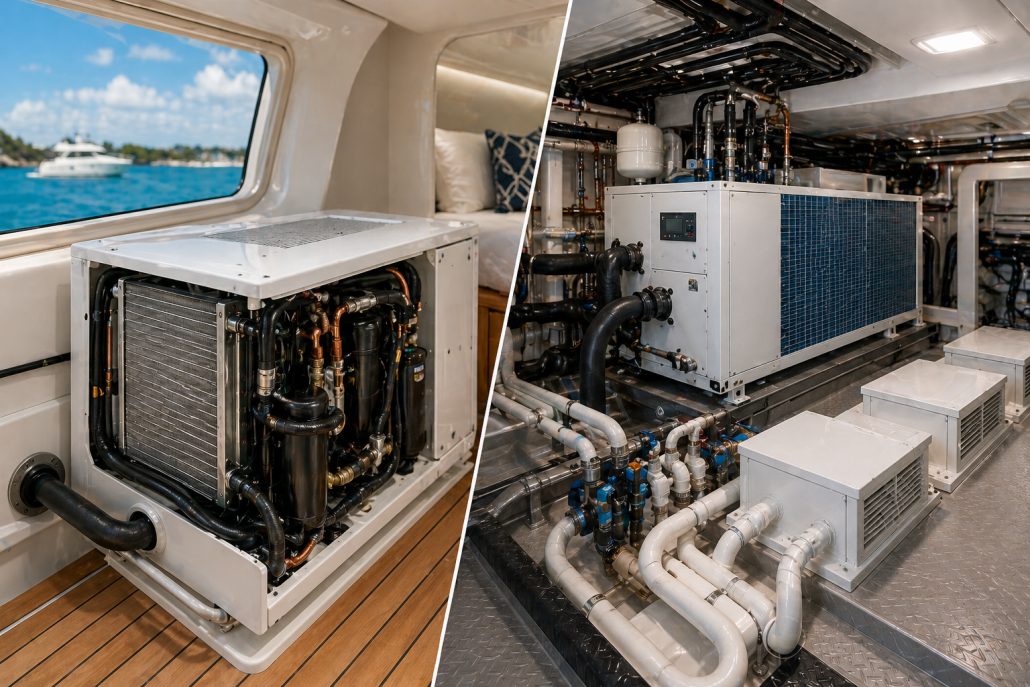
Marine cooling systems operate in a harsh environment that domestic units never encounter. High ambient temperatures, high humidity, saltwater corrosion, and constant vessel movement combine to create severe operating conditions. When these systems fail, recognizing the common causes of marine refrigeration failure allows captains and owners to take prompt action before food spoils or secondary damage occurs.
Marine-Specific Environmental Strains on Refrigeration
Boats operating along the Intracoastal Waterway and offshore Palm Beach face relentless thermal loads. Summer water temperatures often exceed 85°F, reducing the heat-transfer efficiency of water-cooled refrigeration units. Air-cooled systems face challenges inside tight, unventilated galley cabinetry where ambient air temperatures frequently climb past 100°F, forcing the compressor to work under elevated head pressures.
Salt air accelerates the oxidation of exposed metals throughout the galley and engine room. Condenser fins, electrical spade connectors, and copper line sets degrade rapidly without protective marine coatings. Constant wave action and engine vibrations introduce mechanical fatigue, which can crack soldered joints, loosen flare fittings, and cause micro-leaks within the sealed refrigerant circuit.
Power Supply Inconsistencies and Electrical Faults
Refrigeration units on vessels depend on complex electrical configurations, switching between 12V/24V DC battery banks, onboard generators, and 120V/240V AC shore power. Voltage drops are a frequent cause of sudden cooling loss. Corroded wiring harnesses, loose ground connections, or weak house batteries can drop supply voltage below the low-voltage cutoff threshold of electronic control modules (such as Danfoss/Secop controllers), causing the compressor to shut down intermittently.
Understanding how to fix a boat fridge that stopped cooling suddenly often begins with checking the vessel’s electrical bus under load. Marine electrical systems must comply with standards from organizations like the American Boat and Yacht Council (ABYC) to prevent stray current corrosion, thermal overloads, and electrical fire hazards onboard. Refrigerant handling during sealed-system repairs is also governed by EPA Clean Air Act Section 608 guidelines, which certified marine technicians follow when servicing cooling circuits.
Warning Signs and When to Call for Service
Marine refrigeration problems rarely happen without early indicators. Paying attention to how your unit cycles, sounds, and manages moisture can prevent major system failures during a cruise.
- Excessive or Uneven Frost Buildup: A light, dry frost evenly coating the evaporator plate is normal. Dense ice blocks or frost concentrated solely at the inlet pipe signal poor airflow, worn door gaskets, or low refrigerant levels. Understanding why marine refrigeration systems freeze up helps distinguish between a simple defrosting requirement and a sealed-system leak.
- Continuous Compressor Operation: If the compressor runs continuously without cycling off, the unit is struggling to reach the setpoint. This points to failing insulation, dirty condenser coils, declining compressor valves, or thermal overload.
- Water Pooling in Cabinets or Bilges: Blocked evaporator drain tubes or sweating cabinet walls indicate failing cabinet insulation or high interior humidity caused by compromised magnetic door seals.
- Unusual Clicking, Buzzing, or Vibration: A clicking control module often indicates low voltage, while grinding or rattling from the compressor indicates internal mechanical wear.
When to Schedule On-Site Marine Fridge Repair Palm Beach Services
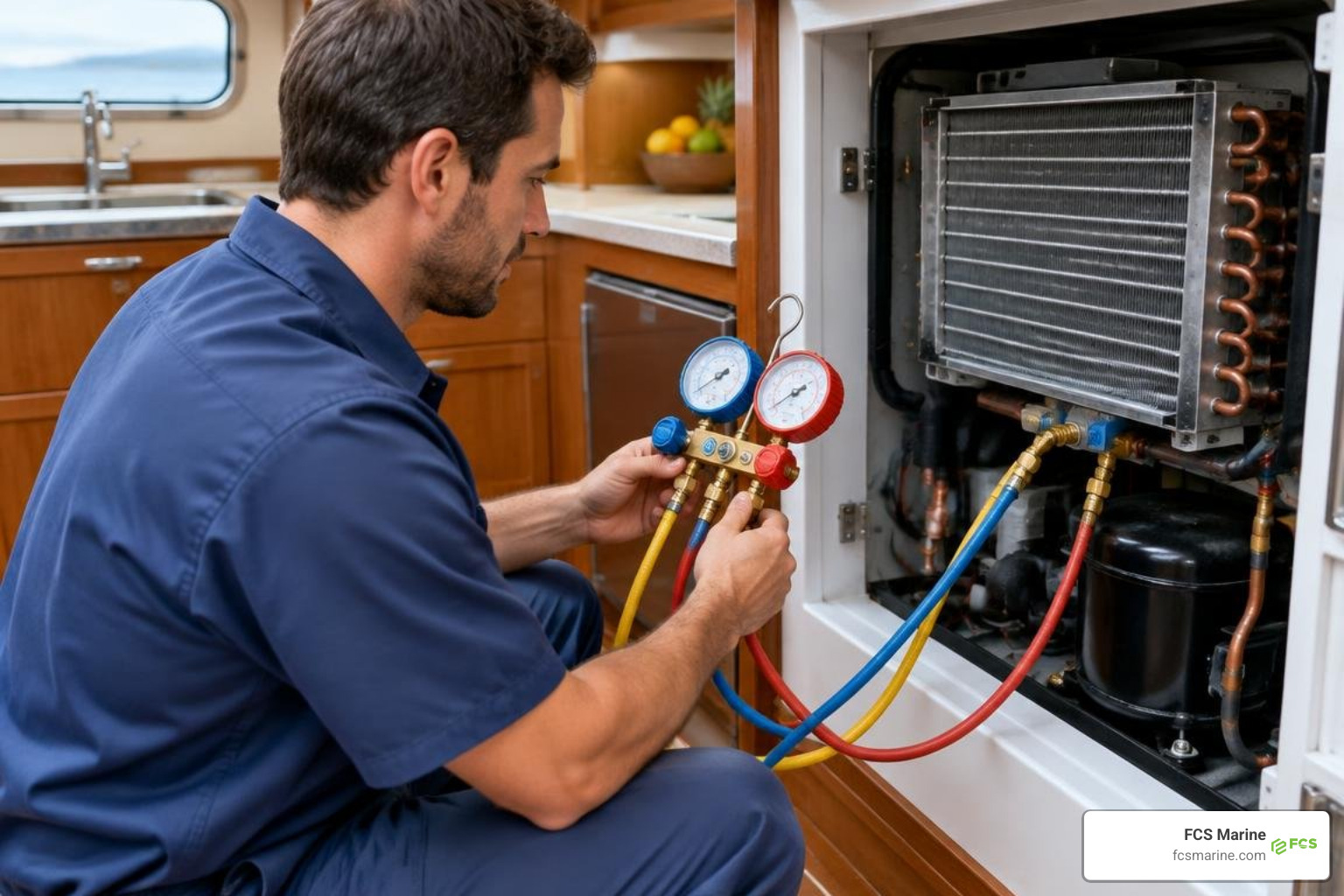
When primary troubleshooting steps (checking breakers, clearing exterior vents, inspecting gaskets) fail to restore normal temperatures, professional evaluation is necessary. Technicians use specialized diagnostic equipment, such as electronic refrigerant leak detectors and digital manifold gauges, to inspect the sealed system while adhering to EPA Clean Air Act Section 608 guidelines for refrigerant handling.
Marine Refrigeration vs Residential Systems
Marine cooling equipment differs fundamentally from residential refrigerators found in land-based kitchens.
| Feature | Marine Refrigeration Systems | Standard Residential Refrigerators |
|---|---|---|
| Power Source | Dual voltage (12V/24V DC & 120V/240V AC automatic switching) | Single-phase 120V AC utility grid |
| Cooling Method | Air-cooled, static keel-cooled, or pumped seawater heat exchangers | Passive or forced-air convective cooling only |
| Vibration Tolerance | Heavy-duty vibration mounts, reinforced copper joints, secure components | Standard domestic mounts, vulnerable to movement |
| Corrosion Resistance | Tinned marine-grade wiring, epoxy-coated coils, 316 stainless hardware | Painted steel, standard copper, unsealed circuit boards |
| Cabinet Latches | Positive mechanical latches to prevent opening in rough seas | Magnetic closure only |
Preventive Maintenance Tips for Boat and Yacht Owners
Regular maintenance prevents unexpected galley breakdowns and extends the life of your equipment:
- Clean Condenser Coils Regularly: Inspect and vacuum air-cooled condenser fins every three months. Dust, pet hair, and salt residue restrict airflow, driving up compressor temperatures and electrical draw.
- Inspect and Lubricate Door Gaskets: Wash magnetic seals with mild soap and inspect for splits. Apply a light film of food-grade silicone grease to keep gaskets supple and airtight against the cabinet face.
- Flush Seawater Cooling Circuits: For water-cooled condensing units, descale the heat exchangers periodically using a mild acid solution to remove marine growth, barnacles, and silt. Keep the raw water sea strainer clear.
- Monitor Battery Bank Voltage: Ensure your battery banks maintain adequate charging voltage under load. Low voltage increases amperage draw across DC compressor modules, leading to premature control board failure.
- Verify Proper Cabinet Ventilation: Never block the supply or return air grilles built into your galley cabinetry. Marine condensing units need continuous fresh airflow to reject heat effectively.
Mobile Vessel Service Coverage Across South Florida
Marine appliances cannot simply be hauled into a standard repair shop. FCS Marine operates as a mobile, on-site service provider, bringing professional tools, diagnostic equipment, and common marine replacement parts directly to your vessel’s location.
Whether your boat is kept on a private lift, at a yacht club, or undergoing yard service, our technicians travel directly to you throughout our primary service areas:
- Palm Beach County: Serving Palm Beach, West Palm Beach, Jupiter, Palm Beach Gardens, Riviera Beach, Boca Raton, Delray Beach, and Boynton Beach.
- Broward County: Providing full mobile service throughout Fort Lauderdale, Pompano Beach, Dania Beach, and Hollywood.
- Miami-Dade County: Supporting vessels berthed across Miami, Miami Beach, Coconut Grove, and Aventura.
- Treasure Coast: Covering marinas and private docks across Martin County and St. Lucie County.
Frequently Asked Questions About Marine Fridge Repair
How quickly can I get marine fridge repair service in Palm Beach?
Mobile service scheduling depends on current dispatch volume, vessel location, and the nature of the issue. When provisions or scheduled charters are at risk, our dispatch coordinates on-site diagnostic visits as promptly as possible across Palm Beach County marinas and private docks.
What should I do if my marine fridge stops cooling while on the water?
First, verify that your 12V/24V DC breakers and battery switches are engaged, and confirm battery voltage remains above 11.5 volts. Avoid opening the refrigerator door to preserve internal temperatures. If operating on an inverter or generator, switch power sources to confirm clean electrical supply. If the system does not restart, pack sensitive provisions in onboard coolers with ice until an on-site technician can inspect the system.
Do technicians provide on-site repair at marinas and private docks?
Yes. FCS Marine technicians travel directly to your vessel at marinas, boatyards, private residential docks, or commercial slips. Technicians arrive fully equipped to perform onboard testing, electrical diagnostics, component replacements, and refrigerant system service without requiring you to move the boat.
What types and brands of marine refrigerators are serviced?
We service a wide variety of marine cooling equipment, including built-in galley refrigerators, drawer fridges, custom holding plate systems, ice makers, and cockpit beverage coolers from major marine brands such as Dometic, Vitrifrigo, Isotherm, Norcold, U-Line, and Frigoboat.
Professional Marine Refrigeration Solutions in Palm Beach
A properly operating galley refrigerator is essential for comfortable cruising, entertaining, and extended stays on the water. FCS Marine provides complete mobile yacht maintenance across South Florida, specializing in marine refrigeration, marine air conditioning repair and installation, yacht insulation, marine mold remediation, watermaker systems, and specialized equipment support.
If your boat or yacht refrigerator is struggling against South Florida’s heat and humidity, contact FCS Marine to schedule an on-site inspection at your dock, slip, or marina.