When Your Galley Goes Warm: Finding Reliable Marine Fridge Repair in Miami
SEO Title: Don’t Sweat on the Water: Boat Refrigerator Repair in Miami Beach Meta Description: Keep your galley cold. Get professional marine refrigeration repair in Miami Beach and South Florida with FCS Marine’s on-site yacht services. Primary Keyword: marine fridge repair Miami Secondary Keywords: boat refrigeration Miami Beach, marine refrigerator service South Florida, yacht galley cooling URL Slug: marine-fridge-repair-miami Search Intent: Find marine refrigeration repair Miami Primary FCS Marine Service Page to Support: https://fcsmarine.com/services/marine-refrigeration/ Recommended Internal Links: https://fcsmarine.com/services/marine-refrigeration/, https://fcsmarine.com/blog/common-causes-of-marine-refrigeration-failure/, https://fcsmarine.com/blog/why-marine-refrigeration-systems-freeze-up/, https://fcsmarine.com/blog/how-long-marine-refrigeration-systems-last/, https://fcsmarine.com/locations/miami-dade-county/, https://fcsmarine.com/blog/emergency-marine-refrigeration-repair/, https://fcsmarine.com/contact-us/ Recommended Outbound Links: https://abycinc.org/, https://www.weather.gov/marine/, https://bernerepair.com/refrigerator-repair, https://fivestarappliancerepairpros.com/areas-we-service/miami-dade-county/

If you need marine fridge repair in Miami, here are the most trusted service options and what to expect:
- On-site mobile service — technicians come directly to your vessel at your marina, dock, or boatyard
- Common repairs — refrigerant recharge, compressor replacement, seawater condenser cleaning, evaporator and expansion valve service
- Warning signs to act on — unit not holding temperature, compressor running non-stop, frost buildup, water pooling near the unit
- Brands commonly serviced — Sub-Zero, Frigibar, Frigomar, Isotherm, and other marine-grade systems
- Who to call — FCS Marine provides professional marine refrigeration repair across South Florida, coming directly to where your vessel is located
Your galley refrigeration does more than keep drinks cold. On a yacht in South Florida, it protects your provisions, supports guest comfort, and keeps onboard operations running smoothly — especially during extended passages or charter trips.
The problem is that Miami’s marine environment is brutal on refrigeration systems. Salt air corrodes metal components. Hull vibration loosens fittings and refrigerant lines. High ambient temperatures push compressors harder than they were ever meant to work on land. The result? Marine refrigeration systems in South Florida fail more often, and more unexpectedly, than most yacht owners anticipate.
When cooling stops — or starts struggling — every hour counts. Food spoils fast in Miami heat, and a weekend trip or charter booking doesn’t wait for a slow repair timeline.
This guide explains why marine fridges fail, how to spot the warning signs early, and what professional on-site service looks like for vessels across Miami-Dade County.
Why Marine Refrigeration Systems Fail in South Florida
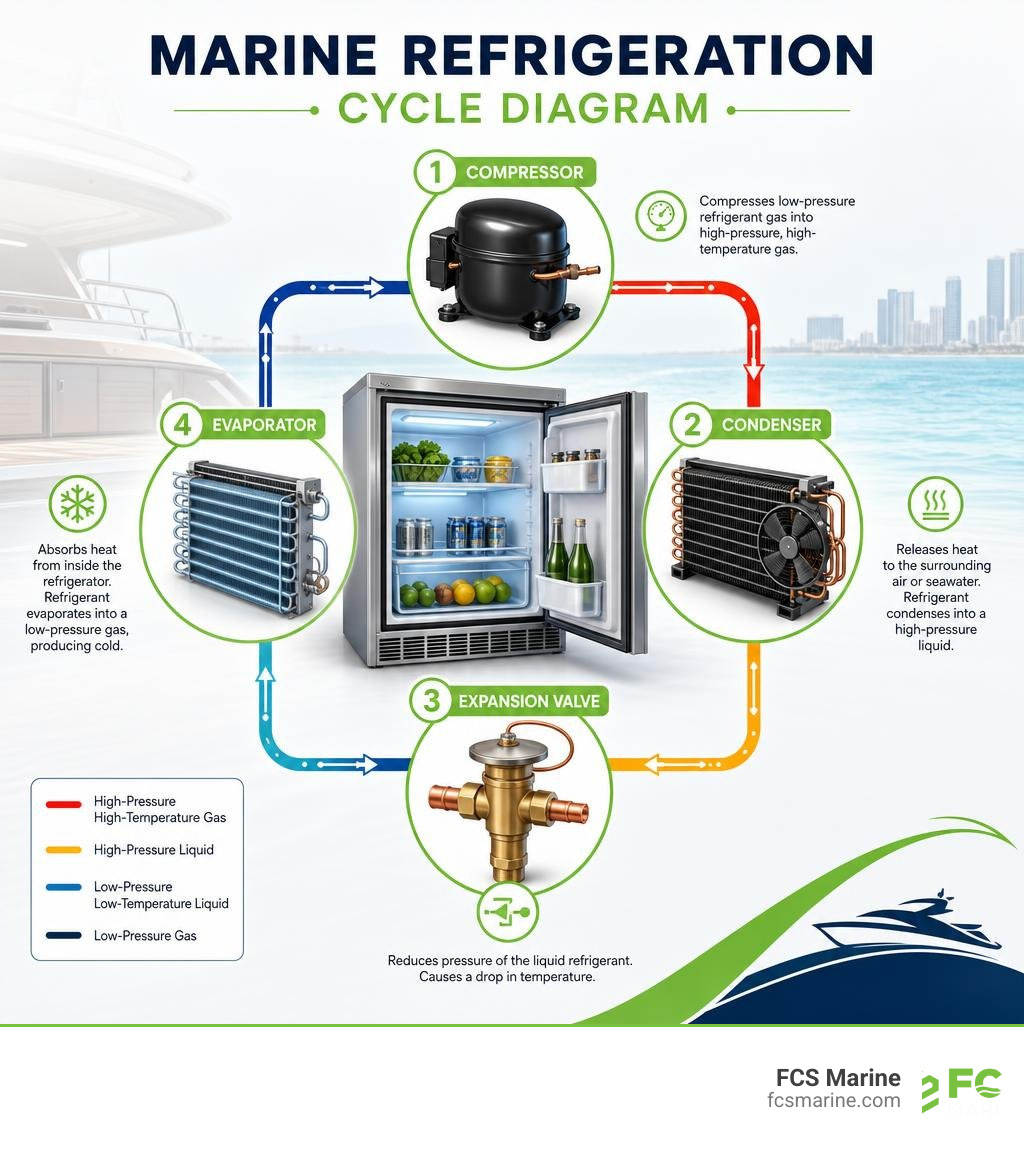
Operating a boat in South Florida’s coastal waters is the ultimate stress test for any appliance. Unlike a stationary kitchen ashore, a yacht’s galley experiences constant motion, high humidity, and relentless exposure to corrosive salt air. These environmental factors combine to place immense thermal and mechanical stress on your onboard cooling systems.
When we look at why these units break down, we must consider the unique climate of South Florida. High ambient temperatures mean your refrigerator’s compressor has to work much harder to reject heat. If your boat is docked in a marina with restricted airflow, or if the machinery space gets hot, the system operates at the limit of its design capacity for months on end. Over time, this extended high-temperature operation degrades electrical contacts, weakens compressor valves, and accelerates the breakdown of lubricating oils within the sealed system.
To understand the full scope of these vulnerabilities, you can read our detailed guide on the Common Causes of Marine Refrigeration Failure, which highlights how South Florida’s climate accelerates wear on vital cooling components.
Common Causes Requiring Marine Fridge Repair Miami
When our technicians perform marine fridge repair Miami services, we generally trace cooling failures back to a few specific technical culprits:
- Refrigerant Leaks from Vibration: Boats are constantly in motion. The vibrations from diesel engines, generators, and slamming against waves put immense physical stress on copper tubing and solder joints. Over time, these joints can develop tiny hairline fractures, allowing refrigerant to slowly escape.
- Restricted Seawater Condenser Flow: Many marine refrigeration units rely on seawater-cooled condensers to reject heat. While highly efficient, this system pulls in raw seawater that is full of marine life, silt, and salt. Scaling, barnacles, and debris can easily clog the narrow cooling passages, restricting water flow and causing the compressor to overheat and shut down.
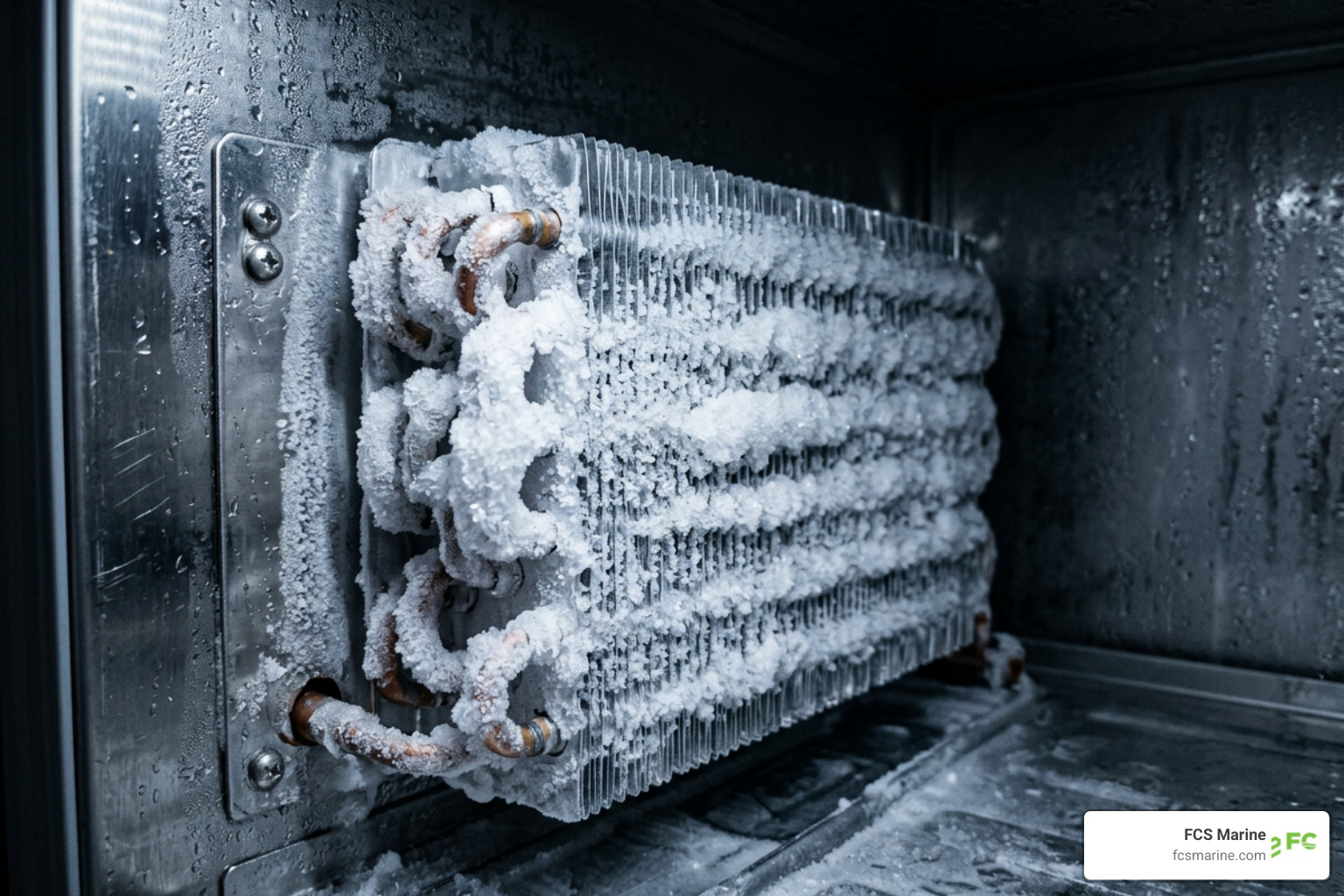
- Evaporator Coil Contamination and Icing: High humidity in Miami Beach means that moist air enters the fridge every time the door or lid is opened. If the door gaskets are worn or the defrost drain is blocked, this moisture rapidly accumulates on the evaporator coils as thick ice, insulating the coil and blocking heat transfer. You can explore this specific issue further in our article on Why Marine Refrigeration Systems Freeze Up.
- Compressor Fatigue and Electrical Failures: Constant cycling under heavy thermal loads eventually wears out even the most durable marine compressors. Additionally, voltage fluctuations from switching between shore power, generator power, and onboard battery inverters can damage sensitive control modules and start relays.
Warning Signs You Need Marine Fridge Repair Miami
Marine refrigeration systems rarely fail completely without giving off a few early warnings. Paying close attention to how your galley equipment behaves can save you from a major headache (and hundreds of dollars in spoiled provisions) before your next trip.
Keep an eye out for these common warning signs on your vessel:
- Inconsistent Temperatures: If your ice cream is soft in the morning but rock-solid by evening, or if the fresh food compartment is hovering above 40°F, your system is struggling. Rising galley storage temperatures are a clear sign of system distress.
- The Compressor Runs Continuously: A healthy marine fridge should cycle on and off. If you notice the compressor hum never stops, the unit is working overtime to maintain its temperature setpoint. This could be due to a low refrigerant charge, poor ventilation, or failing seals.
- Unusual Squealing, Clicking, or Grinding Noises: While marine units are built to be relatively quiet, failing condenser fan motors, worn compressor mounts, or failing start relays will make themselves heard. Clicking sounds often indicate a compressor that is trying to start but tripping on thermal overload.
- Excessive Frost or Water Pooling: Heavy ice accumulation on the evaporator plate or water pooling at the bottom of the fridge cabinet indicates that warm, humid air is leaking inside. This is usually caused by degraded magnetic door gaskets or misaligned hinges.
If you are noticing these symptoms on an older unit, it helps to understand the typical lifespan of these specialized systems. Read our resource on How Long Marine Refrigeration Systems Last to help you evaluate whether a targeted repair or a modern system upgrade makes the most sense for your vessel.
How Marine Systems Differ from Residential Units
A common mistake boat owners make is assuming that a marine refrigerator is simply a compact version of a household kitchen fridge. In reality, marine refrigeration systems are highly specialized pieces of engineering built to meet strict maritime safety and environmental demands.
First, marine units must be compatible with the vessel’s electrical grid. While residential refrigerators run exclusively on standard 120V AC power, marine units often run on low-voltage DC power (12V or 24V) to operate off the vessel’s battery banks when at anchor. Many premium marine systems use dual-voltage automatic switching controllers that seamlessly transition between DC battery power and AC shore power.
Second, the structural components of marine fridges are built to withstand constant movement. Door latches must be mechanical and heavy-duty so they do not fly open when the vessel rolls in a heavy seaway. The internal shelves are designed with high fiddles to keep items secure. Furthermore, the metal alloys used in marine evaporators and condensers are selected for their corrosion resistance, often featuring specialized epoxy coatings to withstand the salt-laden air.
| Feature | Marine Refrigeration Systems | Residential Refrigeration Units |
|---|---|---|
| Power Supply | 12V/24V DC, 120V/240V AC (Auto-switching) | 120V AC Only |
| Vibration Resistance | High (Secured copper lines, robust mounts) | Low (Static kitchen environments only) |
| Cooling Medium | Air-cooled, water-cooled, or keel-cooled | Air-cooled only |
| Corrosion Protection | Epoxy-coated coils, stainless steel, marine-grade hardware | Standard painted steel and bare copper |
| Door Latches | Positive mechanical locking latches | Magnetic gaskets only |
| Lifespan in Salt Air | Designed to resist salt-corrosion for years | Rapidly rusts and fails within months |
Because of these complexities, marine electrical and refrigeration installations must comply with strict safety guidelines. The American Boat and Yacht Council (ABYC) Standards outline precise rules for marine electrical wiring, gas safety, and refrigeration ventilation to prevent onboard fires and electrical shock hazards. Standard residential appliance repair technicians simply do not have the training or tools to navigate these critical marine safety protocols. For high-end residential brands installed on luxury vessels, specialized Sub-Zero Repair Miami-Dade County, FL | Same-Day Service or general Refrigerator Repair Miami — Same-Day, $59 Call-Out services are available, but they must be handled with an understanding of marine-grade power supplies and physical space constraints.
Mobile Marine Refrigeration Service Across Miami-Dade County
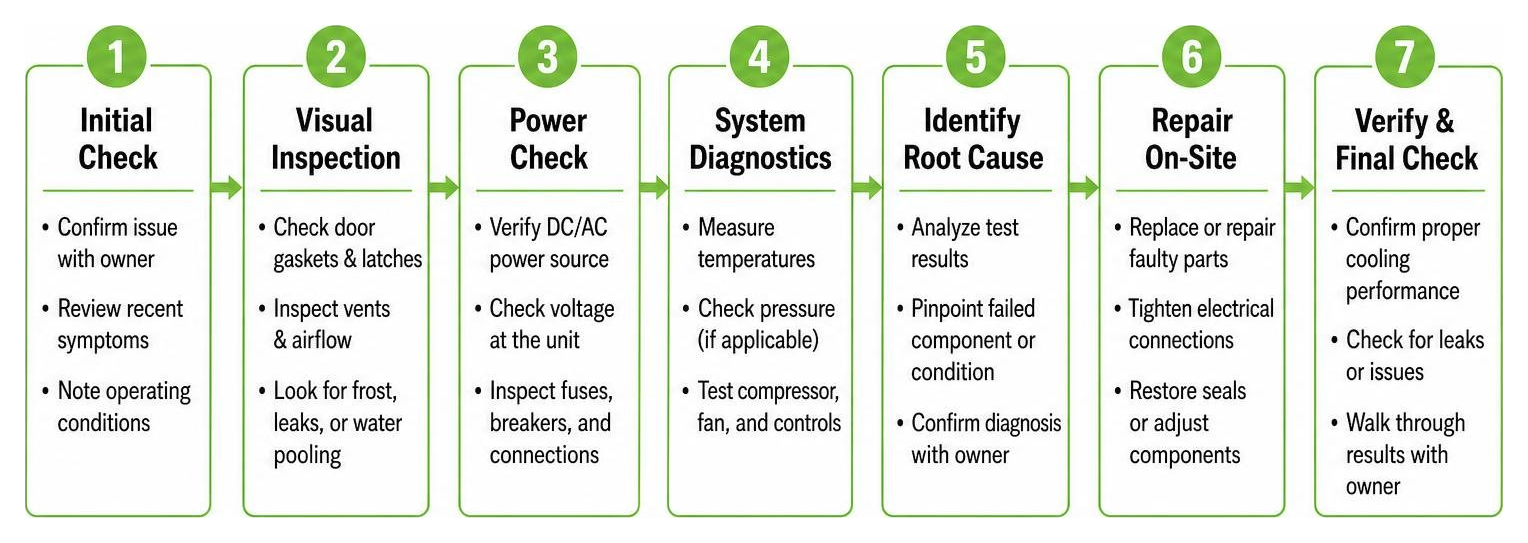
At FCS Marine, we know that moving a yacht to a boatyard or hauling it out of the water just to fix a warm refrigerator is highly impractical. That is why we provide a fully mobile marine service. We come directly to where your vessel is located, saving you time, fuel, and logistical hassle.
Our professional marine technicians travel to marinas, yacht clubs, private docks, and boatyards all over the region. Whether your boat is docked at the prestigious Miami Beach Marina, moored near Key Biscayne, or resting at a private canal dock in Pompano Beach, our mobile service vehicles are fully equipped to handle diagnostics, leak detection, and component replacements on-site.
We proudly serve vessel owners, yacht captains, and management companies across our entire South Florida service area, including Miami-Dade County, Broward County, and Palm Beach County.
Choosing FCS Marine for Marine Fridge Repair Miami
When you trust FCS Marine with your vessel’s refrigeration systems, you are partnering with a family-owned South Florida company that understands the high standards of yacht maintenance. We do not believe in temporary fixes or guesswork; we bring specialized marine diagnostic tools directly to your boat to identify the root cause of the failure.
Our skilled technicians are trained to work on a wide variety of high-end marine refrigeration setups, from integrated galley drawers and custom cold plates to high-capacity ice makers and wine coolers. We stand behind our workmanship with a satisfaction guarantee, ensuring that your system is fully tested under real-world thermal loads before we sign off on the job. Our primary goal is to keep your vessel comfortable, safe, and ready for your next cruise.
Preventive Maintenance to Avoid Onboard Failures
The absolute best way to handle a refrigeration emergency is to prevent it from happening in the first place. Incorporating a few simple checks into your regular vessel maintenance routine will keep your system running efficiently and extend its overall service life.
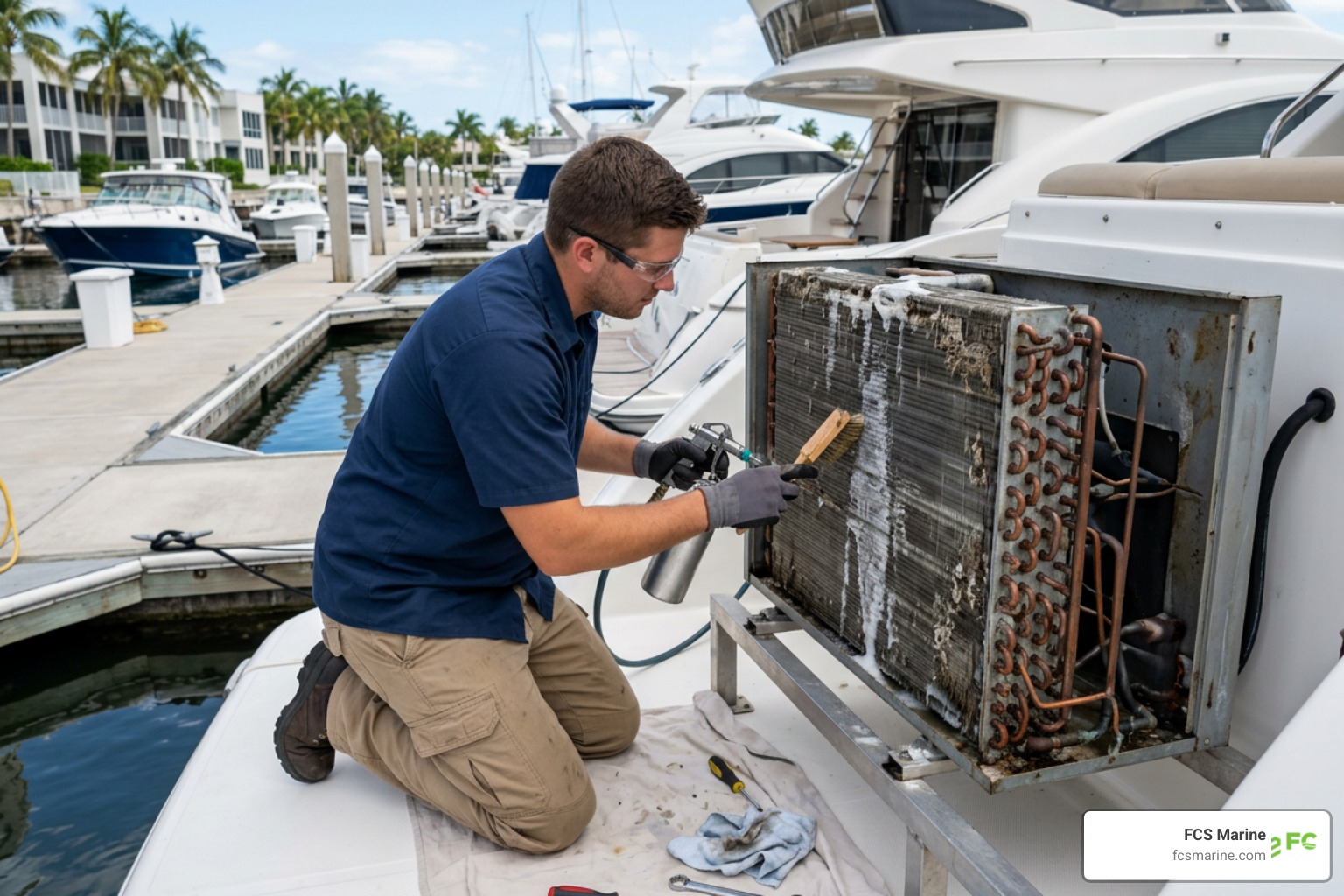
Here is a practical checklist you or your crew can follow:
- Clean the Condenser Coils: Dust, pet hair, and salt crust accumulate on air-cooled condenser coils over time, insulating them and blocking heat rejection. Vacuum and brush the coils clean at least once every six months.
- Inspect Door and Lid Gaskets: Check that your door seals are clean, flexible, and making full contact all the way around the frame. You can test this by closing the door on a dollar bill; if you can pull the bill out easily without resistance, your gasket is leaking cold air and needs adjustment or replacement.
- Monitor Seawater Flow: If your system is water-cooled, regularly check your raw water strainer for grass, algae, and debris. Periodically flush the cooling circuit with a mild descaling solution to remove calcium deposits and barnacle growth.
- Verify Electrical Connections: Salt air accelerates terminal corrosion. Ensure that power connections at the breaker panel and the compressor module are clean, tight, and sprayed with a marine-grade corrosion inhibitor.
By staying proactive, you can avoid the stress of a sudden breakdown. For times when a system does fail right before a major trip, having a relationship with a professional service team ensures you get fast support. To understand how preventive care saves your cruises, read about our Emergency Marine Refrigeration Repair options.
Frequently Asked Questions about Marine Refrigeration
Why is my marine refrigerator running constantly but not cooling?
This is typically caused by restricted airflow around the condenser, heavily fouled condenser coils, or a low refrigerant charge due to a system leak. When the system cannot reject heat efficiently, it runs continuously to try and meet the temperature setpoint. High ambient temperatures in South Florida place an even heavier thermal load on these struggling compressors. You can monitor local weather conditions through the NOAA Marine Forecasts to see when extreme heat and humidity are likely to push your cooling systems to their limits.
Can a residential refrigerator be used on a boat?
While some luxury yachts use residential-style units, standard household refrigerators generally do not last long in a true marine environment. They lack the vibration resistance needed to protect copper joints from cracking, their steel cabinets rust quickly in salt air, and their compressors can suffer electrical damage from the modified sine wave power produced by some older marine inverters.
How often should I service my yacht’s refrigeration system?
We recommend performing basic monthly inspections of your door seals, cabinet drainage, and condenser ventilation. Seawater strainers should be checked weekly or bi-weekly depending on local water conditions. Additionally, you should schedule a professional electrical and refrigerant performance test annually to catch slow leaks or electrical degradation before they cause a complete system failure.
Conclusion
A fully functioning galley is the heart of any comfortable yachting experience. Don’t let a warm fridge or a failing ice maker ruin your time on the water in Miami Beach. By understanding the early warning signs of system failure and keeping up with routine maintenance, you can protect your valuable provisions and ensure your guests always have cold drinks on hand.
When you need reliable, professional marine fridge repair Miami services, we are ready to help. FCS Marine provides expert mobile marine refrigeration, AC repair, and yacht maintenance services directly to your vessel’s location across South Florida.
Keep your vessel comfortable, protected, and ready for the water. Contact Us today to schedule professional on-site service with our dedicated team.