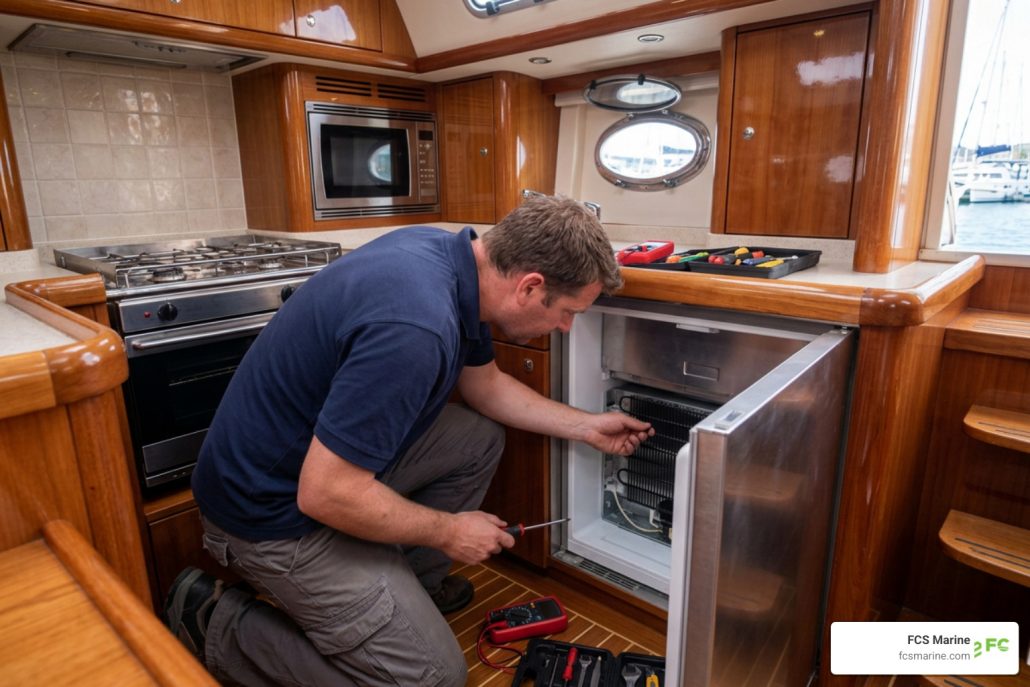
When Your Yacht’s Fridge Fails: What to Do Right Now
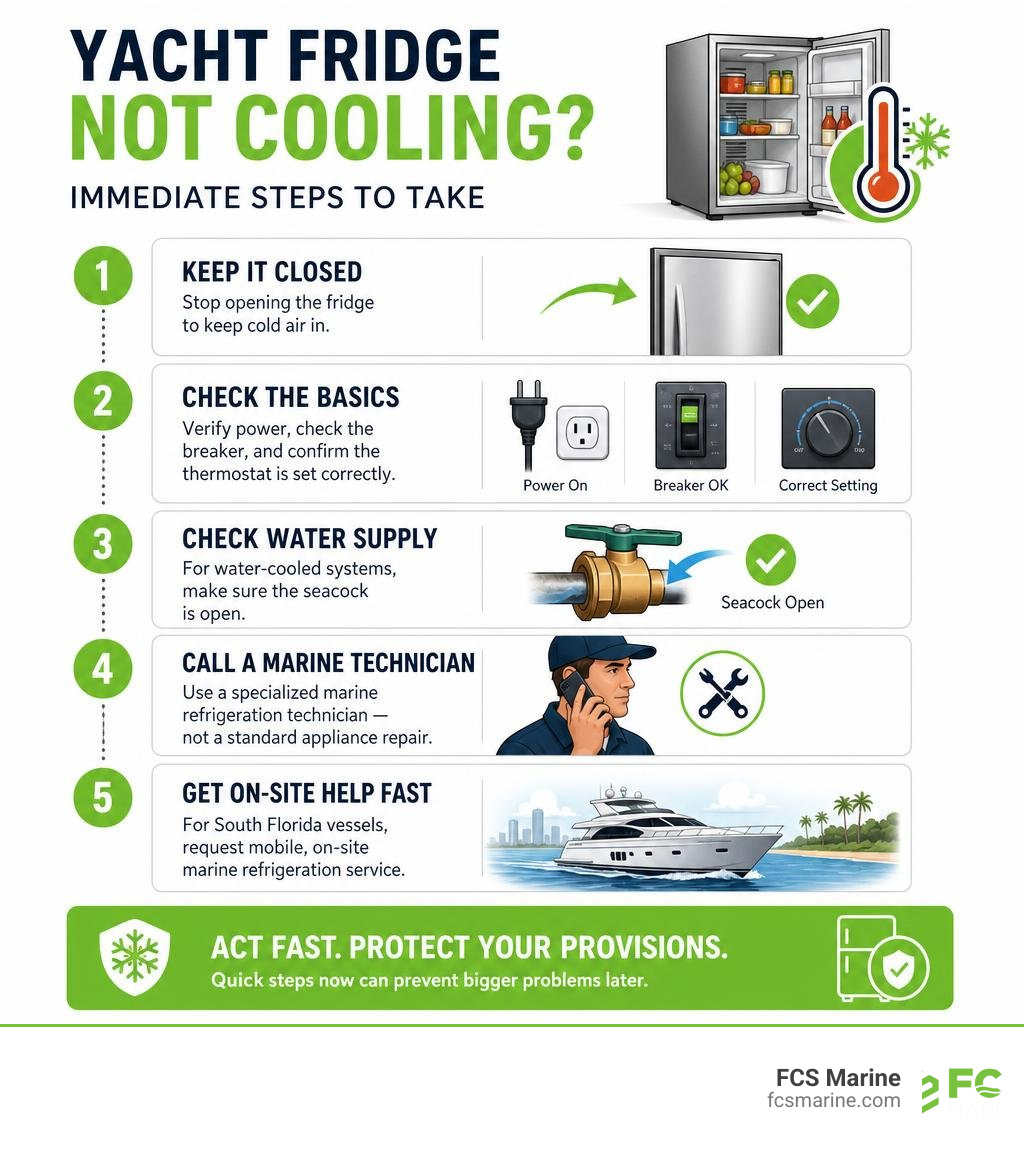
If you’re searching for yacht fridge repair near me, here’s what to do immediately:
- Stop opening the fridge. Every time you open it, cold air escapes. Keep it closed to preserve what’s inside.
- Check the basics first. Verify the power supply, check if a breaker has tripped, and confirm the thermostat is set correctly.
- For water-cooled systems, make sure the seacock is open.
- Call a specialized marine technician — not a standard appliance repair company. Marine refrigeration systems require different tools, parts, and knowledge.
- For South Florida vessels, contact FCS Marine for mobile, on-site marine refrigeration service.
A yacht refrigerator failure is never just an inconvenience. In South Florida’s heat and humidity, a fridge that stops cooling means spoiled food, ruined medication, compromised provisions for guests, and — on a charter — a serious problem that can derail an entire trip.
Marine refrigeration systems face conditions that would destroy a residential fridge in weeks. Salt air, constant motion, voltage fluctuations, and high humidity all accelerate wear on components. When something goes wrong, you need a technician who understands those conditions — and who can come to your vessel’s location rather than requiring you to haul equipment off the boat.
This guide is designed for yacht owners, captains, and vessel operators who need fast, reliable answers about getting onboard cooling back up and running.
Key yacht fridge repair near me vocabulary:
Common Causes of Yacht Refrigerator Failure
Understanding why your marine cooling system has stopped working is the first step toward getting it fixed. In our years of providing professional mobile marine service across South Florida, we have seen that most galley failures trace back to a few specific environmental and mechanical culprits.
The marine environment is incredibly harsh. Saltwater, constant vibration, and intense tropical heat put immense stress on systems that are designed to keep your food and drinks cold. When diagnosing a system, we often look for the primary culprits detailed in our guide on Common Causes of Marine Refrigeration Failure.
Here are the most common reasons marine refrigerators fail:
- Voltage Fluctuations and Electrical Issues: On a yacht, power source transitions occur frequently. Switching between shore power, generators, and battery banks can cause voltage drops or spikes. These fluctuations are highly common and are a primary catalyst for control board failures. In many cases, a complete lack of power is misdiagnosed as a dead compressor when the actual culprit is simply a blown fuse or a fried electronic control board.
- Salt Air Corrosion: Salt air accelerates the degradation of electronic components, wiring connections, and cooling coils. Over time, copper lines can develop micro-leaks, causing refrigerant to slowly escape.
- Dirty Condenser Coils: Dust, pet hair, and salt crust build up on condenser coils. When coils are blocked, the system cannot reject heat efficiently. This causes the compressor to run hotter and longer, leading to short-cycling and eventually complete compressor burnout.
- Worn Door Gaskets: High humidity in places like Fort Lauderdale and Miami accelerates the degradation of door seals. When gaskets fail, warm, humid air constantly leaks into the box. This leads to rapid frost buildup on the evaporator plates, forcing the system to work twice as hard to maintain temperature.
Marine Fridge Repair vs. Replacement: Cost and Lifespan
When your galley cooling goes down, one of the biggest decisions you face is whether to invest in repairs or replace the entire unit.
Generally, marine refrigeration systems have an average lifespan of 8 to 12 years. However, this lifespan is heavily dependent on regular maintenance, usage frequency, and environmental exposure. If you want to dive deeper into system longevity, you can read more about how long marine refrigeration systems last.
To help you make an informed decision, we have outlined the key comparison factors below:
| Decision Factor | Refrigerator Repair | Refrigerator Replacement |
|---|---|---|
| Average Cost | Typically $200 to $800 | $1,500 to $5,000+ (plus custom carpentry) |
| Timeframe | Usually completed on-site in a few hours | May take days or weeks if custom cabinet modifications are needed |
| System Age | Best for systems under 7–8 years old | Recommended for systems over 10–12 years old |
| Common Fixes | Control boards, door seals, thermostats, fans | Complete system upgrades, transitioning to modern dual-voltage units |
| Pros | Fast, cost-effective, preserves original cabinetry | Brand-new warranty, peak energy efficiency, modern cooling |
For older systems, constantly replacing individual parts can become a false economy. However, if your fridge is relatively new and has suffered a simple control board failure or a failed fan, a quick on-site repair is almost always the smartest and most cost-effective path.
Why You Need a Specialized Yacht Fridge Repair Near Me
It is tempting to call a standard home appliance repair company when your galley fridge stops working. However, residential technicians are rarely equipped to handle the unique demands of marine systems.
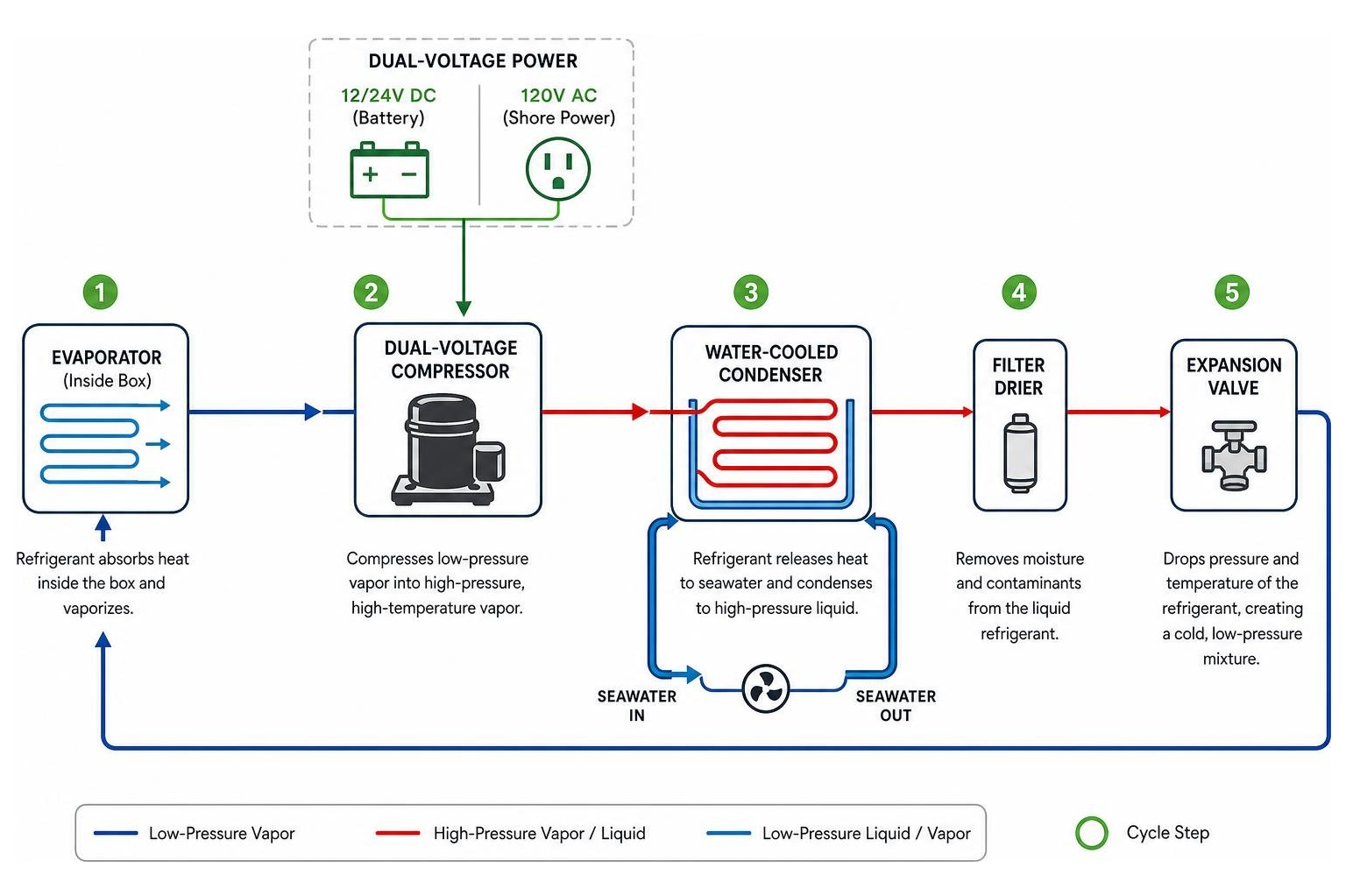
Marine refrigerators are not just built differently; they operate on entirely different systems. Many run on dual-voltage setups (12/24V DC and 120V AC) to allow seamless switching between battery power and shore power. Additionally, high-end marine units like Sub-Zero utilize dual compressors to run the refrigerator and freezer independently, requiring specialized diagnostic equipment.
To handle these systems safely and legally, technicians must hold specific certifications. This includes EPA Section 608 certification requirements for handling marine refrigerants, as well as an understanding of ABYC standards for marine electrical systems to prevent dangerous wiring mistakes that could lead to onboard fires.
How to Find Emergency Yacht Fridge Repair Near Me
When you are preparing for a weekend trip to the Keys or managing a fully booked charter, a broken fridge is an immediate emergency. You don’t have days to wait for a technician to show up.
When searching for emergency support, look for a mobile marine service that offers fast, on-site diagnostics directly at your marina, private dock, or boatyard. Protecting your provisions and guest comfort is paramount. Our team at FCS Marine specializes in rapid-response Emergency Marine Refrigeration Repair across South Florida to ensure you don’t have to cancel your plans or watch thousands of dollars in high-end provisions go to waste.
What to Expect from a Yacht Fridge Repair Near Me
When a professional marine technician arrives at your vessel, the process should be clean, efficient, and highly organized:
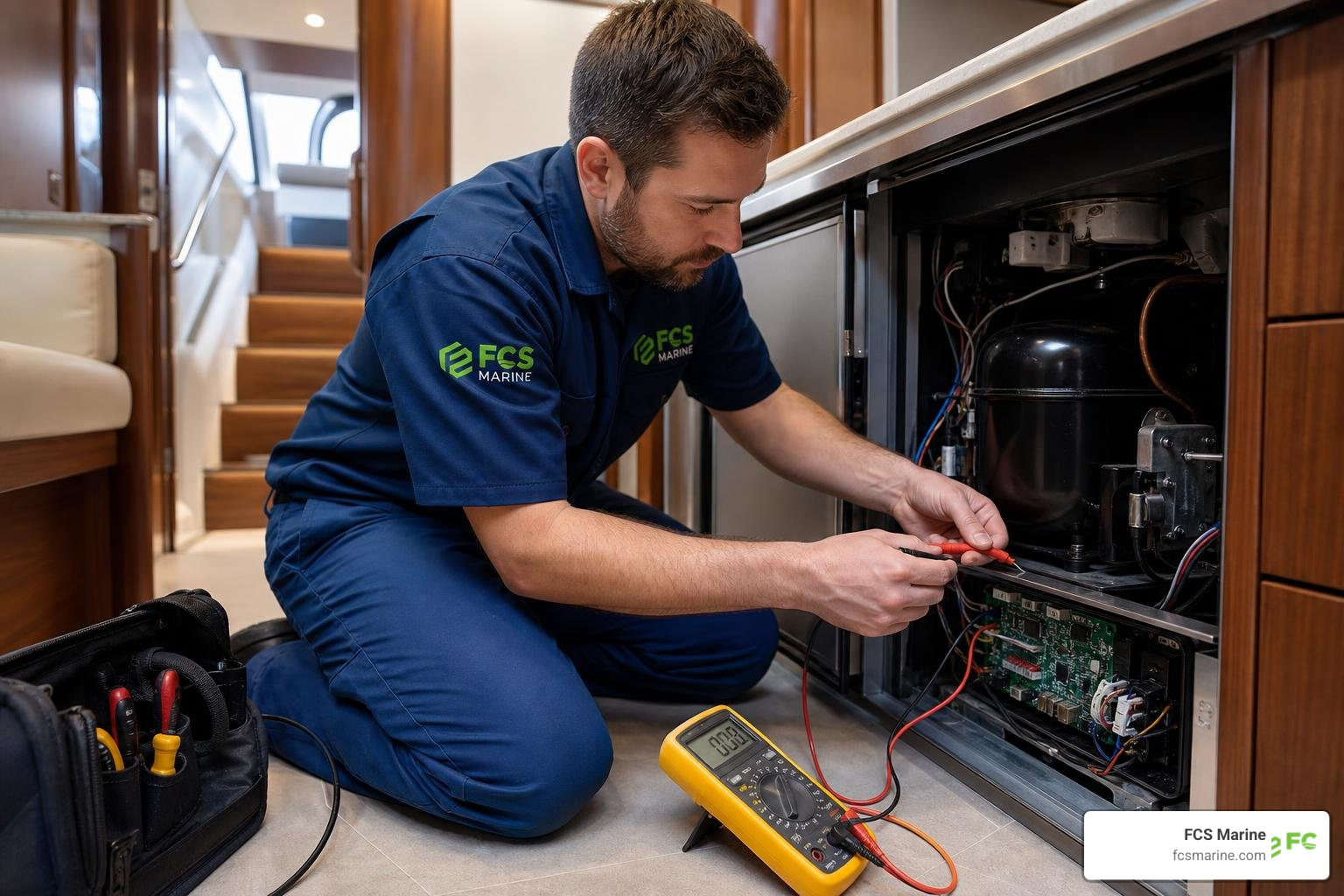
- On-Site Diagnostics: The technician will first test the power supply, check voltage stability, and inspect the electronic controller before touching the refrigeration lines. This prevents the common mistake of replacing a working compressor.
- Parts Sourcing & Matching: Because marine refrigerators fit tightly into custom wood cabinetry, using exact OEM parts is critical. Technicians will match parts using the exact model number, serial number, and photos of the manufacturer’s data plate to ensure compatibility with maritime vibrations.
- Clean & Compliant Execution: Repairs should be performed neatly, using protective mats to safeguard your yacht’s teak or carpet. All work must comply with ABYC safety guidelines to protect your vessel’s electrical grid.
Preventative Maintenance and Service Intervals for Onboard Cooling
The best way to handle a refrigeration failure is to prevent it from happening in the first place. Regular preventative maintenance keeps your galley running efficiently and helps you avoid costly emergency calls.
In South Florida’s warm waters, marine growth can quickly clog sea strainers on water-cooled refrigeration systems, leading to overheating. Integrating systems like ElectroSea can help prevent marine growth, keeping the water flowing freely.
Additionally, understanding why marine refrigeration systems freeze up can save you from a warm fridge. When ice builds up on the evaporator plates, it acts as an insulator, preventing the system from cooling the air inside the box.
We recommend the following service intervals:
- Monthly: Clean the condenser coils and check for proper airflow around the vents. Clean sea strainers on water-cooled units.
- Seasonally (Every 3 Months): Inspect door gaskets for cracks or gaps. Perform a visual check of wiring connections for signs of salt air corrosion.
- Annually: Schedule a professional electrical, fan, and overall performance check. This can be done alongside your annual boat AC service to ensure your entire vessel’s climate and cooling systems are optimized.
Mobile Marine Refrigeration Services in South Florida
At FCS Marine, we know that your time on the water is precious. We are a family-owned South Florida company specializing in complete yacht comfort services, including marine AC repair, refrigeration, insulation, mold cleaning, and water purification.
Our primary USP is fast, mobile marine service with a satisfaction guarantee. You do not need to worry about moving your vessel or hauling heavy appliances off the boat. Our technicians come directly to your vessel’s location, whether you are docked at a luxury marina in Fort Lauderdale, a private dock in West Palm Beach, or a boatyard in Miami.
We proudly serve yacht owners, captains, and crews throughout:
- Palm Beach County (including West Palm Beach, Jupiter, and Boca Raton)
- Broward County (including Fort Lauderdale and Pompano Beach)
- Miami-Dade County (including Miami Beach and Coconut Grove)
- Martin County
- St. Lucie County
Whether you need specialized Sub-Zero Repair in Broward County, emergency service for a custom galley setup, or general marine refrigeration repair, we are ready to help.
Frequently Asked Questions About Marine Refrigeration
Can a residential appliance technician repair a boat fridge?
They can try, but it is highly discouraged. Marine refrigeration systems face unique stresses like constant motion, high humidity, and salt air. They also utilize specialized configurations, such as DC compressors, water-cooled condensers, and cold plates, which standard residential HVAC and appliance technicians rarely encounter. Hiring a non-marine specialist increases the risk of misdiagnosis and can compromise your boat’s electrical safety.
How much does yacht refrigerator repair typically cost?
On average, marine refrigeration repair costs range from $200 to $800, depending on the complexity of the issue. Simple fixes like replacing a thermostat, a fan, a control board, or a door gasket sit on the lower end of the spectrum. Complex overhauls, such as repairing a refrigerant leak or replacing a compressor, will sit on the higher end.
What is the difference between self-contained and remote marine refrigeration?
- Self-Contained Systems: These units have the compressor, condenser, and evaporator all built into a single framework directly behind or beneath the refrigerator box. They are compact and easy to install but can add heat and noise directly to your galley.
- Remote Systems: These systems place the compressor and condenser in a remote location (like the engine room or a lazarette) while the evaporator plate remains in the galley box. This layout keeps heat and noise away from your living space and is common on larger luxury yachts.
Conclusion
A fully operational galley is essential for onboard comfort, guest satisfaction, and successful cruising. Don’t let a failing refrigerator spoil your trip or ruin your provisions. By understanding the warning signs of system failure and keeping up with regular preventative maintenance, you can keep your drinks cold and your food fresh all season long.
If you are experiencing cooling issues, voltage fluctuations, or frost buildup, we are here to help. FCS Marine provides expert, mobile marine refrigeration service directly at your vessel’s location anywhere in South Florida.
Keep your vessel comfortable, protected, and ready for the water. Contact FCS Marine today to schedule professional marine refrigeration service.