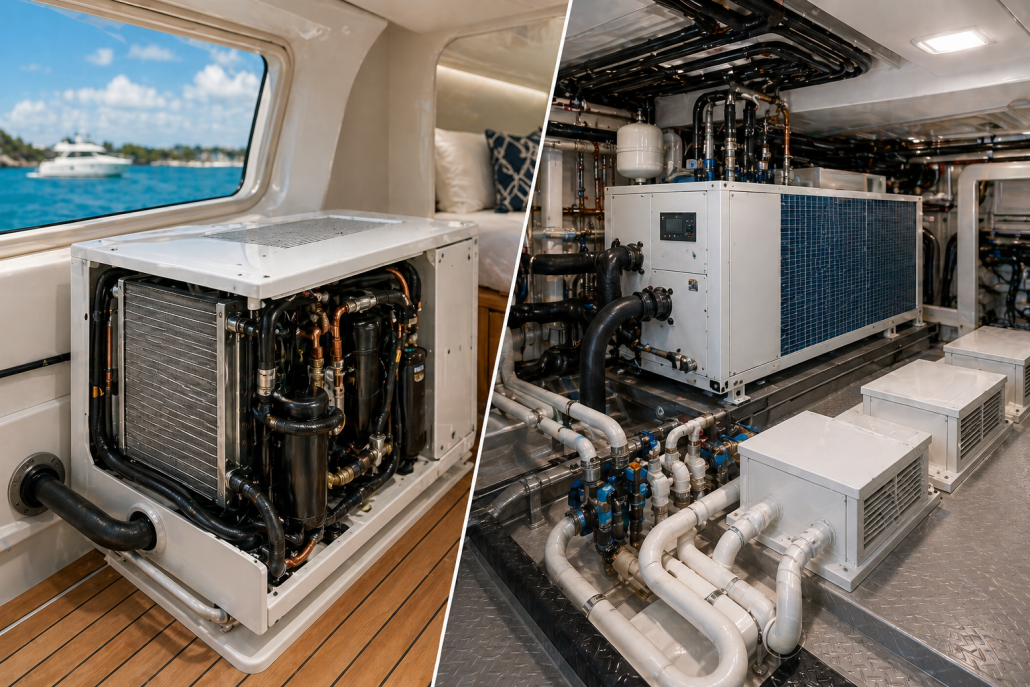
Why Boat Cooling Maintenance Can Make or Break Your Engine
Boat cooling maintenance is the routine process of inspecting, cleaning, and replacing the components that keep your marine engine from overheating — and it is one of the most important things you can do to protect your investment.
Quick answer: What does boat cooling maintenance involve?
- Check coolant level and condition before every trip
- Clean the raw water strainer weekly during heavy use
- Replace the impeller every one to two years (or sooner in shallow water)
- Flush the system with fresh water after every run in salt water
- Service the heat exchanger every three to five years in salt water
- Replace coolant at least every two years
- Test the thermostat annually
- Inspect and replace sacrificial anodes every six to twelve months
South Florida is one of the toughest environments a boat engine can face. Salt water, warm ambient temperatures, shallow bays full of sediment, and year-round heavy use all put enormous stress on your cooling system.
And yet, cooling is one of the most overlooked areas of yacht maintenance.
Most marine engines — gasoline or diesel — rely on seawater drawn from outside the hull to carry heat away. That same seawater brings sand, salt, marine growth, and corrosion into the heart of your engine. When even one component fails — a cracked impeller blade, a clogged strainer, a seized seacock — the entire system suffers. Overheating can destroy an engine in minutes.
The good news: almost all cooling system failures are preventable. Routine checks and a clear maintenance schedule are all it takes.
The Critical Importance of Boat Cooling Maintenance
When you are cruising out of Fort Lauderdale or navigating the shallow, sandy waters around Miami-Dade County, your engine works under a constant, heavy load. Unlike a car engine, which benefits from a steady stream of air rushing through a radiator, a marine engine is tucked away in a confined, hot bilge. It relies almost entirely on water to reject heat.
Skipping out on regular boat cooling maintenance is a gamble that rarely pays off. In fact, industry estimates show that reactive repairs cost three to five times more than proactive, preventative upkeep.
The Threat of Scale, Salt, and Corrosion
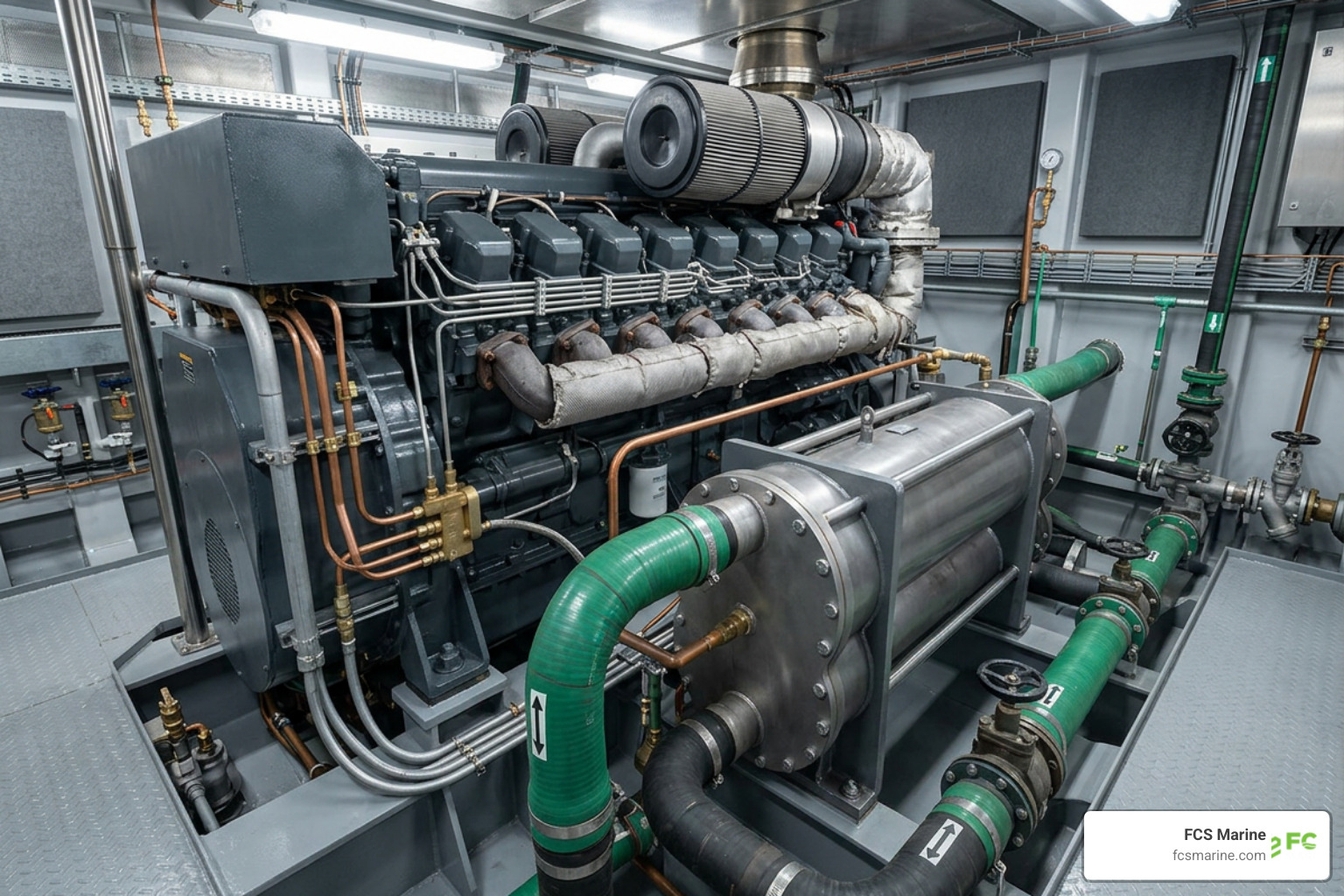
Seawater is highly corrosive. As salt water heats up inside your engine’s cooling passages, it crystallizes, forming scale deposits on the metal walls. This scale acts like an insulating blanket, trapping heat inside the engine. Over time, salt corrosion eats away at cast-iron blocks, exhaust elbows, and copper-nickel heat exchanger tubes. Without proper maintenance, these components will fail, leading to catastrophic water intrusion into your cylinders.
Longevity and Fuel Efficiency
A well-maintained cooling system keeps your engine running at its optimal operating temperature (typically around 160°F or 71°C for many modern marine engines). When an engine runs at its designed temperature, fuel burns more efficiently, emissions are reduced, and internal friction is minimized. Keeping the system clean directly translates to a longer engine lifespan and lower fuel bills at the Pompano Beach FL docks.
Open vs. Closed Marine Cooling Systems
To maintain your cooling system effectively, you must first understand which type of system is keeping your engine running. Marine propulsion systems generally fall into two categories: open (raw water) cooling and closed (freshwater) cooling.
| Feature | Open (Raw Water) Cooling | Closed (Freshwater) Cooling |
|---|---|---|
| Cooling Medium | Raw seawater only | Antifreeze/distilled water loop + Seawater loop |
| Corrosion Protection | Low (internal engine passages exposed to salt water) | High (internal passages protected by coolant) |
| Complexity | Simple (fewer hoses, no heat exchanger) | Higher (features heat exchanger, expansion tank, two pumps) |
| Component Lifespan | Shorter in salt water (cast-iron manifolds degrade in 3–5 years) | Longer (internal engine block remains pristine) |
| Typical Environment | Common in fresh water, budget outboards, and older sterndrives | Standard on modern diesels, yachts, and high-performance gas engines |
In fresh water, open cooling systems are incredibly durable, sometimes lasting decades. However, in our salty South Florida waters, open cooling is a countdown to corrosion.
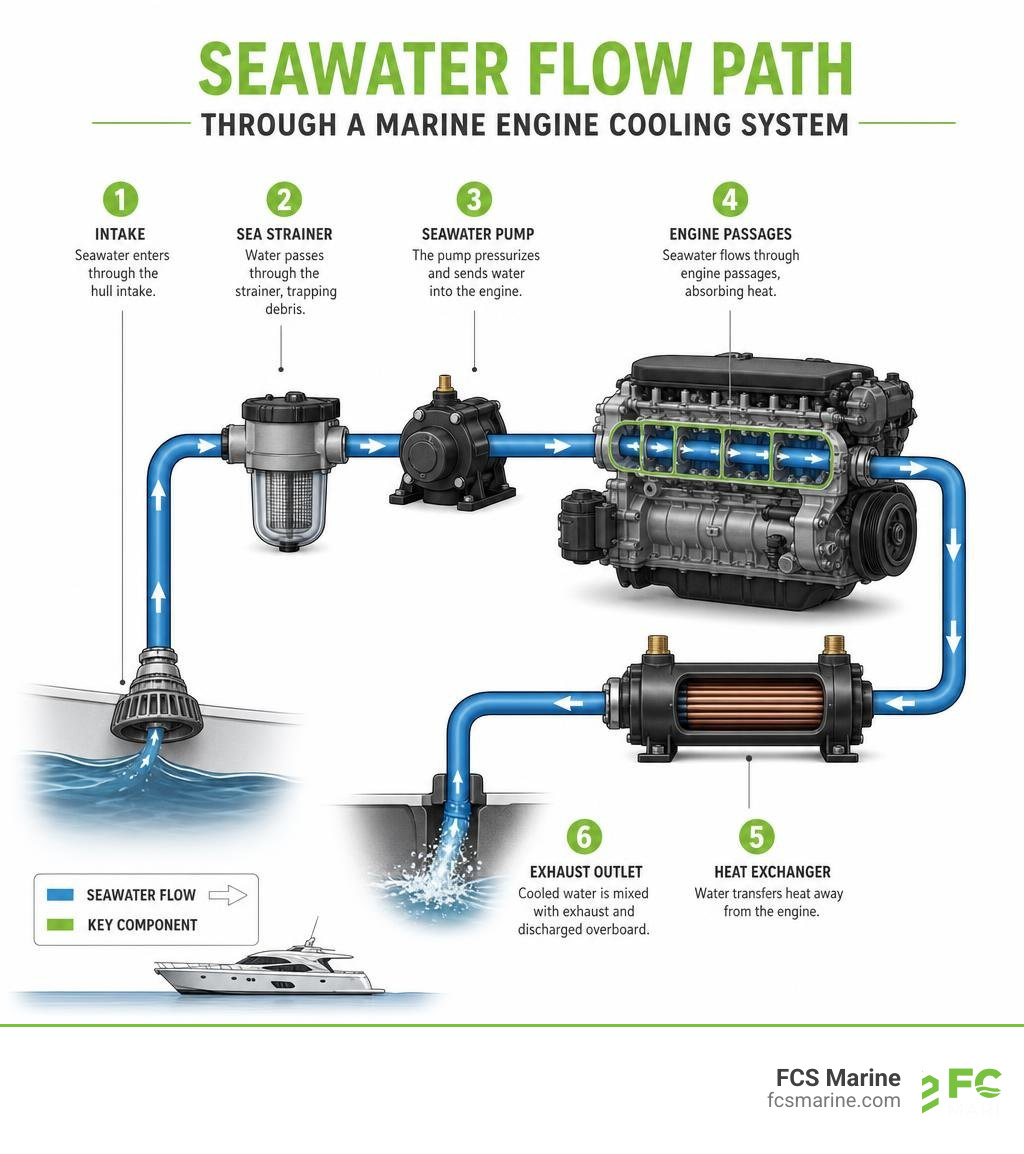
In an open system, raw seawater is drawn directly through the hull, pumped through the engine block, and expelled out the exhaust. This means salt water is constantly touching the internal passages of your engine.
A closed cooling system operates much like your car’s cooling system. It uses a closed loop filled with a mixture of clean freshwater and ethylene glycol antifreeze to circulate through the engine block. This freshwater loop then passes through a heat exchanger. Inside the heat exchanger, raw seawater is pumped through a bundle of small tubes, absorbing the heat from the freshwater loop without the two fluids ever mixing.
For detailed technical service procedures on how these loops isolate seawater, you can consult the Chapter Twelve: Cooling System Manual.
Regardless of which system you have, seawater eventually meets hot exhaust gases at the exhaust elbow. If you run a gas-engine open cooling system in salt water, you must replace the cast-iron exhaust manifolds every three to five years to prevent internal rusting and engine hydrolock.
Key Components and How to Maintain Them
A marine cooling system is only as strong as its weakest link. Let’s break down the key components you need to watch.
Raw Water System and Impeller Care
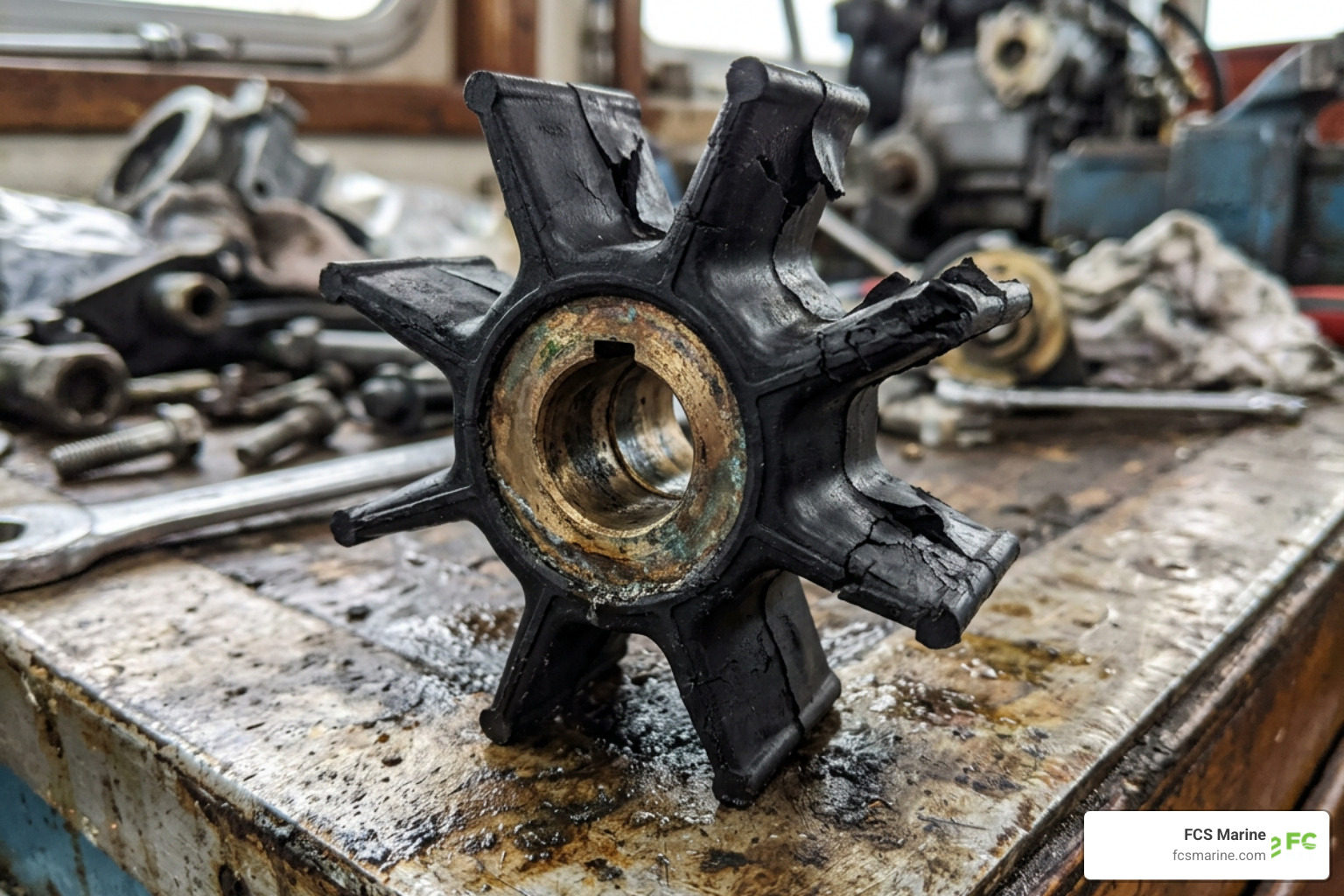
The raw water pump is the heart of your seawater intake. Inside this pump is a flexible rubber impeller that spins to draw water in.
- Impeller Replacement: You should change rubber impellers every year or two at the very least. If you frequently run in shallow waters—such as the sediment-heavy bays of Palm Beach County or St. Lucie County—you should replace them twice as often. Sand and marl act like sandpaper, wearing down the pump housing and tearing the rubber blades.
- Pump Replacement: Replace raw water pumps entirely at 1,500 hours—or half that (750 hours) on boats that often run in shallow water where abrasive sediment is sucked in.
- Seacocks and Strainers: The seacock is the hull valve that lets water in. It must be exercised monthly to ensure it doesn’t seize in the open position. Just above the seacock sits the sea strainer, which filters out weeds, grass, and plastic debris. Clean this weekly during heavy use. For a complete guide on inspecting these intake components alongside your onboard climate control, refer to our Marine AC Maintenance Checklist.
Heat Exchanger Servicing and Anode Replacement
The heat exchanger is where the magic of thermal transfer happens. However, it is also a prime target for galvanic corrosion and fouling.
- Sacrificial Anodes: These small zinc or aluminum pencils screw directly into the heat exchanger. They are designed to corrode so your expensive copper-nickel heat exchanger doesn’t have to. Inspect and replace sacrificial anodes every six months, or whenever they have degraded by 50%.
- Teardown Intervals: Gas-engine closed cooling systems should be torn down, cleaned, and pressure-tested about every three to five years, and diesels a bit sooner. This involves removing the end caps, pulling the tube bundle, and cleaning out salt crust, scale, and broken impeller bits.
- Professional Servicing: For advanced cleaning, have your heat exchanger professionally descaled and pressure-tested. Professional servicing ensures that all scale and debris are completely removed, restoring optimal heat transfer and preventing localized hot spots that can damage the engine.
Coolant Management and Thermostat Testing
In a closed system, the coolant itself must be maintained to protect the engine block from internal rust and cavitation.
- Testing and Flushing: Check your coolant level before every single trip. Test the coolant’s alkalinity annually using pink litmus paper. If the paper doesn’t change color, the corrosion inhibitors have worn out, and the coolant must be replaced. Under normal conditions, flush and replace your coolant every two years (or up to five years if using extended-life marine coolants).
- The Thermostat: The thermostat regulates engine temperature by opening and closing to control coolant flow. A stuck-closed thermostat causes rapid, catastrophic overheating, while a stuck-open thermostat keeps the engine running stone-cold, causing carbon buildup. Thermostats are relatively inexpensive (often around $30), so replace them proactively during your major cooling service.
- Auxiliary Systems: Your engine isn’t the only thing that needs cooling. Onboard air conditioning and refrigeration systems rely on similar raw water loops. If you notice your cabin air warming up, it might be because your Yacht AC System Needs Cleaning due to raw water fouling.
Advanced Diagnostics and Troubleshooting Flow Issues
Sometimes, a simple visual check isn’t enough to find a hidden leak or restriction. When troubleshooting complex cooling issues, we use advanced diagnostic tests.
Pressure Testing and Supply Restriction Diagnostics
If you are losing coolant but can’t find a puddle in the bilge, you may have an internal leak (such as a cracked heat exchanger tube or a leaking head gasket).
- The Pressure Test: Using a cooling system pressure tester, pressurize the freshwater section of your closed cooling system to 17 psi. The system must hold this pressure constantly for at least two minutes. A drop in pressure indicates a leak.
- Seawater Inlet Restriction Test: If your engine is running warm but the impeller is brand new, you might have a restriction in your seawater pickup. Connect a vacuum gauge to the raw water pump inlet. Underway at wide-open throttle (WOT), the vacuum should not exceed 10 in. Hg, and the inlet restriction should not exceed 2.5 psi (17 kPa). High vacuum readings mean you have a clogged seacock, a kinked intake hose, or a blocked strainer.
For a deeper look at how professional technicians run these water-flow and pressure diagnostics on marine systems, see How Marine AC Service Works. You can also check the official Mercruiser Cooling System Specifications for precise flow-rate benchmarks.
Early Warning Signs of Boat Cooling Maintenance Issues
Don’t wait for the high-temperature alarm to scream. Watch for these early indicators of cooling system distress:
- Steam from the Exhaust: If you see white steam billowing from your exhaust port, water flow is restricted. The water is boiling into steam before it can escape.
- Reduced Exhaust Water Discharge: Get familiar with the normal “spit” of your exhaust. If the water flow looks weak or dry, check your sea strainer and impeller immediately.
- Unusual Odors: A sweet, syrupy smell indicates a coolant leak, while a burnt rubber smell points directly to a dry, friction-damaged impeller.
- Rattling or Whining Noises: A worn circulating pump bearing will often whine or rattle before it fails completely.
If you experience similar symptoms on your boat’s climate control systems, such as water pooling or lack of airflow, read our guide on what to do when your Boat Air Conditioning Stops Cooling.
The Ultimate Boat Cooling Maintenance Schedule and Spares
To keep your yacht running smoothly across Martin County, Broward County, and beyond, follow this structured maintenance schedule.
Seasonal Winterization and Boat Cooling Maintenance Checklists
After Every Use (or Weekly)
- Flush your engine’s raw water system with fresh water for 10 to 15 minutes.
- Inspect the sea strainer and remove any trapped weeds or debris.
- Check the bilge for green or orange coolant puddles.
Monthly
- Exercise all seacocks to ensure they turn smoothly.
- Flush the anti-siphon valve. This valve prevents seawater from siphoning back into the engine block when the motor is turned off. Salt buildup can stick the valve open, leading to engine flooding (hydrolock). Clean the valve cap and internal check-ball monthly.
Annually (or Every 100–200 Hours)
- Replace the raw water pump impeller.
- Test or replace the thermostat.
- Inspect and replace sacrificial anodes.
- Test coolant alkalinity and replace the fluid if necessary.
For seasonal storage or winterizing in milder South Florida winter months, thoroughly drain the raw water side of your engine and air conditioners to prevent stagnant water from causing localized corrosion. If you are balancing maintenance between your propulsion and domestic systems, it helps to understand the differences in how they handle water, which you can explore in Chilled Water vs Self-Contained AC Systems.
Essential Onboard Spares and Tools
Never leave the dock without an emergency cooling repair kit. We recommend keeping the following items on board at all times:
- Spare Impeller & Gasket: Keep at least one spare impeller, along with the correct faceplate gasket and O-rings.
- Impeller Puller Tool: Removing a stuck impeller without this tool can damage the brass pump shaft.
- Sacrificial Anodes: Keep several spare zinc/aluminum pencils of the correct thread size.
- Hose Clamps & Wire-Reinforced Hose: Heavy-duty, marine-grade stainless steel hose clamps and a length of spare hose can save you from a sinking emergency.
- Coolant Concentrate & Distilled Water: For topping off closed systems.
- Emergency Epoxy Putty: Useful for temporarily sealing a pinhole leak in a heat exchanger end cap or pipe.
Keeping a comprehensive checklist of marine-grade parts and emergency tools on board ensures you are always prepared for unexpected cooling issues while out on the water.
Frequently Asked Questions about Marine Cooling
How often should I replace my raw water pump impeller?
You should replace your raw water pump impeller every one to two years under normal conditions. However, if you frequently boat in shallow, sandy, or sediment-rich waters (common in coastal South Florida), inspect it every six months and replace it annually or every 750 hours of operation.
What is the difference between open and closed cooling systems?
An open cooling system draws raw seawater directly into the engine block to cool it before pumping it out the exhaust. A closed cooling system uses a sealed, freshwater-and-antifreeze loop inside the engine block, which transfers its heat to a separate seawater loop via a heat exchanger. Closed systems offer far superior corrosion protection in saltwater environments.
Why is my boat engine blowing steam instead of water?
White steam coming from your exhaust indicates that there is insufficient water flow through the exhaust elbow. The small amount of water entering the exhaust is boiling into steam due to extreme heat. This is usually caused by a clogged sea strainer, a blocked raw water intake, or a failing pump impeller. Shut down the engine immediately to prevent severe damage.
Conclusion
Your yacht’s cooling system is its lifeline. In the demanding, salt-heavy environments of South Florida, keeping up with boat cooling maintenance is the single best way to ensure your time on the water is spent cruising, not waiting for a tow.
At FCS Marine, we understand the unique challenges of maintaining luxury vessels in Palm Beach, Broward, Miami-Dade, Martin, and St. Lucie counties. As a family-owned company, we specialize in comprehensive dockside yacht maintenance services, including marine AC repair, refrigeration, insulation, mold cleaning, and water purification. We pride ourselves on fast, dockside service with a 100% satisfaction guarantee.
Don’t wait for your engine or cabin AC to start sweating. Schedule Marine Air Conditioning Service with us today, and let our expert team keep your vessel running cool all year long.