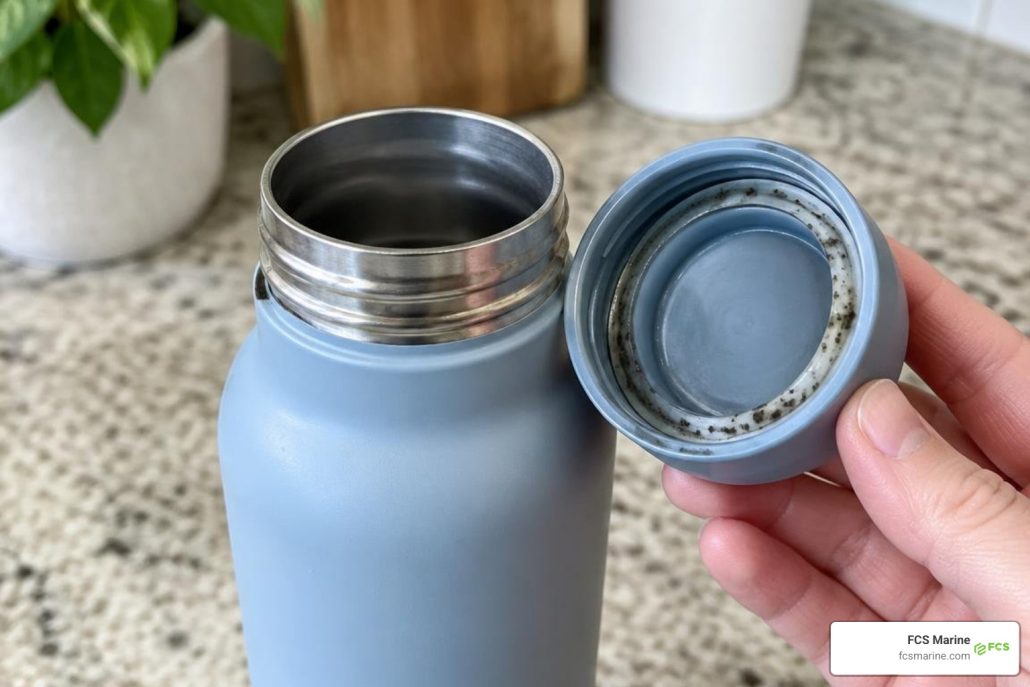
How to Get Rid of Mold on a Silicone Water Bottle
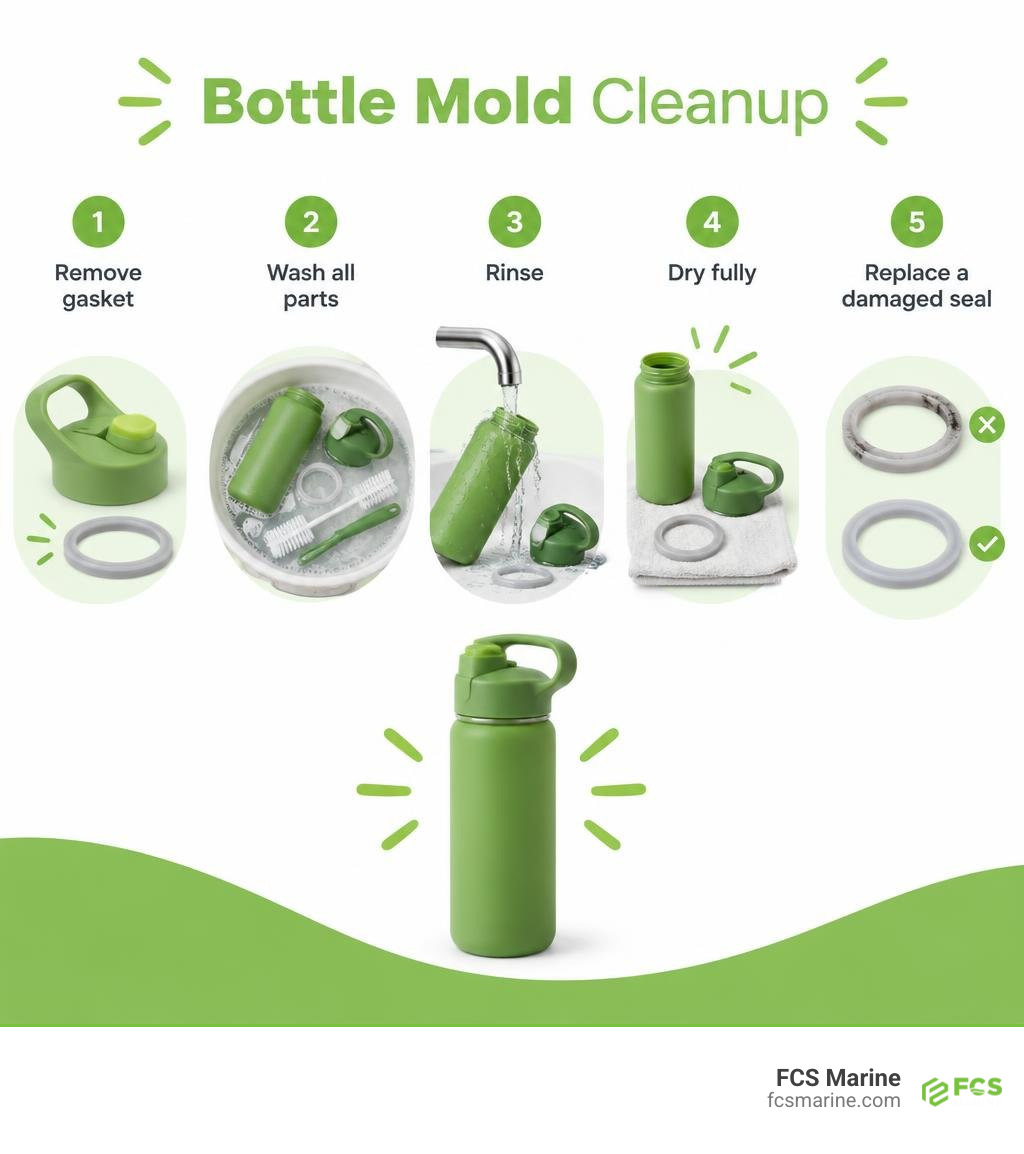
To get rid of mold on a silicone water bottle, stop using it and remove the gasket if it is designed to come out. Wash the gasket, lid, bottle, and gasket groove with warm, soapy water and a soft brush. Rinse well and let every part dry completely before putting the bottle back together. If the gasket still smells musty or has spots you cannot scrub away, replace it.
On a South Florida yacht, humid storage can make it harder for bottle parts to dry. Cleaning the seal helps with the bottle; mold or moisture elsewhere onboard needs separate attention. We’re FCS Marine, a family-owned South Florida company providing on-site marine mold remediation and yacht sanitization for vessels.
Understanding Why Mold Grows on Silicone Water Bottles and Gaskets
Reusable silicone drinkware provides excellent flexibility, heat tolerance, and chemical stability, but its physical design creates ideal breeding grounds for fungi and bacteria. Water bottles frequently trap moisture in narrow threading, deep lid channels, and beneath flexible sealing rings. When exposed to darkness inside a closed cabinet or vessel locker, this standing moisture rapidly initiates microbial growth.
Fungal colonization is especially aggressive in humid environments. While silicone is non-porous on a macro level, its polymer chains can trap microscopic organic residues from backwash, drink powders, and saliva. These organic traces supply nutrients for spores. Learning the core biological differences between mildew vs mold helps explain why these dark spots prove so persistent: surface mildew wipes away easily, but fungal mold roots itself deeply into tight crevices and structural micro-textures.
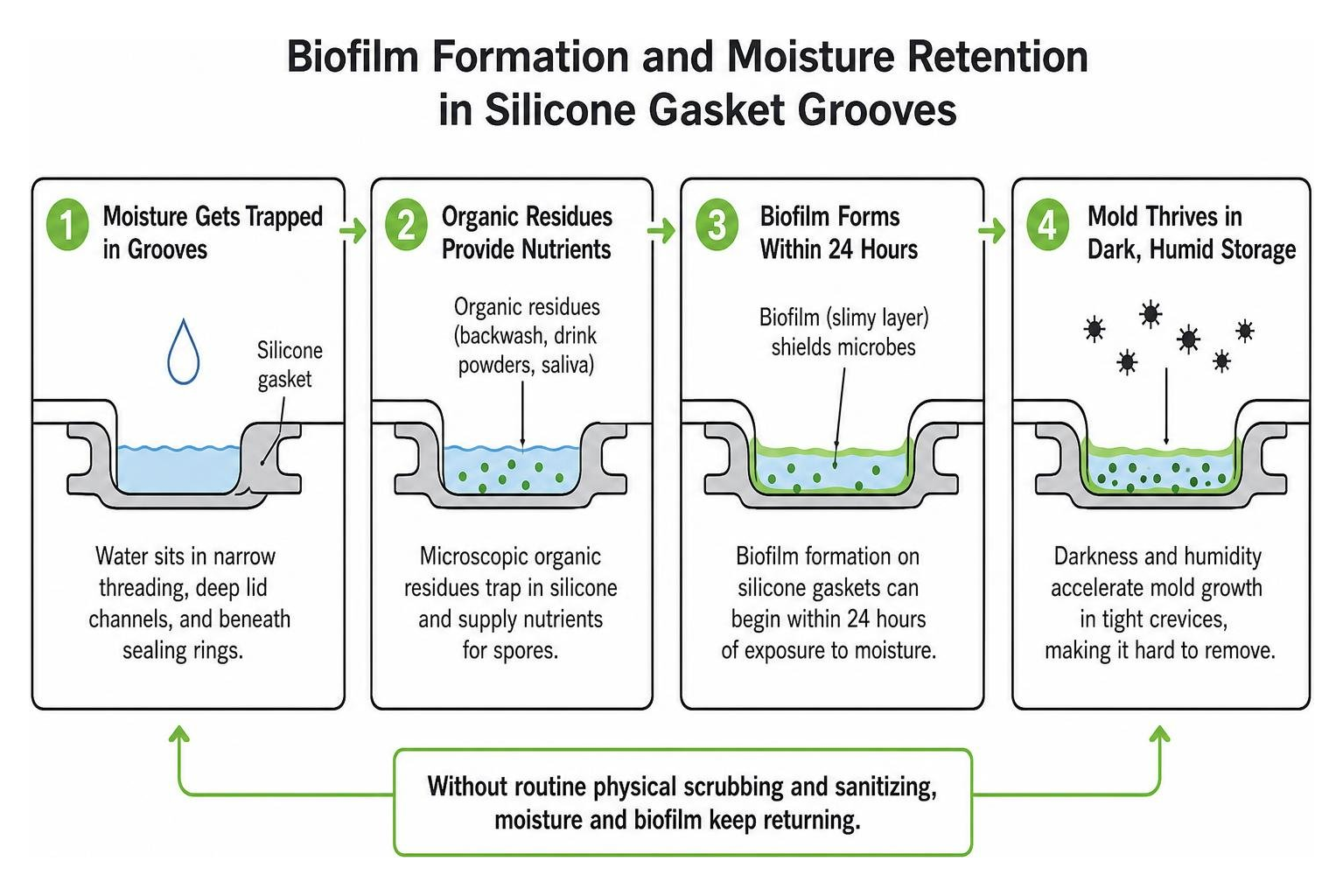
Microbial growth begins almost immediately upon exposure to standing water. Biofilm formation on silicone gaskets can begin within 24 hours of exposure to moisture. This slimy protective layer shields bacteria and fungal hyphae from basic rinsing. According to research from Purdue University, 60% of reusable water bottles tested were contaminated at levels exceeding safe drinking standards. Without routine physical scrubbing and sanitizing, elementary school and adult containers alike accumulate substantial bacterial loads, with unwashed bottles harboring up to 40,000 times more colony-forming units than a common toilet seat.
Health Hazards of Ingesting Mold from Reusable Drinkware
Drinking from a mold-contaminated container poses distinct physiological hazards. When fungal colonies flourish along the drinking spout, straw, or cap seal, users ingest active spores, mycotoxins, and associated bacterial colonies with every sip.
Medical resources outlining the health risks of drinking from moldy water bottles warn that chronic exposure triggers upper respiratory irritation, persistent coughing, sinus congestion, and allergic flare-ups. Individuals with mold sensitivities or compromised immune systems face heightened risks of gastrointestinal distress, nausea, and localized infections. Furthermore, testing reveals that children’s bottles can harbor 34,000 bacteria per milliliter, while adult containers reach upwards of 75,000 bacteria per milliliter—sometimes including fecal coliforms—demanding immediate remediation when contamination is detected.
Identifying Mold Spores vs. Deep Silicone Staining
It is common to scrub a silicone seal thoroughly only to find persistent dark patches remaining. Differentiating between active fungal colonies and harmless pigment discoloration determines whether a component remains safe for use:
- Active Mold Growth: Characterized by raised, fuzzy, or distinctly slimy textures. Active mold releases a pungent, musty odor that persists even after a surface rinse. If you run a clean cotton swab across the surface and pick up dark residue, active spores are present.
- Microbial Biofilm: A slick, clear-to-tinted coating that feels slippery to the touch and indicates dense bacterial colonization along the gasket seat.
- Deep Silicone Staining: Pigment absorption that occurs when fungal melanin penetrates the surface matrix before the organism is killed. If the gasket has undergone thorough chemical or heat sterilization, feels completely smooth and dry, and emits no musty odor, the dark spot is simply residual discoloration.
- Material Degradation: Pitted, brittle, or sticky silicone indicates that chemical exposure or fungal action has compromised the polymer chains, requiring immediate replacement.
How to Get Rid of Mold on Silicone Water Bottle Components: 4 Proven Methods
Eliminating fungal colonies from flexible drinkware requires targeted sanitizing agents combined with physical agitation. Simply running a bottle through a standard rinse cycle rarely generates sufficient mechanical action inside gasket channels to dislodge embedded biofilms.
Before applying any cleaning agent, completely disassemble your container. Pry out silicone gaskets, separate modular straw components, and detach bite valves.
| Cleaning Method | Primary Active Agent | Recommended Soak Time | Removal Efficacy | Material Safety Level |
|---|---|---|---|---|
| Vinegar & Baking Soda | Acetic acid + Sodium bicarbonate | 3–4 hours (Vinegar) / 15 min (Paste) | Moderate to High | High (Non-degrading) |
| Boiling Water | Thermal energy (100°C / 212°F) | 5–10 minutes | Very High (Sterilizing) | High (Food-grade silicone) |
| 3% Hydrogen Peroxide | Oxidizing peroxide solution | 30 minutes | High (Bleaches stains) | High (Leaves zero residue) |
| Diluted Bleach | Sodium hypochlorite | 5–10 minutes maximum | Maximum | Moderate (Requires strict dilution) |
Natural Solutions: How to Get Rid of Mold on Silicone Water Bottle Components with Vinegar and Baking Soda
For everyday maintenance and moderate mold, household food-grade solutions provide safe, non-toxic sanitization. Distilled white vinegar contains approximately 5% acetic acid, which effectively penetrates fungal cell walls. A 2015 study confirmed that a vinegar solution helps stop mold growth on consumer container surfaces.
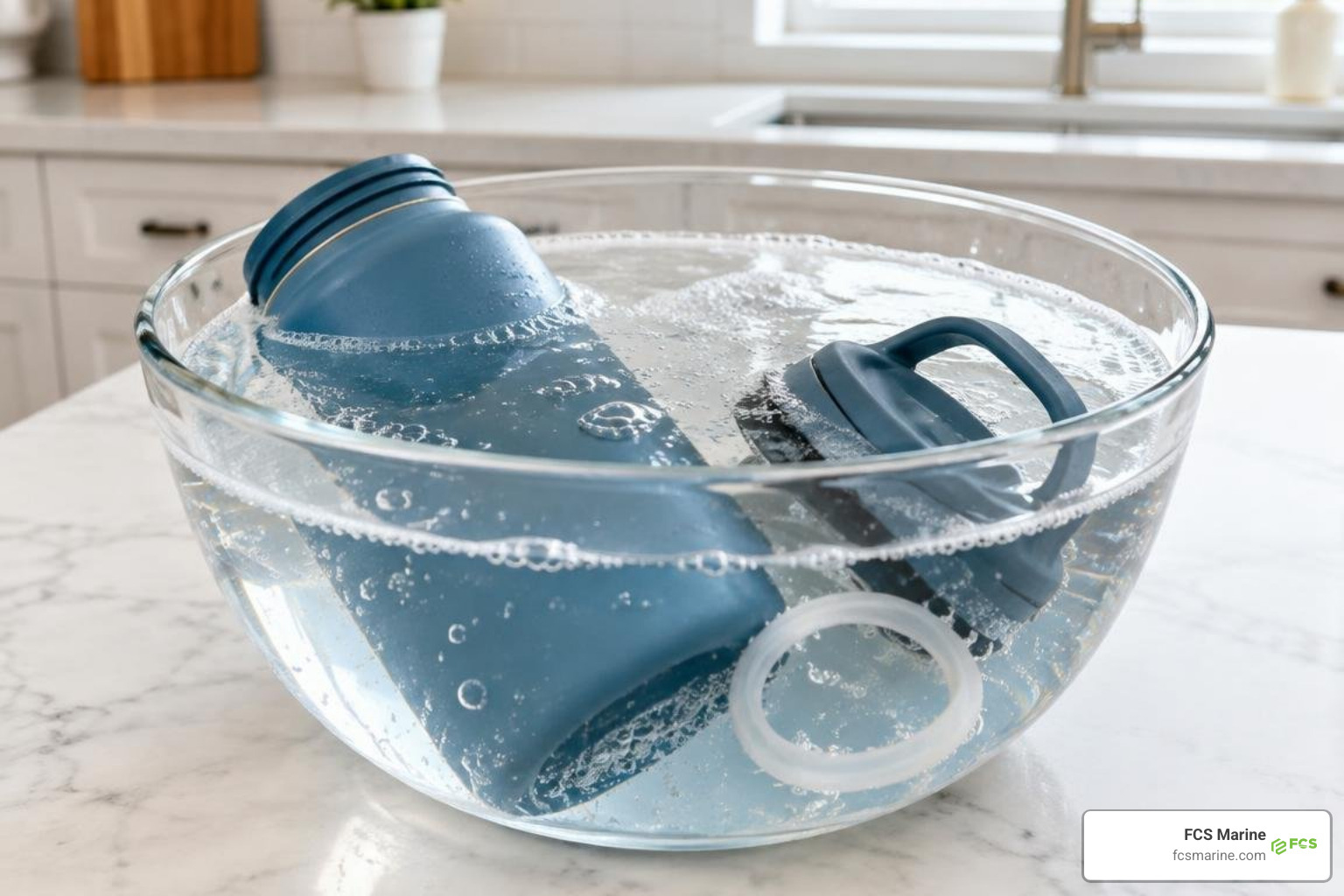
- Submerge in Vinegar: Place the disassembled silicone bottle body, lid, and gasket into a container filled with equal parts warm water and distilled white vinegar. Allow the components to soak for 3 to 4 hours to break down the biofilm matrix.
- Apply Baking Soda Scrub: Sodium bicarbonate acts as a mild, food-safe abrasive and odor neutralizer. Mix baking soda with small drops of warm water to create a thick paste.
- Scrub Seams and Grooves: Using a soft-bristled brush or clean cloth, work the paste into the silicone crevices. The gentle mechanical action lifts dead spores without scratching the flexible polymer. Reviewing proven methods to clean silicone reinforces that non-abrasive tools are critical for preserving the smooth seal face.
- Rinse and Dry: Rinse all parts under hot running tap water, inspecting the seal tracks before allowing components to air-dry completely.
Heat and Sanitizing: How to Get Rid of Mold on a Silicone Water Bottle Using Boiling Water or Peroxide
Food-grade silicone maintains thermal stability up to and beyond 200°C (392°F), making thermal sterilization one of the fastest, chemical-free sanitizing techniques available.
- Thermal Disinfection: Submerge disassembled heat-tolerant silicone components into a pot of rolling boiling water. Boiling silicone components in water for 5 to 10 minutes effectively pasteurizes the material, neutralizing active vegetative cells and spores without degrading elasticity.
- Hydrogen Peroxide Oxidation: If black pigmentation remains after boiling, submerge the silicone parts in standard 3% household hydrogen peroxide for 30 minutes. Peroxide acts as an effervescent oxidizing agent that lifts embedded mold melanin and sanitizes deep pores without imparting chemical odors. Similar to safe methods for reusing food-grade containers, oxidative soaking restores hygienic safety to food-contact polymers.
- Post-Treatment Rinse: Flush parts thoroughly with clean water, referencing clinical guidelines on sanitizing drinkware components to ensure complete removal of loosened organic debris.
Diluted Bleach Disinfection for Severe Mold Infestation
When confronting heavy black fungal growth that resists mild treatments, an EPA-recognized sodium hypochlorite solution provides hospital-grade disinfection. However, concentrated bleach degrades silicone over time, causing hardening or permanent surface yellowing if misapplied.
To sanitize safely, mix 1/3 cup of unscented household chlorine bleach per gallon of cool water (or roughly 1 teaspoon per liter). Following established disinfection protocols for water containers, immerse the silicone parts for exactly 5 to 10 minutes. Do not leave silicone soaking in bleach solutions overnight. After soaking, scrub the parts with warm dish soap, flush repeatedly with clean drinking water to eliminate chemical traces, and allow them to dry fully in a clean, ventilated area.
Safely Removing, Cleaning, and Reinstalling Silicone Gaskets
Most water bottle lid leaks and recurring contamination stem from improper gasket maintenance. Aggressively tearing a gasket out with sharp tools scratches the plastic housing or rips the elastomer, while improper reinstallation creates air gaps that leak water and trap backwash.
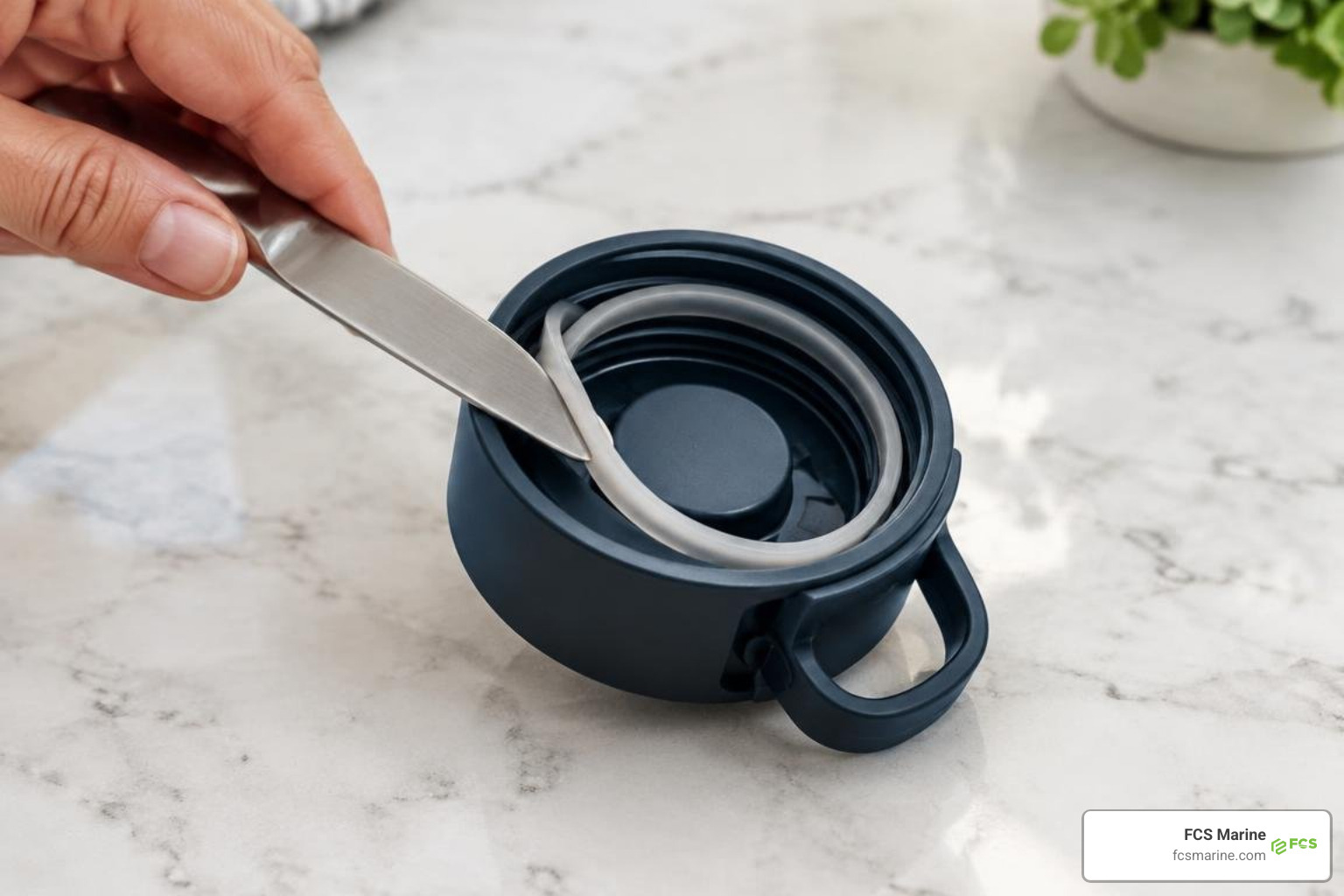
- Extraction: Never use sharp sewing needles, serrated steak knives, or dental picks, which puncture and slice silicone. Instead, insert the rounded, blunt edge of a butter knife or the flat handle of a teaspoon beneath the gasket edge at a shallow angle. Gently lever upward to release the seal.
- Channel Scrubbing: The narrow plastic or steel groove where the gasket rests is where biofilm flourishes. Insert a dedicated narrow straw-cleaning brush charged with hot soapy water, running it firmly around the entire internal circumference.
- Elasticity Check: Never stretch a silicone ring beyond 50% of its relaxed diameter during extraction. Overstretching fractures internal cross-linked siloxane chains, resulting in microscopic fissures where mold roots more aggressively.
- Complete Desiccation: Ensure both the channel and the gasket are 100% dry before reinstallation. Trapping even a single droplet of moisture beneath a sealed gasket initiates rapid spore germination within 8 to 24 hours.
- Even Reinstallation: Press the gasket back into its track smoothly using clean fingertips. Ensure there are no twists, ridges, or rolled edges, as an uneven seal compromises the bottle’s watertight integrity.
Preventive Maintenance and Long-Term Mold Prevention in Humid Marine Climates
In coastal and marine environments like South Florida—where ambient relative humidity regularly exceeds 75%—drinkware left inside enclosed galleys, yacht storage lockers, or center-console dry boxes will develop mold with alarming speed. High ambient humidity prevents residual moisture from evaporating naturally, allowing lingering bacteria to flourish.
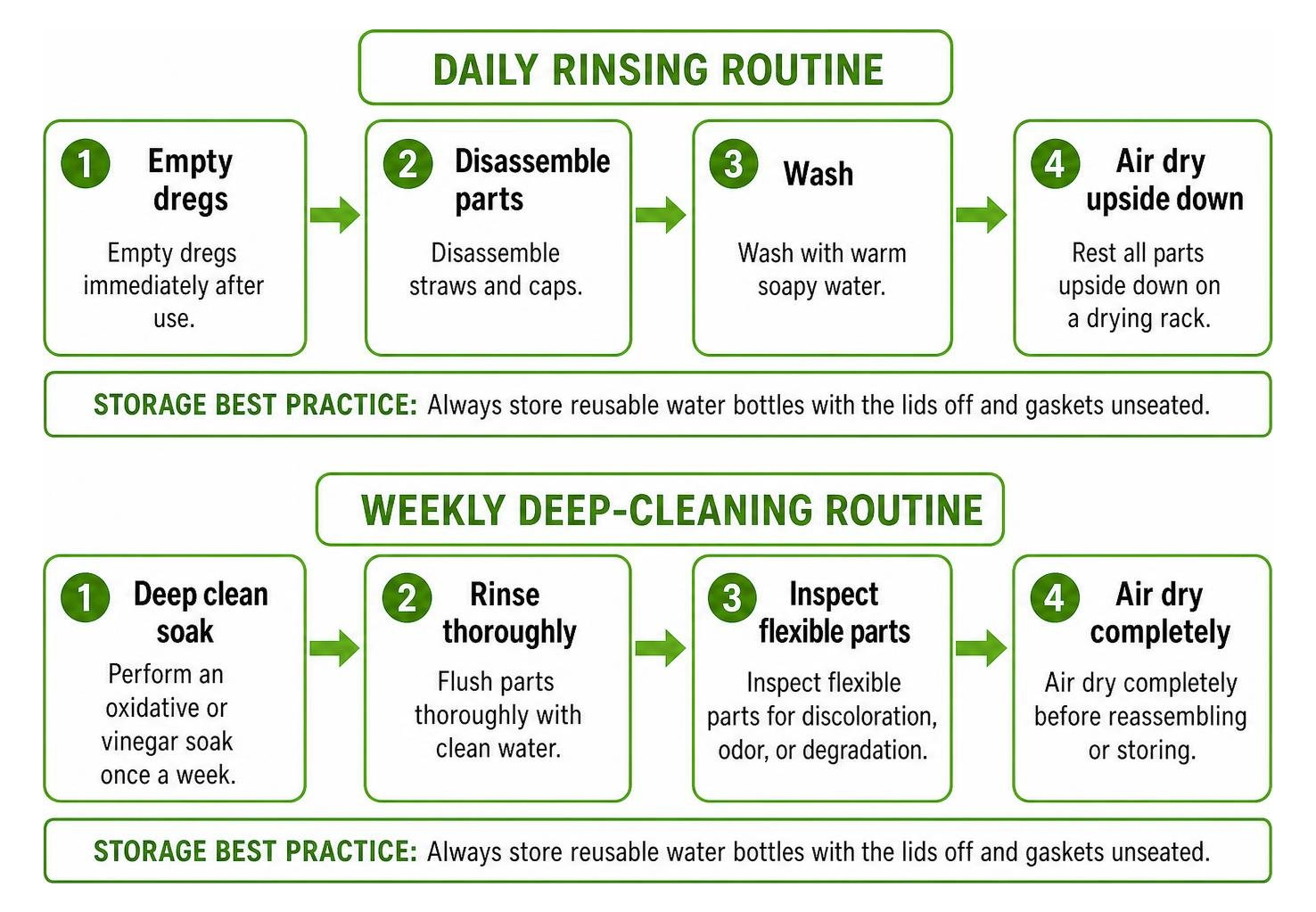
Effective prevention requires a strict maintenance schedule:
- Daily Protocol: Empty dregs immediately after use. Disassemble straws and caps, wash with warm soapy water, and rest all parts upside down on a drying rack rather than reassembling them wet.
- Weekly Protocol: Perform an oxidative or vinegar soak once a week. Inspect flexible parts for discoloration, odor, or degradation.
- Storage Best Practice: Always store reusable water bottles with the lids off and gaskets unseated. Unrestricted airflow stops anaerobic and high-moisture microbial cycles from establishing inside the vessel.
For boaters encountering mold that has spread from galley accessories to surrounding structural trim or head compartments, review our guide on removing stubborn mold from silicone to protect cabin surfaces.
Frequently Asked Questions About Cleaning Silicone Water Bottles
Can boiling water damage my silicone water bottle or gasket?
High-quality, food-grade silicone is exceptionally heat-resistant and easily withstands temperatures of 100°C (212°F) without melting, warping, or leaching harmful compounds. Boiling for 5 to 10 minutes safely sterilizes silicone rings and collapsible bottles. However, ensure that any attached rigid plastic collars, polycarbonate lids, or push-button mechanisms are removed prior to boiling, as rigid plastics often deform at high temperatures.
What should I do if the silicone gasket still smells like mildew after cleaning?
Silicone’s molecular structure can absorb volatile organic compounds and lipid residues from flavored beverages or lingering mildew. If a musty odor persists after washing, apply a paste of baking soda and water directly to the gasket surface and let it rest for 2 to 4 hours before rinsing. Alternatively, placing the clean, dry silicone component in direct outdoor sunlight for several hours allows natural ultraviolet light to break down residual odor molecules. If the smell remains embedded, replace the gasket.
Which cleaning chemicals and tools should I avoid on silicone?
Avoid steel wool, stiff wire brushes, and abrasive scouring pads, which score the surface of the silicone and create microscopic crevices that accelerate future mold growth. Chemically, avoid concentrated industrial solvents, highly scented dish detergents that impart permanent chemical odors, and prolonged soaking in undiluted chlorine bleach, which causes silicone to embrittle, lose elasticity, and crack over time.
How often should I replace silicone water bottle gaskets?
Even with diligent sanitization, silicone gaskets subject to daily compression and heat cycling eventually lose their elasticity. Plan to replace gaskets every 6 to 12 months, or immediately if you notice physical tears, surface cracking, persistent mildew smells that resist boiling, or water leaks around the sealed lid.
Conclusion: Keeping Hydration Clean and Managing Moisture Onboard
Maintaining clean, mold-free silicone water bottles protects your health and ensures refreshing hydration whether you are at home, working on deck, or cruising offshore. By adhering to routine disassembly, using proven sanitizing agents like white vinegar, hydrogen peroxide, or boiling water, and allowing components to dry completely, you can eliminate stubborn grime and prevent microbial recurrence.
While managing moisture in your galley drinkware is a straightforward daily task, managing ambient moisture, condensation, and microbial growth throughout your vessel’s interior requires specialized engineering. When persistent dampness, compromised galley seals, or failing climate systems lead to widespread cabin contamination, professional intervention is essential.
At FCS Marine, we provide mobile, on-site marine service across South Florida, traveling directly to your vessel at local marinas, boat yards, private docks, and yacht clubs throughout Palm Beach County, Broward County, Miami-Dade County, Martin County, and St. Lucie County—including Fort Lauderdale, Pompano Beach, and Miami. Our technicians specialize in professional marine mold remediation and yacht sanitization, alongside marine air conditioning repair, refrigeration, yacht insulation, and onboard water purification systems. For comprehensive vessel climate control and professional silicone cleaning and maintenance across your vessel’s living spaces, contact us today to schedule mobile on-site support.