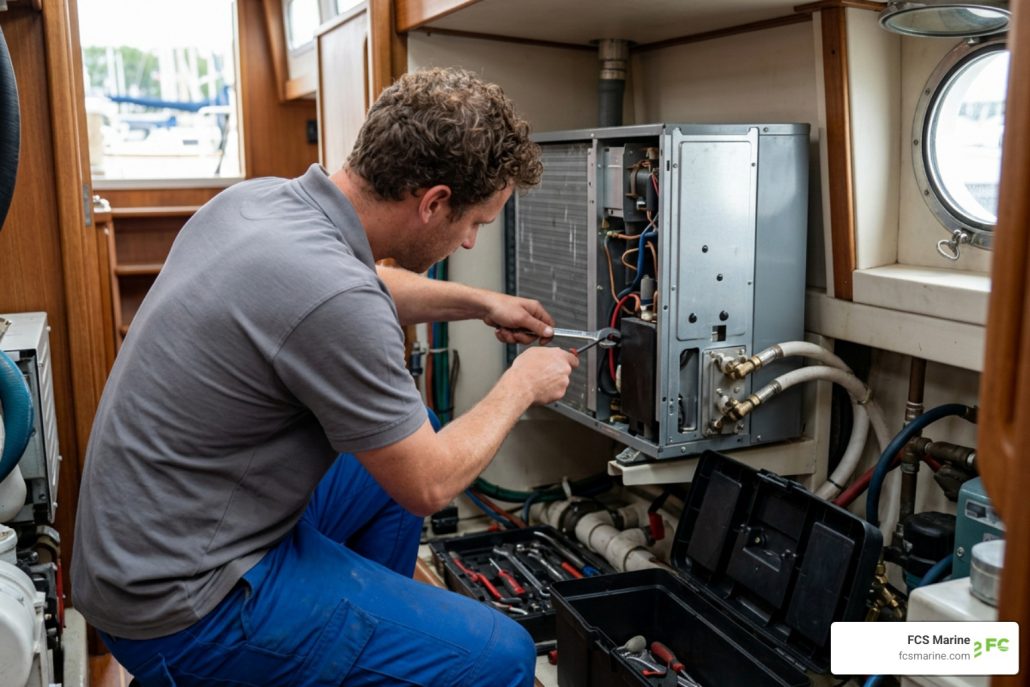
Marine air conditioning repair is one of the most urgent service needs for boat and yacht owners in South Florida — where summer cabin temperatures can become dangerously uncomfortable within minutes and high humidity threatens electronics, woodwork, and onboard air quality every single day.
Quick answer: Here’s what you need to know about marine AC repair:
| Topic | Key Info |
|---|---|
| Most common problems | Clogged sea strainers, pump failure, refrigerant leaks, corrosion, electrical faults |
| Warning signs | Weak airflow, warm air, strange noises, musty odors, water leaks |
| How often to service | At least once a year, ideally before peak boating season |
| Saltwater risk | Accelerates corrosion and marine growth in cooling lines |
| Repair vs. replace | Units over 10 years old with frequent breakdowns often cost less to replace |
| Who to call | A certified marine HVAC technician with marine-specific experience |
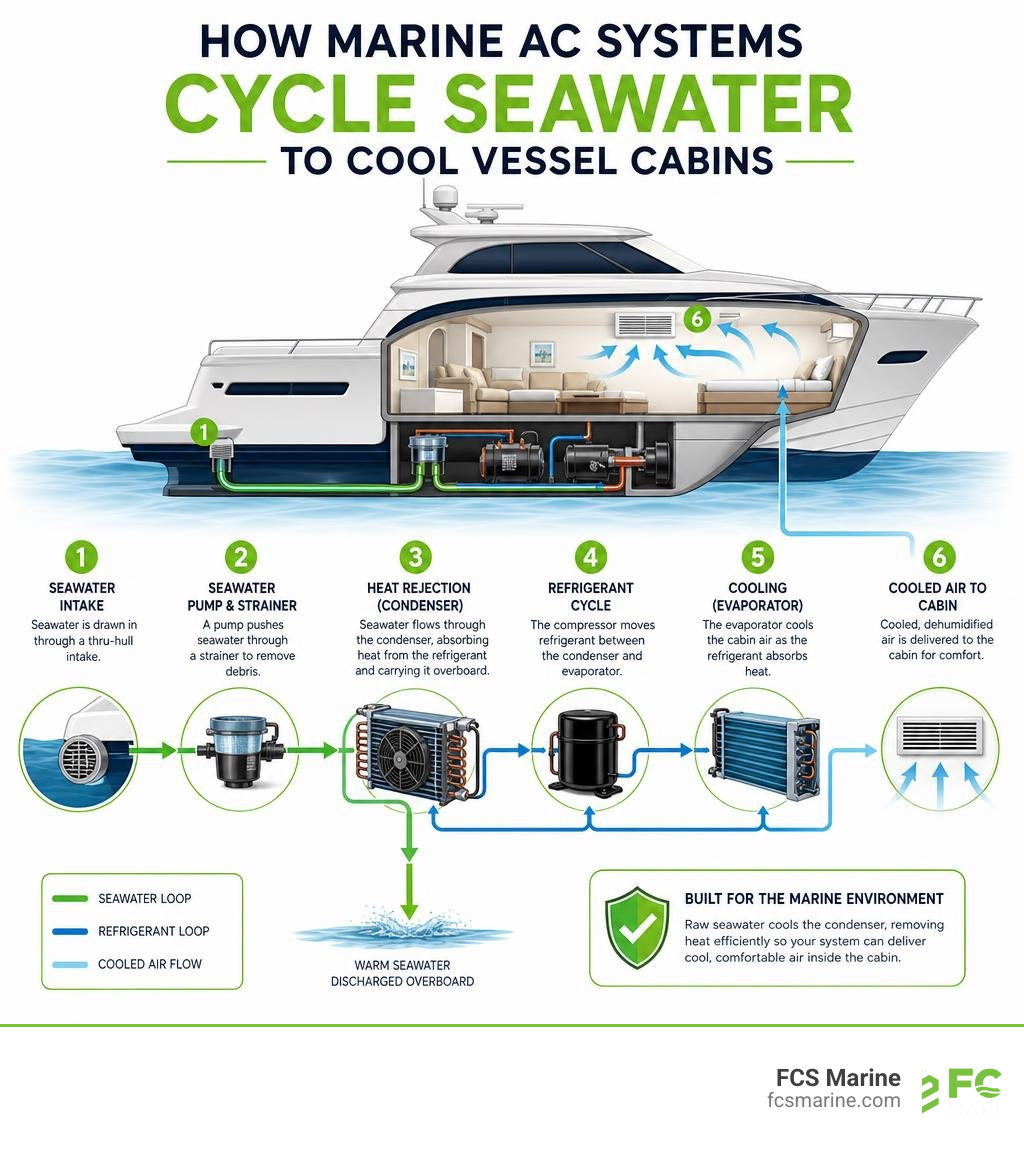
Unlike residential AC systems, marine units pull raw seawater through the hull to cool the condenser. That means they’re constantly exposed to salt, marine growth, debris, and vibration — conditions that no land-based system ever faces. When something goes wrong, it affects more than comfort. It affects humidity levels, onboard electronics, wood surfaces, and even how hard your generator has to work.
The good news: most marine AC failures are preventable with regular maintenance. And when repairs are needed, a qualified marine technician can diagnose and fix most issues right where your vessel is docked — no hauling required.
FCS Marine provides mobile marine AC service across South Florida, coming directly to your vessel at marinas, boat yards, private docks, and yacht club locations from Fort Lauderdale to Miami and Palm Beach.
Common Yacht AC Problems and Why They Happen
In South Florida’s brutal heat, a yacht’s climate control system works overtime. When the system fails, it can turn your luxurious vessel into an unbearable hotbox in a matter of hours. Understanding why these failures occur is the first step in protecting your investment and restoring comfort.
The root of most marine air conditioning issues lies in the raw water cooling loop. Because marine systems rely on seawater to transfer heat away from the cabin, they are vulnerable to the elements. Here are the most common culprits behind marine AC system failures:
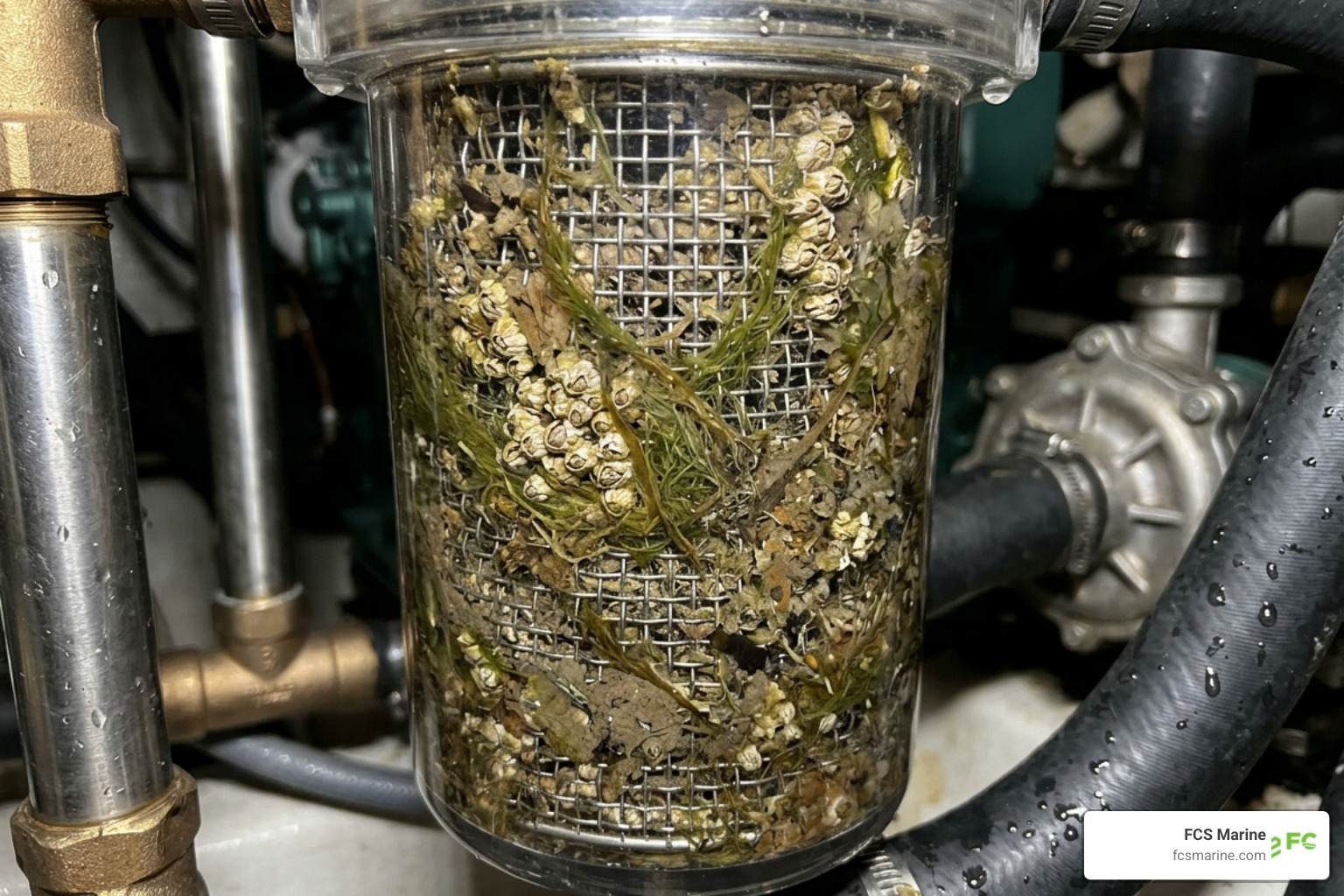
- Clogged Sea Strainers and Marine Growth: Barnacles, algae, and floating debris love to settle in the warm, quiet environment of your sea strainer. When water flow is restricted, the AC compressor overheats and shuts down on high pressure.
- Seawater Pump Failure: The pump is the heart of your marine AC’s cooling loop. If the pump loses its prime, burns out its motor, or suffers from a damaged impeller, cooling water stops flowing entirely.
- Refrigerant Leaks: Marine environments are plagued by constant vibration and salt-air exposure. This combination can cause copper lines to chafe or corrode, leading to slow refrigerant leaks that stop the system from producing cold air.
- Saltwater Corrosion: Saltwater is highly corrosive to metals. Over time, the condenser coils can degrade, leading to structural failures, leaks, and electrical short circuits.
- Electrical Connection Failures: High-humidity environments accelerate the corrosion of electrical terminals, relays, and control boards, resulting in intermittent operation or complete system failure.
If you are currently dealing with a hot cabin, reading How to Stop Your Yacht from Turning into a Floating Sauna can help you understand the dynamics of heat transfer on boats. When your system shuts down completely, refer to our troubleshooting guide on what to do when your Boat Air Conditioning Stops Cooling.
Signs You Need Marine Air Conditioning Repair for a System That Stops Cooling
Your vessel will usually drop subtle hints before the air conditioning fails completely. Catching these warning signs early can save you from costly emergency repairs and ruined weekend cruises. Watch out for these common indicators:
- Weak Airflow or Warm Air: If the vents are barely pushing air, or if the air coming out is lukewarm, your system is struggling. This is often caused by a dirty air filter, blocked ductwork, or low refrigerant.
- Strange Noises: Squealing, rattling, or clicking sounds coming from the air handler or compressor often point to loose mounts, failing fan motors, or compressor wear.
- Musty Odors: A sour or musty smell when the AC turns on is a clear sign of mold or mildew buildup in the evaporator coils or condensate pan. This requires immediate attention, as highlighted in our guide on why your Yacht AC System Needs Cleaning. According to the U.S. Environmental Protection Agency (EPA), controlling indoor moisture and humidity is critical to preventing mold growth.
- Water Leaks Around the Unit: If you notice standing water in your bilge or cabins near the air handler, your condensate drain line may be clogged with dust and biological growth, causing the pan to overflow.
Understanding Marine AC Systems: Self-Contained vs. Chilled Water
Not all marine AC systems are built the same. Depending on the size of your vessel, you will likely have one of three primary system designs. Choosing the right system and understanding its specific repair needs is vital.
For smaller to mid-sized vessels (typically under 40 feet), direct expansion (DX) self-contained units are the standard. In these systems, all components—the compressor, condenser, evaporator, and blower—are mounted on a single, compact chassis. They are cost-effective and relatively simple to service, but they must be located close to the living spaces they cool.
For mid-sized to larger vessels (up to 80 feet), split-gas systems are common. These split the system into two parts: the noisy compressor and condenser are tucked away in the engine room, while the quiet evaporator and air handler are located in the cabin spaces. This reduces noise but requires complex refrigerant lines running through the vessel.
On superyachts and large vessels (typically 80+ feet), chilled water systems (or marine chillers) are used. Instead of routing refrigerant throughout the boat, a central chiller unit cools a freshwater loop (usually mixed with glycol). This chilled water is then pumped to air handlers in each cabin. This offers incredible temperature control and whisper-quiet operation, but these systems are highly complex and require specialized engineering knowledge to repair.
To explore these differences in depth, read our detailed comparison on Chilled Water vs Self-Contained AC Systems. Understanding these configurations helps captains and owners make informed decisions when discussing system upgrades or troubleshooting complex cooling issues with a professional technician.
| System Type | Best Suited For | Key Advantages | Primary Repair Challenges |
|---|---|---|---|
| Self-Contained (DX) | Boats under 40 feet | Compact, lower initial cost, easy to retrofit | Space constraints make on-board component replacement tight |
| Split-Gas Systems | Vessels 40 to 80 feet | Quiet cabin operation, flexible installation | Long refrigerant lines are prone to vibration leaks |
| Chilled Water Systems | Yachts 80+ feet | Maximum efficiency, precise zoning, modular | Complex plumbing, water chemistry management, high repair costs |
The Crucial Role of Marine Air Conditioning Repair and Maintenance
Regular maintenance of marine AC systems does much more than keep you cool during the hottest days of July 2026. Because boats operate in highly corrosive saltwater environments, preventative care is essential for protecting your entire vessel.
First, marine air conditioning units play a vital role in balancing humidity levels onboard. High humidity is a primary driver of mold growth, which can quickly ruin expensive soft goods, headliners, and custom wood finishes. Furthermore, excess moisture in the air can corrode sensitive navigation electronics and electrical panels, leading to dangerous failures at sea.
Second, a well-maintained system operates far more efficiently. When condenser coils are clean and water flow is unrestricted, the compressor doesn’t have to work as hard. This reduces the electrical draw on your generator or shore power connection. On extended trips, conserving generator power and fuel is critical for overall resource management.
To keep your system running at peak performance and extend its lifespan (which typically ranges from 8 to 15 years with proper care), we highly recommend scheduling professional maintenance at least once a year. Our comprehensive Marine AC Maintenance Checklist outlines the key areas that need regular attention, from checking sacrificial anodes to flushing seawater lines.
What to Expect During a Professional Marine AC Service Call
When you schedule professional marine air conditioning repair with us, you don’t have to worry about hauling your boat to a shipyard. FCS Marine is a premier mobile marine service provider. We come directly to your vessel’s location—whether you are docked at a local marina, a private residence, or a boat yard in Fort Lauderdale, Pompano Beach FL, or West Palm Beach.
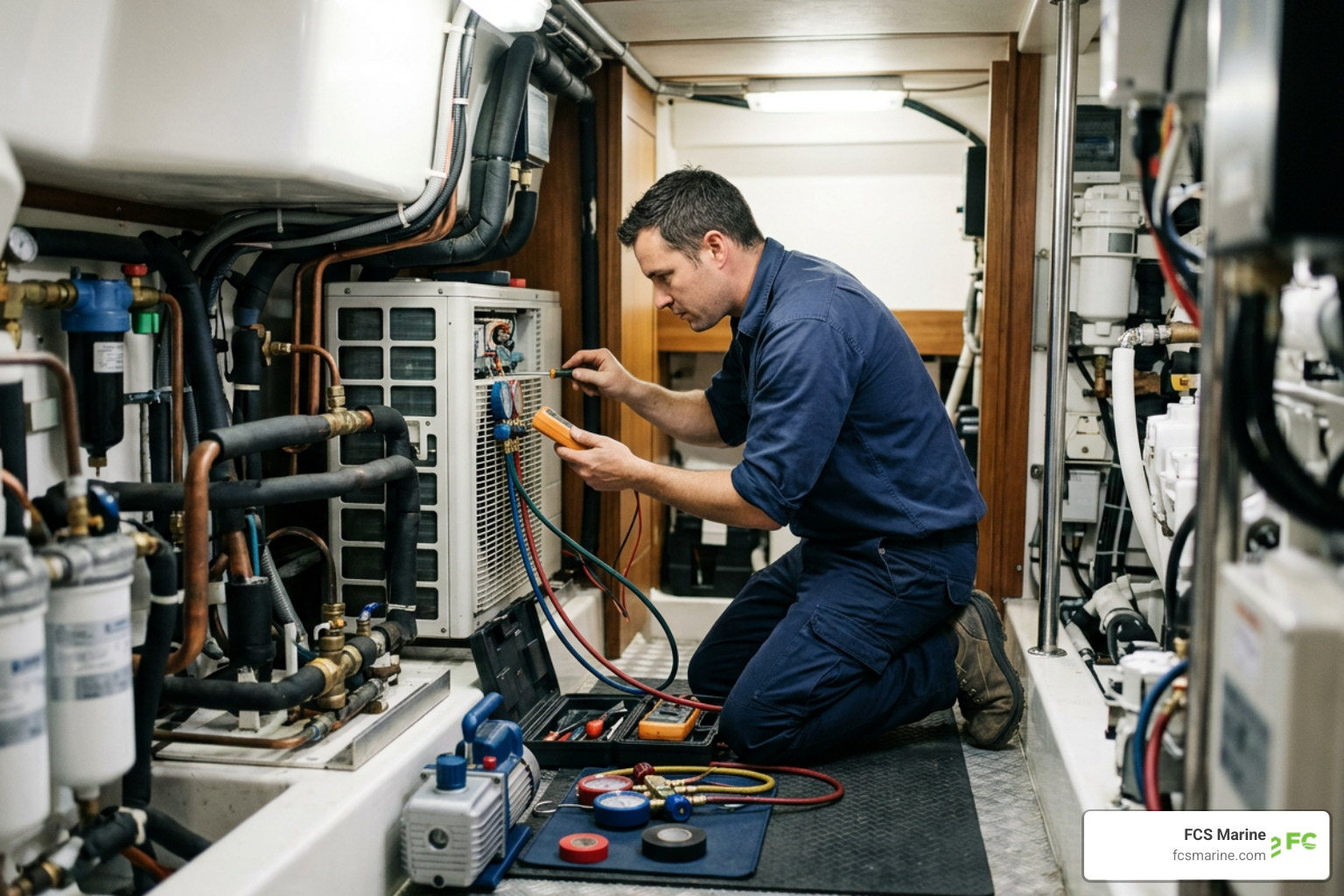
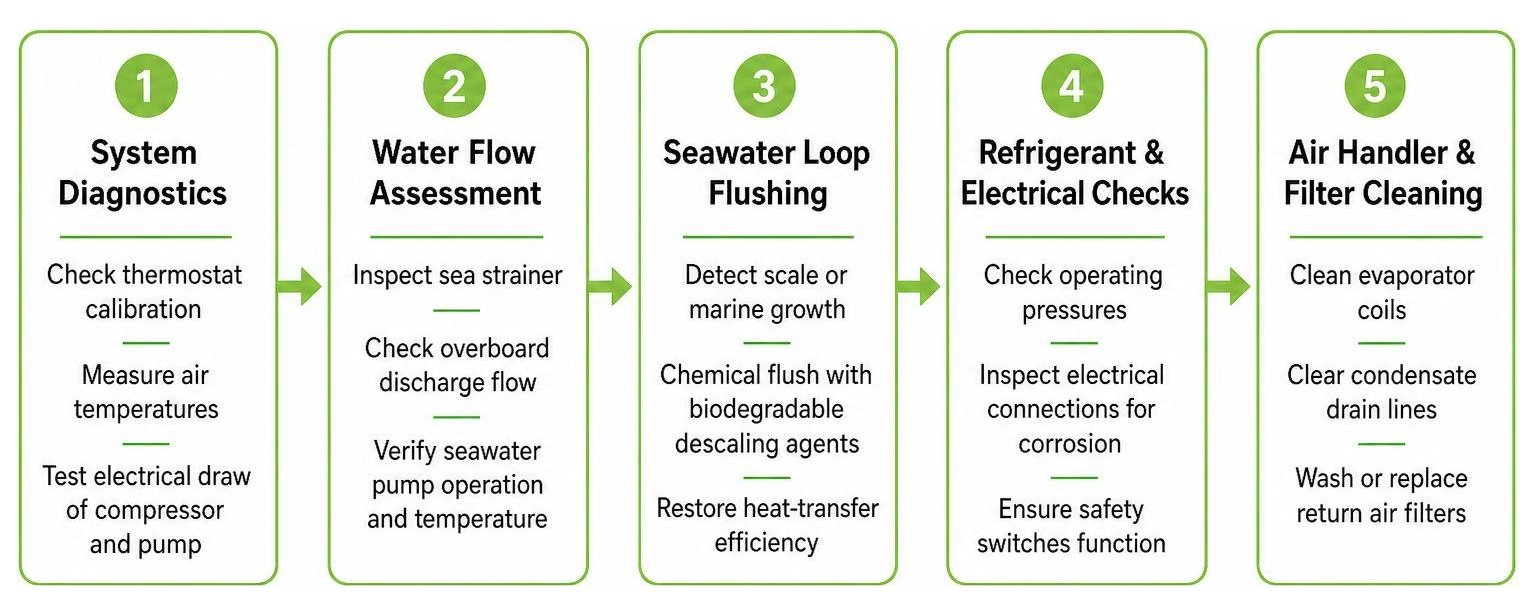
A typical professional service call is highly systematic. Our certified technicians will perform the following steps to diagnose and repair your system:
- System Diagnostics: We check the digital thermostat calibration, measure air temperatures at the supply and return grilles, and test the electrical draw of the compressor and pump.
- Water Flow Assessment: We inspect the sea strainer, check the overboard discharge for proper flow, and verify that the seawater pump is operating efficiently without overheating.
- Seawater Loop Flushing: If we detect scale or marine growth inside the condenser coils, we perform a chemical flush using biodegradable descaling agents to restore heat-transfer efficiency.
- Refrigerant and Electrical Checks: We check the system’s operating pressures, inspect electrical connections for signs of corrosion, and ensure the safety switches are functioning.
- Air Handler and Filter Cleaning: We clean the evaporator coils, clear the condensate drain lines to prevent cabin leaks, and wash or replace the return air filters.
To learn more about the specifics of our on-site procedures, read our guide on How Marine AC Service Works. In emergency situations where a major system component must be ordered, we can also provide temporary cooling rentals to keep your vessel livable in the meantime.
Choosing Certified Experts for Marine Air Conditioning Repair
Marine HVAC systems are vastly different from residential air conditioners. Entrusting your yacht’s climate control to a standard home AC technician can lead to misdiagnoses, improper parts installation, and even safety hazards.
When choosing a marine service provider, always ensure their technicians hold proper certifications. Our team features EPA-certified technicians for safe refrigerant handling and recovery, as well as professionals trained in American Boat & Yacht Council (ABYC) standards. This ensures that all electrical work, plumbing, and structural modifications comply with strict marine safety regulations. To understand why these qualifications matter, read about our commitment to Dual Certified Superior Air Solutions.
Frequently Asked Questions about Marine AC Repair
How often should I schedule marine AC maintenance?
You should schedule a professional marine AC service at least once a year—ideally in the spring before the peak summer boating season begins. However, if you live aboard your vessel or use it year-round in South Florida’s warm waters, twice-yearly seasonal checkups are highly recommended. Between professional visits, boat owners should regularly monitor water flow and clean their sea strainer baskets weekly.
Can saltwater environments damage my boat’s AC system?
Yes, saltwater is highly destructive to marine cooling systems. It causes rapid galvanic corrosion of metals and encourages the rapid growth of barnacles, oysters, and algae inside the raw water cooling lines. If left unchecked, this marine growth will choke the system’s water flow, leading to compressor overheating and eventual system failure. Regular seawater flushing and replacing sacrificial anodes are necessary preventive measures.
What should I do if my marine AC stops cooling suddenly?
If your system stops cooling, follow this quick troubleshooting sequence:
First, check the overboard discharge to see if water is pumping out of the side of the boat. If there is no water flow, turn the system off immediately to protect the pump and compressor. Check your sea strainer basket for weed or plastic bag blockages. If the strainer is clean, the pump may have lost its prime or tripped a circuit breaker. If water is flowing but the air is still warm, it is time to call a professional technician to check for refrigerant leaks or compressor issues.
Conclusion
A reliable, high-performing marine air conditioning system is not a luxury in South Florida—it is an absolute necessity. From preserving your yacht’s high-end woodwork and electronics to ensuring your family’s comfort during weekend trips, keeping your AC in peak condition is vital.
When your vessel’s climate control system shows signs of trouble, don’t wait for a minor issue to turn into a complete system failure. FCS Marine is here to help. As a family-owned mobile marine service provider, we bring professional diagnostic equipment, factory-trained expertise, and a commitment to quality directly to your vessel. We service Palm Beach County, Broward County, Miami-Dade County, Martin County, and St. Lucie County, providing expert care wherever your boat is docked.
Keep your vessel comfortable, protected, and ready for the water. If you need professional Marine Air Conditioning repair, cleaning, or preventative maintenance, contact FCS Marine today to schedule your mobile marine service.