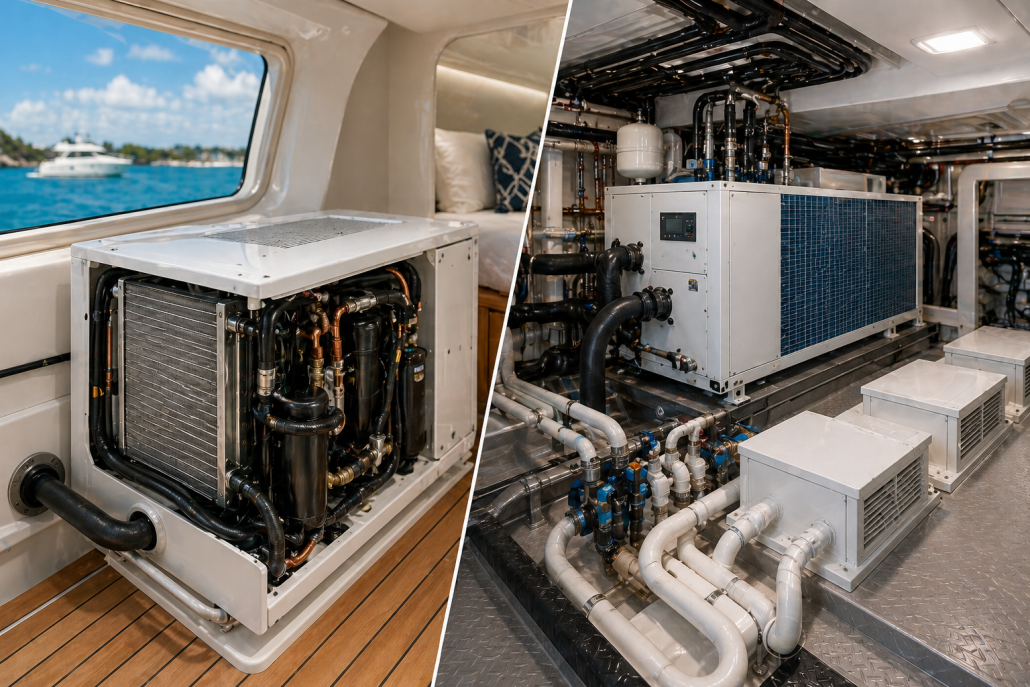
How to Choose Marine AC Repair in South Florida
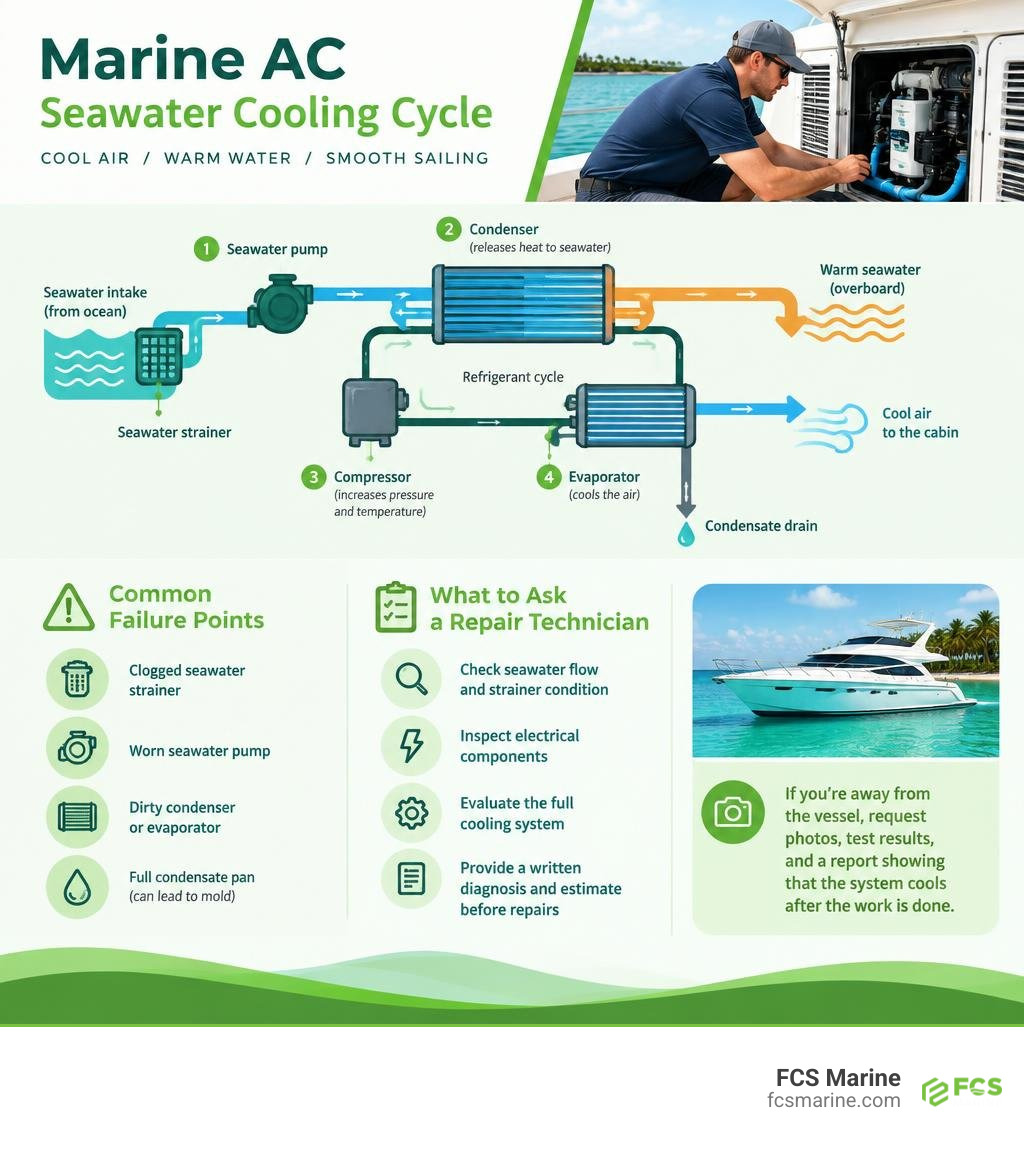
If your yacht’s AC stops cooling, choose a marine HVAC technician who can check seawater flow, electrical faults, and the cooling system, not just replace parts. Ask for a written diagnosis and estimate before approving repairs. If you are away from the vessel, request photos, test results, and a report showing that the system cools after the work is done.
South Florida’s warm, humid air and saltwater put heavy demands on marine AC systems. A clogged seawater strainer or worn pump can cause poor cooling, while a full condensate pan can leave moisture where mold may grow.
FCS Marine provides on-site marine air conditioning service for boat and yacht owners in South Florida.
South Florida marine AC repair further reading:
Marine-Specific Causes of AC Failure in Subtropical Waters
Operating air conditioning equipment on a vessel in South Florida is fundamentally different from running standard residential cooling systems. Marine climate systems reject cabin heat directly into surrounding seawater rather than outside air. While water transfers heat far more efficiently than air, South Florida’s coastal waterways present unique environmental stressors that rapidly accelerate component wear.
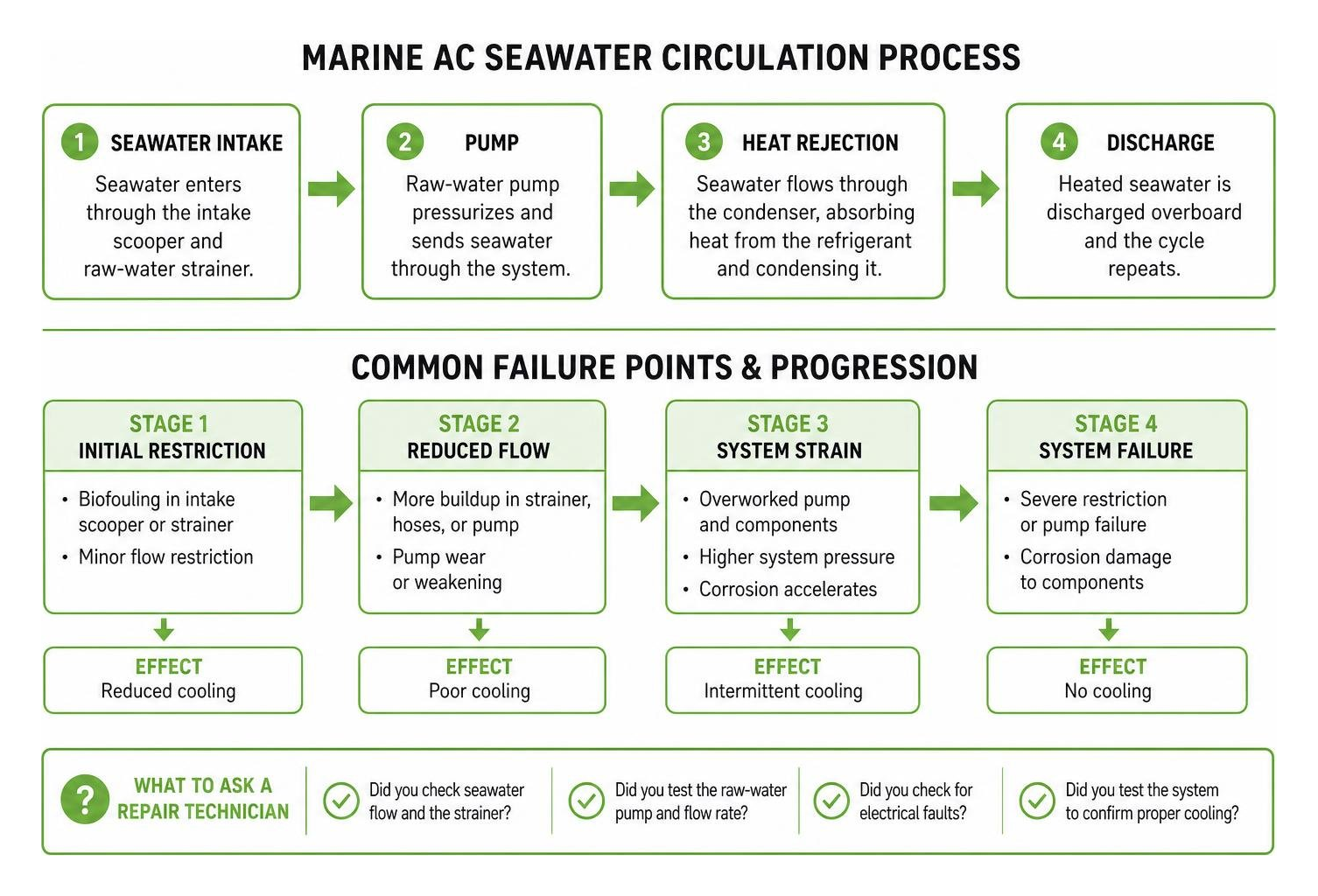
The primary operating challenges in local waters include:
- Aggressive Marine Biofouling: Warm canal and bay waters in Miami-Dade, Broward, and Palm Beach counties act as an incubator for algae, barnacles, and mussels. Invertebrates and vegetative growth enter through the raw-water intake scooper and settle inside the plumbing, restricting the flow needed to condense hot refrigerant.
- Saltwater Electrolysis and Galvanic Corrosion: Dissimilar metals immersed in seawater generate small electrical currents. Without properly maintained sacrificial anodes and robust bonding circuits, cupronickel condenser coils, pump housings, and bronze fittings quickly suffer pitting and structural degradation.
- Extreme Condensation Loads: Subtropical relative humidity regularly exceeds 80 percent. When warm, humid air hits cold evaporator coils, it yields gallons of water daily. If pan drains are restricted by dust, pet dander, or slime, condensate spills into bilges and subflooring, accelerating cabin moisture issues.
- Condenser Tube Scaling: High water temperatures cause calcium and mineral salts to precipitate out of seawater, forming hard scale along internal heat exchanger walls. This insulating barrier prevents effective heat rejection.
Understanding these environmental dynamics makes it easier to diagnose boat AC issues before severe component damage occurs. Left unaddressed, moisture build-up from failing cooling loops creates the ideal breeding ground for microbial contamination, making mold growth prevention on marine vessels an urgent priority for interior air quality. For general environmental guidelines on managing moisture and indoor air quality, the U.S. Environmental Protection Agency offers extensive resources on preventing indoor dampness.
Warning Signs That Require Professional South Florida Marine AC Repair
Marine cooling systems rarely fail without warning. Paying attention to early operational indicators allows captains and vessel owners to arrange corrective service before complete system shutdowns leave cabins uninhabitable during humid summer afternoons.
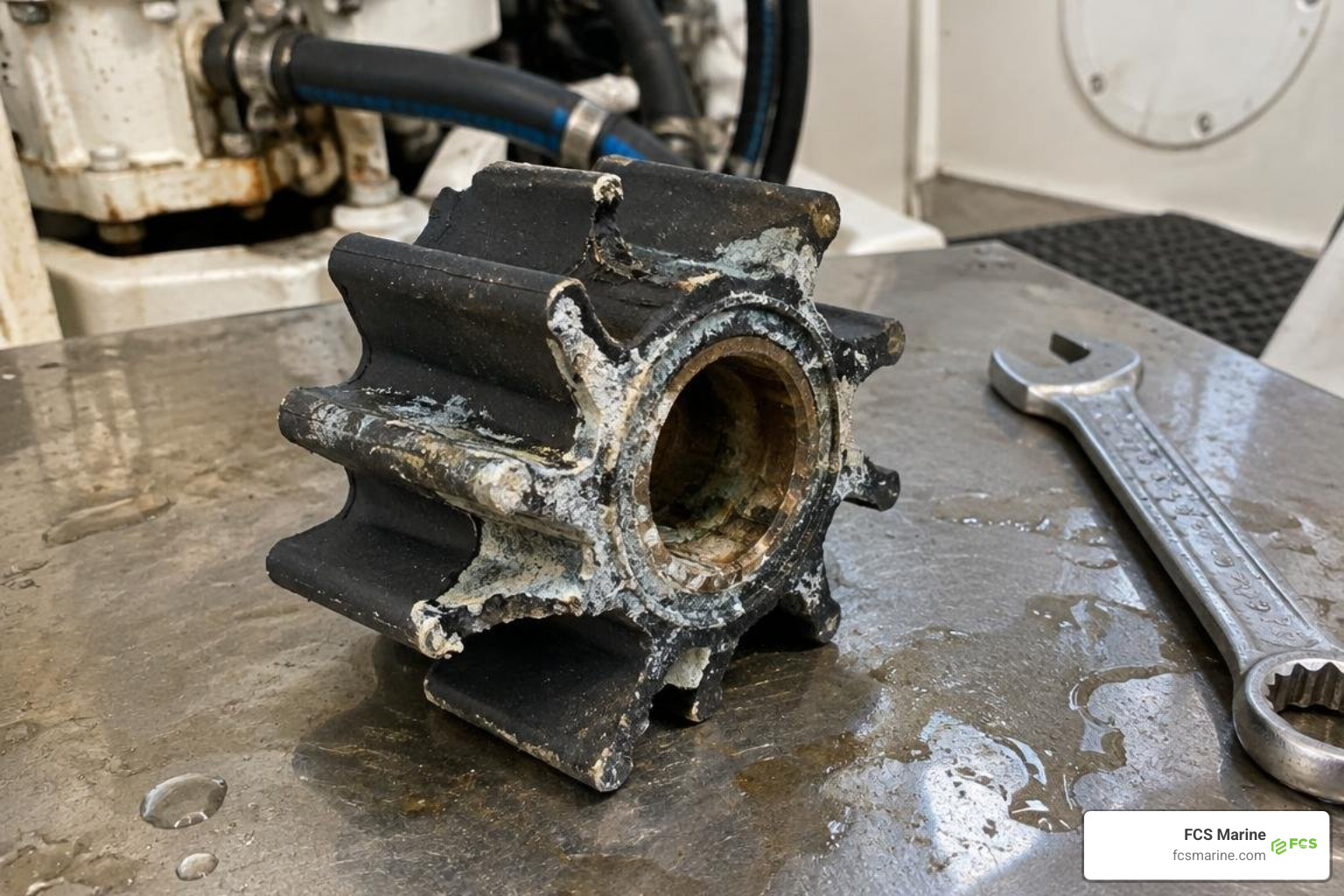
Key warning signs that signal the need for professional South Florida marine AC repair include:
- High-Pressure Cutout Faults (HP Errors): Digital marine thermostats display “HP” or trigger an alarm when head pressure spikes. This is almost always caused by restricted raw-water cooling, failing pump impellers, or scaled heat exchangers.
- Compressor Short-Cycling: If a compressor runs for two minutes and shuts off repeatedly, it is likely tripping on thermal overload or internal safety switches due to poor ventilation or fluctuating shore power voltage.
- Evaporator Coil Icing: A solid block of ice behind the return-air grille indicates severe airflow starvation or a loss of refrigerant. If you notice your boat air conditioning stops cooling and the copper line set is frosted white, power down the system immediately to prevent liquid refrigerant from entering and destroying the compressor valves.
- Hissing Sounds and Poor Superheat Regulation: A malfunctioning metering device, such as a clogged or sticking thermal expansion valve, disrupts the flow of refrigerant. Learning the symptoms of fixing your boat’s AC TXV valve helps differentiate between metering valve restrictions and low refrigerant charges.
- Slow Condensate Pan Draining: Water standing in the drain pan rather than flowing freely overboard indicates line obstruction, which risks interior water damage to cabinetry, upholstery, and headliners.
Evaluating Chilled Water and Direct Expansion Systems
The diagnostic approach depends heavily on your yacht’s underlying HVAC design. Smaller cruisers and sportfish vessels typically utilize direct expansion (DX) self-contained packages or split systems, where refrigerant circulates directly to each cabin’s air handler. Larger motoryachts and superyachts rely on chilled water loops, where a central mechanical plant cools fresh water that is continuously circulated through insulated piping to remote air handlers throughout the vessel.
Understanding the operational differences between chilled water vs self-contained systems is critical when evaluating symptoms. A self-contained DX unit experiencing high pressure usually points to a single clogged seawater hose, whereas a high-pressure trip on a multi-stage chiller plant can indicate a primary circulation pump failure affecting the entire yacht.
Why Specialized Marine HVAC Expertise Matters
Marine HVAC systems cannot be treated like household heat pumps or basic automotive air conditioners. Boats represent compact, highly integrated, dynamic micro-environments subject to constant mechanical vibration, pounding wave impacts, and unpredictable shore power fluctuations.
Working on these platforms requires strict adherence to safety and construction standards established by organizations like the American Boat and Yacht Council and the U.S. Coast Guard. Technicians must navigate tight mechanical spaces, isolate complex DC-to-AC electrical distribution panels, safely manage EPA-regulated refrigerants, and plumb raw-water systems without risking siphon breaks that could flood the vessel.
Understanding how marine AC service works gives owners insight into the comprehensive skill set required. A qualified technician must simultaneously act as an electrician, plumber, refrigeration engineer, and shipwright to resolve airflow, waterflow, and electronic control issues safely.
How to Choose Qualified Technicians for South Florida Marine AC Repair
Hiring the right repair contractor is critical, particularly for absentee yacht owners managing vessels in Fort Lauderdale, Miami, or Palm Beach from out of state.
When evaluating service providers, verify the following practical criteria:
- Dedicated Marine Tooling: The service team must arrive equipped with specialized marine descaling systems, digital manifold gauges, micron gauges, and leak detectors designed for tight marine machinery spaces.
- Remote Communication Protocols: For remote owners, the technician should provide clear, written diagnostic summaries supported by photographic evidence, electrical amperage readings, and temperature differential logs before and after work is performed.
- Mobile On-Site Capabilities: Choose a team that travels directly to where your vessel is berthed—whether at a major shipyard, marina slip, or private residential dock along the Intracoastal Waterway—eliminating the hassle and expense of moving the vessel for mechanical repairs.
Reviewing a practical guide on how to find a certified marine AC technician ensures you ask the right questions regarding mechanical safety and operational testing before authorizing major repairs.
Comparing Managed Maintenance vs. Reactive South Florida Marine AC Repair
Relying exclusively on emergency repairs when a breakdown occurs during peak summer heat creates unnecessary stress, high repair bills, and extensive downtime. South Florida’s year-round warmth requires continuous system operation, making structured preventive care far more economical than reactive triage.
| Evaluation Metric | Scheduled Preventive Maintenance | Reactive Emergency Repair |
|---|---|---|
| Seawater Loop Condition | Regularly flushed; scale and barnacles cleared proactively | Severe biofouling leading to high-pressure lockouts |
| Airflow & Air Quality | Coils sanitized; filters washed on a scheduled routine | Coils plugged with dust; risk of interior mold growth |
| Compressor Reliability | Monitored amperage draws prevent electrical burnouts | Unexpected compressor failure requiring replacement |
| Vessel Downtime | Minimal; planned servicing during unoccupied periods | Extended downtime during peak cruising weekends |
| Owner Peace of Mind | Documented service logs and remote status verification | Scrambling to locate emergency mechanics while away |
Following a proven marine AC maintenance checklist alongside consistent cleaning of marine AC air filters protects costly compressors from premature failure and keeps electrical power draw within nominal manufacturer specifications.
Repair, Component Replacement, and Remote Vessel Management
When mechanical wear or internal electrical faults surpass the threshold of minor servicing, comprehensive component replacement becomes necessary. Worn raw-water pumps, leaking condenser coils, locked compressors, and corroded blower assemblies must be replaced with equipment rated specifically for marine duty cycles.
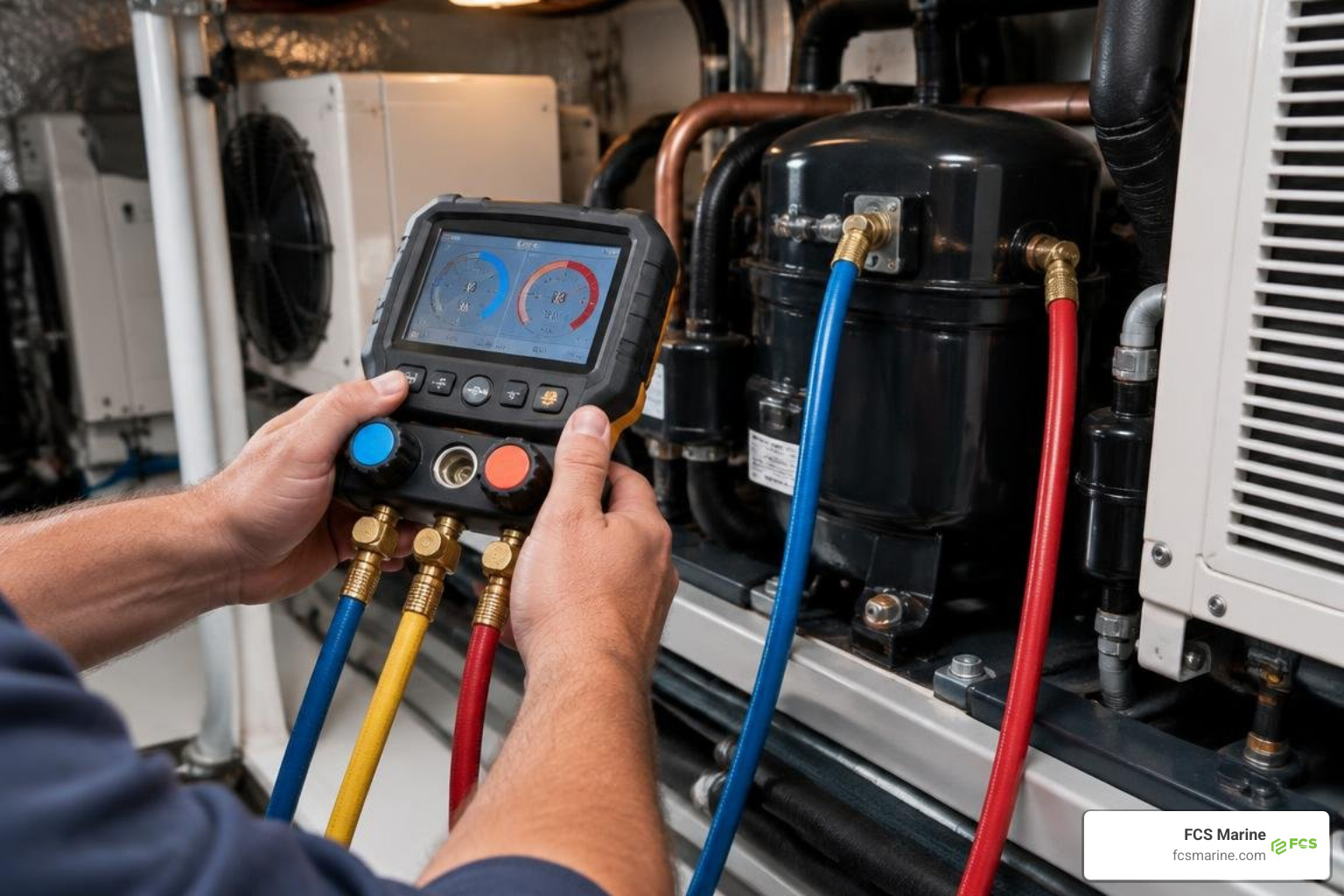
For owners who reside out of state or travel frequently, having a reliable marine service provider inspect the vessel’s climate systems provides crucial protection against summer humidity spikes and storm-driven power outages. In addition to cooling systems, maintaining onboard marine refrigeration, yacht thermal insulation, and potable water purification systems ensures the yacht remains fully operational and protected year-round.
When equipment reaches the end of its serviceable lifespan, consulting a detailed marine air conditioning replacement guide allows owners to evaluate modern, energy-efficient units that operate quietly and consume less generator power. Working with established local repair specialists across South Florida ensures all plumbing, electrical connections, and duct transitions meet strict marine standards.
Frequently Asked Questions
What causes marine AC water flow faults in South Florida waters?
Water flow errors (often indicated by HP or high-pressure error codes) are primarily caused by raw-water sea strainer blockages from weeds and jellyfish, barnacle growth inside the cupronickel condenser heat exchanger, a worn pump impeller, or an airlock trapped in the intake hose line after running the vessel on plane.
How often should a yacht’s marine air conditioning system be flushed?
In South Florida’s warm waters, seawater cooling loops should typically be chemically flushed with an approved, non-destructive descaling solution every six to twelve months. Vessels kept in shallow canals or high-temperature backwaters experience faster marine growth accumulation and may require more frequent descaling and monthly sea strainer cleanouts.
How can remote yacht owners verify marine AC repairs from out of state?
Remote yacht owners can verify work by requesting a comprehensive digital service report. This report should include date-stamped photographs of replaced parts, supply and return air temperature split measurements, raw-water pump amp draws, and confirmation that the digital thermostat maintains the targeted setpoint under load.
Can a clogged AC air filter cause my marine system to freeze up?
Yes. When an air filter becomes clogged with dust, lint, and pet hair, airflow across the evaporator coil is severely restricted. Without sufficient warm cabin air blowing over the coil to transfer heat, the coil temperature drops below freezing, causing condensation to freeze into a solid block of ice that completely stops cooling.
Professional On-Site Yacht Climate Care in South Florida
At FCS Marine, we specialize in comprehensive yacht maintenance and climate care designed to withstand South Florida’s demanding subtropical conditions. As a family-owned company, our mobile, on-site marine service travels directly to your vessel—whether you are docked at a private residence in Fort Lauderdale, moored in a marina in Miami, or undergoing yard service in Palm Beach.
We provide a complete range of specialized yacht support services, including:
- Marine air conditioning diagnostics, descaling, repairs, and full replacements
- Marine refrigeration system maintenance and servicing
- Marine insulation to eliminate thermal sweating and condensation
- Marine mold remediation and sanitization to protect interior air quality
- Marine water purification systems and watermakers
- Specialized marine equipment rentals
Whether you need urgent mechanical repairs or ongoing preventive care while managing your vessel remotely, our team delivers transparent reporting, reliable diagnostic testing, and dependable craftsmanship.
To explore our complete range of capabilities, visit our marine air conditioning services page. Review our full service territory on our service coverage locations page, serving Palm Beach County, Broward County, Miami-Dade County, Martin County, St. Lucie County, Fort Lauderdale, and Pompano Beach.
Ready to restore peak cooling performance to your vessel? Contact FCS Marine today to schedule professional, on-site yacht service directly at your dock.